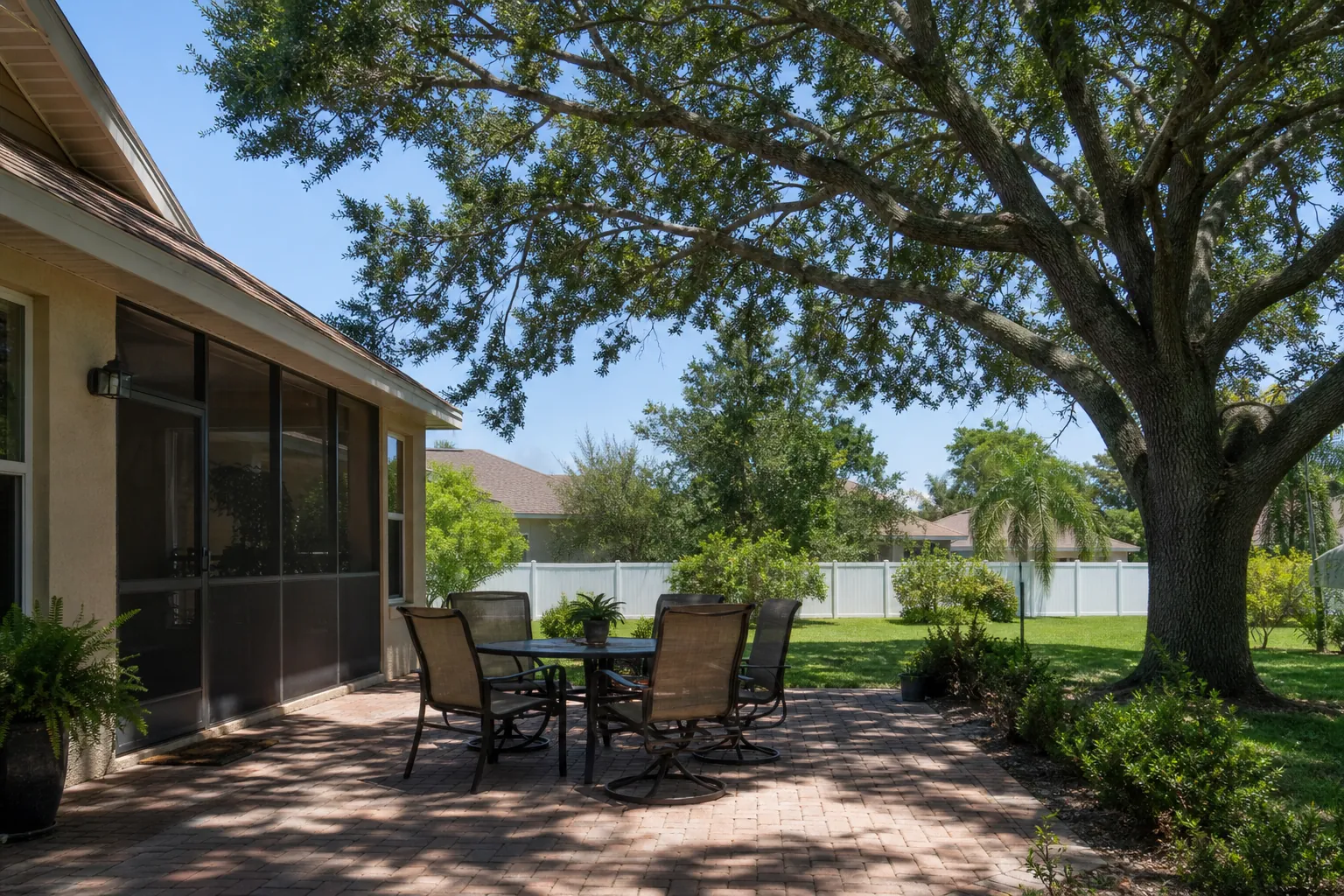
An oak extending over a patio can create a difficult decision. You may want more clearance while preserving the tree’s natural form and avoiding unnecessary removal. Crown reduction is one possible approach, but it must be considered in relation to branch structure, tree condition, patio use, and the amount of clearance needed. A deliberate inspection helps determine whether reduction, another type of tree trimming, or removal deserves consideration.
What Crown Reduction Is Intended to Accomplish
Crown reduction decreases the height or spread of a tree by shortening selected branches. Instead of cutting every limb back to the same line, appropriate reduction cuts are made at suitable lateral branches. For an oak over a Deltona patio, the goal may be to pull the canopy edge away from the roofline, seating area, screen enclosure, or another part of the outdoor space.
This work differs from simply removing the lowest branches. Raising the canopy may create vertical clearance, while crown reduction addresses outward or upward spread. Canopy thinning is also different because it selectively removes branches within the crown rather than substantially shortening its overall reach.
The best choice depends on where the conflict exists. A branch extending horizontally across the patio may call for selective reduction, while crowded interior growth may make canopy thinning relevant. When several objectives overlap, a tree inspection can help define a focused trimming plan rather than treating the entire crown the same way.
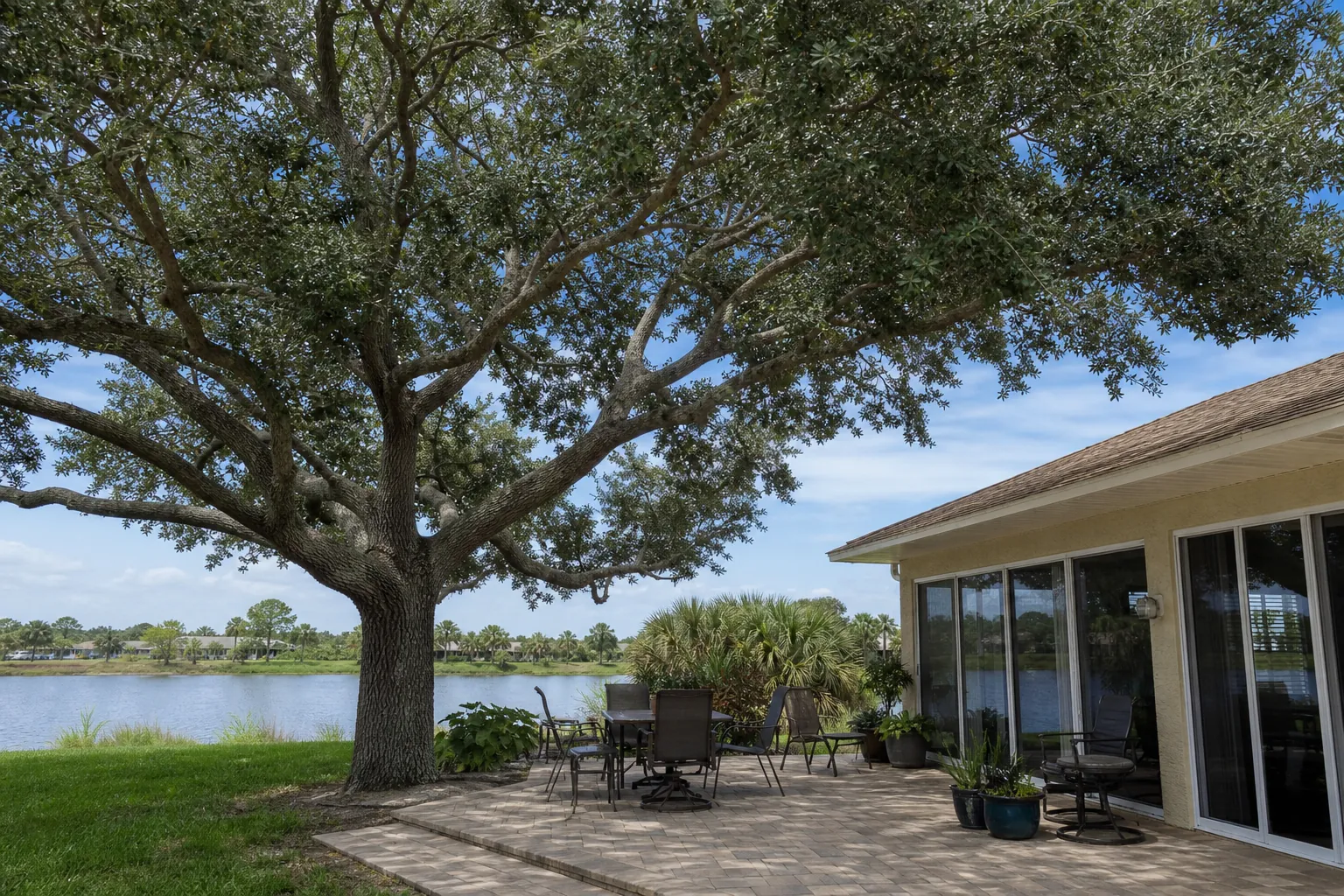
Inspect the Oak Before Choosing a Cutting Plan
Begin with the tree, not the patio furniture. Look at the trunk, major unions, branch attachments, canopy balance, and visible dead or damaged wood. Note whether the limbs over the patio are primary structural branches or smaller secondary limbs. The size and position of the branches affect what can reasonably be shortened without creating an abrupt, unbalanced crown.
Next, identify the exact conflict. Is a branch touching a structure, hanging low over a walking area, blocking normal patio use, or creating concern because it appears damaged? Vague goals such as “cut it back” can lead to unnecessary trimming. A clear target allows the work to concentrate on the relevant branch ends and clearance zone.
Florida Foliage provides tree inspections and arborist reports in addition to crown reduction, canopy thinning, and tree trimming. An inspection can help a property owner understand the visible condition of the oak and discuss practical options before deciding how much work to authorize.
Use a Practical Checklist for Patio Clearance
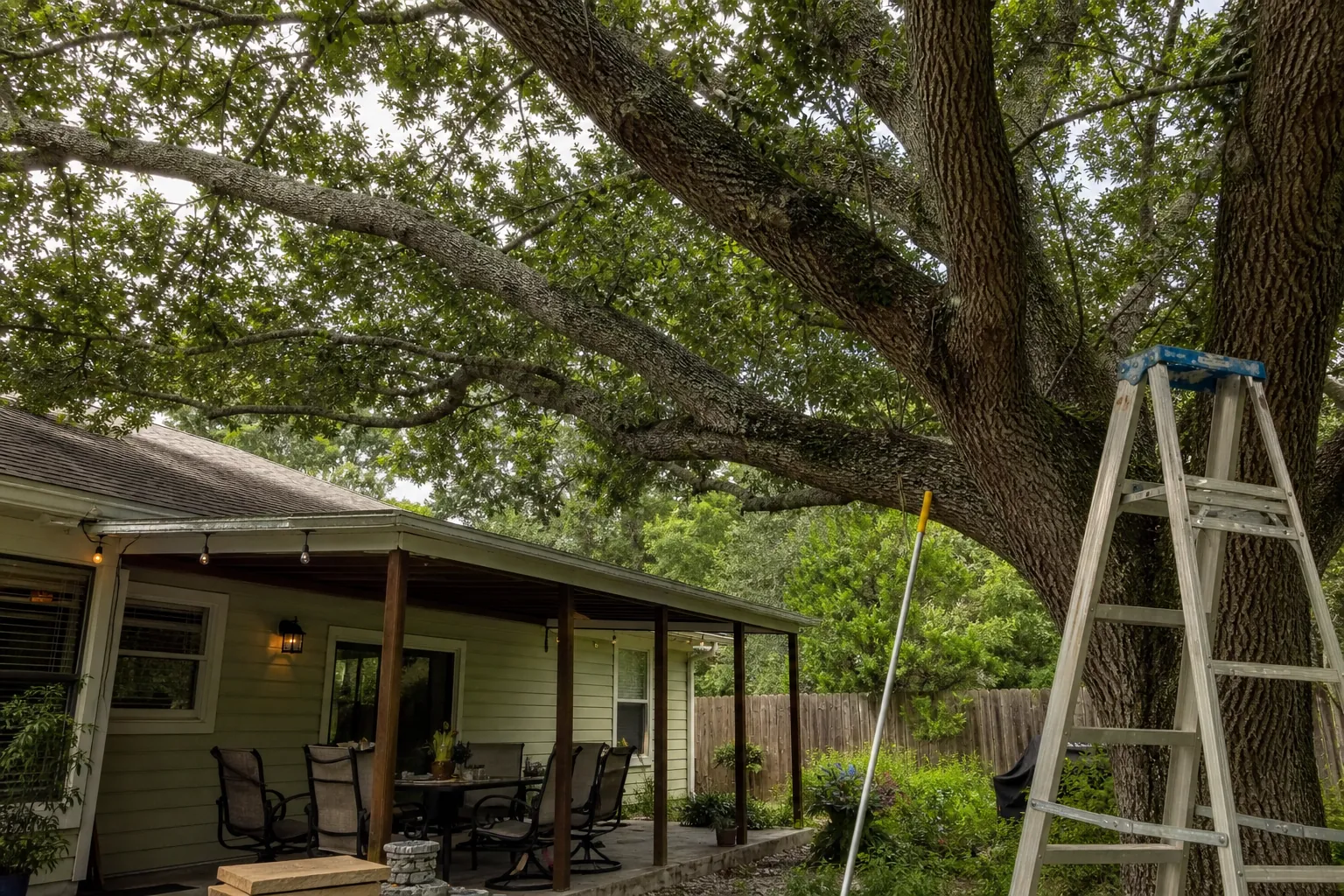
A useful site review should account for the tree, the patio, and access for the work. Walk around the area from several viewpoints, including beneath the canopy and from outside its drip line. Take photographs if the conflict is easier to understand from a particular angle. Then write down the outcome you want so it can be discussed clearly during an inspection.
- Identify the branches directly affecting the patio, roof, enclosure, walkway, or seating area.
- Check for visible cracks, hanging limbs, deadwood, or damaged branch unions.
- Decide whether the priority is vertical clearance, reduced lateral spread, or both.
- Note gates, fences, landscaping, structures, and other features that may affect access.
- Consider how the canopy would look and function after selected branches are shortened.
- Ask whether crown reduction, canopy thinning, or another trimming approach fits the stated goal.
- Confirm any applicable city or county requirements before work begins.
This checklist keeps the conversation tied to observable conditions. It also helps prevent a broad request from becoming more extensive than the patio conflict requires.
Know When Reduction May Not Resolve the Issue
Crown reduction is not automatically the right answer for every oak above a patio. If the desired clearance would require shortening major limbs too severely, repeated trimming may not produce a practical long-term arrangement. Visible structural concerns, extensive damage, or a conflict involving the trunk and permanent construction may also change the available options.
Tree removal may be discussed when trimming cannot reasonably address the site conflict or when the tree’s condition raises broader concerns. That decision should follow an inspection of the actual tree rather than assumptions based only on canopy size. If removal enters the conversation, property owners should confirm current requirements with their city or county. Rules can vary by jurisdiction and by the circumstances of the tree.
Readers comparing trimming and removal can review this related guide to protected tree removal permit requirements in DeLand. It provides additional context while reinforcing the importance of checking directly with the appropriate local authority for the property in question.
Compare the Options Before Scheduling the Work
Once the oak has been reviewed, compare each option against the same decision points: the clearance achieved, the branches affected, the resulting canopy balance, site access, and any follow-up needs. Crown reduction may suit a defined spread conflict. Canopy thinning may be considered when the objective involves selected interior branches. Standard tree trimming may address dead, damaged, or specifically interfering limbs. Tree removal is a separate decision for situations where retaining the tree does not fit the site or its condition.
Ask for the proposed scope to identify which part of the crown will be addressed and why. Make sure the plan distinguishes the patio clearance objective from unrelated trimming elsewhere in the tree. If access is constrained by the home, patio, fencing, or landscaping, discuss those conditions before work is scheduled.
For shared properties, an HOA or condo association may also need internal approval. Florida Foliage provides HOA and condo tree services as well as commercial tree services, allowing the decision process to reflect the type of property involved.
Discuss Your Deltona Oak and Patio
If you are deciding whether crown reduction is appropriate for an oak over your patio, start with a clear review of the tree and the clearance needed. Call Florida Foliage at (386) 481-7913 to discuss tree trimming, crown reduction, canopy thinning, tree inspections, or related tree care options.
Call (386) 481-7913 to talk through next steps.