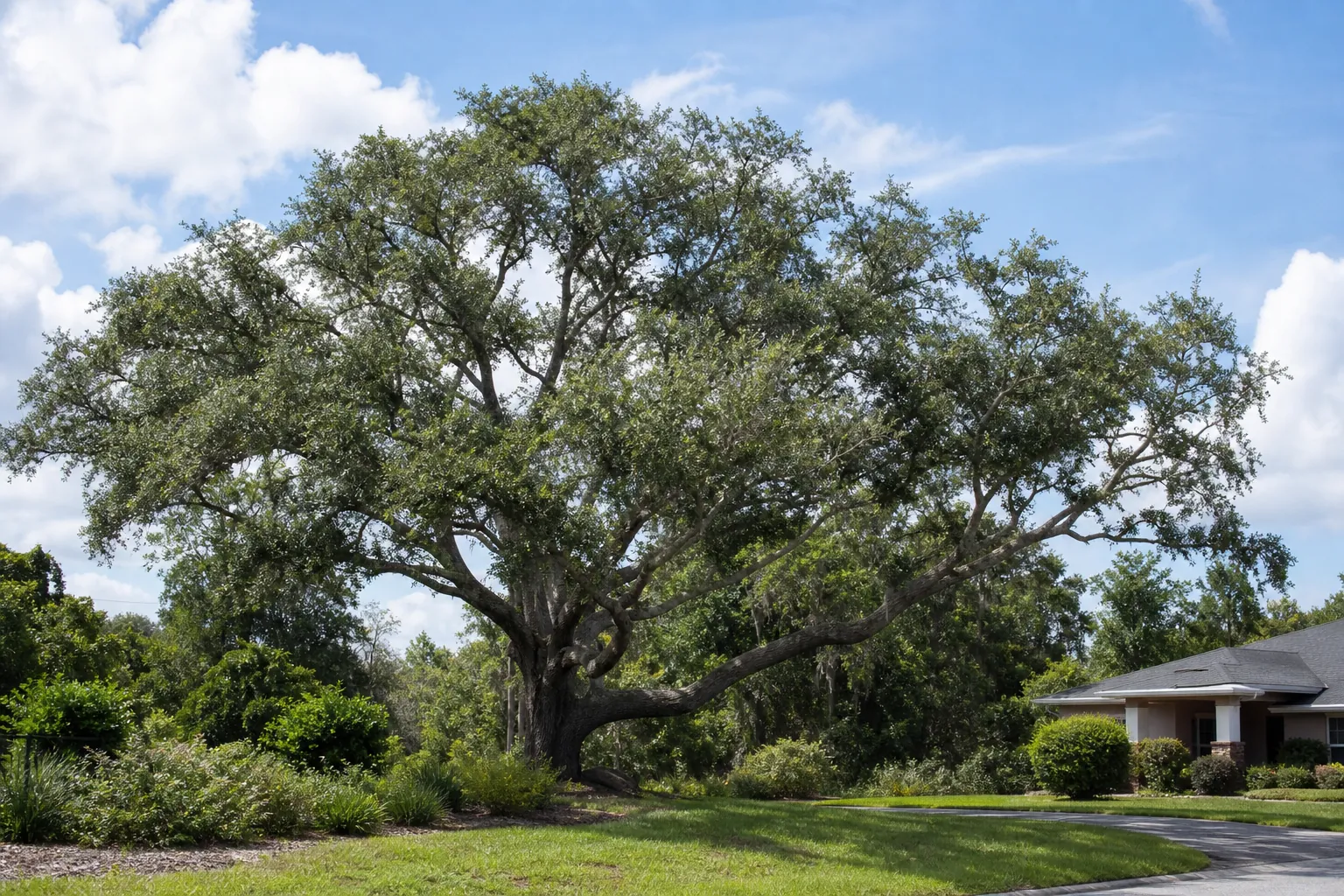
A large oak can shape a Deltona property, but it can also create difficult decisions when limbs extend toward a roof, driveway, utility area, or neighboring space. Crown reduction may sometimes address specific concerns while retaining the tree. In other situations, tree removal may be the more appropriate option. The choice should follow a careful tree inspection rather than assumptions based only on size, leaf drop, or appearance from the ground.
What Crown Reduction Is Intended to Accomplish
Crown reduction is a tree trimming method that decreases the height or spread of a canopy by shortening selected branches. The work should focus on specific objectives, such as reducing the reach of a long limb or creating more appropriate clearance around nearby structures. It is different from simply cutting the top off a tree or removing large portions of foliage without regard to branch structure.
For a large Deltona oak, crown reduction may be considered when the primary concern involves canopy dimensions rather than a reason to remove the entire tree. The tree’s structure, condition, branch arrangement, and surroundings all matter. A reduction plan should identify which sections need attention and why.
Crown reduction also differs from canopy thinning. Thinning selectively removes branches to change canopy density, while reduction shortens the canopy’s outer dimensions. These methods are not interchangeable, and neither automatically resolves every structural concern. An on-site tree inspection can help determine whether crown reduction, canopy thinning, another trimming approach, or removal fits the actual conditions.
When Keeping the Oak May Be Considered
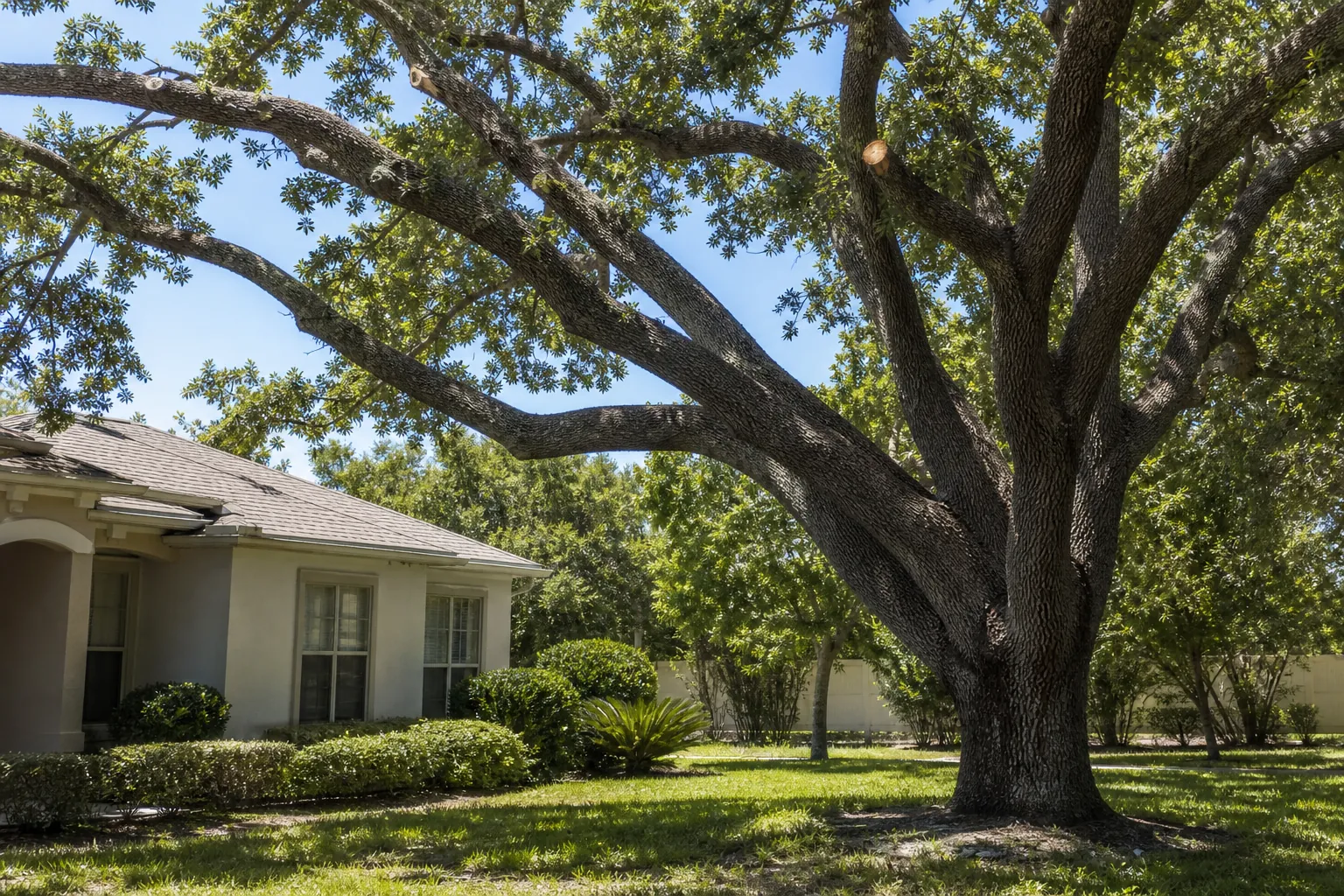
Retaining the oak may be considered when an inspection finds that the concern is limited and can potentially be addressed through selective trimming. Examples might include an overextended branch, canopy growth approaching a structure, or a need to reduce part of the crown’s spread. The decision depends on whether suitable branch unions are available for proper reduction cuts and whether the proposed work aligns with the tree’s overall structure.
Property owners should begin by defining the problem clearly. Is the concern clearance, branch length, storm-related damage, canopy density, or the condition of the trunk? A precise objective helps prevent unnecessary work and makes it easier to compare recommendations.
- Photograph the oak from several sides and note visible changes.
- Identify buildings, pavement, fences, utilities, and neighboring property beneath or near the canopy.
- Record broken limbs, cavities, cracks, hanging branches, or exposed roots without approaching unsafe areas.
- Request a tree inspection before selecting crown reduction or removal.
- Confirm local requirements with the appropriate city or county before work begins.
When Tree Removal Enters the Discussion
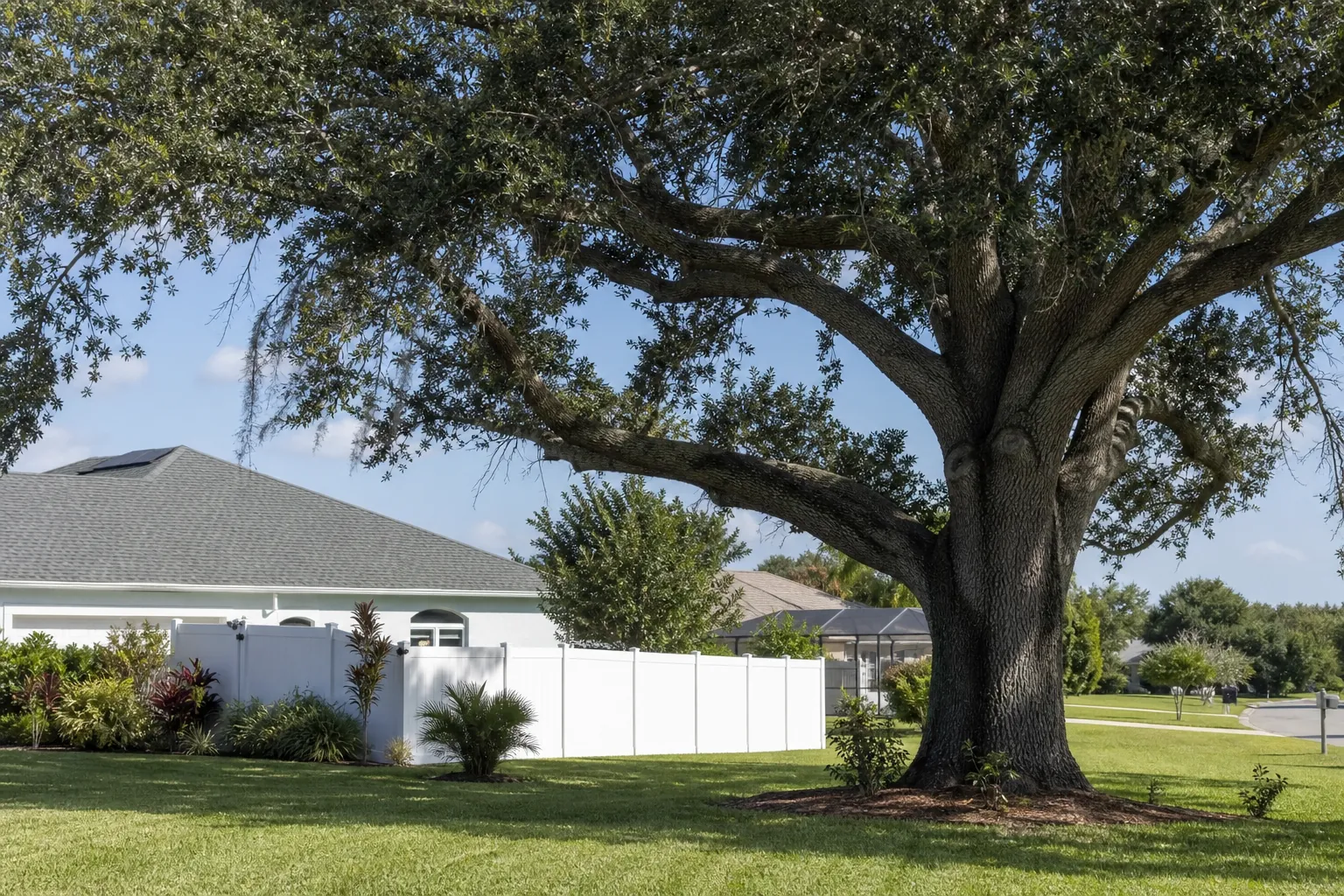
Tree removal becomes part of the discussion when trimming may not address the main concern. Significant trunk problems, major root disturbance, extensive storm damage, or structural conditions involving the whole tree require a different evaluation than an overextended branch. A tree may also have multiple concerns that cannot be understood from one viewpoint or from photographs alone.
Removal decisions should consider the entire work area. Access, nearby structures, overhead obstacles, surrounding trees, and the space available for dismantling can affect planning. Florida Foliage provides tree removal, crane tree removal, emergency and hurricane tree removal, tree inspections, and arborist reports. The appropriate service depends on the site and the tree rather than on a single visible symptom.
Removal also creates follow-up decisions. The property owner may need to plan for wood, debris, and the remaining stump. Stump grinding is a separate service to discuss when reviewing the scope. Ask for clarity about what work is included so the plan reflects the desired condition of the site after removal.
How to Compare the Two Options Carefully
A useful comparison starts with the objective, not a preferred method. If the goal is to create clearance, ask whether selective crown reduction can achieve it without removing excessive canopy. If the concern involves the trunk, roots, or broad structural condition, ask whether trimming would address the underlying issue at all. The answer may require an arborist report or tree inspection.
Consider how each option affects the property after work is complete. Crown reduction retains the tree but does not freeze its growth or eliminate the need for future observation. Removal eliminates the tree but changes shade, views, and the space around nearby features. Stump grinding and restoration planning may also need consideration.
Ask for recommendations tied to visible conditions and clear objectives. Useful questions include which branches would be shortened, why particular cuts are proposed, what site constraints affect removal, and whether additional inspection is appropriate. Be cautious about choosing based solely on convenience. A written scope can help everyone understand whether the proposed work is crown reduction, canopy thinning, general tree trimming, or full removal.
Permits, Timing, and the Next Practical Steps
Tree-related requirements can vary by city, county, property type, and tree circumstances. Before authorizing crown reduction or tree removal, confirm current requirements directly with the appropriate local authority. Homeowners associations and condominium communities may also have review procedures separate from government requirements. Florida Foliage offers HOA and condo tree services as well as commercial tree services for properties requiring coordinated planning.
Readers researching nearby permitting considerations can review protected tree removal permit requirements in DeLand for general planning context. Requirements applicable to a DeLand property should not be assumed to apply in Deltona, so confirm details with the city or county responsible for the specific address.
Next, arrange an inspection and explain the concern in concrete terms. Share where branches extend, when changes were noticed, and what property features may affect access. Keep people away from hanging or storm-damaged limbs. If immediate conditions follow severe weather, discuss emergency and hurricane tree removal rather than attempting to inspect unstable areas yourself.
Discuss the Deltona Oak With Florida Foliage
If you are weighing crown reduction against removing a large oak, Florida Foliage can discuss tree inspection, crown reduction, tree trimming, and tree removal options for the site. Call (386) 481-7913 for a calm, practical conversation about the next step.
Call (386) 481-7913 to talk through next steps.