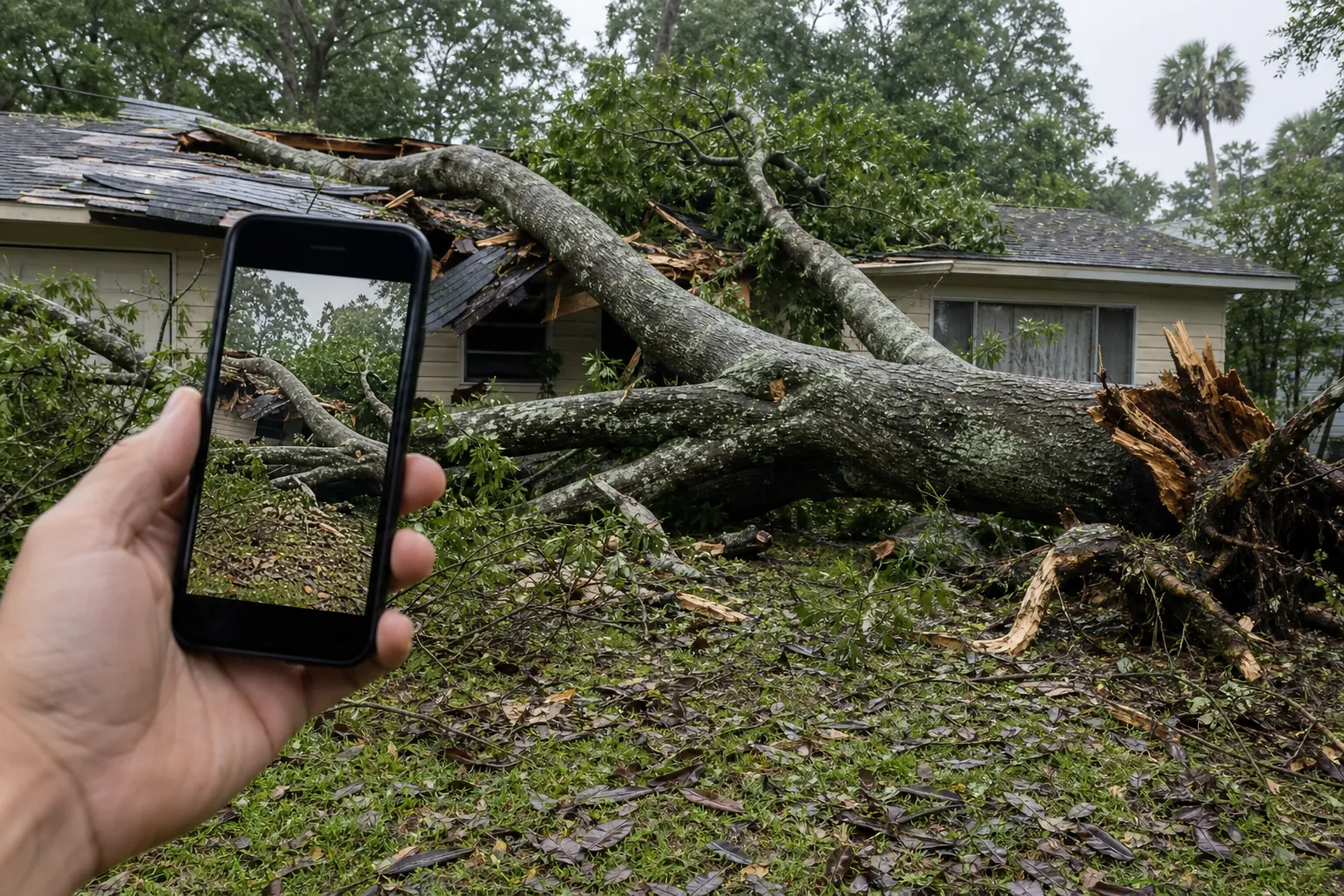
A damaged or unstable tree can force a quick decision, especially after severe weather. Before emergency tree removal begins in Port Orange, document the condition without entering a hazardous area. Clear records can help you explain why removal appeared necessary, communicate with property stakeholders, and respond to questions from local authorities or an insurance provider. Documentation should never delay action needed to protect people from an immediate danger.
Put Safety Ahead of Photos and Paperwork
Start by deciding whether you can observe the tree from a safe location. Do not approach hanging limbs, a split trunk, exposed roots, downed utility lines, or a tree resting against a structure. Keep people and pets away, and avoid standing beneath the canopy. If electrical lines may be involved, treat the area as dangerous and contact the appropriate utility or emergency authority.
Use your phone's zoom rather than moving closer. Photographs taken through a window, from across the street, or from another protected position may still show the essential conditions. If wind, darkness, flooding, or active tree movement makes documentation unsafe, wait in a secure place and share what you can observe by phone.
Florida Foliage provides emergency and hurricane tree removal, tree inspections, arborist reports, crane tree removal, and related tree services. When you call, describe immediate hazards first so the conversation stays focused on safety and the property's current condition.
Capture Wide Views and Specific Damage
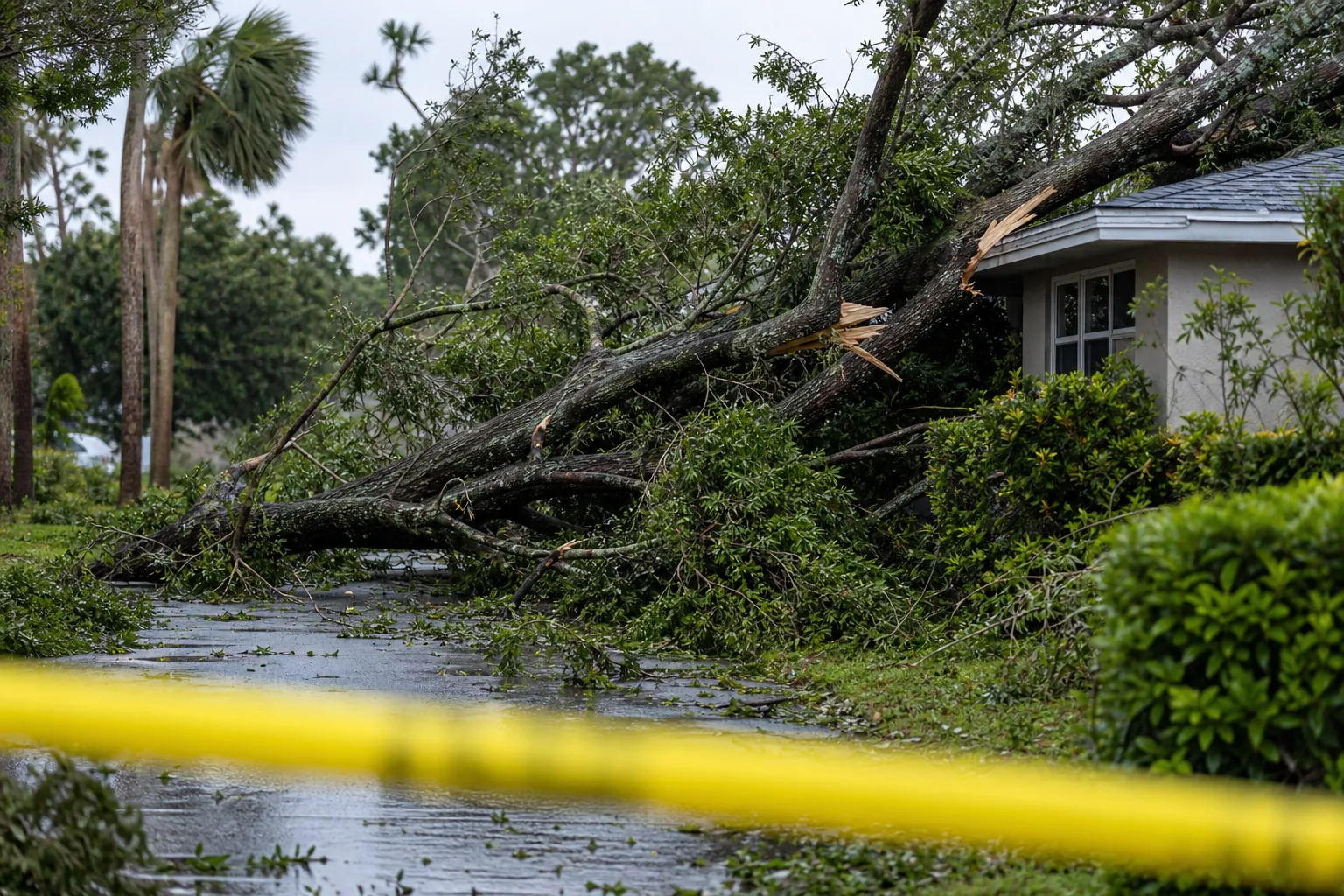
A useful photo record moves from context to detail. Begin with wide images showing the entire tree and its position relative to the home, road, fence, vehicles, neighboring property, and other nearby features. Take pictures from more than one safe angle when possible. These views can clarify what the tree threatened before removal changed the scene.
Next, photograph visible defects without stepping into the fall zone. Relevant details may include trunk splits, broken unions, hanging branches, soil lifting near the roots, a newly leaning trunk, storm impact, or contact with a building. Include images of any resulting property damage. A short video can document movement or unstable limbs, but record it only from a protected location.
- Photograph the full tree and surrounding area.
- Record the trunk, root area, canopy, and visible failure points.
- Capture affected structures or blocked access.
- Keep original files with their timestamps and avoid deleting unclear images.
- Note who took each photo if several people are involved.
Write Down the Timeline and Observations
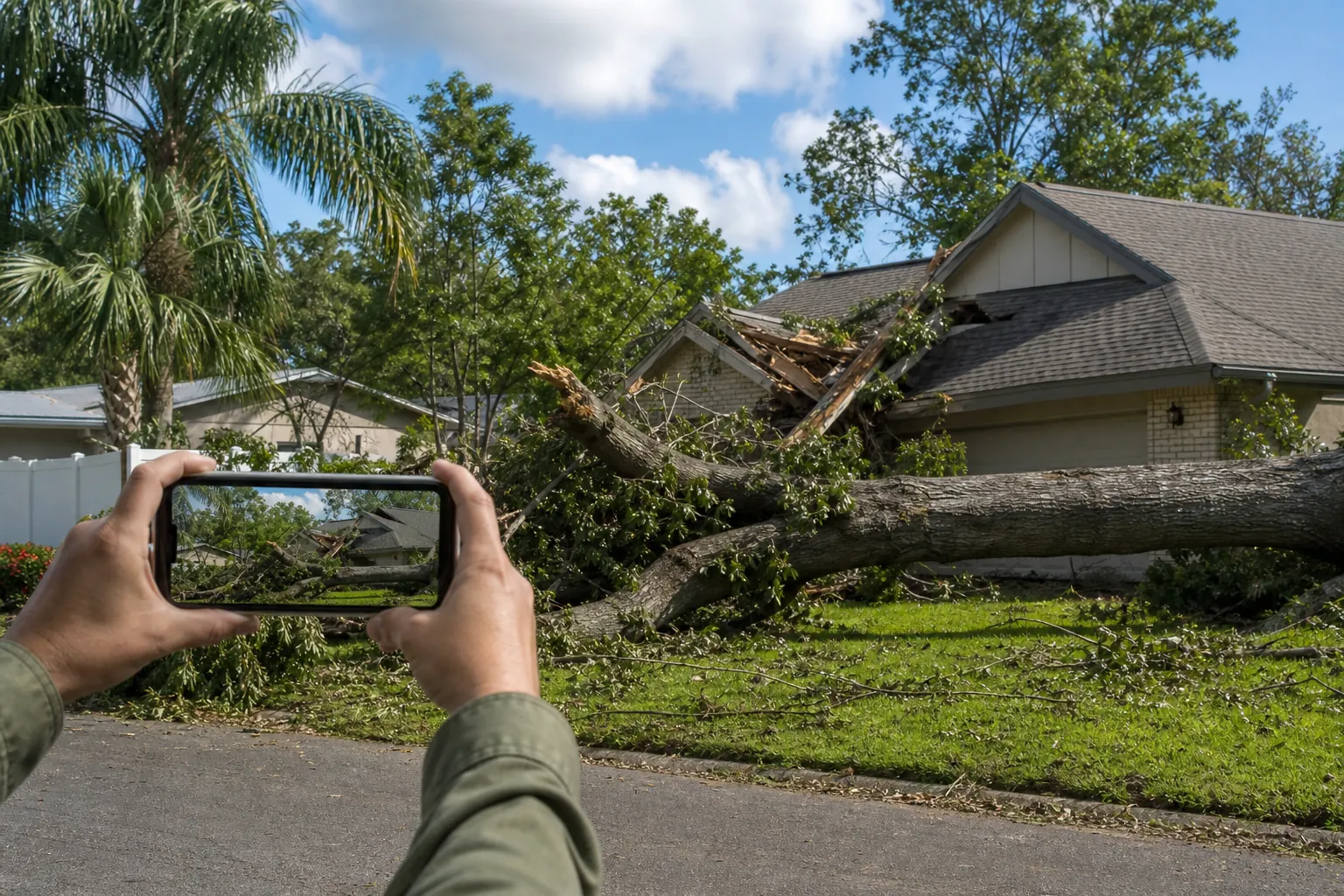
Photos show conditions, but a short written timeline provides context. Record when you first noticed the problem, what occurred beforehand, and whether the condition changed. For example, note the date and approximate time of a storm, impact, sudden lean, branch failure, or root movement. Separate direct observations from assumptions. Writing that you saw soil lifting is more precise than guessing why the roots failed.
List any immediate effects, such as blocked entry, damage to a roof, or a limb suspended over an occupied area. Record steps taken to restrict access and the times you contacted relevant parties. Those parties might include a property owner, manager, HOA or condo representative, insurer, utility, local authority, or tree service, depending on the situation.
Save texts, emails, call notes, inspection materials, and written recommendations in one folder. If Florida Foliage prepares an arborist report or conducts a tree inspection, retain that material with your photographs and timeline. Organized records make later conversations easier and reduce reliance on memory.
Confirm Local and Property Requirements
Emergency circumstances do not automatically answer every permitting or notification question. Requirements can depend on the property's jurisdiction, the tree's status, the extent of work, and the immediate hazard. Before removal, confirm current requirements directly with the City of Port Orange, Volusia County, or another authority that has jurisdiction over the specific property. Ask whether emergency work requires prior approval, prompt notice, photographs, an inspection, or follow-up documentation.
Also review rules that may apply through an HOA, condominium association, lease, management agreement, or shared-property arrangement. If the tree is near a boundary, document its location and avoid making assumptions about ownership. Commercial properties may have internal approval and reporting procedures as well.
For broader background on how protected-tree questions can affect planning, read this guide to protected tree removal permit requirements. It addresses a different city, so it should not be treated as Port Orange guidance. Always verify current rules with the relevant city or county before proceeding when conditions safely allow.
Preserve Records During and After Removal
Documentation should continue once the work begins. Keep the written scope, inspection findings, authorizations, and communications associated with the job. When it is safe to do so, take photos showing the condition immediately before work, important damage revealed during removal, and the area after completion. Do not enter the work zone or distract the crew to obtain an image.
Retain paperwork identifying what work occurred, such as emergency tree removal, crane tree removal, tree trimming, or stump grinding. If only part of a tree is addressed, note what remains and whether additional evaluation was recommended. Keep records related to debris, access, neighboring property, and visible structural damage with the same file.
A consistent filename system can help. Use the date, property reference, and image subject, then back up the folder. Keep unedited originals even if you create marked copies for discussion. If an insurer, association, property manager, or local authority requests information, ask what format and supporting material they need rather than assuming your records satisfy a particular process.
Discuss the Tree's Current Condition
If you are evaluating a storm-damaged, fallen, or unstable tree in Port Orange, call Florida Foliage at (386) 481-7913. Describe the hazard from a safe location and mention any photos, timeline notes, property requirements, or official instructions you have already gathered.
Call (386) 481-7913 to talk through next steps.