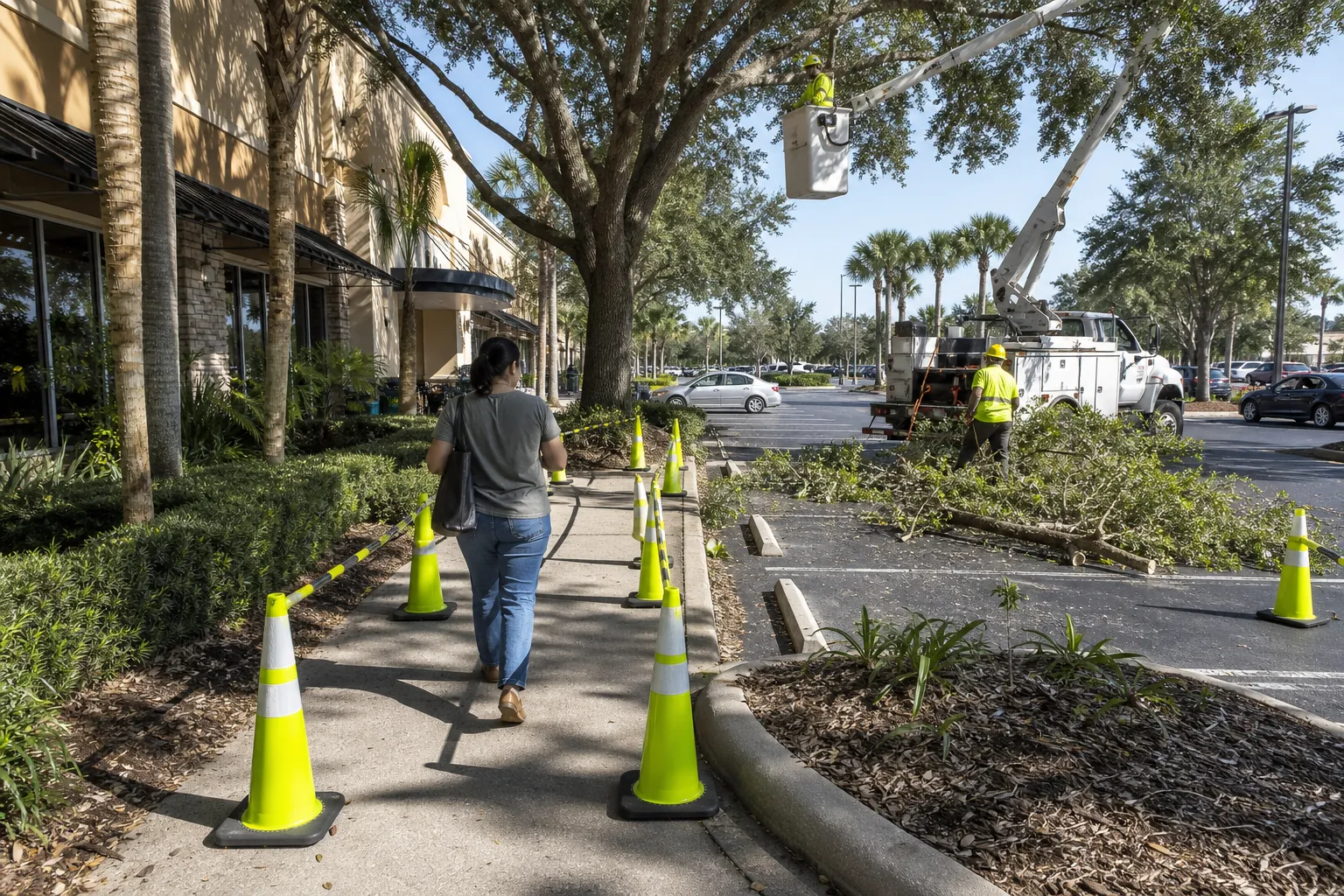
Shopping center tree trimming requires more than deciding which branches should be cut. The work may affect sidewalks, storefront approaches, parking spaces, loading areas, and the paths people use between businesses. Property managers in DeLand can support safer access by identifying these conflicts before work begins and adjusting pedestrian routes as conditions change. The practical goal is to separate people from active tree work while preserving clear, understandable access wherever possible.
Start With a Site Review of Pedestrian Activity
Planning should begin with a walk-through of the shopping center. Note where people move from parking spaces to storefronts, cross driving lanes, gather near entrances, or use ramps and curb cuts. Also identify loading areas, delivery routes, outdoor seating, cart returns, and narrow sidewalks. These features can affect how a work area is established.
The tree itself also needs careful review. Branches may extend over roofs, signs, parked vehicles, pedestrian paths, or neighboring areas. Equipment placement can create additional conflicts, particularly where access is already constrained. Florida Foliage provides commercial tree services, tree trimming, canopy thinning, crown reduction, arborist reports, and tree inspections. The appropriate service depends on the tree, its location, and the property’s objectives.
A useful site review connects tree conditions with how the property actually functions. Rather than treating the tree and walkway as separate issues, managers can plan around both the work zone and the people who will encounter it.
Define and Communicate the Work Zone Clearly
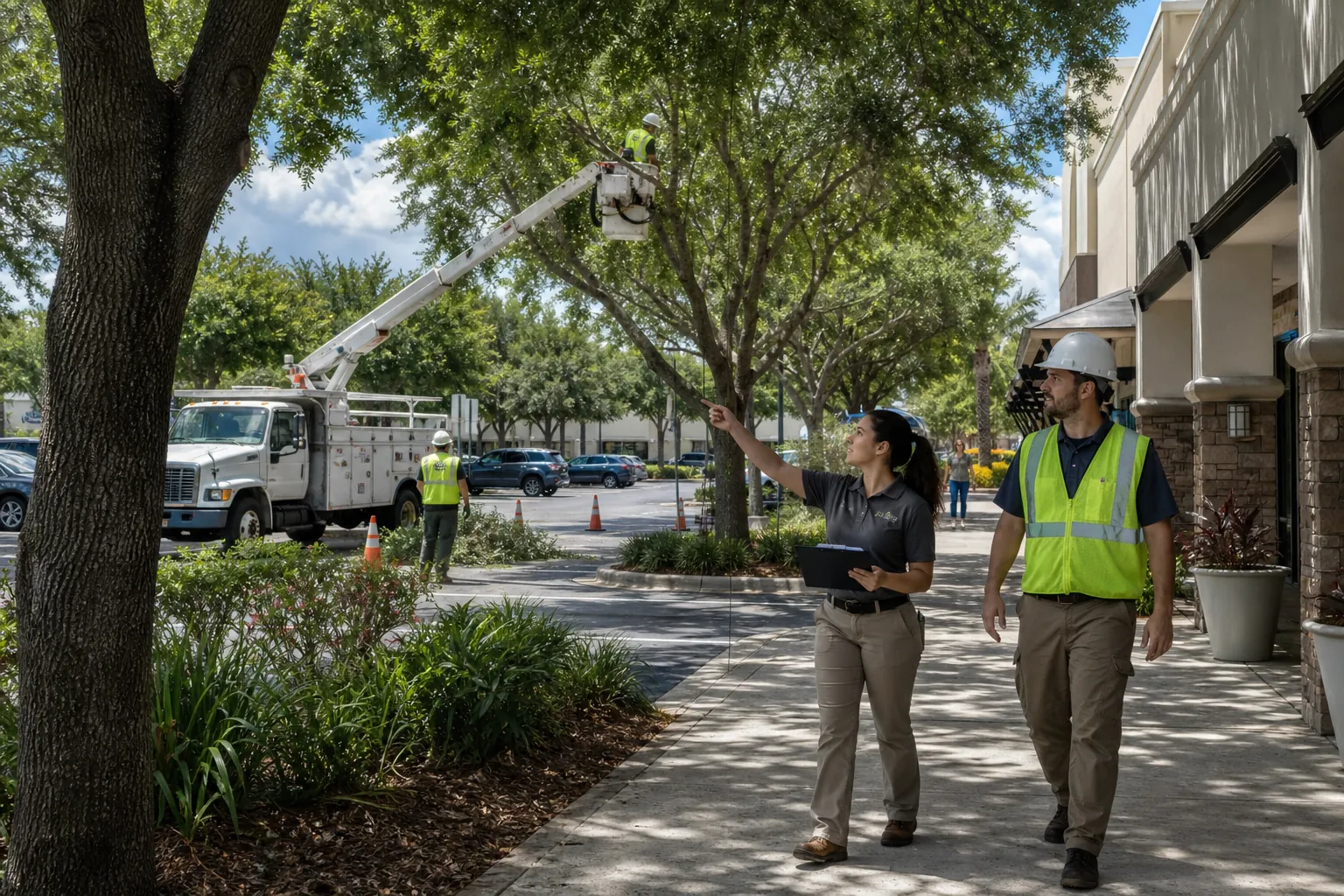
An active trimming area should be separated from customers, tenants, employees, delivery drivers, and other visitors. The needed boundary may change as workers move around the tree or address different parts of the canopy. A route that appears clear at one moment may become unsuitable when equipment is repositioned or branches are being lowered.
Communication helps prevent people from entering the area out of habit. Before work starts, property managers can notify tenants about the expected location of the work and any temporary access changes. On the site, directions should be visible before a person reaches the closure. People need enough space and time to choose an alternate route without stepping into traffic or doubling back through the work zone.
The plan should also account for normal distractions. Customers may be looking for a business, carrying purchases, assisting children, or using mobility devices. Clear routing is more useful than relying on visitors to interpret tree work as they approach it.
Plan a Practical Alternate Pedestrian Route
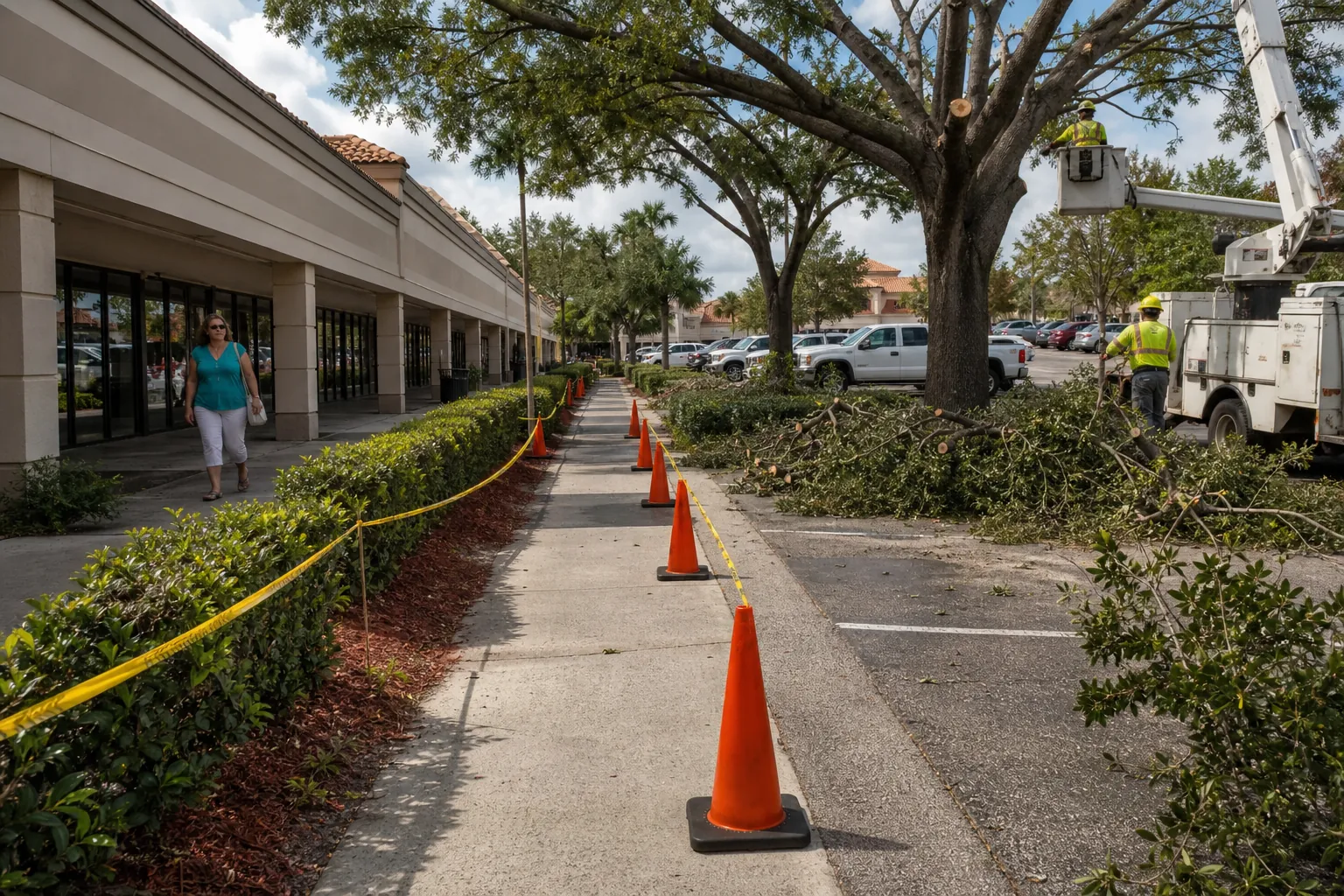
Closing a sidewalk is only part of access management. The alternate route should lead people to a usable entrance without sending them through moving traffic, equipment areas, landscaping, or another obstruction. Managers should walk the proposed route from the perspective of someone unfamiliar with the property.
Before selecting the route, review these points:
- Whether the path remains outside the active trimming and debris-handling area
- Whether curb ramps, accessible approaches, and storefront entrances remain usable
- Whether signs are visible from parking areas and common walking paths
- Whether parked vehicles, carts, deliveries, or equipment could block the route
- Whether the route still works after branches or equipment change position
- Whether tenants know how customers should reach their entrances
If no reasonable route can remain open beside the work, scheduling and sequencing become especially important. Completing work in smaller sections may allow access to shift as each area is cleared. The route should be checked throughout the job rather than assumed to remain suitable.
Coordinate Trimming With Parking and Storefront Operations
Shopping centers combine pedestrian movement with frequent vehicle activity. Tree trimming may require temporary control of parking spaces near the tree, room for equipment, and a clear area for handling branches. These needs should be coordinated with storefront access rather than addressed independently.
Property managers can identify delivery periods, tenant activities, and areas where vehicles commonly stop. They can also determine whether parked cars would limit visibility between drivers and pedestrians using a temporary route. If work affects more than one storefront, sequencing it by section may reduce confusion and keep unaffected entrances easier to reach.
The type of tree work matters as well. Routine tree trimming, canopy thinning, and crown reduction can involve different canopy areas and equipment needs. Crane tree removal or tree removal can create a different site footprint from trimming. Stump grinding may affect ground-level access after a tree has been removed. Discussing the full scope in advance helps the access plan reflect the actual work rather than a generic closure.
Monitor Conditions and Confirm Local Requirements
A written or discussed plan is a starting point, not a substitute for observing the site. Weather, deliveries, unexpected parking, tree conditions, and changing equipment positions can alter pedestrian access. Someone responsible for the property should be prepared to coordinate with the tree service and tenants when a route needs adjustment.
Managers should also confirm whether notices, permissions, permits, or other requirements apply. These matters can vary by city, county, property, and tree. Contact the appropriate city or county office for current requirements rather than relying on a general assumption. If the project could involve removal of a protected tree, review this overview of protected tree removal permit requirements in DeLand and verify the details with the relevant local authority.
After work is complete, inspect the pedestrian area before reopening it. Check that branches, loose debris, equipment, and temporary routing materials have been addressed and that normal paths and entrances are ready for use.
Discuss Your Shopping Center Tree Work
Florida Foliage provides commercial tree services, including tree trimming, canopy thinning, crown reduction, tree inspections, and arborist reports. To discuss site access considerations for a DeLand shopping center, call (386) 481-7913.
Call (386) 481-7913 to talk through next steps.