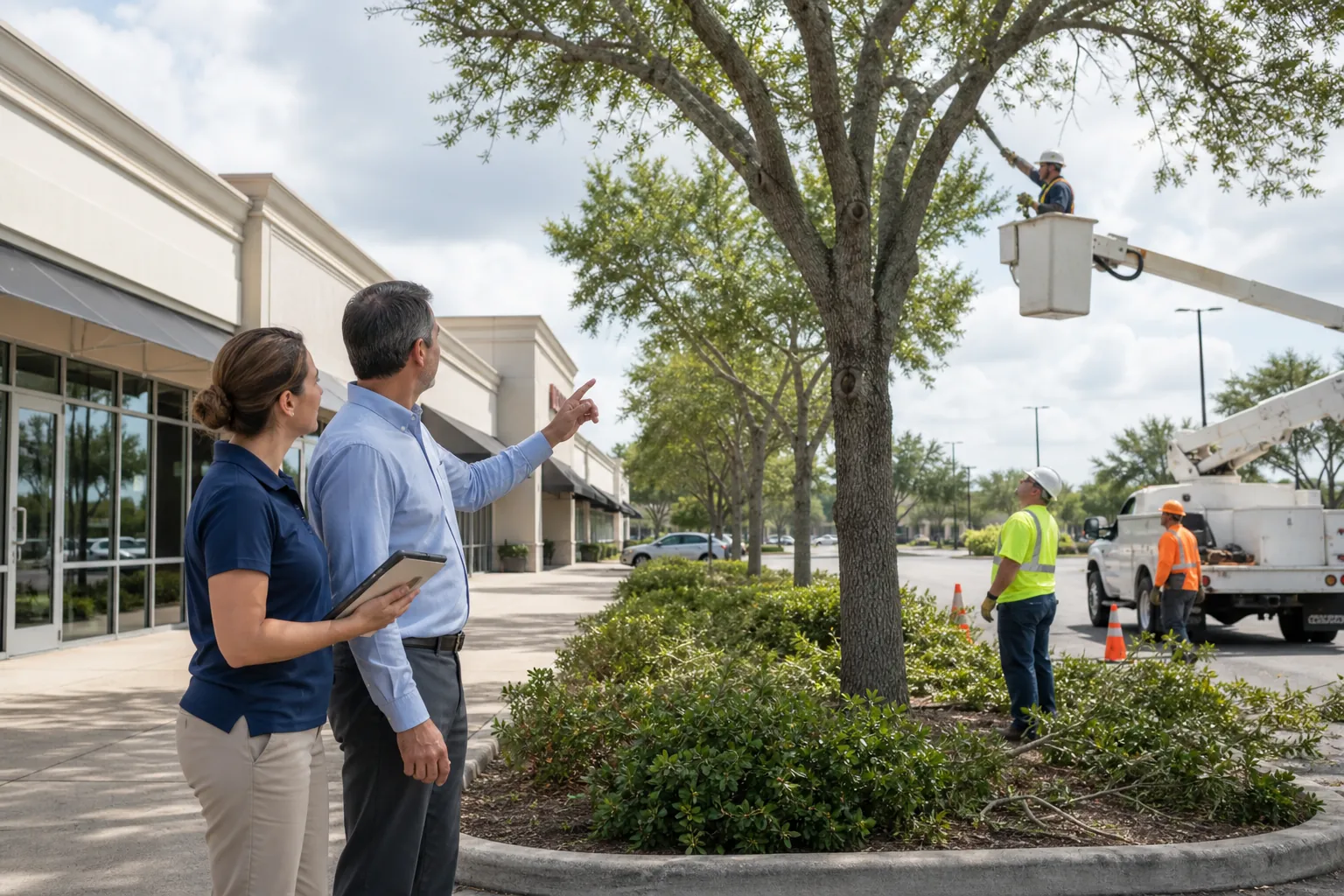
Tree trimming at an occupied shopping center requires more than selecting trees and choosing a work date. Tenants need timely information, crews need safe access, and customers need clear routes to storefronts and parking. A written coordination plan helps property managers organize these moving parts while keeping decisions focused on the site. Before work begins, confirm the scope, identify affected areas, and assign one contact who can communicate with tenants and the tree service.
Start With a Property-Wide Tree Assessment
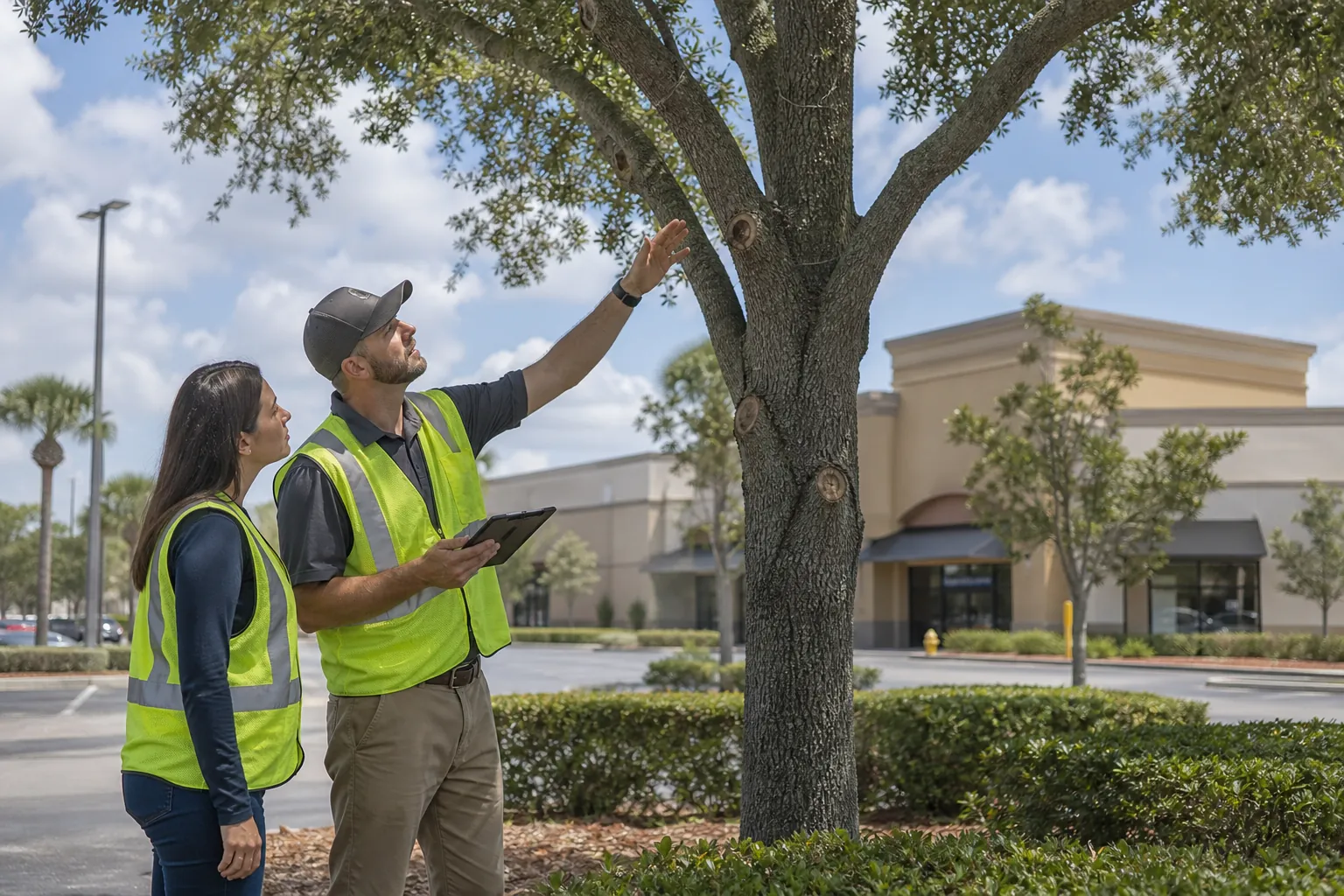
Begin by reviewing the entire shopping center rather than treating each tenant frontage as a separate project. Trees along parking rows, sidewalks, loading areas, monument signs, drive aisles, and property boundaries may affect several occupants at once. A tree inspection or arborist report can help document conditions and support decisions about tree trimming, canopy thinning, crown reduction, or tree removal.
Walk the property with a current site plan if one is available. Note branches near roofs, signs, lighting, pedestrian areas, delivery lanes, and neighboring parcels. Record surface conditions that could affect equipment placement, including narrow access points, medians, curbs, and landscaped islands. Also identify trees that may need a closer review before they are included in the trimming scope.
Once the assessment is complete, create a marked plan showing every work zone. That plan gives tenants a practical reference and allows the property manager to discuss specific entrances, parking spaces, and delivery routes instead of sending a broad notice with little detail.
Build a Schedule Around Tenant Operations
Ask each tenant about operational conflicts before finalizing the schedule. Important details may include deliveries, employee arrival periods, customer appointments, waste pickup, outdoor displays, and access needed for loading doors. The goal is not to eliminate every inconvenience. It is to identify conflicts early enough to make informed scheduling decisions.
Group work by zone so closures can be opened again as crews move through the property. Avoid promising exact completion times before the site and scope have been evaluated. Weather, tree condition, equipment access, and changes discovered during work can affect progress. Instead, give tenants a planned work window, the expected areas of impact, and a method for receiving updates.
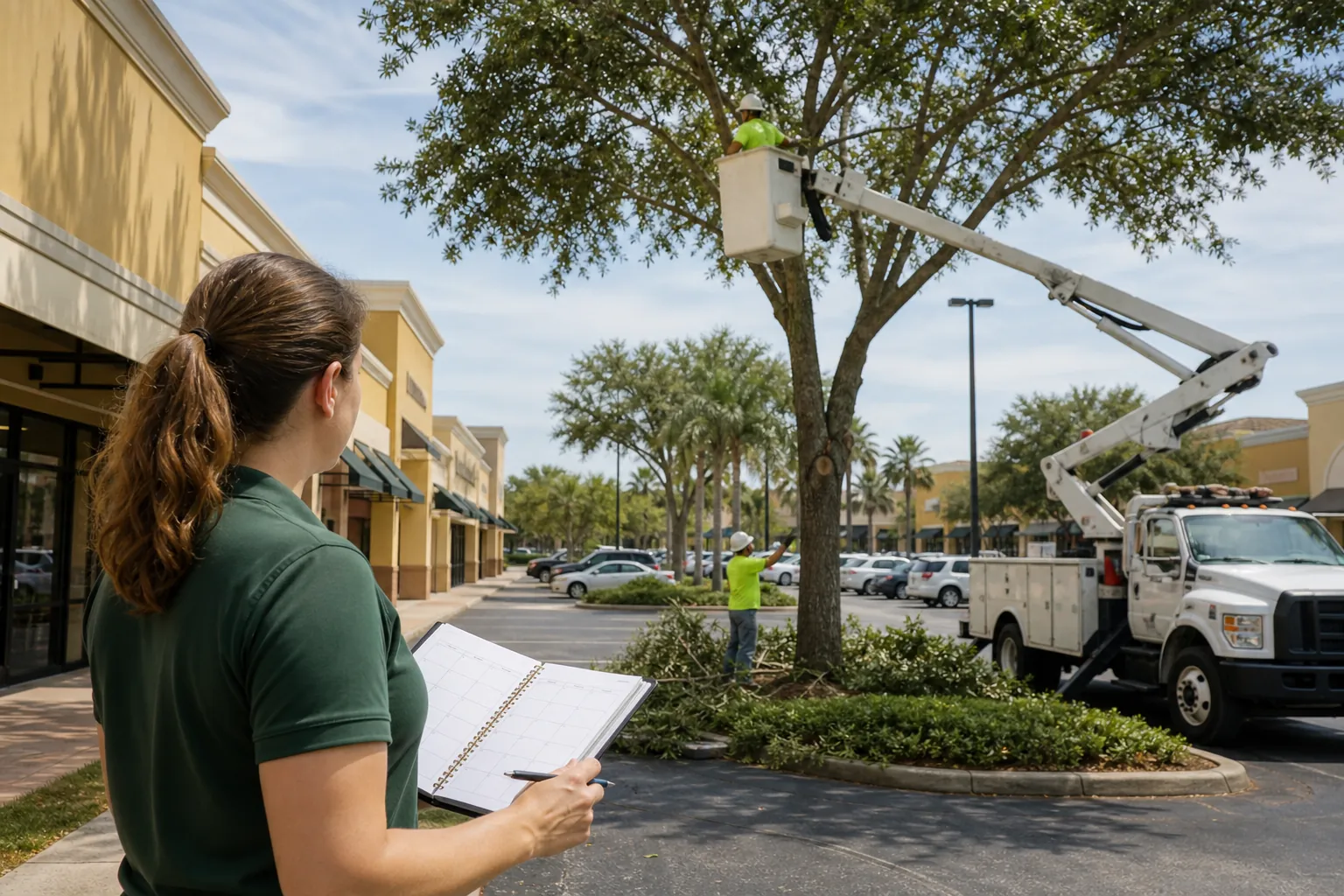
For multi-day commercial tree services, send a daily summary identifying the next work area. If a zone changes, notify the affected tenants directly rather than relying only on general signage. A single property representative should approve schedule changes and relay them consistently to occupants, vendors, and onsite personnel.
Give Tenants Clear, Actionable Notices
A useful notice tells tenants what they need to do, not simply that tree work is planned. Distribute an initial notice with enough time for tenants to review delivery schedules and alert employees. Follow it with a shorter reminder closer to the work date. Include a marked map when parking spaces, sidewalks, loading areas, or entrances may be affected.
Keep instructions specific and easy to scan. A tenant coordination notice can include:
- The planned date or work window for each property zone
- Parking spaces, sidewalks, entrances, and loading areas that may be restricted
- When vehicles, displays, furniture, or other movable items must be cleared
- The designated route for deliveries, employees, and customers
- The property representative responsible for tenant questions
- How tenants will receive weather or schedule updates
Ask tenants to confirm receipt and identify any critical access concern. Written confirmation creates a reliable record and gives the manager time to resolve competing needs. Notices should also remind occupants not to enter marked work zones or move cones and barriers.
Coordinate Access, Equipment, and Site Protection
Tree trimming may require space for workers, equipment, debris handling, and temporary controls around the active area. Some trees may require different access planning based on their size, position, or surroundings. When evaluating a proposal, ask how the work zone will be established and which portions of the property must remain clear.
Confirm who will handle temporary parking restrictions, traffic direction, tenant notifications, and access to locked areas. Review overhead and ground-level constraints, including signs, lighting, awnings, irrigation features, curbs, and landscape beds. If work is near a loading lane or service corridor, determine where vendors should wait or reroute while that zone is active.
Debris movement also deserves attention. Discuss where material can be processed or loaded without unnecessarily blocking storefronts and traffic. If stump grinding, tree removal, crane tree removal, or related work is part of the project, clarify the additional space and sequencing required. Reopen each area only after the property representative and tree service confirm it is ready for normal use.
Review Approvals and Close Out the Work
Before authorizing work, confirm whether the shopping center has internal approval requirements, owner standards, lease-related notice duties, or property management procedures. Local requirements may also apply to certain tree work. Permit and protected-tree rules vary, so confirm current requirements directly with the appropriate city or county before work begins. For a related overview, read protected tree removal permit requirements in DeLand.
After trimming is complete, walk each work zone and compare it with the agreed scope. Check that parking areas, sidewalks, entrances, loading routes, and landscaped areas are ready to reopen. Document any follow-up item and communicate its status to the affected tenant. Keep the final scope, notices, maps, approvals, and inspection information with the property records.
A brief tenant follow-up can also improve future planning. Ask whether delivery access, parking communication, and route signage were clear. Record practical lessons, such as which tenants need direct calls or which loading areas require longer notice, for the next commercial tree service project.
Discuss Your Shopping Center Tree Work
Florida Foliage provides commercial tree services, including tree trimming, canopy thinning, crown reduction, tree removal, stump grinding, tree inspections, and arborist reports. To discuss the scope and coordination needs for a DeLand shopping center, call (386) 481-7913.
Call (386) 481-7913 to talk through next steps.