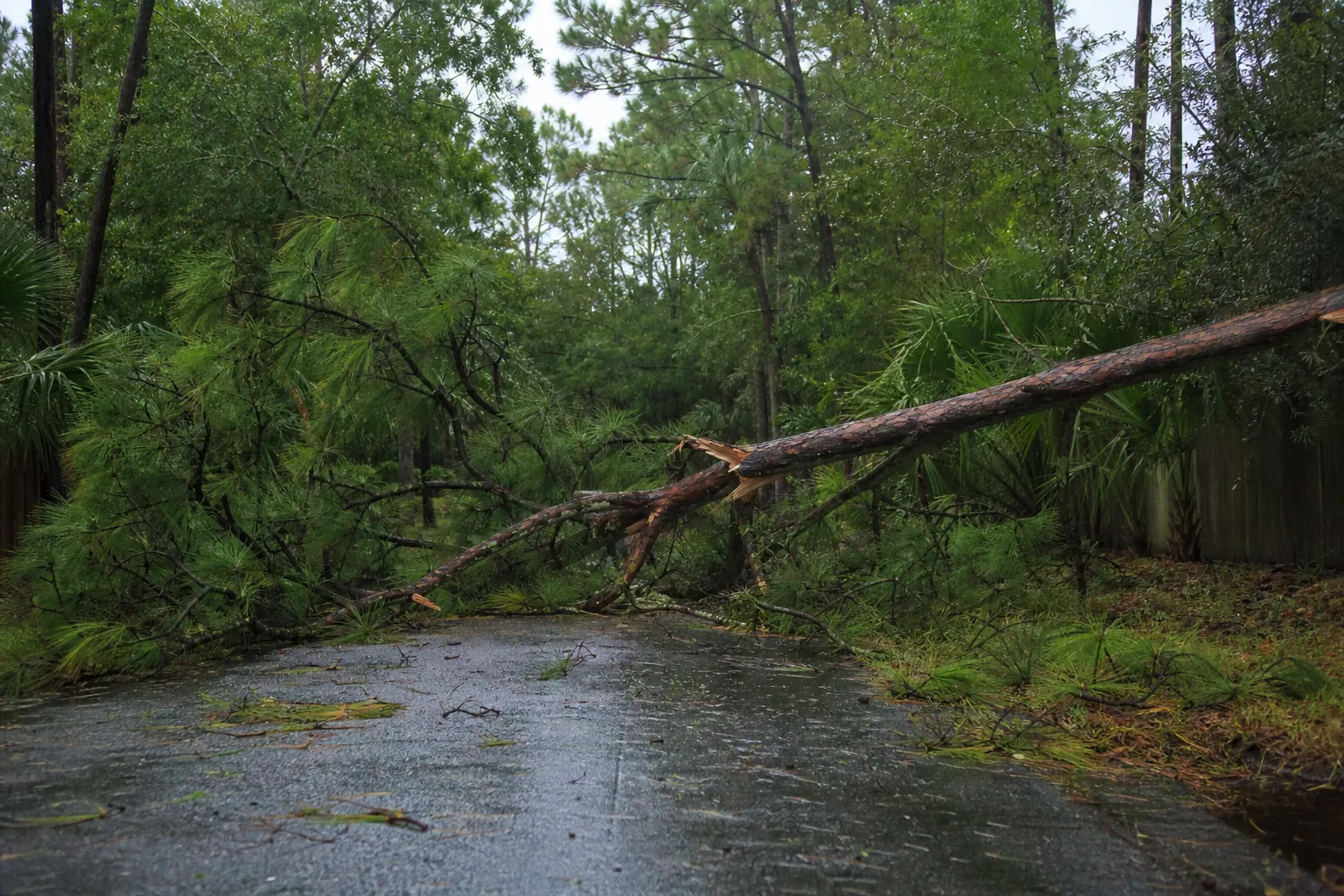
A storm-fallen tree across a private road can stop residents, visitors, and service vehicles from getting through. In Port Orange, the first priority is not cutting the tree. It is protecting people, identifying immediate hazards, and contacting the appropriate parties. Once urgent safety concerns are addressed, Florida Foliage can inspect the tree and discuss options for emergency and hurricane tree removal. Use the steps below to make a measured decision without creating additional risk.
Secure the Area Before Approaching the Tree
Keep vehicles and pedestrians away from the fallen tree until the surrounding area has been checked. Storm damage can leave a trunk, root plate, or hanging limb under tension. A tree that appears settled may move as weight shifts or wind continues. Do not climb over the trunk, stand beneath suspended branches, or let anyone begin cutting without understanding how the tree is loaded.
Look from a safe distance for downed utility lines, damaged poles, broken transformers, leaning trees, and limbs caught in nearby canopies. Treat every wire as energized. If electrical equipment or a line may be involved, contact the utility provider or emergency services rather than a tree company first. Also call emergency services when the blockage is preventing a response to an immediate medical, fire, or public safety situation.
Use cones, barricades, or clearly visible warnings if they can be placed without approaching the hazard. Ask residents to use another route when one is available.
Determine Who Controls the Private Road
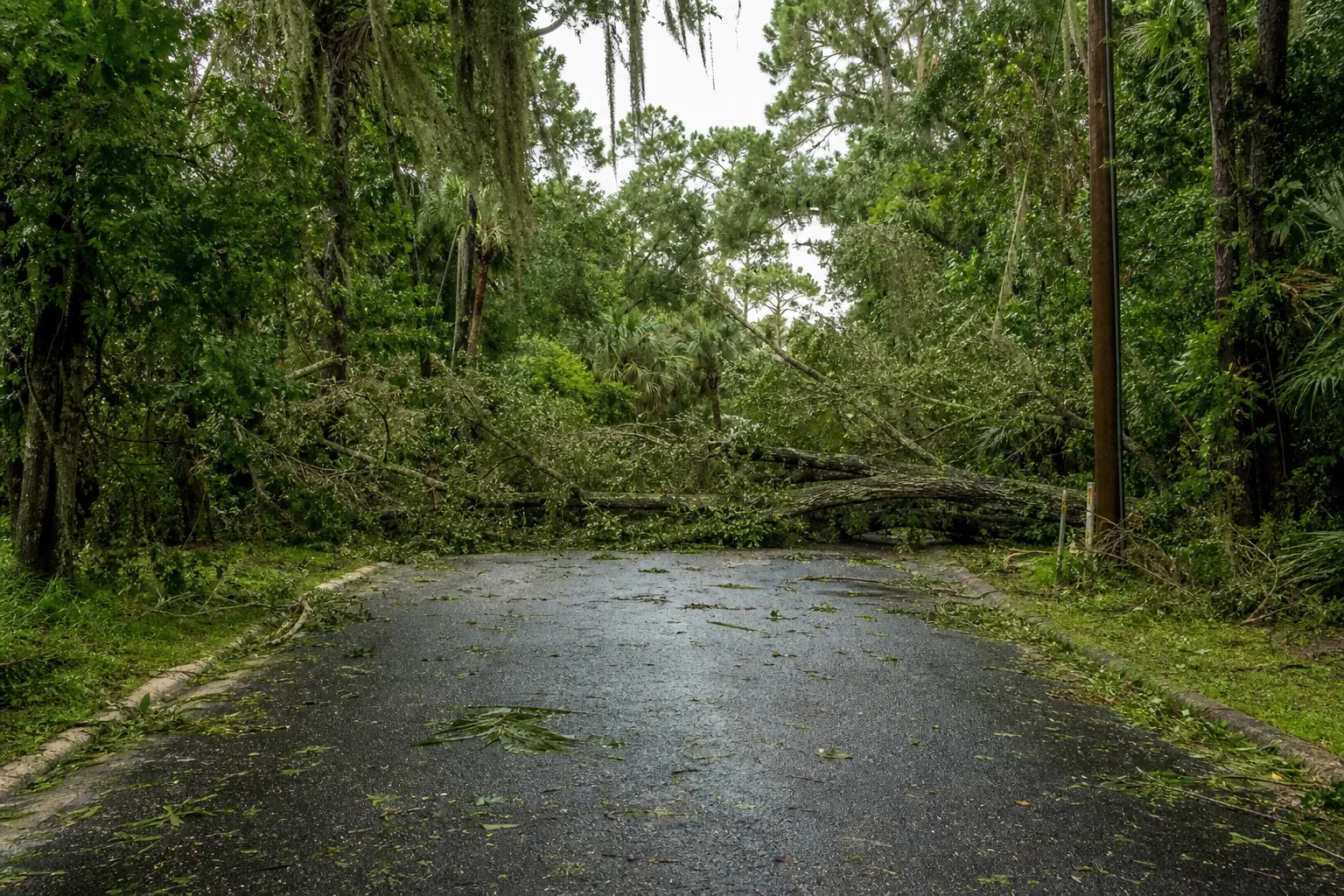
Responsibility for a blocked private road may depend on ownership, easements, community documents, maintenance agreements, and the location where the tree originated. Before authorizing work, identify who has authority to approve access and removal. That person may be an individual property owner, a homeowners association, a condominium association, a property manager, or a commercial property representative.
Notify the road owner or manager promptly. If the tree fell from an adjoining parcel, document that location without entering private property or making assumptions about liability. Insurance questions should be directed to the relevant insurer, association, or qualified adviser. A tree service can assess the physical work but should not be expected to decide legal responsibility.
Useful documentation includes wide photographs of the road, the entire tree, its base, nearby structures, and visible damage. Note when the blockage was discovered and whether access remains available from another direction. Clear records help decision-makers explain the situation and coordinate the next step.
Share Useful Details When Requesting Help
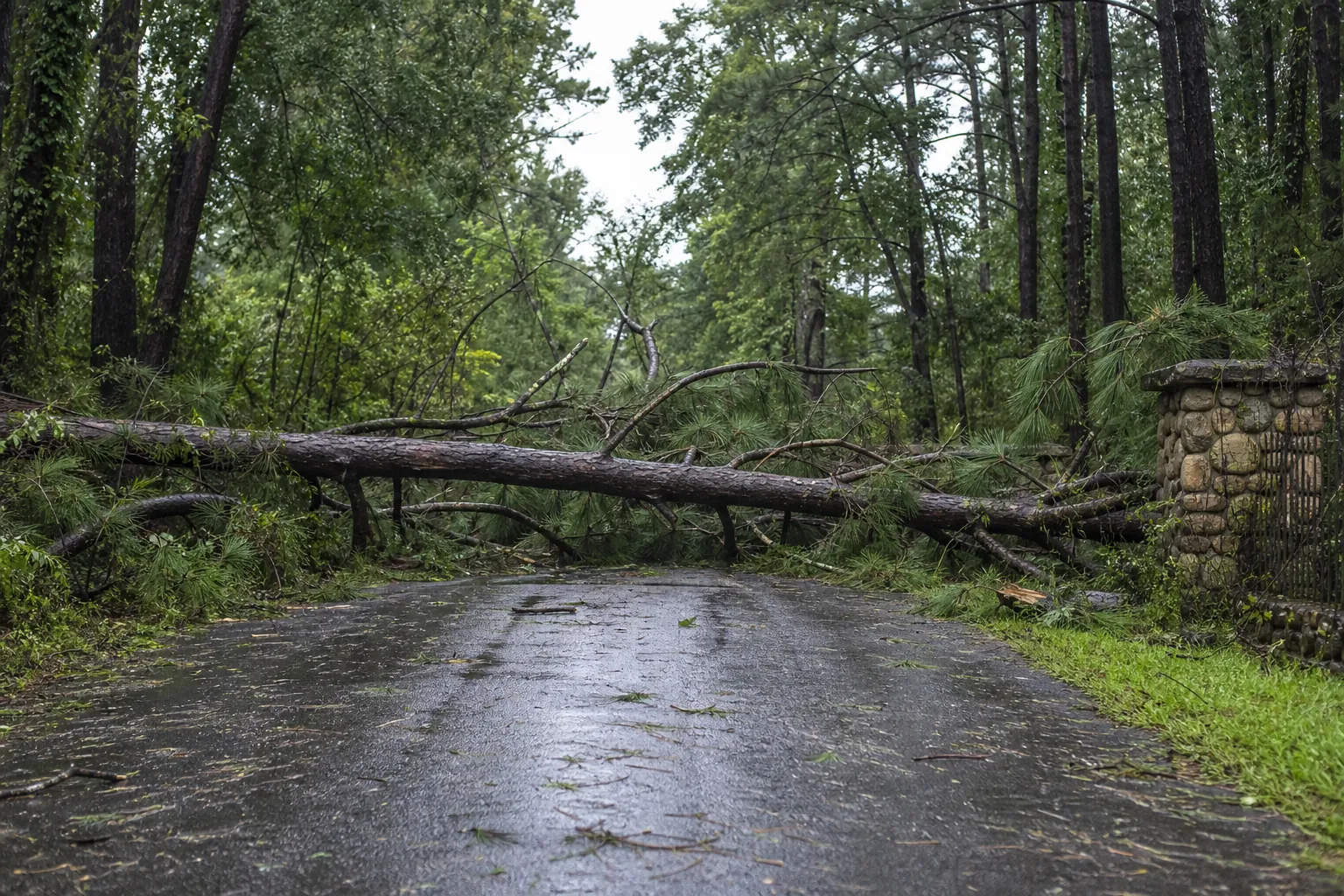
When calling about a storm-fallen tree across a road in Port Orange, provide enough information for the tree service to understand the setting. Avoid estimating technical details if you are unsure. Photos and a straightforward description are often more useful than guesses about tree size, condition, or weight.
- Give the exact property address and explain that the road is private.
- State whether the road is fully blocked or whether limited access remains.
- Describe visible wires, damaged poles, structures, fences, vehicles, or gates.
- Explain whether the trunk or limbs are suspended, split, or resting on another tree.
- Identify the owner, manager, HOA, condo association, or other person authorized to approve work.
- Share safe access points for equipment and mention narrow entrances or soft ground.
- Send photographs taken from a safe location when requested.
Do not move wires, pull the tree with a vehicle, or make exploratory cuts. These actions can change the tree's balance and complicate removal. Calm, accurate information supports a safer assessment and helps the authorized party make an informed decision.
Understand How Removal May Be Planned
The removal approach depends on the tree's position, surrounding hazards, available equipment access, and the condition of the trunk and limbs. Some fallen trees can be sectioned and moved from the roadway. Others may require controlled rigging or crane tree removal, particularly when heavy sections are suspended or access is restricted. An inspection is needed before selecting an approach.
Ask what area must remain clear, how access will be managed, and whether residents need notice before work begins. For an HOA, condo, or commercial property, designate one contact to communicate approvals and updates. This reduces conflicting instructions during an already disruptive situation.
Road clearance and complete site work are not always the same decision. After the immediate obstruction is addressed, the responsible party may also need to consider remaining damaged limbs, an exposed stump, or nearby trees affected by the storm. Florida Foliage provides tree removal, tree trimming, stump grinding, tree inspections, arborist reports, and commercial, HOA, and condo tree services where those confirmed services fit the site.
Check Local Requirements and Plan Follow-Up
Storm damage does not automatically answer every question about permission or documentation. Requirements can vary based on property type, tree status, work location, and the agency with jurisdiction. Confirm current requirements directly with the City of Port Orange, Volusia County, or another applicable authority before authorizing non-immediate work. If a tree may be protected, additional confirmation may be appropriate.
For broader background on how protected-tree questions can affect planning, read this guide to protected tree removal permit requirements. It addresses DeLand, so it should not be treated as a statement of Port Orange rules. Always verify the requirements that apply to the specific property and situation.
After access is restored, arrange a review of nearby storm-damaged trees when there are cracked limbs, shifted root areas, or newly leaning trunks. Canopy thinning, crown reduction, tree trimming, or removal should be considered only after the tree and site are assessed. Document completed work and keep access routes clear for any follow-up.
Call Florida Foliage for a Calm Next Step
If a storm-fallen tree is blocking a private road in Port Orange, first address utility and emergency hazards, then confirm who can authorize the work. Call Florida Foliage at (386) 481-7913 to discuss emergency or hurricane tree removal and arrange an appropriate assessment.
Call (386) 481-7913 to talk through next steps.