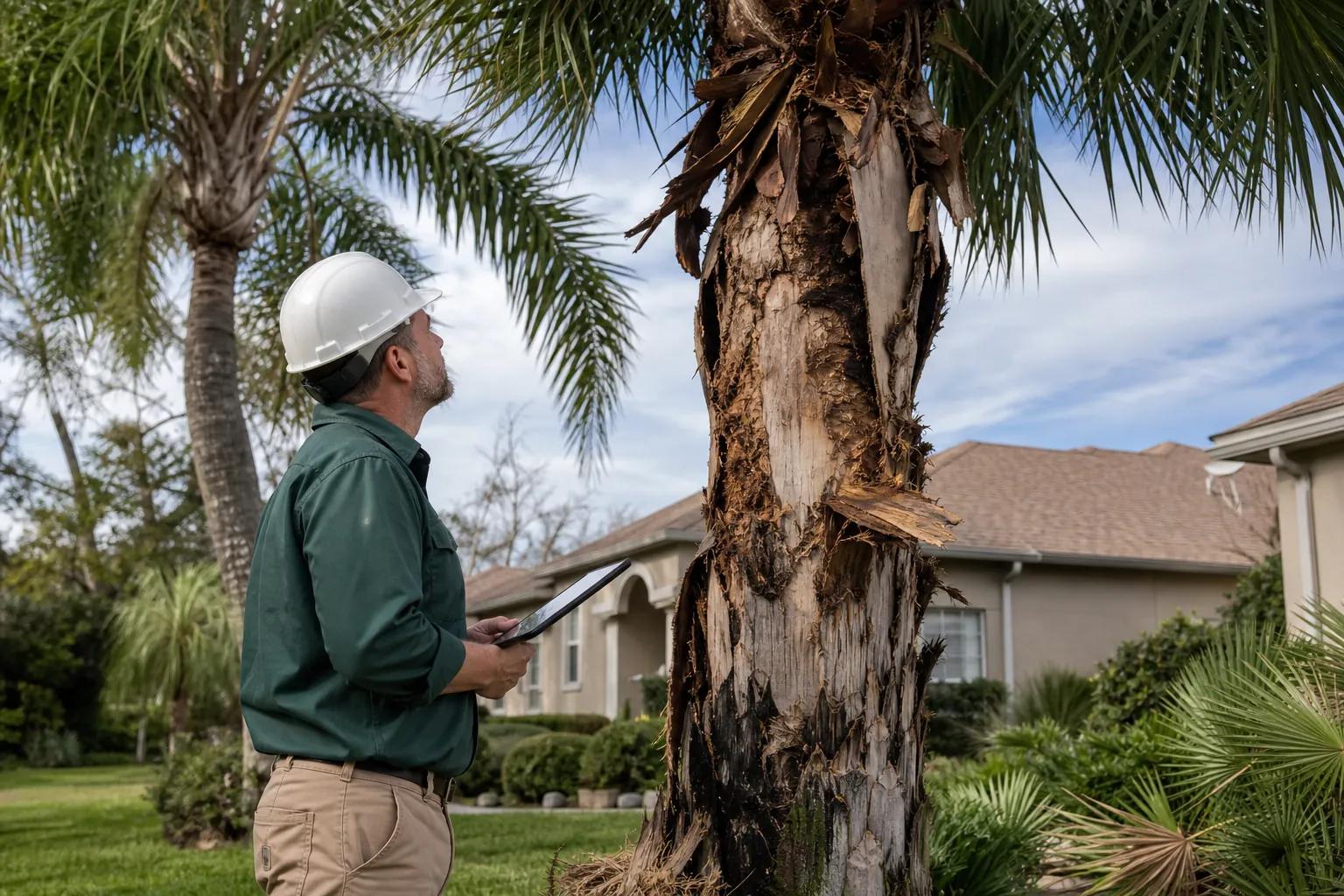
Before listing a Palm Coast property, sellers often focus on paint, landscaping, and minor repairs. Trees deserve the same practical review. Overgrown branches, visible damage, leftover stumps, and unclear removal requirements can raise questions for buyers or complicate preparations. A tree inspection can help identify concerns, organize priorities, and determine whether trimming, removal, stump grinding, or documentation should be considered. The goal is not to make assumptions about a tree from appearance alone. It is to gather useful information and address visible issues before photographs, showings, and buyer inspections.
Start With a Focused Review of the Property
Walk the property from several viewpoints, including the driveway, street, backyard, and areas near structures. Look at the full tree, not only the trunk. Note branches over roofs, driveways, fences, walkways, and neighboring property. Check whether dense growth blocks clear access or makes important parts of the home difficult to see.
Also look for broken or hanging limbs, cavities, cracks, exposed roots, leaning trunks, and sections with noticeably sparse foliage. These observations do not establish whether a tree is unsafe, but they provide specific concerns to discuss during a tree inspection. Avoid trying to diagnose the cause yourself or relying only on seasonal appearance.
Make a simple property map or take labeled photos so each concern can be located quickly. If the lot has multiple mature trees, identify which ones affect structures, access, or presentation most directly. This creates an organized starting point and helps sellers focus on decisions that may matter before listing.
Prioritize Clearance Around Structures and Access
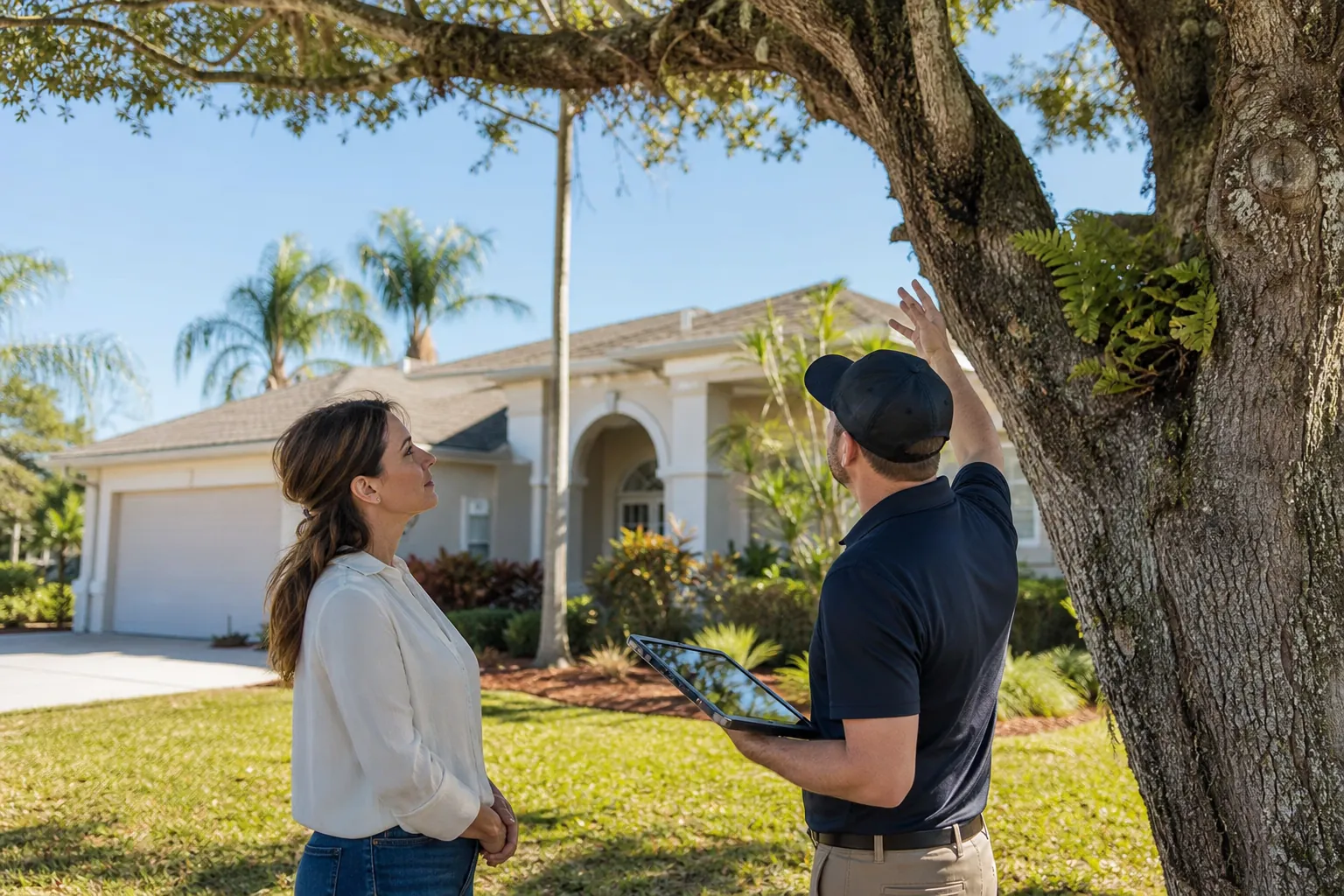
Branches near a roof, siding, windows, utility areas, driveways, and pedestrian routes deserve careful attention. Sellers should consider whether limbs touch the home, hang low over access points, or interfere with a clear view of the property. These conditions may prompt questions during a showing even when the tree itself is otherwise healthy.
Tree trimming may address specific clearance needs. Canopy thinning can reduce selected interior growth, while crown reduction may be considered when a tree's overall dimensions require thoughtful management. These are different approaches, so the appropriate choice should reflect the tree and the objective rather than a general desire to cut it back.
Avoid severe or indiscriminate cutting. Removing too much growth or making poor cuts can create additional concerns instead of improving the property. Write down the exact result you need, such as clearing a roof section, improving driveway access, or removing a broken limb. A defined objective makes it easier to discuss a suitable scope of work.
Examine Damage, Lean, Roots, and Dead Wood
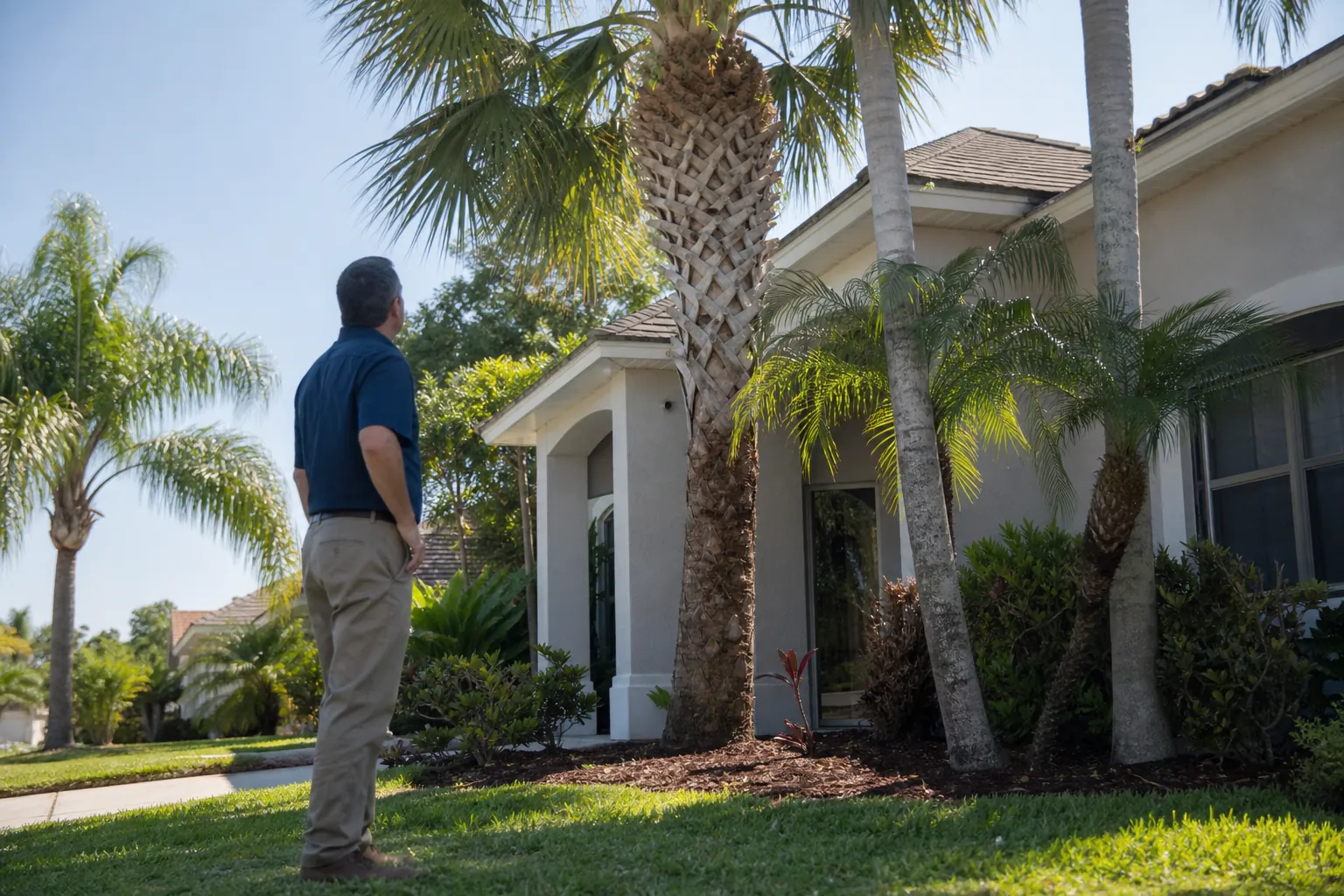
Visible damage should be documented before listing. Pay attention to recently broken limbs, dead branches, trunk wounds, cracks where large limbs join, and soil movement around the base. A tree that appears to lean should be viewed from multiple angles because slopes and nearby structures can distort perspective. Older photos may help show whether the lean is longstanding or appears to have changed.
Roots also require context. Exposed roots are not automatically a reason for removal, but roots lifting pavement, affecting access, or showing recent damage should be noted. Do not cut major roots or fill over them without informed guidance.
After severe weather, inspect from a safe distance and keep people away from hanging branches or unstable-looking trees. Emergency and hurricane tree removal may be relevant when storm damage creates an urgent concern. Crane tree removal may be considered for removals where access, tree size, or nearby structures affect how the work can be approached. A tree inspection can help sellers understand what deserves prompt attention.
Resolve Stumps, Debris, and Overgrown Areas
Unfinished tree work can make a property feel less prepared. Old stumps may interrupt mowing, limit use of an area, or stand out in listing photographs. Stump grinding can address remaining stumps after removal, but sellers should first identify nearby irrigation, utilities, edging, and other features that may affect access.
Overgrown lots may have separate concerns, including dense brush, hidden debris, or limited access to trees that need evaluation. Land and lot clearing or brush hogging may be relevant depending on the property and the seller's objective. Keep the scope tied to practical listing needs rather than clearing vegetation without a plan.
Before scheduling work, prepare a concise checklist:
- Mark trees or stumps that need evaluation.
- Photograph damage and areas with limited access.
- Identify roofs, fences, driveways, and neighboring property nearby.
- Locate known irrigation, utility, or landscape features.
- Separate urgent concerns from appearance-related improvements.
- Ask what cleanup and stump handling are included in the proposed scope.
Confirm Documentation and Local Requirements
Sellers should not assume that every tree can be removed or substantially altered without review. Requirements can vary by city, county, property, and tree. Confirm current requirements directly with the appropriate city or county before authorizing work. If the property is governed by an HOA or condo association, check its approval process as well.
An arborist report or tree inspection may provide useful documentation when a seller, buyer, association, or local reviewer needs clearer information about a tree. Keep inspection notes, reports, approvals, invoices, and before-and-after photos together. Organized records can help explain what was evaluated and what work was completed without overstating the outcome.
For a broader explanation of why local review matters, read this guide to protected tree removal permit requirements. It discusses DeLand, so Palm Coast sellers should still verify the rules that apply to their own property. Do not rely on another city's process or an outdated understanding of local requirements.
Discuss Tree Concerns Before You List
If you need help organizing tree concerns before listing a Palm Coast property, contact Florida Foliage for tree inspections, arborist reports, tree trimming, tree removal, stump grinding, or other confirmed tree services. Call (386) 481-7913 for a calm discussion of the property and the work you are considering.
Call (386) 481-7913 to talk through next steps.