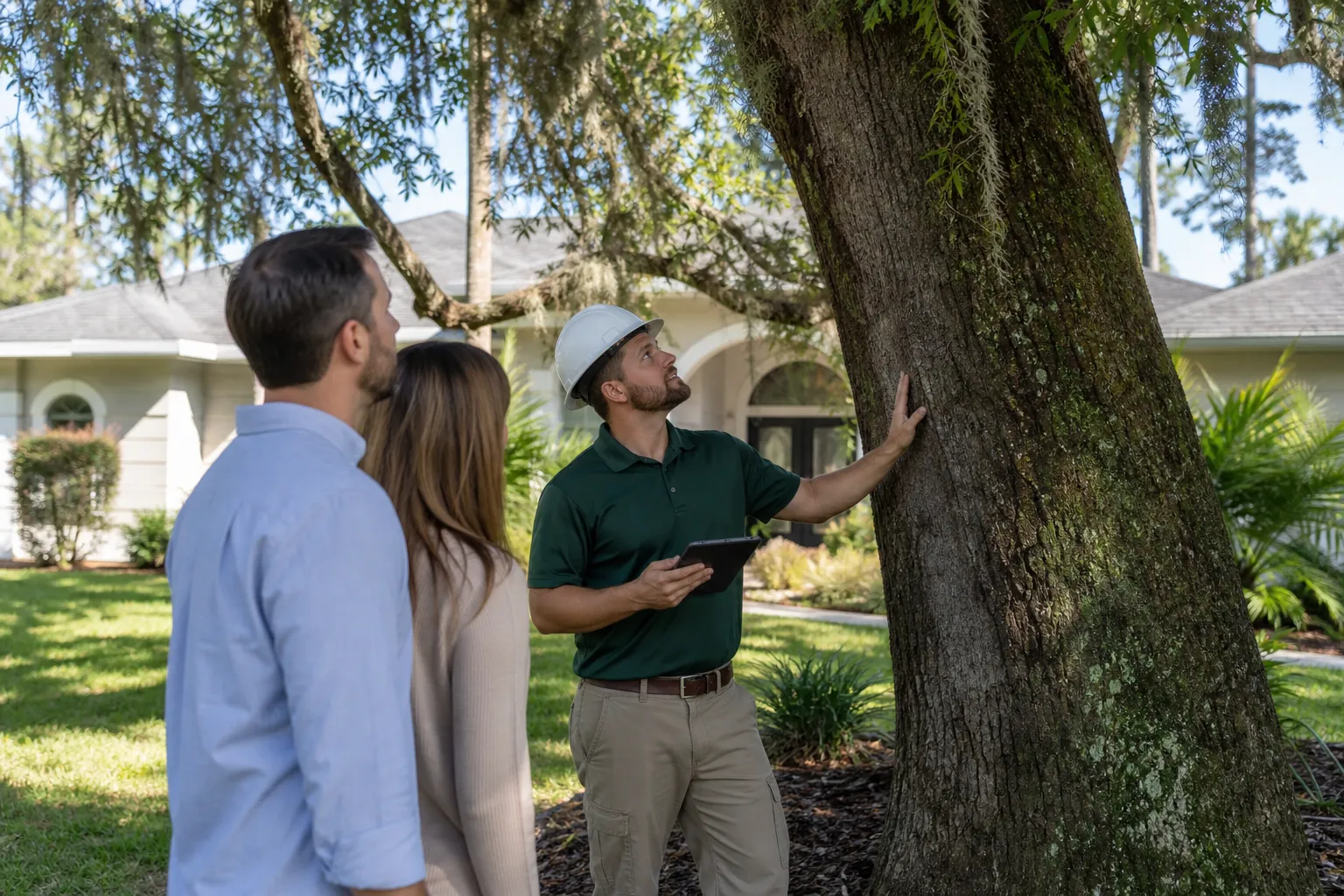
A home inspection covers many parts of a Palm Coast property, but it may not provide a focused assessment of the trees. If large trees, visible defects, dense canopies, old stumps, or overgrown areas could affect your decision, consider discussing a tree inspection contingency with your real estate and legal professionals. A tree inspection can give you practical information before the contingency period ends, helping you separate immediate concerns from routine maintenance and longer-term planning.
Understand What a Tree Inspection Adds
A general property inspection and a tree inspection serve different purposes. A tree inspection focuses on the trees and site conditions that could influence your plans for the property. The inspection may help identify visible concerns, clarify which trees deserve closer attention, and provide a clearer basis for discussing maintenance or removal.
This step can be especially useful when trees are close to the house, driveway, utility areas, fences, neighboring property, or planned improvements. It can also help when a lot has thick vegetation that makes it difficult to understand the condition and placement of individual trees.
Florida Foliage provides tree inspections and arborist reports, along with tree removal, tree trimming, stump grinding, canopy thinning, crown reduction, and other confirmed tree services. The goal during a purchase is not to assume every tree needs work. It is to gather relevant information while you still have time to review it and decide what matters to you.
Set Up a Useful Inspection Contingency
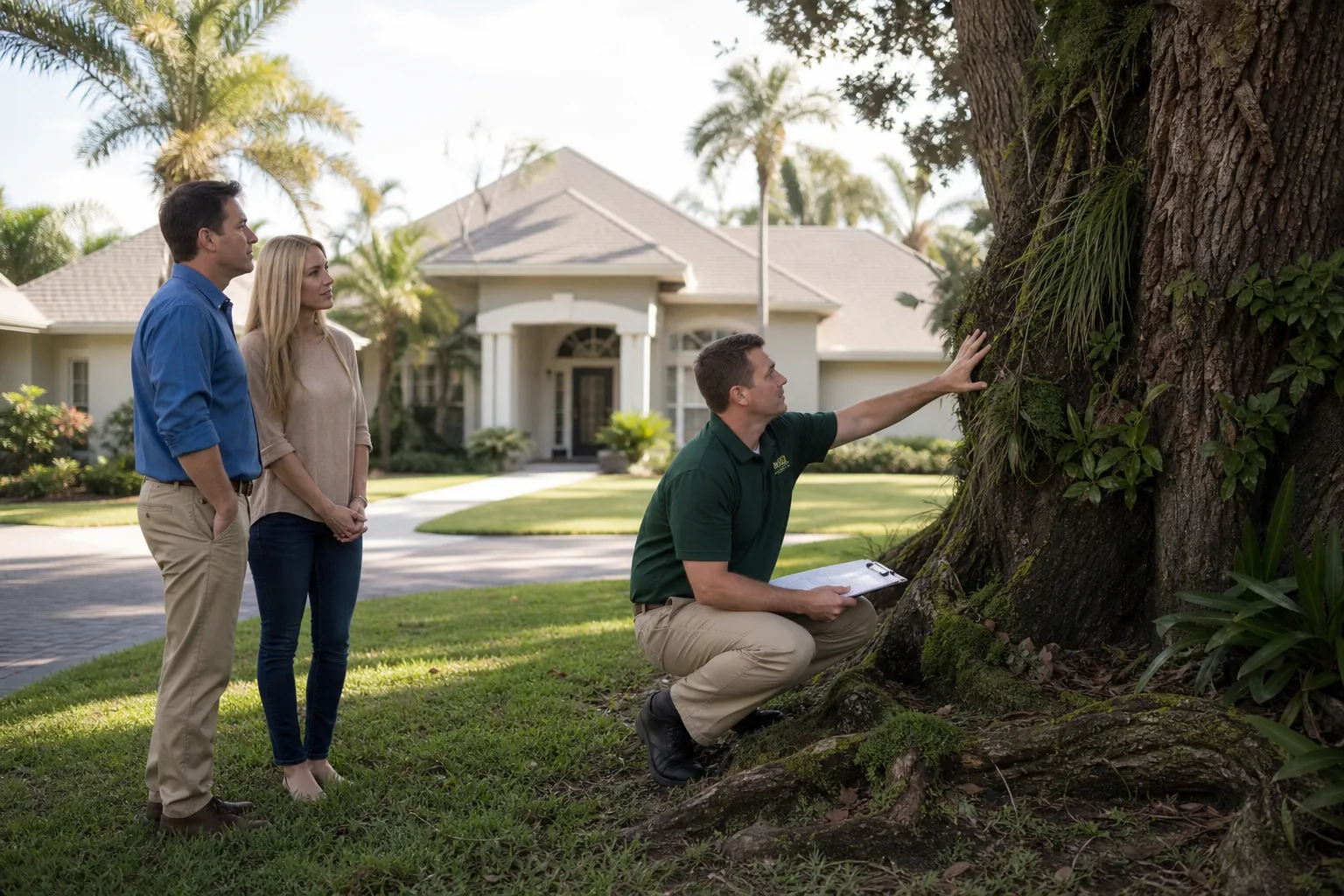
A contingency should give you enough time to schedule the inspection, receive the findings, ask questions, and consider your options. Your real estate agent or attorney can help you determine how to address that timing and wording in the purchase agreement. A tree service should not interpret your contract or advise you about legal rights.
Before arranging the inspection, confirm that the seller permits access to the entire property. Ask whether locked gates, pets, stored items, standing water, or heavy vegetation could restrict access. Share the contingency deadline and any areas that are especially important to your decision.
It is also helpful to explain your plans. A buyer considering an addition, pool, fence, driveway change, or lot clearing may have different questions from a buyer who intends to leave the landscape largely unchanged. Clear priorities allow the inspection to focus on the trees and conditions most relevant to your purchase, rather than producing a broad list without context.
Prepare Questions Before the Site Visit
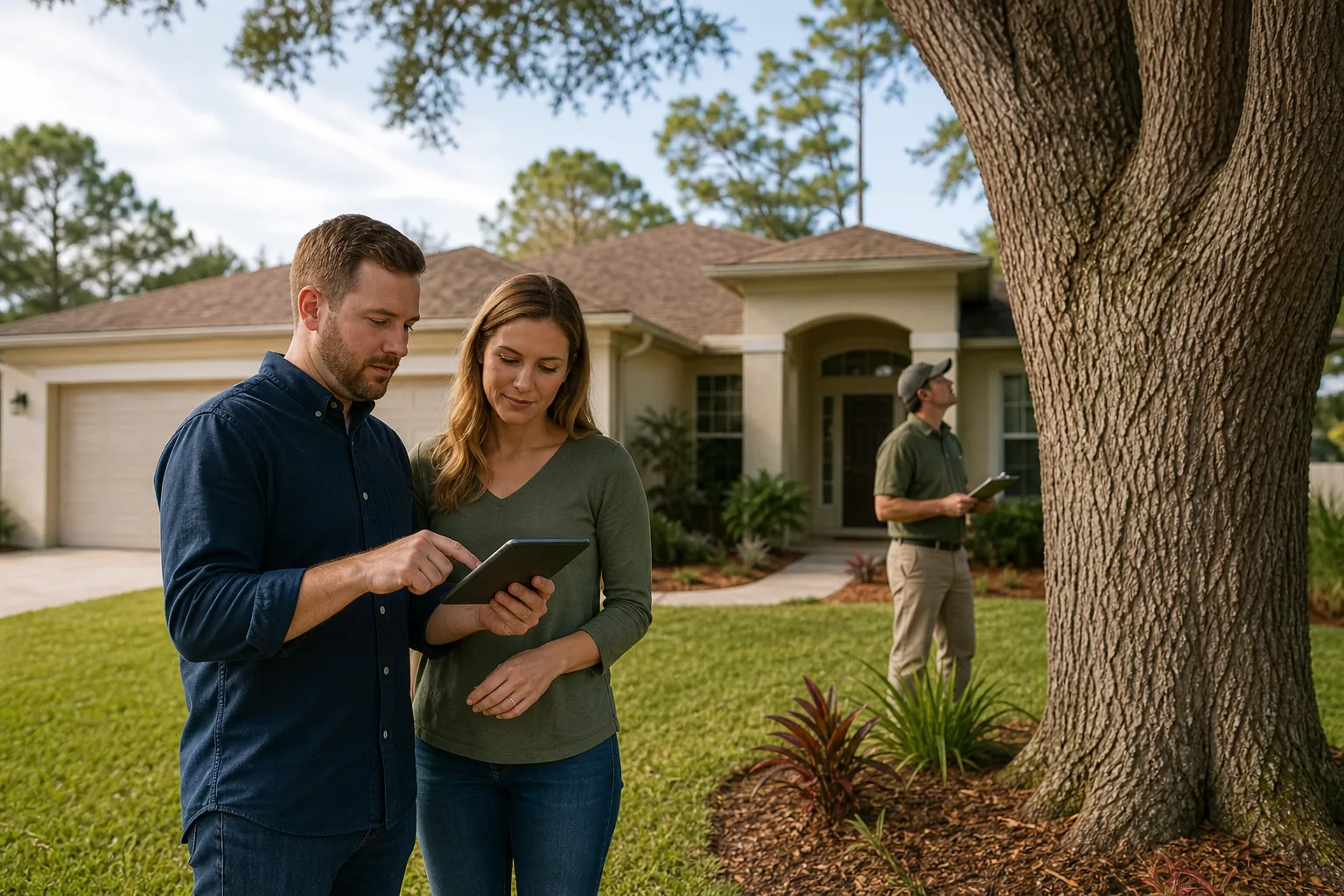
Walk the property if access is allowed, and note what you want the tree inspector to examine. Avoid diagnosing trees yourself or treating visible appearance as proof that a tree is safe or unsafe. Instead, document locations and specific observations so they can be reviewed during the visit.
- Which trees are close to the home, driveway, fence, or neighboring property?
- Are there large dead limbs, broken branches, cavities, visible decay, or leaning trunks?
- Do canopies appear unusually dense, unbalanced, or in conflict with structures?
- Are old stumps, surface roots, or heavily overgrown areas affecting planned use?
- Would access limitations require specialized equipment for future work?
- Could planned construction or clearing affect trees you expect to retain?
- Which findings appear time-sensitive, and which can be monitored or planned later?
Bring the property survey if available, but do not assume it resolves ownership questions. If a trunk or root area is near a boundary, confirm property lines and responsibilities through the appropriate real estate, survey, or legal professional.
Review Findings in Practical Categories
When the inspection is complete, organize the findings by decision priority. First, identify any concerns that could affect whether you want to proceed with the purchase. Next, separate work that may need prompt attention from routine trimming, canopy management, stump grinding, or longer-term monitoring. Finally, note optional changes tied to your preferences, such as opening a view or preparing part of the lot for future use.
Ask what type of service may be appropriate for each item. Depending on the condition and your objectives, options could include tree trimming, canopy thinning, crown reduction, tree removal, or no immediate work. Some properties may require crane tree removal because of access or tree placement, but that should be evaluated from actual site conditions rather than assumed from photographs.
If severe weather has recently affected the property, ask whether there are storm-related concerns to review. Florida Foliage also offers emergency and hurricane tree removal, but purchase planning should distinguish current observations from possible future events.
Confirm Rules Before Planning Tree Work
Do not assume that ownership automatically means every tree can be removed or altered without review. Requirements can vary by city, county, development, homeowners association, condominium association, and property conditions. Confirm current requirements directly with the relevant city or county before arranging work. If the home is governed by an HOA or condo association, request the current landscape and architectural rules as well.
Protected trees, required documentation, replacement conditions, and approval processes may affect the timing or feasibility of your plans. For a related overview, read protected tree removal permit requirements in DeLand. That article concerns a different Florida community, so Palm Coast buyers should use it as a reminder to verify local requirements, not as a substitute for Palm Coast or Flagler County guidance.
If land or lot clearing, brush hogging, or major tree work is part of your purchase plan, resolve approval questions before relying on that plan. Written confirmation from the appropriate authority can help prevent misunderstandings.
Discuss the Property Before Your Deadline
If trees may influence your Palm Coast home purchase, contact Florida Foliage to discuss a tree inspection or arborist report. Have the property address, access details, major concerns, and contingency deadline ready. Call (386) 481-7913 for calm, practical guidance on the next step.
Call (386) 481-7913 to talk through next steps.