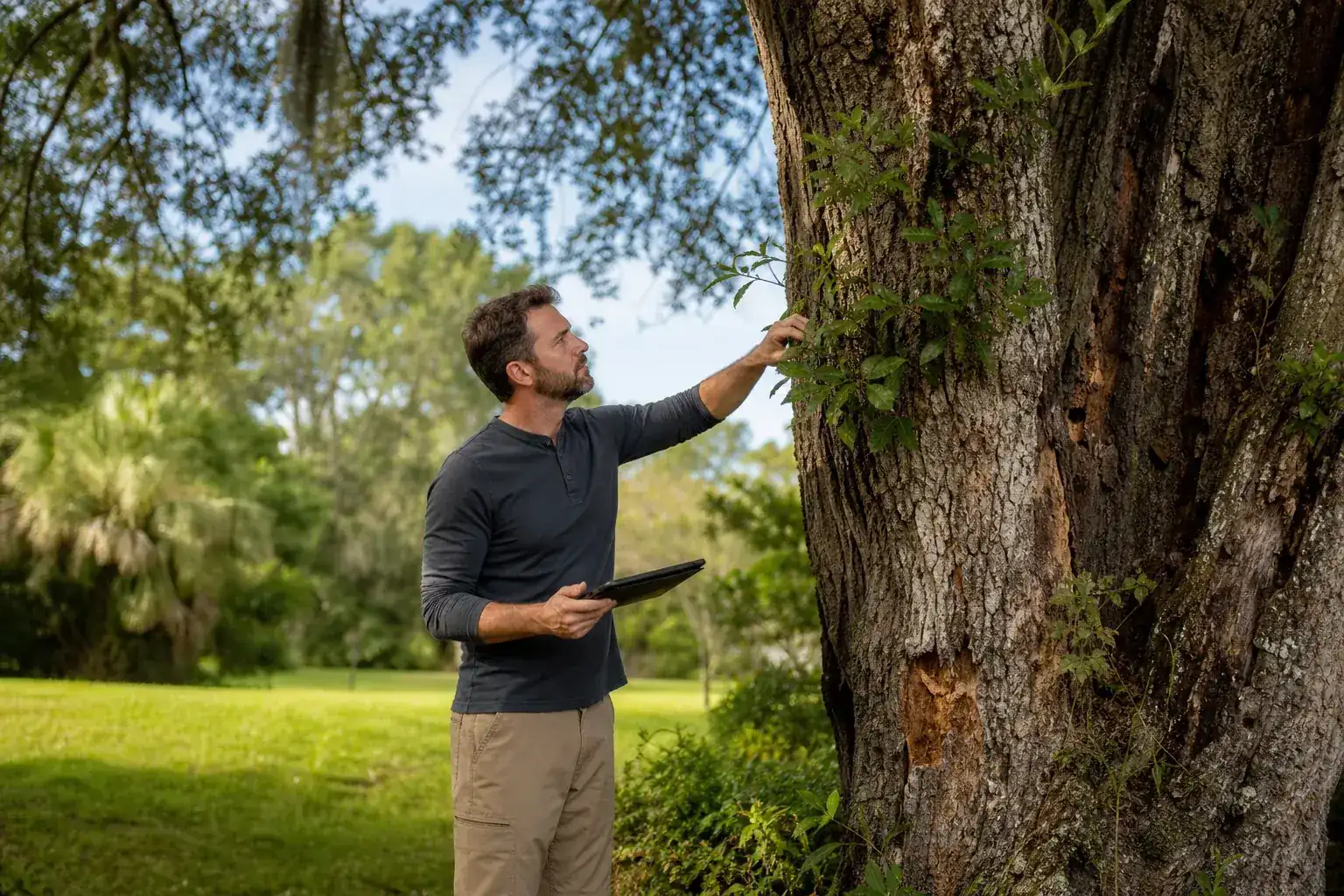
A dead tree can create an urgent decision, especially when branches hang over a roof, driveway, sidewalk, fence, or neighboring property. Even so, removal should begin with two separate questions: Is the tree hazardous, and does the applicable local authority require approval before work begins? Rules can depend on the property, tree, location, and current city or county requirements. Before scheduling removal in Deltona, document the tree, confirm which office has jurisdiction, and ask whether a permit, inspection, or supporting report is required.
Start by Confirming Which Local Rules Apply
Do not assume that a dead tree can always be removed without review. Permit and documentation requirements can change, and different rules may apply based on the property and where the tree stands. Contact the appropriate city or county department and describe the situation clearly. Ask whether the property is within city jurisdiction, whether tree removal approval is required, and whether dead or hazardous trees are handled differently from healthy trees.
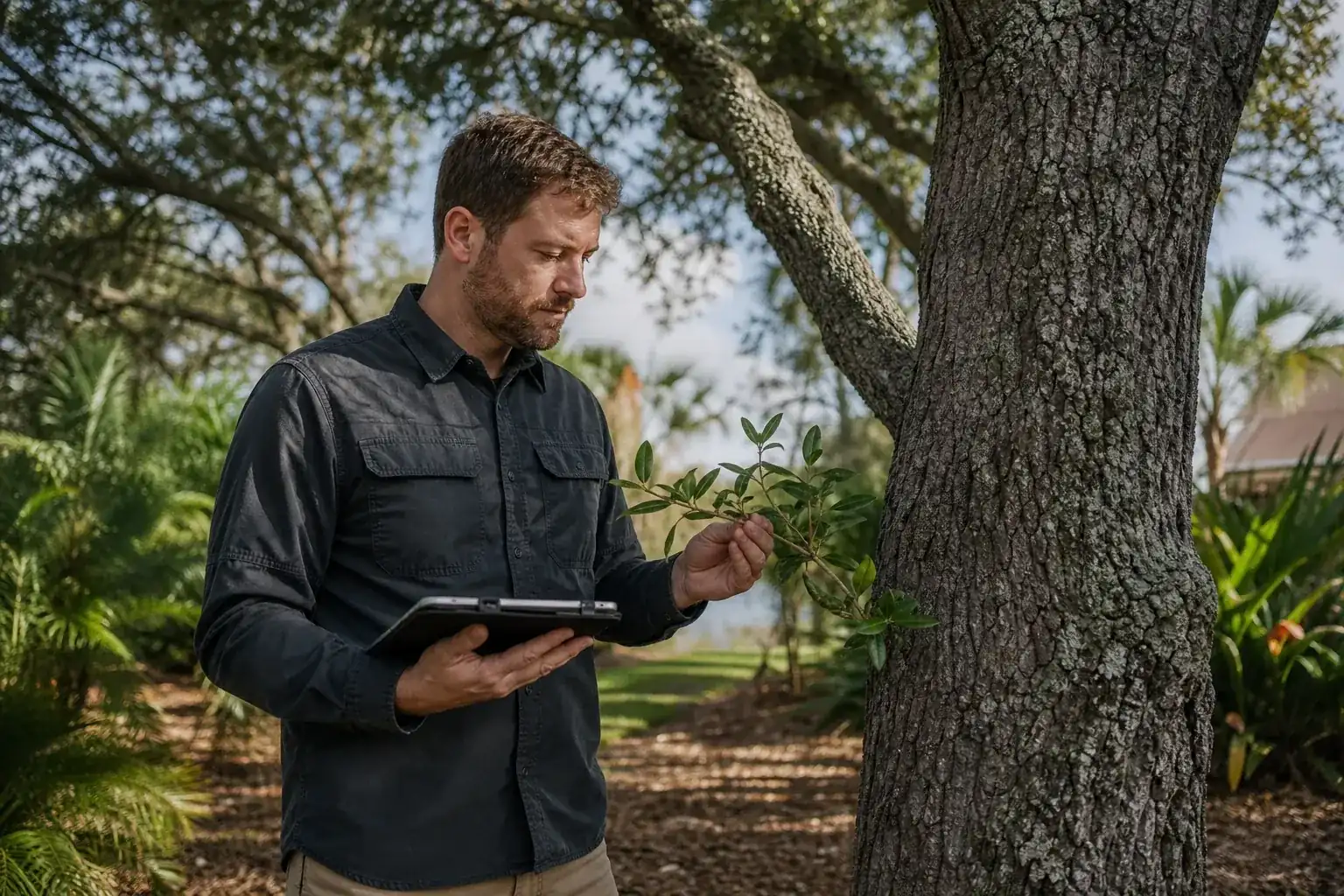
Be ready to provide the property address, the tree's approximate location, and its condition. Mention whether it is near a street, utility line, drainage area, shared boundary, or neighboring structure. If the property is governed by an HOA or condo association, review those requirements separately. Association approval does not necessarily replace city or county review, and local approval may not satisfy association rules. Confirm each applicable requirement before authorizing work. A short written response from the relevant office can also help you keep a clear record of the guidance received.
Document the Tree Before Any Work Begins
Clear documentation helps local staff, property managers, and tree professionals understand the condition without relying on a vague description. Take current photographs from several angles, including a full view of the tree and close views of visible defects. Include surrounding structures so the tree's location and possible targets are easy to understand. Do not enter an unsafe area or stand beneath unstable limbs to obtain a better photograph.
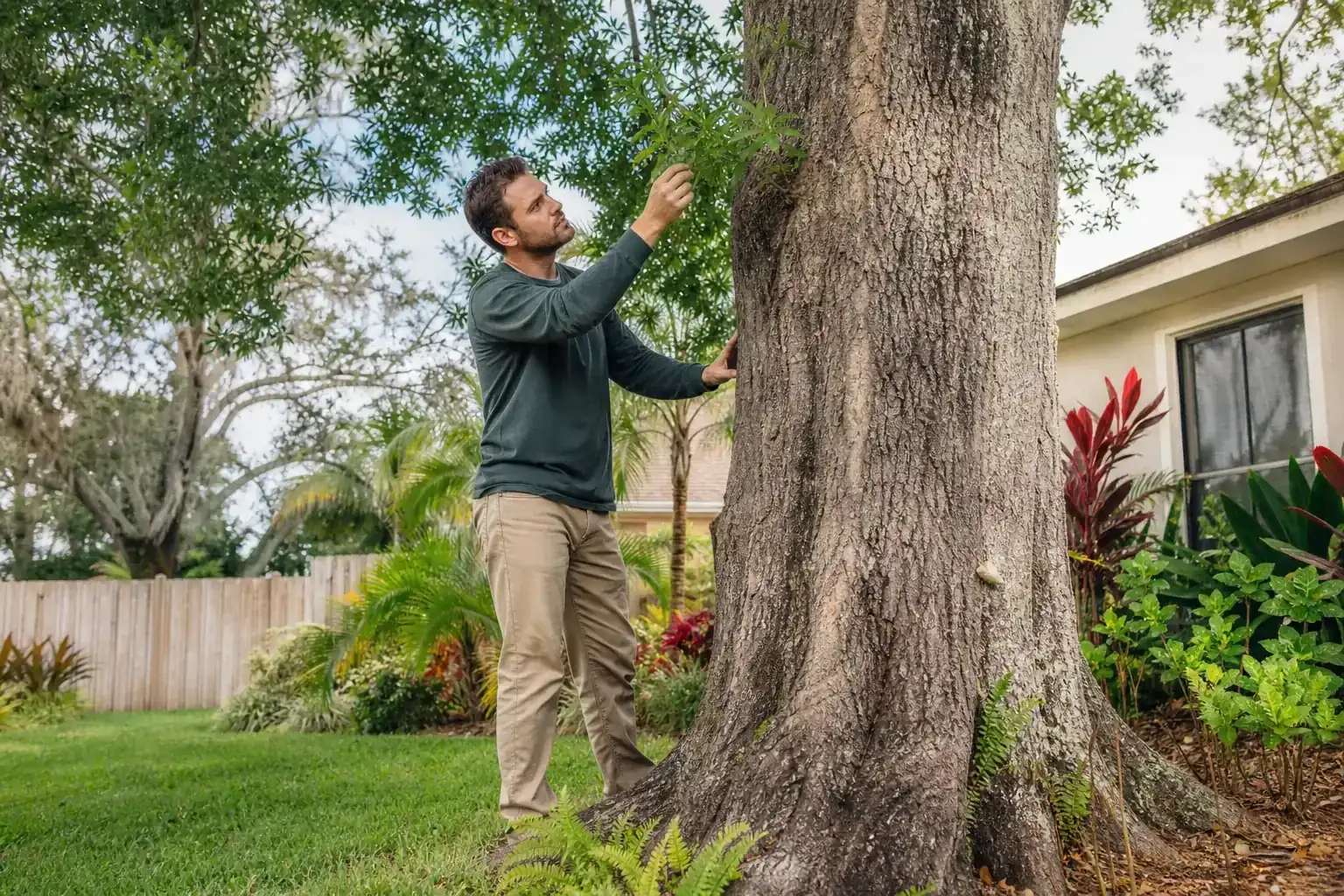
Create a simple record with the date, property address, tree location, and observations. Useful items to collect include:
- Wide photographs showing the entire tree and nearby property features
- Close photographs of dead limbs, cavities, cracks, decay, or trunk damage
- Notes about recent limb failures, movement, or changes in the canopy
- Copies of city, county, HOA, or condo communications
- Any requested tree inspection or arborist report
Keep the original files and avoid presenting personal conclusions as professional findings. Describe what you can see and obtain an inspection when the condition is uncertain.
Know When a Tree Inspection May Be Useful
A tree that looks dead from the ground may have a more complicated condition, while a declining tree can sometimes be mistaken for a fully dead one. A tree inspection can help document visible conditions and clarify the work being considered. An arborist report may also be useful if a local authority, HOA, condo association, property manager, or other decision-maker requests written support.
Florida Foliage provides tree inspections and arborist reports among its confirmed services. Before requesting a report, ask the reviewing authority what information or format it expects. That prevents you from collecting documentation that does not address the actual requirement. If the tree has hanging limbs, a split trunk, recent root movement, or a strong lean toward an occupied area, keep people and vehicles away while you seek guidance. Do not climb the tree, pull unstable limbs, or attempt removal without suitable planning. If utility lines are involved, avoid contact and follow directions from the appropriate utility and local authorities.
Plan Removal Around Access and Site Conditions
Once applicable approvals are confirmed, evaluate how the tree can be reached and removed. A dead tree may have brittle limbs or weakened wood, so the condition affects more than the permit question. Access for equipment, nearby buildings, fences, landscaping, overhead lines, traffic, and neighboring property can all influence the work plan. Some sites may call for crane tree removal, while others may allow a different approach. The appropriate method depends on the actual tree and site.
Clarify the scope before work starts. Ask whether removal includes handling the trunk and branches, and decide whether stump grinding is also desired. Stump grinding is separate from taking down the tree and may matter if the area will be replanted, mowed, or used for another purpose. Florida Foliage's confirmed services include tree removal, stump grinding, emergency and hurricane tree removal, and crane tree removal. For a broader explanation of documentation and approval questions, see this guide to protected tree removal permit requirements.
Use a Practical Checklist Before Scheduling
Before choosing a work date, verify that every decision-maker has the information needed. Start with local confirmation rather than advice from a neighbor or an old online discussion. Ask the city or county whether its current rules require a permit, inspection, application, photographs, or report for the specific property and tree. If permission is not required, ask whether that guidance can be provided in writing or whether there is an official page you should retain.
Next, check HOA, condo, landlord, property management, and shared-boundary considerations when applicable. Confirm that access does not depend on entering neighboring property without permission. Share relevant approvals and site limitations with the tree service before work begins. Keep copies of submitted materials, responses, reports, and photographs with the property records. These steps do not determine whether removal will be approved, but they create an orderly process and reduce avoidable confusion. If conditions change, such as a new crack or fallen limb, update the documentation and notify the appropriate authority or property representative.
Discuss the Tree and Your Next Step
If you need tree removal, a tree inspection, an arborist report, stump grinding, or help evaluating access for crane tree removal, contact Florida Foliage. The team can discuss the tree and site while you confirm any applicable city, county, HOA, or condo requirements.
Call (386) 481-7913 for a calm, practical conversation about the next step.
Call (386) 481-7913 to talk through next steps.