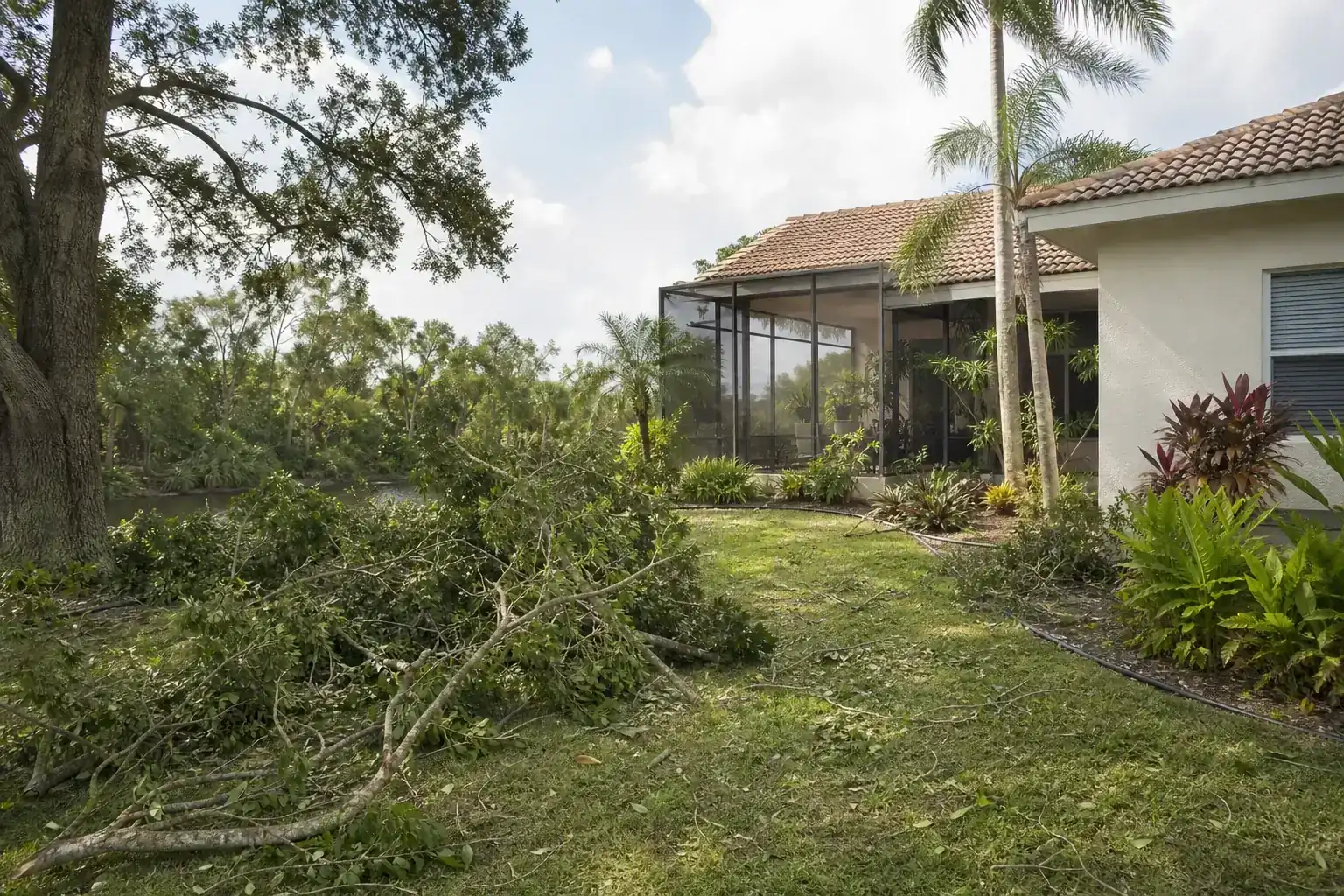
Trees beside a lanai require thoughtful hurricane preparation. The goal is not simply to remove as many branches as possible. Instead, evaluate how the canopy, trunk, roots, and nearby structures interact, then choose trimming that addresses specific concerns without creating avoidable damage. Palm Coast property owners can use the following steps to make a practical decision before scheduling tree trimming.
Begin With the Tree and Lanai Relationship
Start by viewing each tree from several positions: inside the lanai, along the roofline, near the trunk, and from the opposite side of the yard. Look for branches that touch or hang directly over the enclosure, roof, screens, gutters, or nearby utility features. Note limbs that could block access if they fell, particularly around doors, gates, walkways, and driveways.
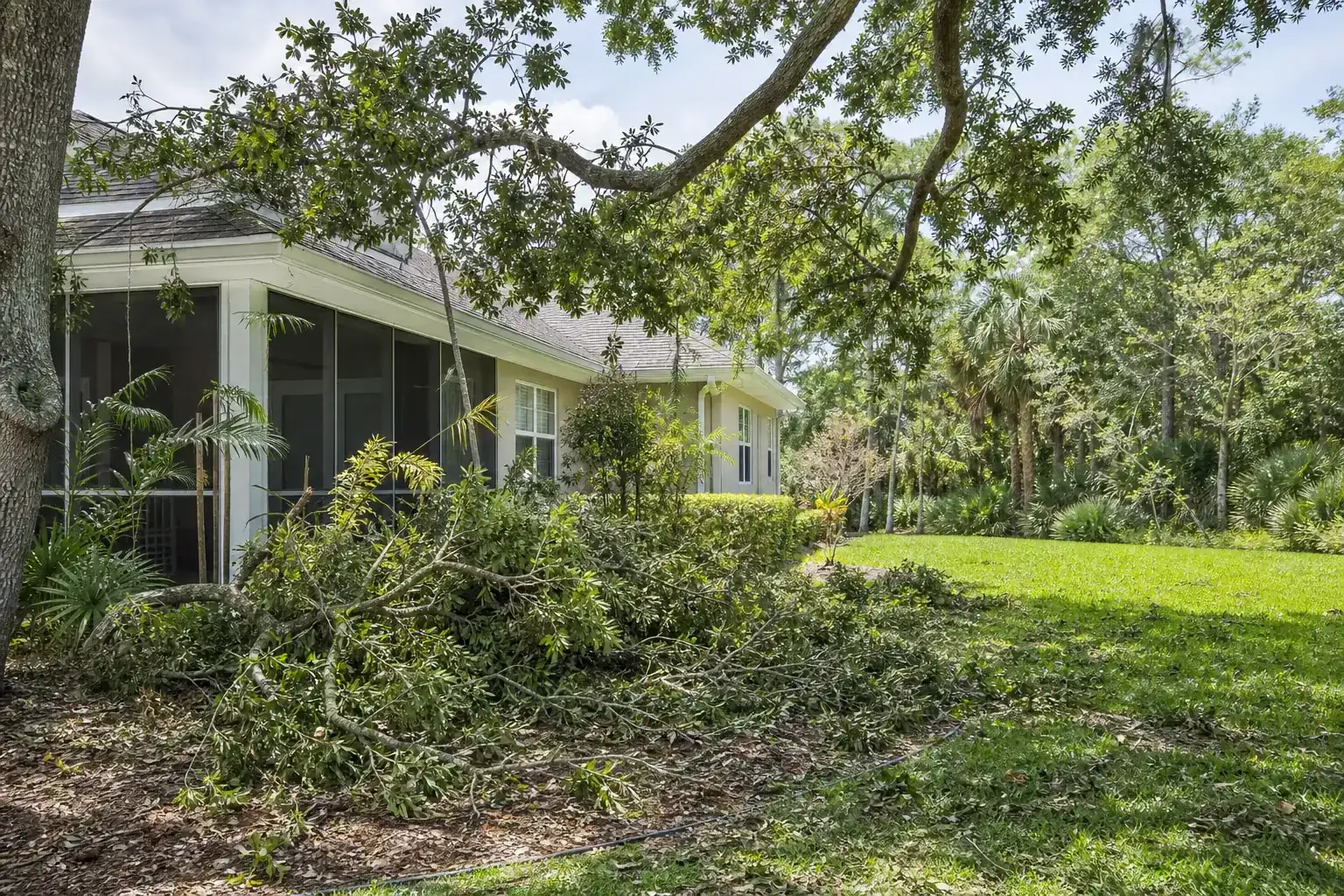
Next, consider the entire tree rather than focusing only on the branches closest to the structure. A heavy canopy on one side, multiple limbs extending toward the lanai, or crowded branches may warrant a closer inspection. Also look for visible cracks, broken limbs, hanging branches, cavities, unusual leaning, or changes around the root area.
Do not assume every overhanging branch must be removed. Its size, attachment, position, and role in the canopy matter. A tree inspection or arborist report can help clarify whether trimming, monitoring, crown reduction, or removal should be considered.
Choose Trimming Based on a Clear Objective
Before any cutting begins, define what the work should accomplish. Common objectives include creating reasonable clearance from the lanai, removing broken or hanging branches, reducing a specific overextended limb, or thinning selected canopy growth. A clear objective helps prevent unnecessary cutting and makes it easier to compare recommendations.
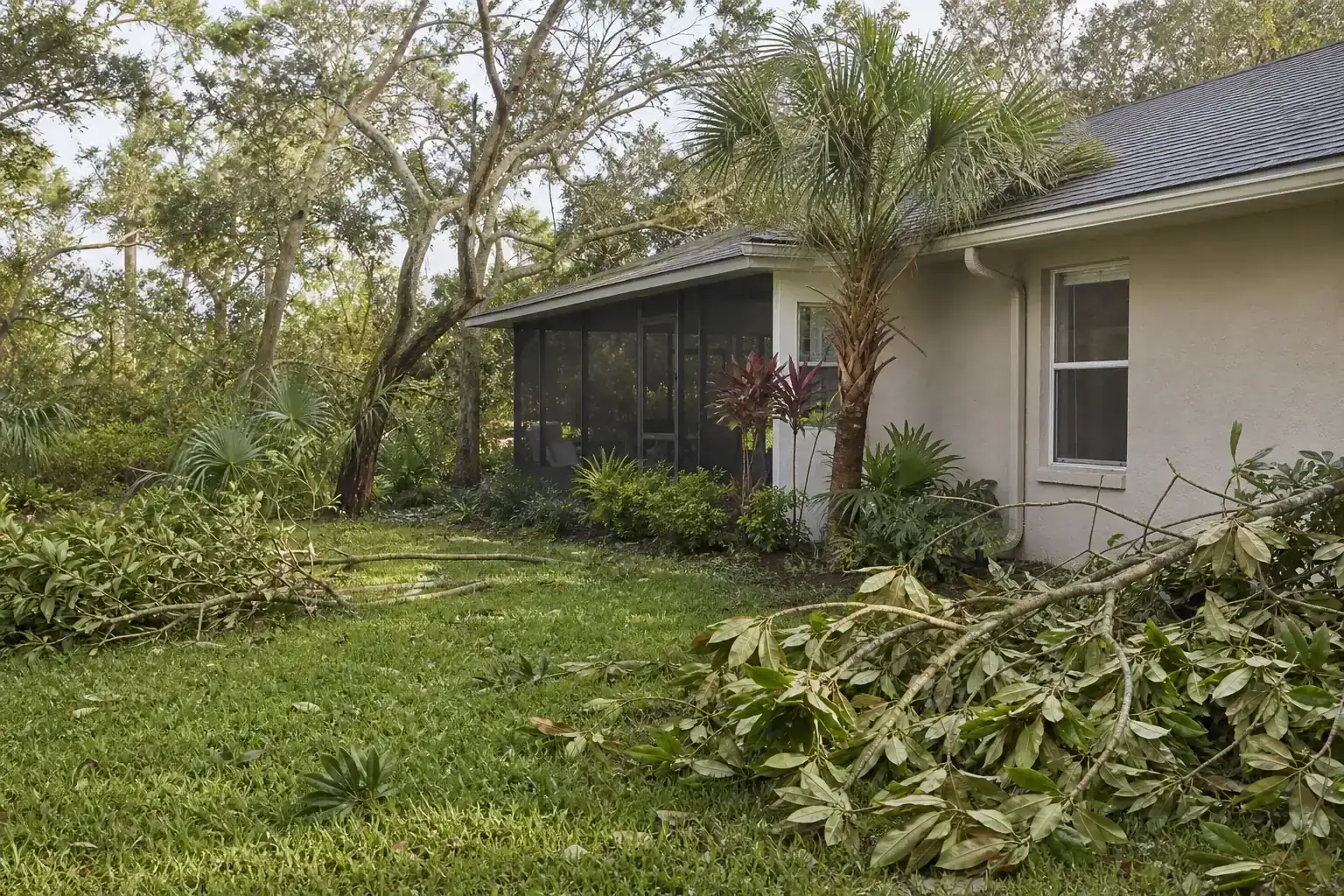
Two relevant approaches are canopy thinning and crown reduction. Canopy thinning selectively removes branches to address density while retaining the tree's overall form. Crown reduction shortens selected limbs or portions of the canopy when size or extension is the main concern. These techniques are not interchangeable, and neither means stripping the canopy or cutting every limb back to a uniform line.
Ask which branches are proposed for removal, why each cut is recommended, and how the remaining canopy will be balanced. The plan should account for clearance above and beside the lanai, branch structure, and the tree as a whole. Avoid making hurricane preparation a last-minute, indiscriminate cutting project.
Use a Practical Pre-Trimming Checklist
A written checklist can turn a general concern into a useful scope of work. Walk the property during daylight and document what you see. Photos from several angles can help identify changes later and make conversations about specific limbs more precise.
- Identify branches touching or hanging over the lanai, roof, screens, gutters, doors, gates, or walkways.
- Look for dead-looking, cracked, split, broken, or suspended branches.
- Check whether dense growth prevents a clear view of major branch attachments.
- Note trunks or large limbs that lean toward occupied or frequently used areas.
- Keep access routes clear for people, equipment, and debris handling.
- Mark nearby fences, landscaping, outdoor furniture, lighting, and other features that affect access.
- Ask whether trimming debris and larger wood can be moved without damaging the lanai area.
This review does not replace a tree inspection, but it helps property owners explain priorities. It also reveals whether the job may require specialized access, staged rigging, or crane tree removal rather than routine trimming methods.
Plan Access and Protect the Surrounding Area
Tree work near a screened enclosure can be complicated by limited drop zones. Branches may need to be controlled during removal rather than allowed to fall freely. Before choosing a plan, consider how workers and equipment can reach the tree, where cut material can be lowered, and how debris can leave the property.
Move portable furniture, grills, planters, decorations, and other items away from the work area when instructed. Keep children and pets out of the designated zone. Gates should be accessible, and vehicles may need to be relocated so driveways remain usable. If neighboring property could be affected, discuss boundaries and access before work starts.
Some trees require more than trimming. If inspection identifies a concern that leads to tree removal, the method should reflect the available space and nearby structures. Florida Foliage provides tree removal, emergency and hurricane tree removal, crane tree removal, and stump grinding in addition to tree trimming. The appropriate service depends on the tree and site conditions.
Confirm Requirements and Schedule Work Thoughtfully
Tree requirements can vary by city, county, property type, tree status, and scope of work. Before substantial trimming or removal, confirm current requirements directly with the appropriate city or county. Property owners in an HOA or condo community should also review their association's approval process. Florida Foliage provides HOA and condo tree services, commercial tree services, tree inspections, and arborist reports when those services fit the situation.
If removal is under consideration, documentation and approval questions should be addressed before work begins. For a related overview, read protected tree removal permit requirements in DeLand. That article concerns a different city, so Palm Coast readers should not treat it as local approval guidance. Always verify requirements for the specific property.
Schedule an assessment with enough time to discuss options rather than waiting until severe weather is approaching. Ask for a clear description of the proposed cuts, access method, debris handling, and whether follow-up inspection or additional work is recommended.
Discuss Trees Near Your Lanai
If you are deciding how to address trees near a Palm Coast lanai, call Florida Foliage at (386) 481-7913. A calm, site-specific conversation can help clarify whether tree trimming, canopy thinning, crown reduction, inspection, or another confirmed service fits your concerns.
Call (386) 481-7913 to talk through next steps.