Quick Answer
Tree trimming controls size and shape for appearance and clearance. Tree pruning removes specific branches to improve health, structure, or safety. Both follow ANSI A300 standards, but they serve different goals. In Daytona Beach's climate, live oaks and sabal palms often need pruning for storm prep, while ornamental trees need regular trimming to stay manageable. Knowing which service you need saves money and keeps your trees alive longer.
What Tree Trimming Actually Means
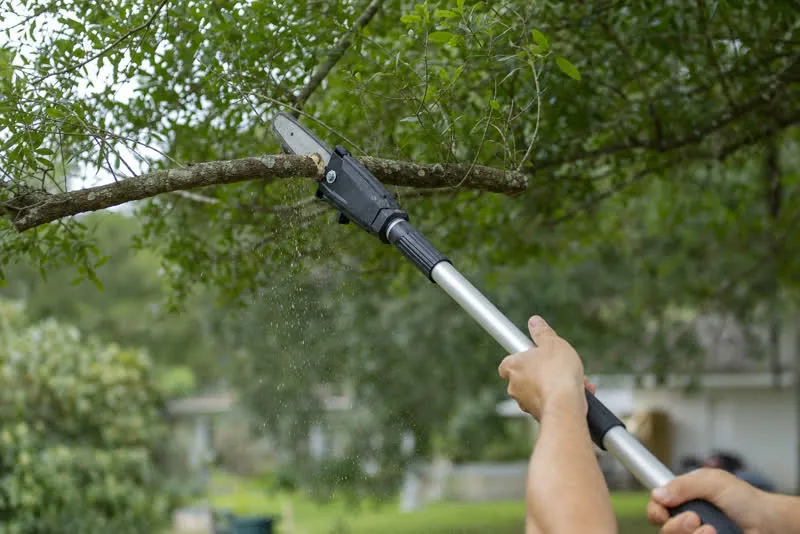
Tree trimming is the routine cutting of branches and foliage to control size, maintain a desired shape, and keep growth in check. It's primarily a maintenance task. You trim a tree the same way you'd mow a lawn: on a schedule, to keep things tidy and within bounds.
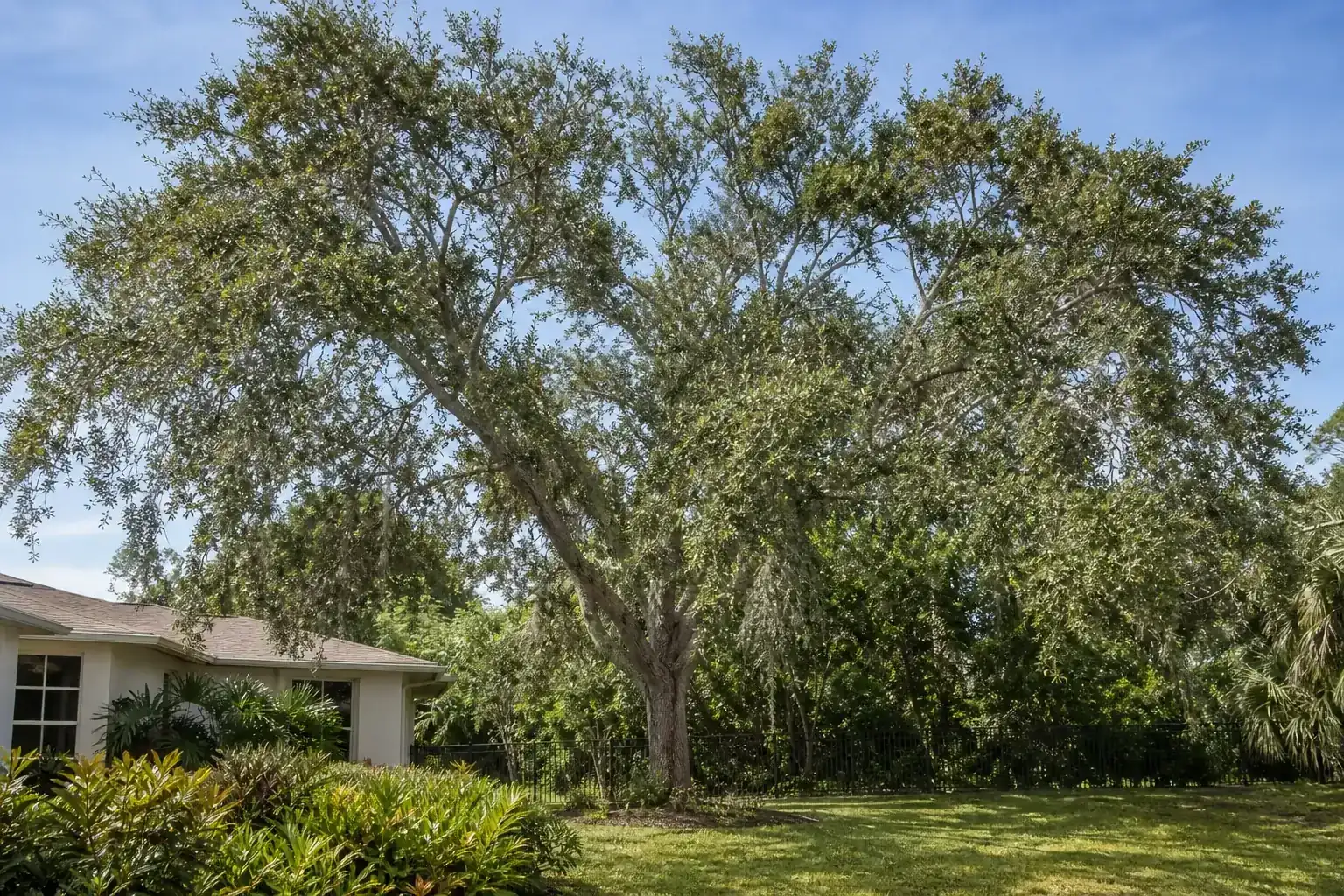
In Daytona Beach, trimming comes up most often when branches start creeping over rooflines, brushing against FPL power lines, or blocking sight lines along driveways. Homeowners in Indigo and the LPGA District frequently call us about laurel oaks that have grown well past the canopy line they expected when they planted them five years ago. Trimming brings that canopy back to a workable size without targeting any one branch for a specific health reason. It's a broad approach, not a surgical one.
Our tree trimming crews work to ANSI A300 Part 1 standards, which cap the amount of live crown you can remove in a single visit. Removing too much at once stresses the tree and triggers excessive regrowth called water sprouts. We've seen homeowners attempt heavy DIY trimming on slash pines along Ridgewood Avenue and end up with trees that looked worse six months later than they did before the cuts. A proper trim removes no more than 25 percent of the live crown in most cases, and far less on mature trees.
What Tree Pruning Actually Means
Pruning is targeted. You're removing specific branches for a specific reason: a dead limb over a patio, a co-dominant stem that could split in a hurricane, a crossing branch rubbing bark off a structural leader, or early signs of Ganoderma butt rot spreading through a queen palm. The goal is the long-term health and structural integrity of the tree, not just its appearance.
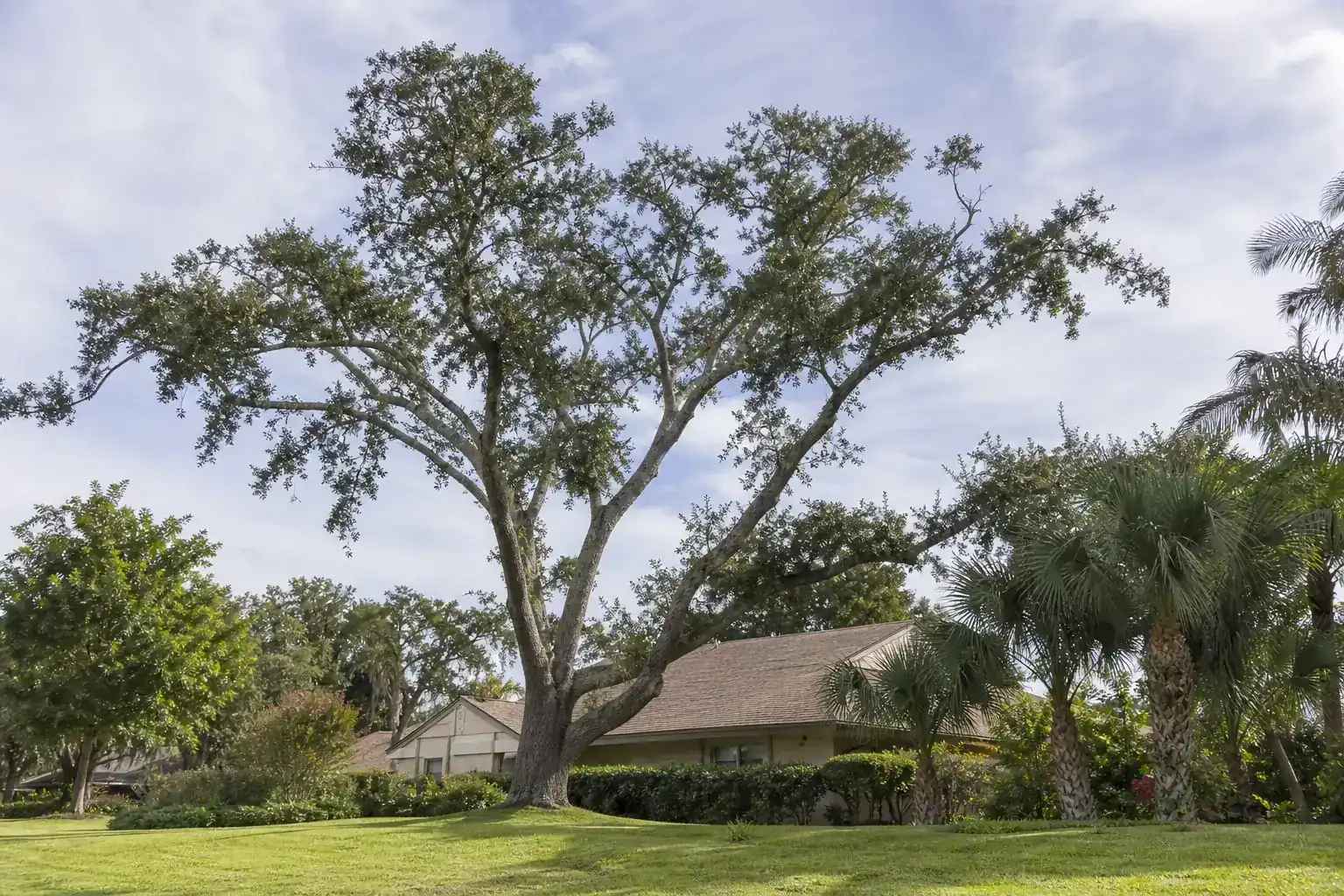
ANSI A300 breaks pruning into several defined cut types. Crown cleaning removes dead, dying, or diseased wood. Crown raising lifts the lower canopy for clearance. Crown reduction reduces overall height or spread while keeping the natural form. Structural pruning, done on young trees, sets the growth pattern early so problems don't develop at all. Each type requires a trained eye to identify which branches to cut and exactly where to make the cut relative to the branch collar.
The ISA Certified Arborist consultant we work with assesses the tree before a single cut is made. That assessment matters enormously in Volusia County's sandy, shallow soils, where root systems are already stressed and a bad pruning cut can open a wound the tree struggles to compartmentalize. We recently completed a crown cleaning on a large water oak in South Daytona that had four dead scaffold branches over a screened enclosure. The homeowner had been told by another company it needed full removal. It didn't. Targeted pruning saved the tree and the customer roughly $1,800.
Trimming vs. Pruning: Side-by-Side Comparison
The easiest way to separate these two services is to look at the goal, the timing, and the tool mindset behind each one. The table below covers the key differences our arborists use when scoping a job.
| Factor | Tree Trimming | Tree Pruning |
|---|---|---|
| Primary Goal | Shape, size control, aesthetics | Health, structure, safety |
| Cut Selection | General canopy reduction | Specific targeted branches |
| Frequency | Every 1-3 years for most species | As needed; often every 3-5 years |
| Best Timing in FL | Late fall through early spring | Dormant season; avoid oak wilt risk months |
| ANSI A300 Type | Crown reduction, crown raising | Crown cleaning, structural pruning |
| Who Performs It | Trained crew under arborist supervision | ISA Certified Arborist recommended |
| Typical Cost Range | $150-$600 per tree | $200-$900 per tree |
These ranges reflect what we see on jobs across Volusia County. A small crape myrtle trim in Ormond-by-the-Sea costs far less than structural pruning on a 60-foot live oak in Daytona Beach Shores. Species, height, access, and the number of cuts all affect the final price.
Not sure which service your tree needs?
Florida Foliage offers free estimates, and our ISA Certified Arborist consultant can tell you exactly what's going on with your tree before any work begins.
(386) 481-7913When You Need Trimming vs. When You Need Pruning
Call for trimming when branches are crowding structures, blocking light, or the canopy has simply outgrown the space. Call for pruning when you see dead wood, crossing branches, storm damage, signs of disease, or a young tree that needs its growth pattern corrected early.
Florida's hurricane season runs June through November, and that window changes the calculus for both services. Before the season starts, ideally in March or April, pruning to remove weak or dead wood reduces the sail effect in high winds. A well-pruned live oak sheds wind more efficiently than one loaded with dead interior branches. We've worked in Wilbur-by-the-Sea and Daytona Beach Shores after tropical events, and the trees that held up best were the ones that had been properly pruned in the preceding spring. That's not coincidence. It's physics.
Timing matters for oak species specifically. Oak wilt, while less prevalent in Florida than in Texas, does occur in warm months when the pathogen spreads through root grafts and beetle activity. Pruning live oaks and laurel oaks during the cooler months, roughly November through February, reduces infection risk. Trimming is less risky in terms of disease entry because it typically involves smaller cuts, but painting or sealing large pruning wounds on oaks during warm months is still worth considering.
Young trees in new subdivisions around the LPGA District and Indigo benefit most from early structural pruning. Correcting a co-dominant stem on a 10-foot sapling takes 20 minutes. Correcting the same problem on a 50-foot tree may require a crane. Our certified arborist consultations often focus on exactly this kind of early intervention.
ANSI A300 Standards and Why They Matter in Florida
ANSI A300 is the American National Standard for tree care operations. It's the industry benchmark that separates professional arboricultural work from random cutting. Florida Foliage follows these standards on every job, and you should ask any tree company you hire whether they do the same.
The standards cover cut placement, crown removal limits, and the specific terminology for each pruning type. One of the most important rules: never cut into the branch collar. The collar is the swollen tissue at the base of a branch where the trunk's defense chemistry is concentrated. Flush cuts through the collar destroy that defense zone and leave a wound the tree often cannot close. We see flush-cut damage constantly on crape myrtles and queen palms throughout Holly Hill and Port Orange South. It's one of the most common errors made by unlicensed crews offering cheap work.
Here's a quick reference for what ANSI A300 prohibits on any healthy tree:
- Topping (cutting the central leader flat)
- Removing more than 25% of live crown at once
- Flush cuts through the branch collar
- Lion's tailing (stripping all interior branches)
- Stub cuts left more than a few inches long
Topping is the single most destructive practice we encounter. A topped tree produces rapid, weakly attached regrowth and is far more likely to fail in a storm than an untouched tree. If a company quotes you a "topping" job, walk away. Our emergency tree removal calls after storms include a disproportionate number of previously topped trees. That pattern is not coincidental.
Worried about storm prep for your trees?
Our licensed and insured team serves Volusia and Flagler County, Monday through Saturday, 7AM to 6PM.
(386) 481-7913Palm Trees: Different Rules Apply
Sabal palms, queen palms, and other species common throughout Daytona Beach don't follow the same rules as hardwoods. Palms are monocots. They don't form new wood the way oaks do, and improper cuts can cause permanent damage that shows up years later.
The biggest mistake homeowners make with palms is over-trimming the fronds. Green fronds feed the tree. Cutting live green fronds stresses the palm and can cause a condition called "pencil-pointing," where the trunk narrows at the top because the growth bud is nutrient-starved. You should only remove brown, fully dead fronds. The classic "hurricane cut," which strips a palm down to just a few fronds before storm season, actually weakens the tree's ability to recover from wind damage.
Ganoderma butt rot is a serious fungal disease that attacks the base of palms and is common in Volusia County's warm, humid conditions. It enters through wounds, including careless trimming cuts. Our palm tree trimming service uses sanitized equipment between trees to prevent spreading this pathogen from one palm to the next. Customers in Midtown and along Palmetto Avenue are often surprised to learn that the tool sanitation step matters as much as the cutting technique itself.
Timing for palm trimming is less restrictive than for oaks, but we recommend avoiding the active growing season for nutrient removal. Late fall and winter trimming lets the palm recover without competing demands on its stored energy. For larger queen palms that require bucket truck access, our team coordinates with property owners to minimize disruption to driveways and landscaping.
What Comes After Trimming or Pruning
The work doesn't always end when the last branch hits the ground. Depending on what we find during the job, follow-up services may be worth scheduling.
If pruning reveals significant decay in a scaffold branch, a full risk assessment may be the next step. Trees with extensive internal decay sometimes need cabling and bracing to stay safe, or in the worst cases, removal. Our team can walk you through those options during the estimate visit. We don't push removal unless it's genuinely the safest choice. In our experience, most trees in Daytona Beach that homeowners assume need removal can be saved with the right pruning and follow-up care.
After any trimming job, a large volume of debris needs to go somewhere. Florida Foliage hauls away all cut material, so you're not left with a pile of branches at the curb. For larger jobs involving significant wood volume, we can coordinate with our stump grinding crew if any trees were removed as part of the same visit. Bundling services on a single mobilization saves you money on the overall job cost.
If you've recently had a tree removed and the stump is still in the ground, grinding it out before replanting or sodding is worth doing sooner rather than later. Stumps left in Volusia County's sandy soil attract termites and can harbor root rot fungi that spread to neighboring trees. Scheduling stump grinding alongside your trimming or pruning work is the most efficient approach.
Florida Foliage serves homeowners and property managers across Volusia and Flagler County. Our team is licensed, insured, and staffed with an ISA Certified Arborist consultant who can assess, recommend, and perform whatever your trees actually need, without upselling services they don't require. Call us Monday through Saturday between 7AM and 6PM to schedule your free estimate.
Ready to schedule your free tree estimate?
Florida Foliage serves Daytona Beach and all of Volusia and Flagler County, Monday through Saturday, 7AM-6PM.
(386) 481-7913Frequently Asked Questions
What is the difference between trimming and pruning?
Trimming controls the overall size and shape of a tree for aesthetic or clearance purposes. Pruning targets specific branches to address health, structural, or safety concerns. Trimming is a broad maintenance task done on a schedule. Pruning requires an arborist's assessment to identify which branches to remove and why. Both follow ANSI A300 standards when performed by a qualified crew.
Do I need pruning or trimming for my trees?
If your tree looks overgrown, is crowding structures, or just needs a cleaner shape, trimming is the right call. If you see dead branches, crossing limbs, storm damage, or signs of disease, you need pruning. Many trees in Daytona Beach need both at different times. A free estimate from an ISA Certified Arborist at Florida Foliage will tell you exactly which service applies to your situation.
How often should trees be pruned in Florida?
Most mature trees in Florida benefit from a professional inspection every two to three years, with pruning performed as needed based on what the arborist finds. Young trees may need structural pruning annually for the first few years to establish good form. Live oaks and laurel oaks in Volusia County's warm climate grow faster than in northern states, so some species may need attention more frequently than that general guideline suggests.
Can trimming damage a tree?
Yes, improper trimming causes serious and sometimes irreversible damage. Topping, flush cuts through the branch collar, and removing more than 25 percent of the live crown in one visit all stress the tree and can trigger decay, disease entry, or structurally weak regrowth. Hiring a company that follows ANSI A300 standards and works with an ISA Certified Arborist consultant is the most reliable way to avoid trimming-related damage to your trees.
How much does tree pruning cost in Daytona Beach?
Tree pruning in Daytona Beach typically runs between $200 and $900 per tree, depending on species, height, access, and the scope of work required. A small ornamental tree costs significantly less than a mature live oak requiring a bucket truck or crane. Florida Foliage provides free on-site estimates so you get an accurate number before any work begins. Call (386) 481-7913 to schedule yours.