
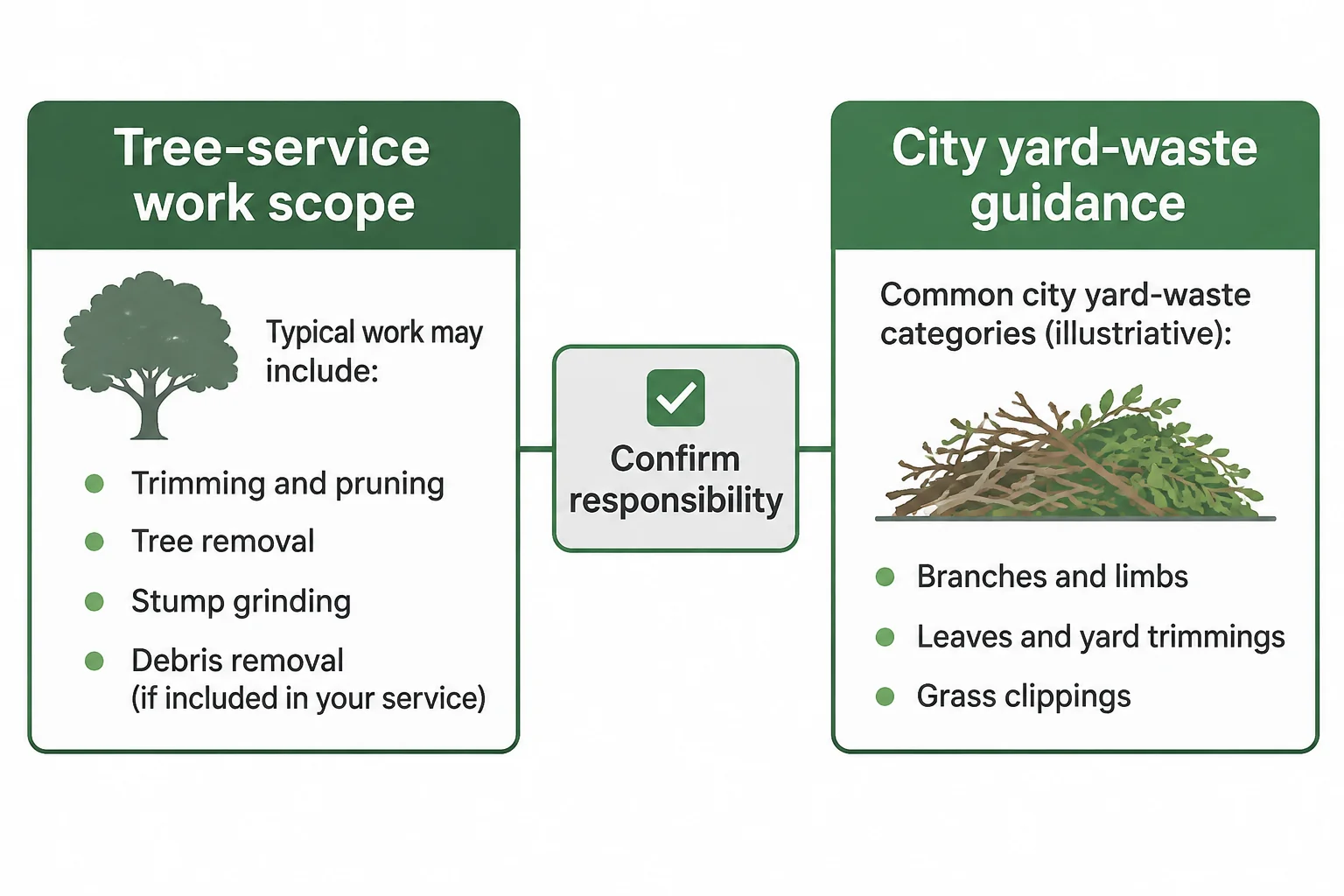
A tree-service estimate and a residential collection schedule answer different questions. The estimate should explain what the contractor will remove and what will remain. The City's guidance describes residential collection categories and requirements. Neither document replaces the other. Before booking tree work in Daytona Beach, FL, establish the contractor's cleanup duties and ask the City about any material you hope to assign to residential collection. Do not assume that material left by a contractor will qualify.
Separate the Work Order From City Collection
Keep contractor cleanup in the written work order, and treat City pickup as a separate question. Ordinary yard-care trimmings and trees cut down on the property are distinguished in the City's guidance. Use the tree-cutting service scope guide to organize contractor questions, and connect that record with your broader land and site needs. The City's Solid Waste FAQ, question 9, separates ordinary yard-care trimmings from land-clearing debris, including trees cut down on the property.
Start with the service address and the tasks being priced. Then identify the cleanup result you expect. A description such as “tree work and cleanup” leaves questions unanswered: does cleanup include hauling, does any material remain, and who has agreed to handle it? Ask for those answers in the estimate rather than treating a collection day as the missing part of the contractor's scope.
- Property: Record the complete service address and confirm that the collection question concerns that residence.
- Approved work: Identify the tree-service tasks covered by the estimate, without substituting a general project label.
- Removal commitment: State which resulting materials the contractor agrees to haul away.
- Material remaining: Describe anything intentionally excluded from hauling and the agreed location, if applicable.
- Unresolved responsibility: Mark any proposed City collection as unconfirmed until the City answers the specific question.
Keep these points together with the estimate. If one proposal includes hauling and another excludes it, the two proposals describe different outcomes. Compare the written deliverables before choosing between them. A lower quoted scope is not a complete cleanup plan if the remaining material has no confirmed destination or responsible party. This is a scope comparison, not a determination of City eligibility.
Check the Published Rules for the Actual Address
Verify the collection category as well as the schedule before relying on City pickup. The tree-debris hauling guide and tree-debris removal planning resource can help frame the separate contractor decision. For residential collection, record the City's answer for the actual material and address, not just the weekday shown online.
The City's Collection Days page lists Wednesday for residential yard debris within Daytona Beach, FL. The schedule describes ordinary residential collection. Confirm that it still applies to the address before relying on it, and ask separately how the City classifies material from the proposed tree job.
Use the City collection guidance as the reference in your record. Note when you checked it, the address you asked about, and the description you gave the City. When you receive a response, record whether the answer covers the exact tree work or only the normal residential yard-waste schedule.
Question 9 of the Solid Waste FAQ says the City's waste contractor is not responsible for land-clearing debris, including trees cut down on the property. It describes a separate, charged special-collection option. Ask the City whether that option applies to the job and which information it needs to confirm the category and any fee.
For verification, describe whether the proposed material comes from ordinary trimming or a tree cut down, whether the work is contracted, and the expected amount. Ask the City which collection route, if any, applies and whether a charge would apply. Record the response without extending it to a different job, quantity or address.
Compare Cleanup Responsibilities Before Choosing a Route
Assign responsibility only when the contractor's scope or the City's response supports it. Compare the written tree-service scope with the separate questions in the debris-hauling planning guide. The table below is a decision worksheet: a possible match with published yard-waste guidance is not confirmation that the City will collect material from your job.
The collection descriptions below come from the City's ordinary yard-waste guidance and FAQ question 9. Keep the contractor agreement and City confirmation as separate records, even when both concern the same material.
| Material or task | Included in contractor scope? | Potentially fits City guidance? | Confirm before assigning responsibility |
|---|---|---|---|
| Ordinary yard-care limbs or palm fronds | Only if the written estimate includes their removal. | Listed categories, subject to published requirements; contracted-job eligibility remains unconfirmed. | Record the City's answer for this job and the contractor's written hauling commitment. |
| Material from a tree cut down on the property | Confirm hauling expressly in the written scope. | The FAQ includes cut-down trees in its land-clearing exclusion and describes charged special collection. | Obtain a written contractor decision and ask the City about the applicable collection option and fee. |
| Leaves and small trimmings | Confirm whether these are included or left outside the hauling scope. | The City lists ordinary yard waste separately. Confirm whether its guidance applies to this job. | Save the written scope and the City's response about category, amount and requirements. |
| Mixed material listed in a contractor estimate | Ask what the written agreement covers; do not assume. | The collection category remains open until the City addresses the described material. | Request separate written responsibility and classification answers. |
If a row remains uncertain, keep it marked “confirmation pending.” Do not replace that status with “City pickup” because hauling is absent from an estimate. Ask the contractor what it would mean to include the unresolved material in its written scope, while separately asking the City about collection. Those answers address different responsibilities and should not be treated as interchangeable.
Use a Before-and-After Booking Workflow
Before booking, settle what will be hauled, what will remain and which questions still need an answer. Use the service-scope checklist to prepare, then contact Florida Foliage about a written cleanup scope. A contractor can clarify its proposed work; the City must answer questions about its residential collection guidance and the applicable collection category.
- Describe the desired finish. Tell the tree service whether you want the estimate to include hauling of all material resulting from the approved work. Ask for any exclusions to be named rather than covered by a broad phrase such as “cleanup included.”
- Resolve the remaining-material question. If anything would remain, obtain a description of it. Ask whether the proposal includes leaving or staging that material, and record what that means in the agreement. Do not substitute an assumed City collection arrangement.
- Check the separate City question. Give the City the address, source of the material and expected quantity. Ask whether ordinary collection, charged special collection or another arrangement applies. Confirm any fee directly with the City.
- Save the agreed version. Keep the estimate, written clarifications and collection response together. If the planned work changes, ask whether the hauling commitment also changes. Record the updated answer before relying on the earlier scope.
- Reconcile the outcome. After the job, compare what remains with the written agreement. Describe any difference and ask the contractor to clarify it. If the remaining material differs from what the City considered, seek a new collection answer.
This workflow keeps a changed project from inheriting an outdated assumption. For example, a City response about a described quantity of ordinary trimmings does not answer a later question about a tree being cut down. Likewise, a contractor's agreement to haul material from one approved task does not explain an added task unless the scope addresses it. Keep each change attached to its corresponding responsibility decision.
Keep a Closeout Record for Anything That Remains
Close out the cleanup decision with a short record that names the material, the agreed responsibility and any open question. Use the tree-debris hauling resource and debris-removal planning guide for the contractor side of that discussion. Keep City eligibility in a separate field so that an estimate is not mistaken for collection approval.
Suggested record fields: Service address; job date; approved work; remaining-material description; hauling included or excluded; responsible party confirmed; City guidance checked; date of City response; applicable collection option; fee question; and unresolved next step. Reference the relevant estimate or message alongside the entry. These fields document the decision without requiring you to make a classification the City has not confirmed.
A useful entry distinguishes an agreement from an expectation. “Contractor hauling included in written estimate” records a defined commitment. “Owner expects Wednesday pickup” records only an assumption unless the City has answered the actual job question. If the contractor's scope and the City's guidance leave a gap, name that gap directly. Avoid marking the cleanup complete merely because the cutting work is finished or a collection day is approaching.
When asking a follow-up question, send the same material description used in the record. This helps prevent one conversation from addressing routine trimmings while another addresses a cut-down tree. Ask for clarification of the unresolved responsibility, not a general assurance that the debris is “yard waste.” Keep any City answer within the address, material and circumstances it actually addresses.
Contact Florida Foliage to request a tree-service estimate, confirm availability and discuss the exact written cleanup scope. Ask what hauling is included and what, if anything, would remain. Direct questions about City collection eligibility, special collection and current fees to the City.
Frequently asked questions
Does Daytona Beach, FL collect debris left after a tree-service job?
Do not assume so. The City's FAQ distinguishes ordinary yard-care trimmings from land-clearing debris, including trees cut down on the property. It also describes charged special collection. Confirm the category and collection option for your actual address and job, and keep the contractor's hauling commitment separate from the City's response.
How do I confirm which City collection route applies?
Use the Collection Days page and question 9 of the Solid Waste FAQ as separate references for the schedule and the material category. Tell the City the address, source and expected amount of the material. Ask which collection option applies and whether a charge applies. Record the response alongside the contractor's written hauling scope.
Should I assume the City will collect material a contractor leaves behind?
No. An exclusion from the contractor's hauling scope does not create a City collection commitment. Ask the contractor to identify what will remain, then ask the City about that specific material, its source and expected quantity. Record any applicable collection option and fee rather than relying only on the published Wednesday schedule.
What should I ask the tree service to include for hauling and cleanup?
Ask the estimate to identify the approved work, material included in hauling, exclusions and anything that would remain at the property. Clarify what any proposed staging means within the scope. Save the answers with the estimate, and request an updated written scope if the work changes. City eligibility requires a separate answer.
What should I record if responsibility for remaining debris is unclear?
Record the address, job date, material description, contractor hauling terms, City guidance checked and the exact unanswered question. Mark responsibility as pending rather than assigning it to routine collection. Ask the contractor about its scope and the City about collection classification separately, then save each response with the closeout record.