Reviewed by Clinton Funk
Hurricane tree cleanup from coastal Alabama to Pensacola needs a clear order. First, follow official instructions about access. Then ask which trees need a check, which may recover, and what each quote covers. UF/IFAS puts professional help for dangerous hanging limbs, leaning trees, and limbs near power lines first. Read its storm recovery guidance.
Use the latest National Hurricane Center advisory for current storm information. Follow local officials before planning tree work. A forecast does not establish damage at your address.
Use this guide to sort decisions if your property needs cleanup afterward.
Where should hurricane tree cleanup begin after safe return?
First, check access rules. Then list the concerns you can describe from a safe spot away from damaged trees. The Pensacola hurricane cleanup guide helps organize that first call. Use the tree risk assessment when wires may be involved. Keep those questions separate from routine hauling or yard cleanup.
For safe return, follow local officials' directions before you travel back. NWS Mobile directs residents to local emergency management for evacuation and shelter information. Read the local storm statement. Once access is allowed, use this order to organize your calls:
- Write down the full address, state, county, and any access limits.
- Describe visible concerns from a place you can reach safely.
- Put any tree near wires on a separate assessment list.
- Note which entrances, paths, or buildings you want assessed first.
- Ask what must be checked before any cleanup work starts.
- Keep the reply, photos, and proposed scope in one folder.
UF/IFAS says limbs near power lines need a qualified line-clearance arborist. It also places large hanging limbs and dangerous leaning trees ahead of other work. See its first response step. Do not approach those areas to improve a photo or estimate size.
Describe what you see in plain terms. For example, say where a branch rests rather than guessing its weight. Note areas you could not see. This tells the assessor what still needs a check.
Which tree concerns belong on the assessment list?
Make a separate entry for each tree or group of debris. The tree risk assessment covers one useful scenario. The tree removal covers another. Use both to frame questions, rather than decide how to cut or move wood yourself.
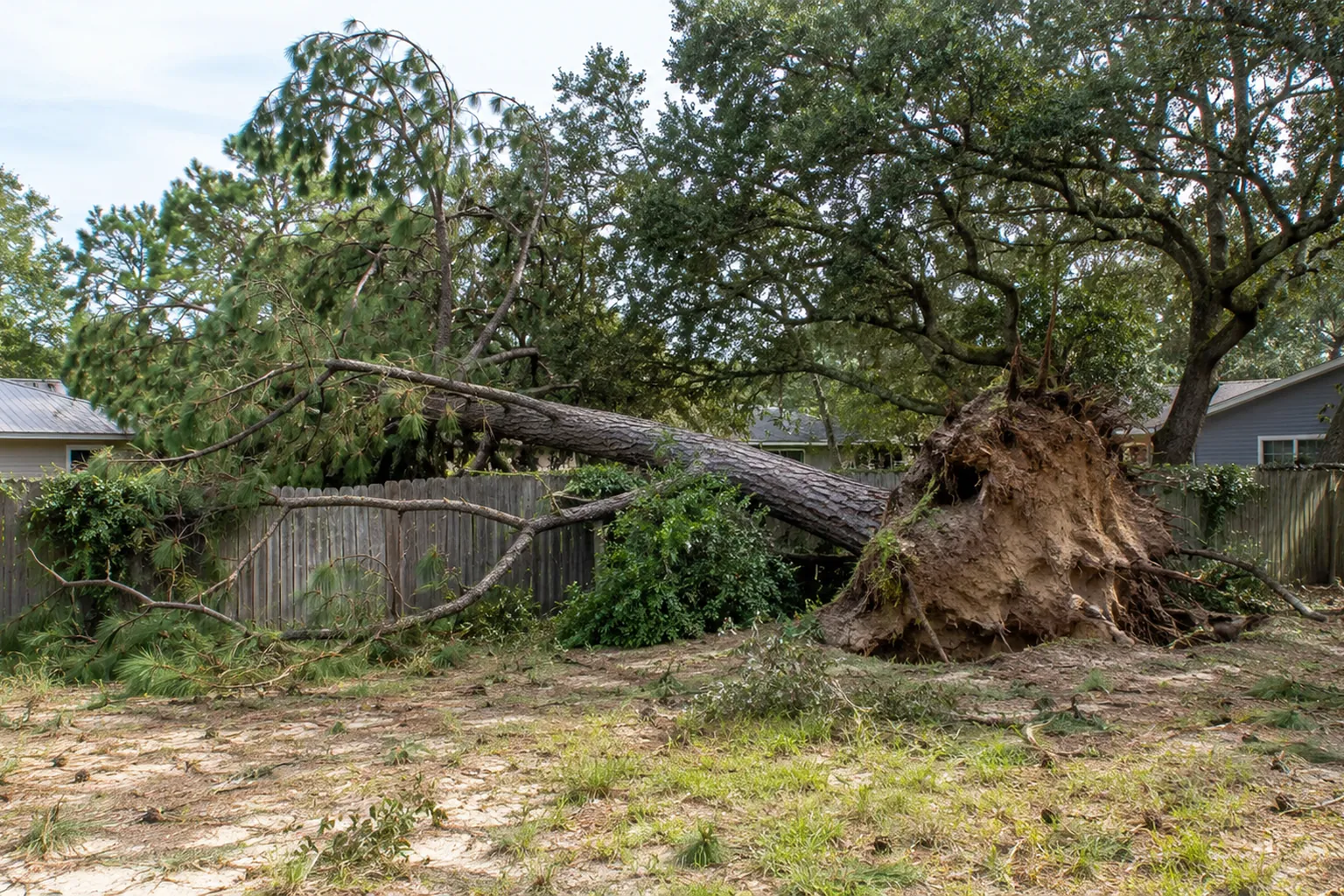
Visible cracks and large wounds on the main trunk, limbs, or main roots help show whether a tree can be restored. UF/IFAS also says major trunk damage is often beyond repair. Read its restoration criteria. Ask the assessor to explain any such findings in writing.
For each entry, record these details only when already visible:
- The tree's location, using a clear landmark.
- Any branch or trunk touching a fence, shed, or roof.
- Any visible crack, broken top, or exposed root area.
- The entrance or path you want checked.
- What you could not see from your position.
A useful request for a tree check states the choice you need to make. Ask whether the tree should be removed, restored, or assessed further. Then ask what supports that choice. If you want a fair check of whether a tree can stay, ask for more than a removal price.
If two providers give different advice, ask each to explain their view of the same tree. Keep each recommendation beside the matching photos. This makes their views easier to discuss. It also keeps the issue apart from other work.
What should you check across Mobile, Baldwin, and Escambia counties?
Use the property's full address each time you ask for local details. The Pensacola cleanup hub provides nearby reading, while the Emerald Coast cleanup guide covers planning farther east. These guides do not replace current official instructions. They also do not confirm that a contractor can reach your address or take your job.
NWS Mobile lists Mobile County emergency management, Baldwin County emergency management, and Escambia County emergency information as local starting points. See the NWS local information list. When using Escambia information, state whether the property is in Florida or Alabama.
Keep a short record of the questions you still need answered:
- Does the latest notice allow access to this address?
- Which office handles questions about this property?
- Is there a current debris collection notice?
- Which materials and pile locations does that notice describe?
- Who can answer any tree removal permission question?
These are questions to verify, not promises of public collection. Keep the notice date and the office's reply with your plan. If a contractor wants to stage debris by the road, ask which current rule supports that spot. Do not treat a neighbor's plan as the answer for your yard.
For several properties, use a separate page for each address. Put county notices, access replies, and contractor quotes on the matching page. This helps keep an Alabama instruction out of a Florida job. It also keeps a quote for one property from being approved for another.
How do you separate tree recovery from tree removal?
Ask whether each damaged tree can recover before you approve its removal. The tree risk assessment helps frame that discussion. The tree risk assessment addresses another possible concern. Each tree still needs its own assessment and recommendation. Related reading: Pensacola guide.
- UF/IFAS says trees can recover from full leaf loss or major crown damage. Its advice for early cleanup is to remove broken limbs and keep as much live wood as possible. It warns against cutting the whole crown back to stubs. Read the recovery and pruning guidance. Ask what a proposed pruning job would leave intact.
- Request two clear descriptions: work needed now and care proposed later. UF/IFAS notes that restoring a tree often takes several pruning visits. The timing depends on its age, health, size, species, and damage. See its recovery factors. The cleanup quote should state whether it covers later visits.
Keep species questions precise. UF/IFAS reports that live oaks recover from damage better than laurel oaks. That does not show whether a given tree should be kept. Read its species discussion. For a pine, ask the assessor to explain its condition. Do not use a recovery plan meant for an oak.
Palms need a separate discussion. UF/IFAS advises leaving broken green leaves attached in many cases. It also advises waiting at least six months to judge recovery. Read its palm guidance. Ask which leaves present a concern and what follow-up would show whether the palm is recovering.
What should a debris removal quote include?
Define the result you want before comparing hauling quotes. The storm debris hauling helps organize debris questions. The storm damage tree removal page covers the broader work category. Ask each provider to state what it will take from the property and what it will leave when its work ends.
- Identify each tree or debris pile included in the quote.
- List cutting, lifting, loading, transport, and disposal as separate questions.
- State whether stump work and ground cleanup are included.
- Describe the proposed entrance, equipment route, and staging area.
- List excluded work and the agreed finished condition.
- Explain how changes will be priced and approved.
Ask how the proposed route will protect trees you plan to keep. UF/IFAS advises keeping heavy equipment and vehicles out of areas set aside for trees you will keep or have just planted. This helps prevent soil compaction. Read its site protection guidance. Request a route plan before equipment arrives.
For a staged job, name who handles each remaining task. Keep the tree work quote beside the hauling quote. Before you sign either agreement, check that both list the same piles, access plan, and planned finish.
When should you plan stump work and replacement trees?
Keep stump work and new planting visible as separate choices in the plan. The guide to post-hurricane replanting in Pensacola helps organize replacement questions. The hurricane tree removal page provides context for the earlier stage. Ask what each proposal covers before assuming that removal also prepares a planting space.
- Have the provider describe the intended finish around each stump. Ask whether the work covers grinding, stump removal, leftover material, or soil repair.
- Use the same wording when seeking another quote. Discuss these choices before you agree to the work. You do not need to approve every task at once.
Before you plant, UF/IFAS says to find out where underground utilities are. Its site guidance also considers overhead wires, buildings, soil drainage, salt, and root space. Read its site evaluation guidance. Ask how those factors shape both the choice of tree and where to plant it.
If you see saltwater flooding afterward, note where and when you saw it. UF/IFAS notes that hurricane storm surge can cause significant salt-related tree dieback. See its salt damage discussion. Share that history with the assessor without deciding that salt caused every change.
Ask for a tree that suits the site, rather than a promise of a hurricane-proof tree. UF/IFAS states that no tree or species is fully windproof. Read its wind resistance cautions. Include care needs and mature size in the planting discussion.
Frequently Asked Questions
Compare the written plan as well as the price. Read the tree risk assessment and the tree removal. Use them to plan questions about who the provider is, what work is proposed, and why any work is said to be urgent.
Before signing, check these points together:
- Are the trees and tasks clearly identified?
- Are recovery choices explained where proposed?
- Are access, hauling, and excluded tasks clear?
- Are dates, payment terms, and changes written down?
Does leaf loss mean a tree must be removed?
No. UF/IFAS says trees can recover from complete leaf loss, while major trunk damage is often beyond repair. Read its restoration criteria. Ask for an assessment of the actual damage. Have the written recommendation distinguish leaf loss from the findings that support removal, recovery, or further inspection.
Can a regular cleanup quote cover wood near power lines?
Do not assume it does. UF/IFAS says limbs near power lines require a qualified line-clearance arborist because electrical work is dangerous. See its electrical hazard guidance. Flag the location when requesting help. Ask who will handle that concern and what must happen before other tree work proceeds nearby.
How soon can I judge whether a damaged palm will recover?
UF/IFAS says it may take at least six months to see signs of recovery. It advises close checks over the next one to two years. Read its palm recovery guidance. Ask for a follow-up plan. If removal is advised now, ask for a clear reason based on more than how the palm looks.
Who can answer questions about insurance coverage?
Use your policy and speak with your insurer or agent about coverage. Keep that reply apart from the contractor's work scope. The Florida insurance overview explains that debris and tree removal coverage can have limits. Save the reply with the date and contact name. A work estimate alone does not confirm policy coverage.
Does a storm advisory prove my home has tree damage?
No. The advisory describes the storm and expected conditions; it does not record damage at your address. Keep the forecast separate from your own property notes; label photos by place and time. Describe only what they show. Use the official advisory for storm information and your records for property questions. Read the advisory.
Related Reading And Scope
See the Pensacola tree guide and tree risk assessment guide for related background.
For related reading, see the Pensacola tree guide and tree removal guide. For a property outside Volusia or Flagler County, contact a local tree professional.
Florida Foliage is a Daytona Beach tree service that works with an ISA Certified Arborist consultant. For a property in Volusia or Flagler County, call (386) 481-7913 to request an estimate.
Drafting disclosure: This article was drafted with AI assistance using public sources. It does not independently verify live forecasts, site conditions, pickup notices, or insurance coverage. Check current details with the responsible agency or a qualified local professional.
Call (386) 481-7913 to talk through next steps.