Reviewed by Clinton Funk
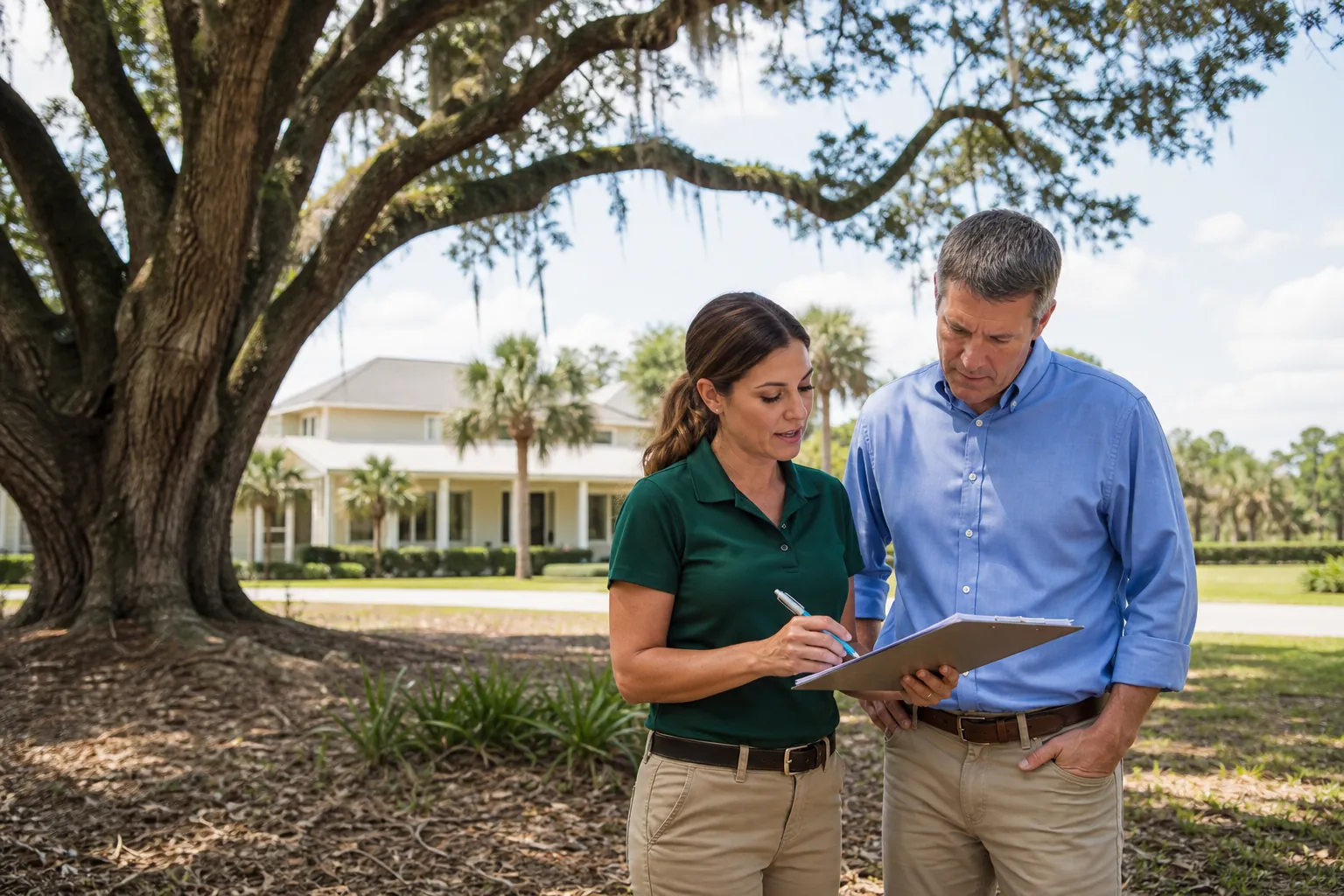
A large tree can be an asset, a maintenance responsibility, or a concern that needs closer examination. When a property decision depends on its condition or value, photographs and informal opinions may not provide enough information. A written arborist report can organize observations, explain limitations, and recommend practical next steps.
A tree appraisal answers a different question: what value can reasonably be assigned to a tree for a defined purpose? Although reports and appraisals may overlap, they are not interchangeable. Understanding that distinction helps Flagler County homeowners, property managers, and community associations request documentation suited to their situation.
If you are searching for arborist report tree appraisal Flagler County information, start with the decision you need to make. Whether you are considering tree work, documenting damage, or reviewing a property concern, the purpose should guide the scope of the assessment.
What An Arborist Report Can Tell You
An arborist report documents findings about one or more trees. Depending on the assignment, it may describe species, approximate dimensions, visible condition, structural concerns, growing conditions, and recommended work. A useful report connects those observations to the property owner's questions rather than simply labeling a tree good or bad.
For example, a tree may have healthy foliage but a concerning branch attachment above a frequently used walkway. Another may have sparse foliage associated with restricted rooting space. Those situations call for different interpretations and potentially different management choices.
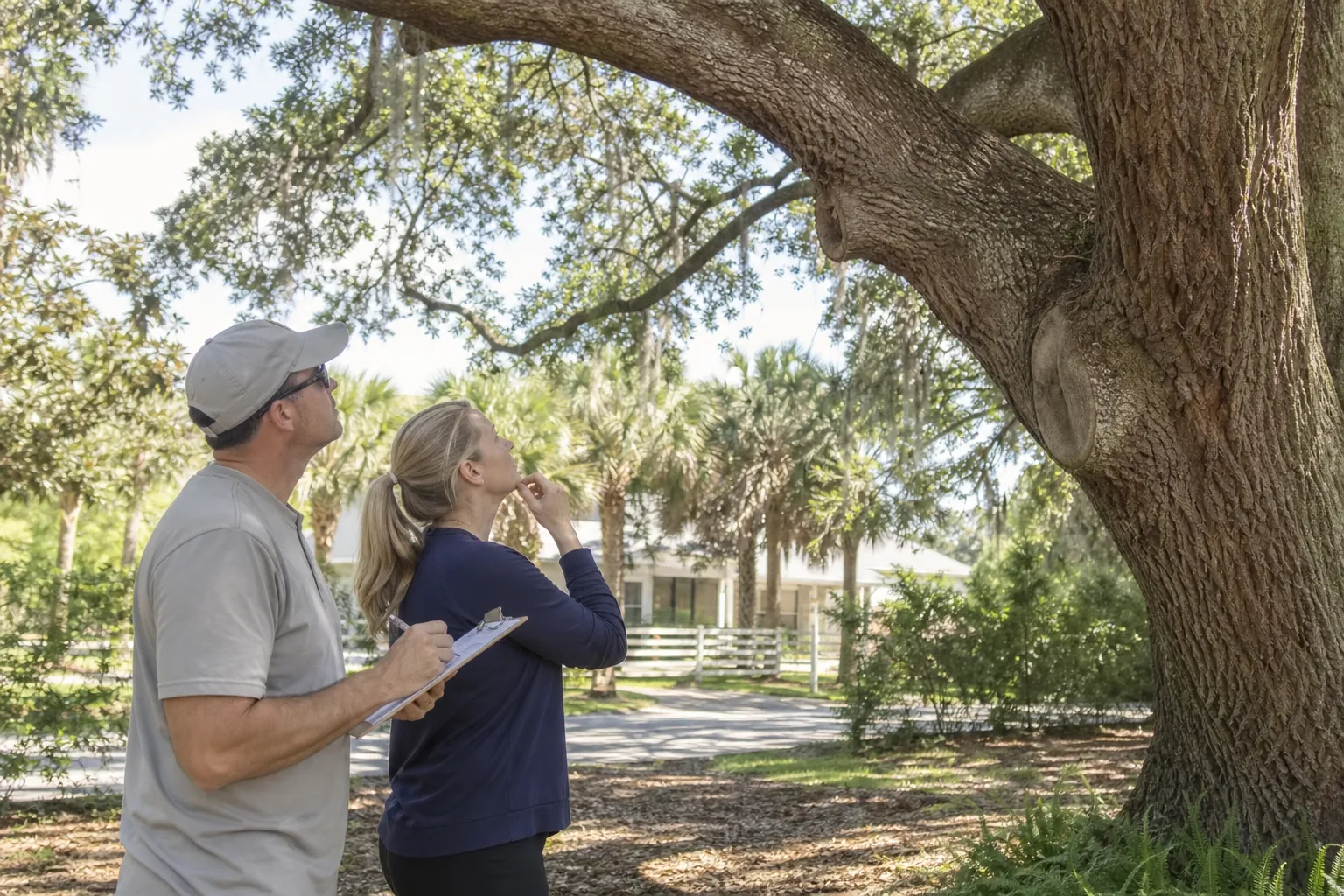
The report should identify which trees were examined and explain how the inspection was performed. A ground-level visual inspection has limitations. It does not automatically reveal internal decay, concealed root damage, or conditions high in the canopy. Any unresolved concern should be described without overstating what the inspection establishes.
- A condition report can document visible health and structural observations for a specific tree.
- A management report can help prioritize tree trimming, monitoring, or tree removal across a property.
- A project-related report can describe existing trees and concerns associated with proposed site changes.
- A damage report can record observed injuries and explain whether additional evaluation is appropriate.
Ask what the report will include before scheduling. The level of detail needed for routine maintenance may differ from the documentation requested by a reviewing agency, insurer, or legal representative.
How A Tree Appraisal Differs From An Inspection
A tree inspection focuses on condition and management. A tree appraisal develops an opinion of monetary value for a stated purpose and date. The appraisal process may use information from an inspection, but it also requires a suitable valuation method and clearly explained assumptions.
Tree value is not determined by trunk size alone. Species, condition, location, landscape contribution, and the feasibility of replacement may matter. A tree shading a residence has a different setting from a similar tree growing in an unmanaged area. The assignment determines which characteristics are relevant.
Different valuation approaches may be appropriate for different circumstances. Replacing a small landscape tree is not the same task as evaluating a mature tree that cannot practically be replaced with an equivalent specimen. An appraisal should explain why its selected approach fits the situation.
An appraised value is also not automatically the amount an insurer will pay or a court will award. Coverage terms, legal standards, ownership, causation, and other evidence can affect those decisions. For a claim or dispute, ask the intended recipient what qualifications, format, and supporting material they require.
Florida Foliage provides arborist reports and tree inspections. If your assignment specifically requires a formal monetary appraisal, confirm that scope and any required qualifications before proceeding. Do not assume that every inspection includes a valuation.
When Written Tree Documentation Is Useful
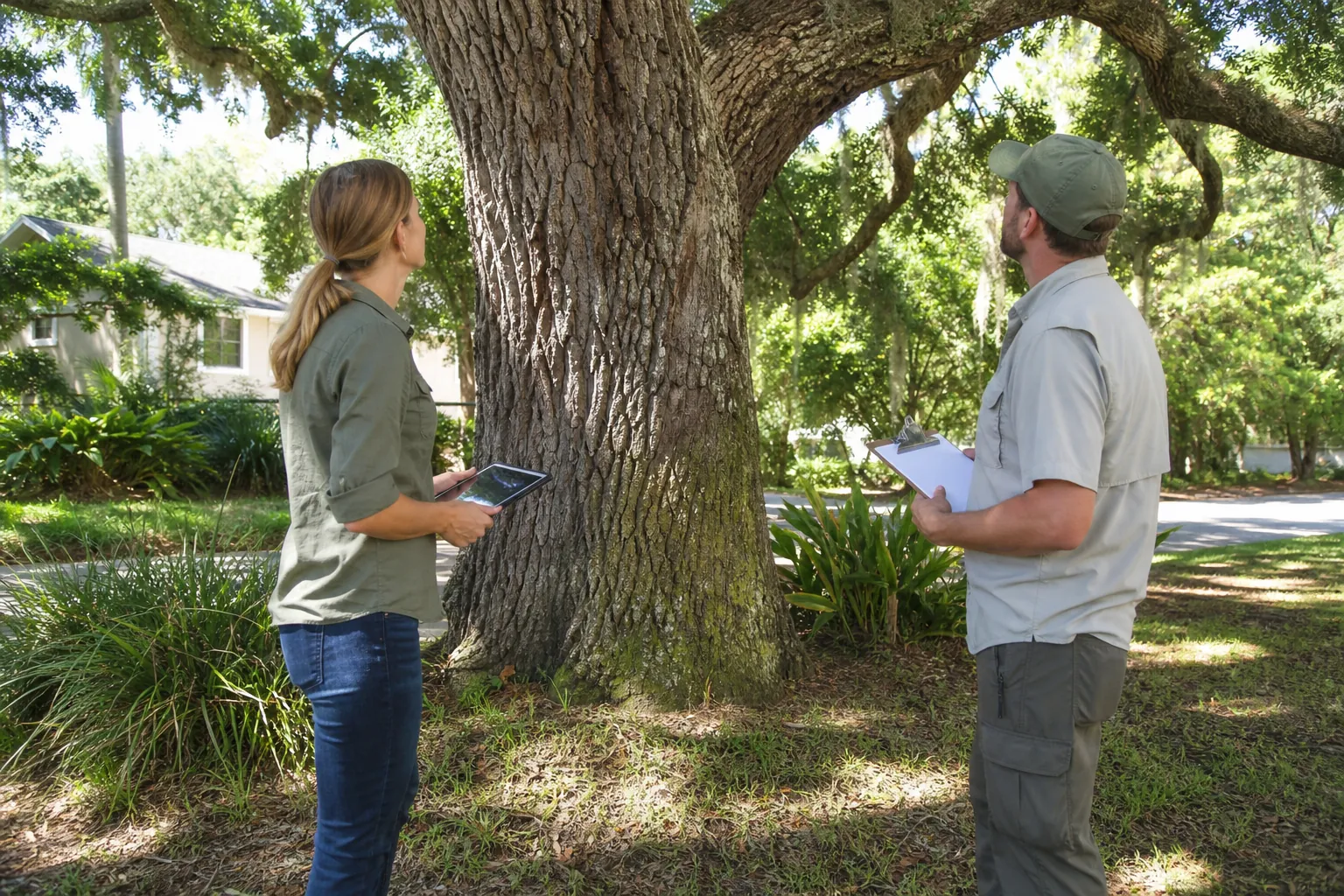
Written documentation is most useful when a decision needs a clear record. It can help separate observable facts from assumptions and give everyone involved a common reference. This is particularly helpful when multiple owners, contractors, or property representatives are discussing the same tree.
On residential properties, common questions involve trees near homes, driveways, fences, and outdoor gathering areas. An owner may want to understand whether a visible defect calls for management, whether storm damage has changed a tree's condition, or how proposed work could affect nearby trees.
Commercial properties and shared communities often need a broader perspective. A single report may need to identify multiple trees, distinguish immediate concerns from routine maintenance, and explain priorities in a format that a board or property manager can use.
- Before purchasing property, request documentation when a particular tree concern could affect your planned use of the site.
- Before major site work, document trees that may be affected by equipment access, excavation, or changes around their roots.
- After damage, record visible conditions promptly while keeping people away from unstable trees and hanging branches.
- For an HOA or condo review, identify the specific maintenance decision the board needs to make.
- For an insurance or legal matter, confirm documentation requirements with the appropriate representative before commissioning a report.
A report should support a defined decision. Requesting a broad document without explaining its intended use can leave you with information that does not answer the question that matters.
Flagler County Site Conditions Worth Considering
Tree assessments in Flagler County should account for the actual site rather than treating every Florida property alike. Coastal exposure, soil drainage, available rooting space, and nearby structures can influence tree condition and management options. Two trees of the same species may perform differently on different lots.
Wind exposure is especially relevant when reviewing trees near occupied areas. An open site, a sheltered courtyard, and the edge of a recently cleared lot can present different conditions. Removing neighboring vegetation can change the exposure of trees that remain.
Drainage also deserves attention. Standing water, changes in grade, and compacted soil can affect roots. Conversely, restricted soil volume beside pavement may limit available moisture. An inspection should consider these conditions without assigning a cause that the available evidence cannot support.
Property boundaries matter as well. Before requesting work or an appraisal, identify whether the tree is on your parcel, a shared area, or neighboring land. If ownership or access is uncertain, resolve that issue before authorizing work. A tree assessment does not settle a boundary dispute.
Requirements can vary by city, county jurisdiction, property type, and project. Confirm any applicable tree protection, removal, or documentation requirements with your city or Flagler County. If the property belongs to an HOA or condo association, check its review process too. A report does not itself authorize tree work.
What To Gather Before The Site Visit
Good preparation makes the inspection more focused. Start with a brief description of the concern, when you first noticed it, and what decision you hope to make. Include whether a report is for personal planning, a community review, a project, or a third-party request.
Collect existing records if they are available. Older photographs may show whether a lean, wound, or canopy change is recent. Previous tree work, storm damage, nearby excavation, and drainage changes can provide important context. Share uncertainty rather than filling gaps with guesses.
- Provide the property address and a simple description of how to find each tree.
- Gather photographs that show the entire tree, the trunk base, and the specific area of concern.
- Share relevant surveys or site plans while noting that their boundaries may require separate verification.
- List known changes such as trenching, paving, construction access, or removal of nearby trees.
- Provide written requirements from an insurer, association, or reviewing office when available.
- Explain access restrictions, pets, locked gates, and areas that cannot safely be entered.
Photographs are helpful, but they do not replace a site inspection when the assignment requires one. Take pictures from a safe position. Do not climb a damaged tree, stand beneath a suspended limb, or approach electrical lines to get a better view.
What A Useful Report Should Include
A practical report should make it easy to connect findings to the correct tree. On a property with several similar trees, descriptions alone may be confusing. Photographs, numbered tree references, or a simple location sketch can improve clarity.
The document should state the assignment, inspection date, and assessment scope. It should distinguish direct observations from interpretations and recommendations. If access was restricted or part of a tree could not be examined, that limitation belongs in the report.
Recommendations should also be specific enough to guide the next step. A vague instruction to prune a tree leaves important questions unanswered. When tree trimming, canopy thinning, or crown reduction is recommended, the purpose of the work should be clear and tied to the findings.
- The report should identify the trees assessed and the locations relevant to the assignment.
- The findings should describe observed conditions without implying that hidden conditions were fully examined.
- The recommendations should explain the intended management outcome and any need for further assessment.
- The limitations should acknowledge inaccessible areas, missing history, and other factors affecting interpretation.
- A formal appraisal should state its purpose, valuation date, method, and key assumptions.
No report can guarantee that a tree will remain unchanged or never fail. Trees are living structures, and weather or site alterations can change their condition. Ask when reassessment may be appropriate and what developments should prompt another inspection.
Turning Findings Into Practical Tree Care
The value of a report comes from using it to make informed decisions. Some findings may support continued observation. Others may lead to targeted tree trimming, canopy thinning, crown reduction, or tree removal. The appropriate choice depends on the tree, its surroundings, and the objective.
Not every defect requires removal, and pruning is not a universal solution. Removing branches cannot correct every trunk or root problem. Excessive pruning can also create new concerns. Recommended work should address the documented issue rather than follow a one-size-fits-all approach.
When removal is selected, access and nearby structures influence planning. Crane tree removal may be relevant where the tree's position or site constraints make other methods unsuitable. Stump grinding is a separate consideration after removal and should be discussed in relation to access, nearby features, and intended site use.
Land and lot clearing or brush hogging can change a site's vegetation and equipment access. Before those activities begin, identify trees intended to remain and discuss how work near them may affect trunks, roots, and soil. Keeping a tree standing is not the same as protecting its growing conditions.
For larger properties, Florida Foliage offers commercial tree services and HOA and condo tree services. Written findings can help organize work by location and priority, making it easier to communicate which tasks address specific concerns and which are routine maintenance.
Documenting Storm Damage Without Delaying Safety
After a hurricane or severe storm, safety comes before documentation. Stay clear of uprooted trees, split trunks, lodged limbs, and trees contacting utility lines. Contact the appropriate utility or emergency authorities when electrical hazards or immediate public danger are present.
If the area is safe, photographs taken before cleanup can preserve useful information. Capture broad views and visible damage without entering the affected zone. Note the date and what you observed, but avoid claiming that a particular cause has been established unless it has been evaluated.
Emergency and hurricane tree removal may be needed before a complete written assessment can be prepared. Ask whether safe, pre-work photographs and observations can be recorded as part of the process. Documentation should not require anyone to delay necessary action around an immediate hazard.
Keep reports, photographs, correspondence, and work records together. If an insurer or legal representative is involved, ask what they need before disposing of materials when it is safe and practical to do so. Their requirements may differ from the information needed to plan tree care.
Questions To Ask Before Requesting A Report
Clear expectations help you obtain the right documentation. Explain your intended use and ask whether the proposed scope addresses it. A brief inspection summary and a detailed report for a contested matter are different assignments.
- Ask whether the document will assess condition, recommend work, provide monetary valuation, or address a combination of these purposes.
- Ask what qualifications the intended recipient requires and whether the person preparing the document meets them.
- Ask which trees are included and how their locations will be identified.
- Ask what inspection methods are proposed and what limitations will remain.
- Ask whether additional information or assessment might be needed before conclusions can be reached.
- Ask how recommendations will be explained so you can distinguish routine care from more urgent concerns.
Be cautious about conclusions based only on a photograph or statements that promise absolute certainty. A sound assessment should explain what is known, what remains uncertain, and how those limits affect the recommendation.
Plan Your Next Step With Florida Foliage
For Flagler County property owners, the best starting point is a clear question and a defined scope. Decide whether you need a condition assessment, a written management recommendation, or a formal appraisal for a specific recipient. Gather relevant records and confirm local requirements before scheduling work.
Florida Foliage provides arborist reports and tree inspections, along with tree care services that can support an appropriate management plan. To discuss your property, the trees involved, and the documentation you need, call (386) 481-7913. A focused conversation can help clarify the next step without assuming that every tree needs removal or every report needs a monetary value.
Call (386) 481-7913 to talk through next steps.