Reviewed by Clinton Funk
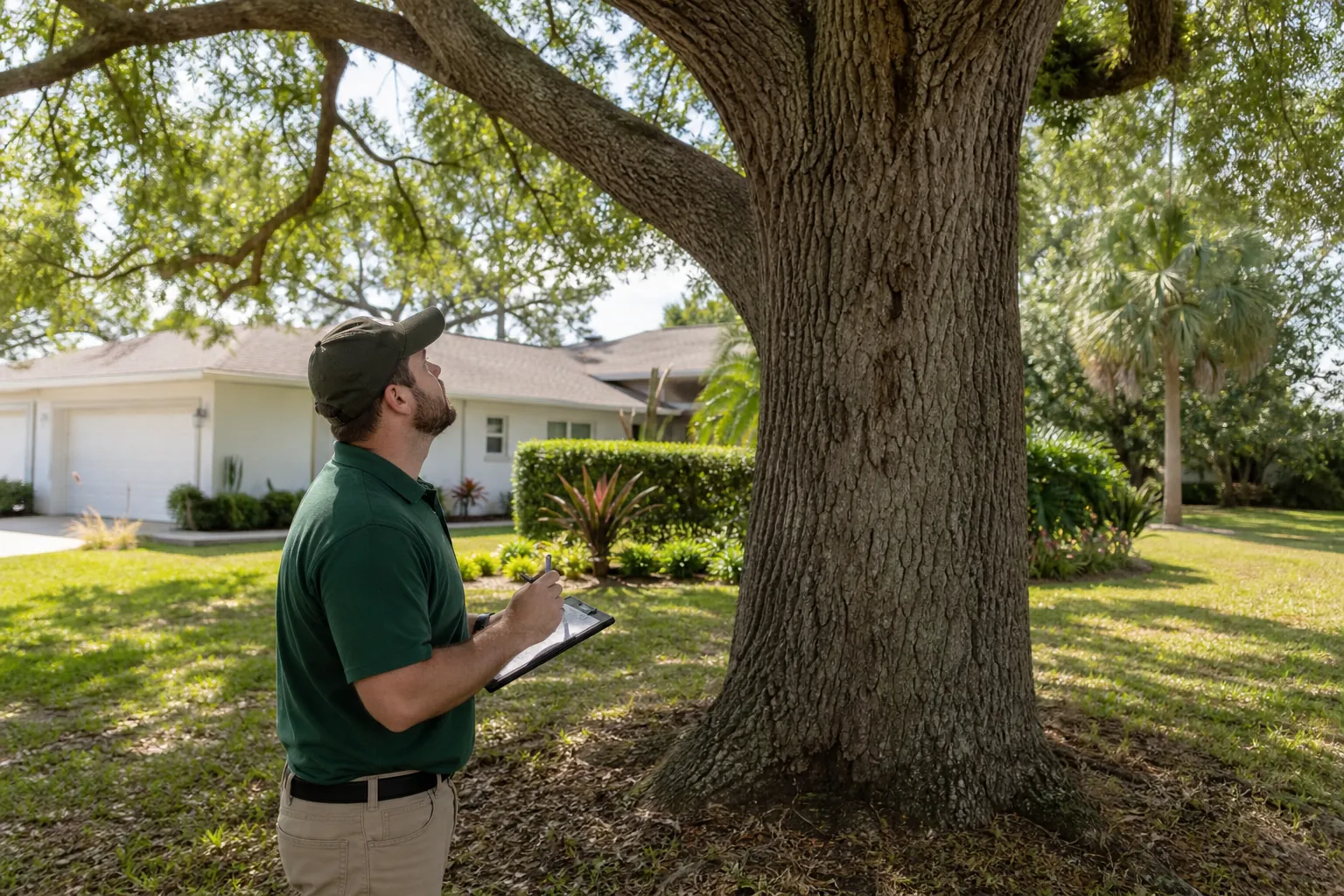
A tree can look familiar from the driveway and still be difficult to identify correctly. Similar leaves, seasonal changes, storm damage, and years of pruning can hide the features that distinguish one species from another. In Volusia County, accurate identification is a useful starting point for understanding a tree's condition and deciding what information belongs in an arborist report.
If you are searching for an arborist report for tree identification in Volusia County, it helps to know what an inspection can establish, what a written report should explain, and which questions to ask before scheduling. Florida Foliage provides arborist reports and tree inspections, along with tree services for residential, commercial, HOA, and condo properties.
Why Tree Identification Belongs In An Arborist Report
Tree identification provides context for an inspection. A growth pattern that is typical for one species may deserve closer attention in another. Expected mature size, branching habits, leaf characteristics, and tolerance of site conditions can all influence how an arborist interprets what is visible.
Identification also makes a report easier to use. A recommendation referring only to 'the large tree by the driveway' can become confusing when several trees occupy the same area. A species name, a tree number, and a location description create a clearer record.
Common names are helpful for everyday conversation, but they are not always precise. Different trees may share a common name, and regional names may vary. Including a scientific name when identification is sufficiently supported can reduce ambiguity.
The species name alone does not establish whether a tree is healthy or whether it should remain. Condition, structure, surroundings, and the purpose of the assessment still matter. A useful report connects identification with observations rather than treating the name as the final answer.
How An Arborist Identifies A Tree
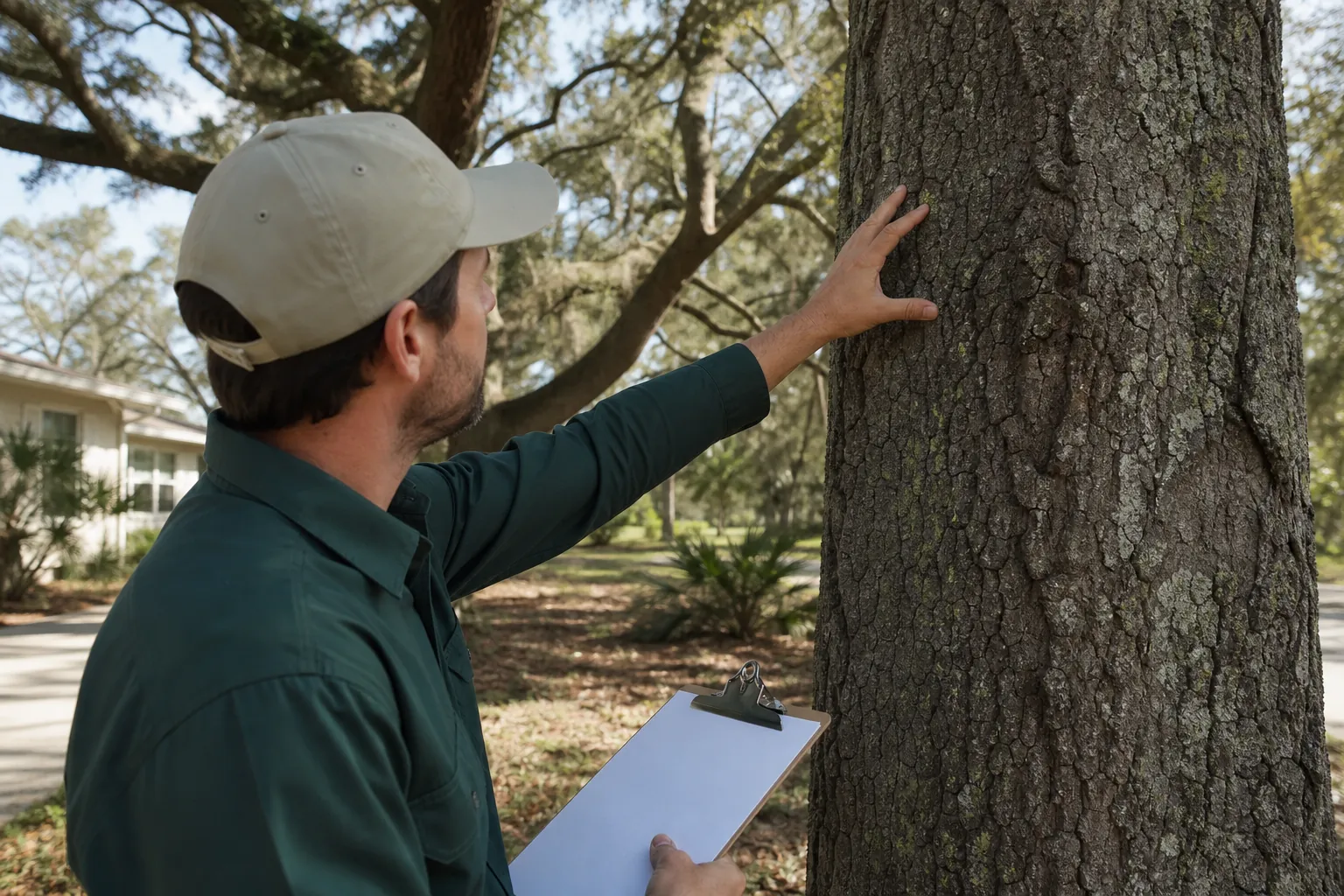
Identification generally relies on several features considered together. Leaves are often the first clue, but bark, buds, twigs, branching patterns, fruit, flowers, and overall form can provide important supporting evidence. No single feature should carry more weight than it can reasonably support.
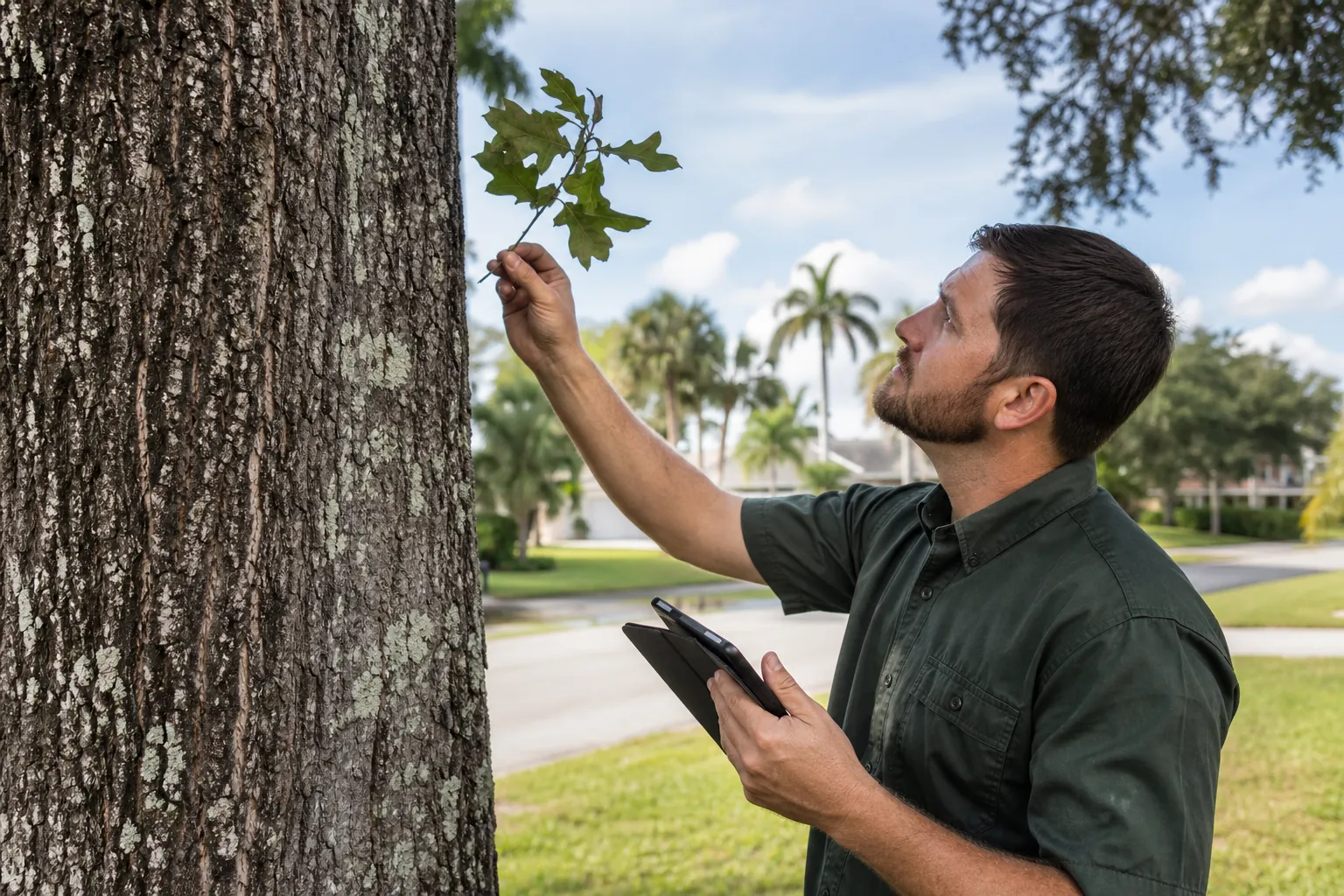
Leaf arrangement can be especially useful. An arborist may examine whether leaves occur opposite each other or alternate along a twig, whether a leaf is simple or compound, and how its edges and veins are shaped. A detached leaflet can be mistaken for an entire leaf, so looking at intact growth matters.
Bark changes as trees mature. Young bark may look quite different from bark on an older trunk of the same species. Storm wounds, surface growth, and previous trimming can also obscure normal characteristics.
- Photograph leaves while they are still attached to a twig, showing both arrangement and shape.
- Include a close view of the bark and a wider view of the whole tree.
- Photograph flowers, fruit, seed structures, or buds if they are present and safely accessible.
- Explain whether a specimen came from the tree being assessed or was found loose on the ground.
Photos can help with initial discussion, but they may not support a confident identification. Closely related species, cultivated varieties, or trees without accessible foliage may require an on-site examination. When uncertainty remains, the report should acknowledge it.
What A Useful Arborist Report Should Document
An arborist report should have a clear purpose. A homeowner seeking maintenance guidance needs different information from a property manager comparing several trees or an owner preparing documentation for a local review. Agreeing on that purpose before the visit helps avoid a report that misses the actual question.
The report should identify the trees assessed and explain how they were located. On a small property, photographs and written descriptions may be enough. On a larger site, tree numbers linked to a sketch or supplied site plan can make recommendations easier to follow.
Measurements may include trunk diameter, estimated height, or canopy spread, depending on the assignment. The report should make clear which measurements were taken and which were estimated. Precision should match the method used.
- The report should state the inspection date and identify the property or assessment area.
- Each assessed tree should have a clear identifier, location, and species identification where supported.
- Observations should distinguish visible conditions from information supplied by the owner or manager.
- Recommendations should explain the concern being addressed and any suggested priority.
- Limitations should describe access restrictions, concealed areas, or other conditions affecting the assessment.
A written report is a record of conditions observed at a particular time. It cannot guarantee that a tree will remain unchanged or never fail. Weather, construction, root disturbance, and biological changes can alter conditions after the inspection.
Reading Tree Condition Without Jumping To Conclusions
A tree inspection considers more than whether the crown looks green. Foliage condition, dead branches, branch attachments, trunk defects, root-zone conditions, and the surrounding site may all be relevant. A full canopy can coexist with structural concerns, while sparse foliage can have several possible explanations.
Visible cavities, cracks, fungal growth, or damaged roots deserve attention, but their significance depends on context. Their location, extent, and relationship to the rest of the tree matter. An arborist should explain why an observation affects a recommendation rather than simply listing alarming features.
The surroundings are equally important. A branch extending over an unused area presents a different exposure from one extending over a frequently used entrance. Buildings, parking spaces, walkways, roads, and gathering areas help define where a failure could cause harm.
A ground-based visual inspection has limits. It may not reveal internal conditions or concealed root problems. If the available evidence does not answer the central question, the report should describe what remains uncertain and whether further assessment is appropriate.
Volusia County Conditions That Deserve Attention
Volusia County properties range from coastal settings to inland neighborhoods and wooded lots. Exposure, drainage, soil conditions, and surrounding development can vary substantially. An arborist should consider the actual site rather than assuming that every Florida property presents the same growing conditions.
Coastal exposure can affect foliage and growth, while saturated ground can complicate root conditions. Compacted soil, added fill, pavement, and excavation can also affect trees. The visible symptoms may appear well after the original disturbance, making a property history valuable.
Hurricanes and other strong storms can break branches, expose preexisting weaknesses, or change a tree's position. An inspection after a storm should consider both obvious damage and changes the owner has noticed, such as newly lifted soil or a recent lean.
Owners should not enter an unsafe area to collect evidence. Hanging branches, partially fallen trees, and trees near damaged utility lines require caution. Keep people away from the affected area and contact the utility when its lines are involved.
Florida Foliage offers emergency and hurricane tree removal. For a nonurgent concern, arborist reports and tree inspections can help document conditions before deciding whether tree trimming, removal, or another appropriate service is warranted.
When Identification Helps With Local Review
Tree identification may matter when a property owner is considering tree removal, construction, or land and lot clearing. Local requirements can differ according to jurisdiction, property circumstances, tree characteristics, and the proposed work. A report should not assume that one rule applies throughout Volusia County.
Confirm the applicable requirements directly with your city or county before work begins. Ask whether documentation is required, what information it must contain, and whether the reviewing authority specifies qualifications for the person preparing it.
An arborist report can describe species, condition, and the basis for a recommendation, but it is not automatically an authorization to proceed. The local reviewing authority determines whether a submission meets its requirements.
- Confirm whether your property falls within a municipality or an unincorporated county area.
- Ask the reviewing office whether it needs specific measurements, photographs, or a site plan.
- Provide any written documentation instructions before the inspection is scheduled.
- Keep the submitted report and any subsequent correspondence with your property records.
For HOA and condo properties, community review may be separate from government review. Property managers should confirm both processes rather than assuming that approval from one party satisfies the other.
How Findings Can Guide Tree Work
The value of a report is often in the connection between observations and a practical next step. Not every concern leads to tree removal, and not every crowded canopy needs thinning. Recommendations should be proportionate to the issue and compatible with the tree's condition.
Tree trimming may address selected dead, damaged, or interfering branches. Canopy thinning and crown reduction are distinct approaches, not interchangeable terms. Where either is recommended, the intended objective and scope should be clear.
Removing excessive foliage can create new problems rather than resolve existing ones. A report should avoid vague instructions such as 'cut it back hard' and instead explain what the proposed work is intended to accomplish. Species identification helps inform that discussion.
If tree removal is recommended, the report should explain the basis. Site access and nearby structures may influence how the work is planned. Crane tree removal may be considered for some access or handling situations, but equipment choices do not follow from species identification alone.
Stump grinding is a separate decision after removal. Nearby utilities, access, and the intended future use of the area affect planning. Likewise, land and lot clearing or brush hogging should be discussed with attention to which vegetation is intended to remain.
Preparing For A Tree Inspection
Good preparation helps the inspection focus on the right questions. Start by explaining why you need the report. Are you concerned about a changed lean, planning nearby work, responding to a request for documentation, or trying to identify several trees?
Share relevant history without treating it as a diagnosis. Recent trenching, driveway work, soil changes, storm damage, or previous tree trimming can provide useful context. Approximate dates are helpful when exact records are unavailable.
If several trees are involved, use temporary labels or a simple marked photograph to show which ones concern you. Avoid attaching anything that damages bark or creates a hazard. The inspector can establish a consistent numbering system for the report.
- Provide safe access to the inspection area and explain any locked gates or restricted spaces.
- Share earlier reports and photographs if they show how conditions have changed.
- Identify nearby features that matter, including entrances, parking areas, and frequently used outdoor spaces.
- Tell the inspector about planned excavation, construction, or changes to the surrounding landscape.
- Supply any city, county, HOA, or condo documentation request before the visit.
Do not remove suspicious branches or alter the area solely to improve its appearance before an inspection. Changes can erase useful evidence. If an immediate hazard requires action, prioritize safety and describe what was changed afterward.
Using Reports On Commercial, HOA, And Condo Properties
Properties with many trees benefit from consistent identification and recordkeeping. Tree numbers, location references, and comparable observations can help managers track recommendations without confusing similar-looking trees in different parts of the site.
A report can also help explain a proposed course of action to owners, residents, or board members. Clear language is important because most readers will not have arboricultural training. Photographs should support the findings, and technical terms should be explained where they affect decisions.
Priorities should be understandable rather than buried in a long inventory. Managers need to know which concerns require timely attention, which recommendations relate to routine work, and which trees may need follow-up observation.
Florida Foliage provides commercial tree services and HOA and condo tree services, as well as arborist reports and tree inspections. When arranging an assessment, explain who will use the report and whether recommendations need to be organized by building, common area, or tree number.
Questions To Ask Before Requesting A Report
Before scheduling, clarify the expected deliverable. A verbal opinion during a visit is not the same as a written report. Ask whether the assignment includes species identification, photographs, measurements, recommendations, and documentation of inspection limitations.
Also ask about the experience and qualifications of the person who will inspect the trees and prepare the report. If a reviewing authority requires a particular credential or format, confirm that requirement in advance rather than assuming any report will qualify.
Finally, ask how uncertain findings will be handled. Responsible reporting should allow for an unresolved identification or a condition that cannot be fully evaluated within the agreed scope. Clear limits are more useful than unsupported certainty.
For help with tree identification and an arborist report in Volusia County, call Florida Foliage at (386) 481-7913. Describe the property, the trees involved, and the question you need answered so the inspection can be planned around your actual needs.
Call (386) 481-7913 to talk through next steps.