Reviewed by Clinton Funk
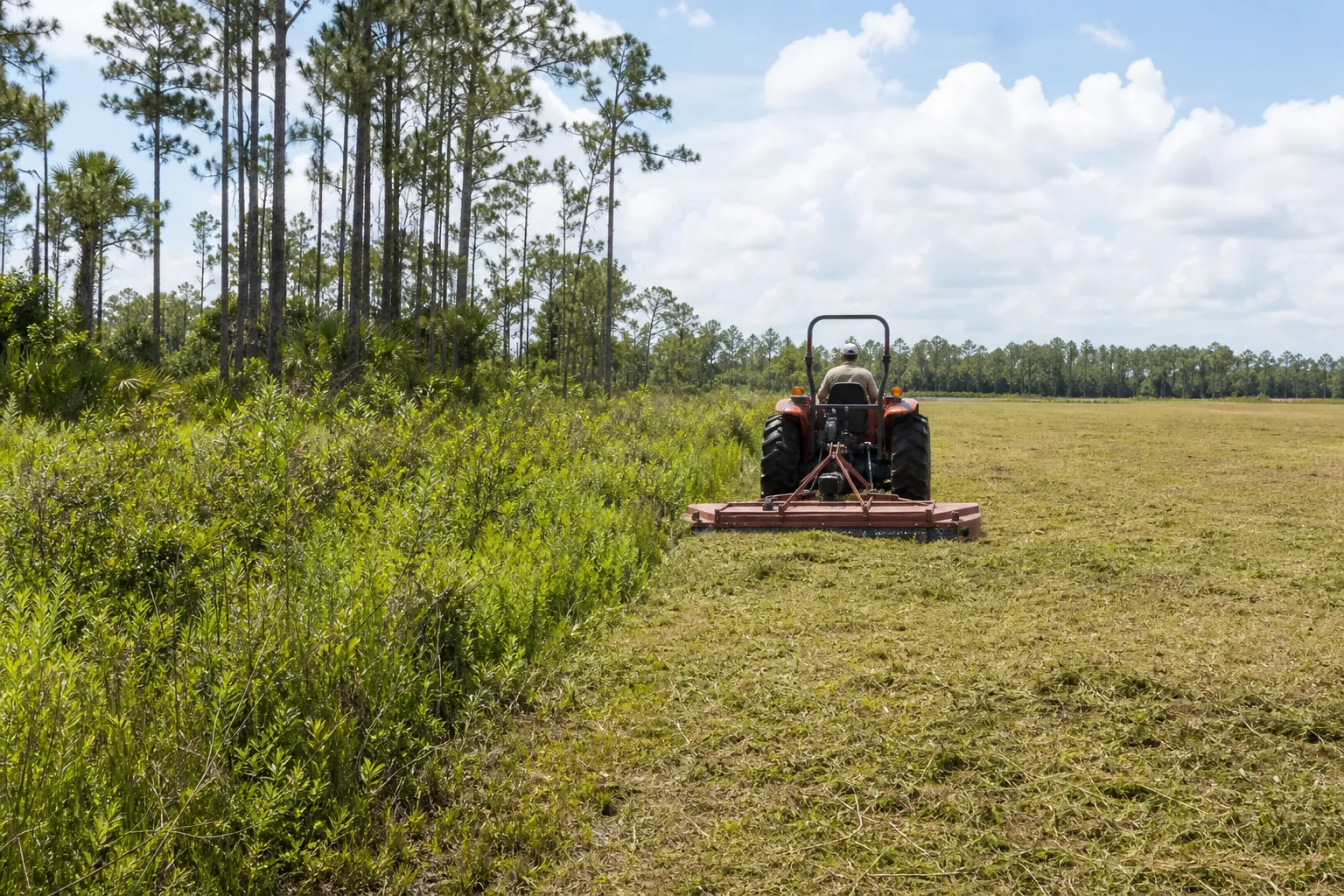
An overgrown lot can look straightforward from the road while hiding conditions that change the work considerably. Tall grass may conceal fallen limbs, uneven ground, old fencing, or woody growth that needs a different approach. That is why understanding brush hogging cost in Volusia County starts with understanding the property, not simply measuring its acreage.
Brush hogging generally uses a heavy-duty rotary cutter to reduce tall grass, weeds, and suitable light brush. It is not the same as removing trees, grinding stumps, or completely clearing a wooded parcel. A useful estimate should explain what vegetation can be cut, where equipment can operate, and what the property will look like afterward.
Florida Foliage helps property owners evaluate brush hogging alongside tree care and land and lot clearing needs. This guide explains the conditions that shape an estimate, what to prepare before requesting one, and how to compare proposals without overlooking important details.
Start With The Result You Want
Before discussing equipment or scheduling, define why you want the area cut. Maintaining an open field requires a different scope from reclaiming the edge of a wooded property. Improving visibility along a driveway is also different from preparing an entire parcel for a future use.
Be specific about the area you want treated and the vegetation you want preserved. A rough sketch, marked photograph, or walkthrough can help separate cutting areas from trees, planted beds, fences, and other features that should remain untouched.
The desired finish matters as much as the starting condition. Brush hogging usually leaves cut vegetation on the ground and does not create the smooth appearance of a maintained lawn. Woody fragments, uneven stubble, and existing ground irregularities may remain. Ask what finish is realistic for your site.
- Explain whether your goal is routine upkeep, improved access, or reducing overgrowth on an unused section of the property.
- Identify trees, planted areas, and other features that should be protected during cutting.
- Clarify whether cut material can remain in place or whether the proposed scope must address larger existing debris.
- Describe any future use of the land so the estimate does not confuse brush hogging with more extensive clearing.
A clear objective helps prevent paying for unnecessary work or accepting a proposal that does not achieve the result you actually need.
Vegetation Type And Density Shape The Work
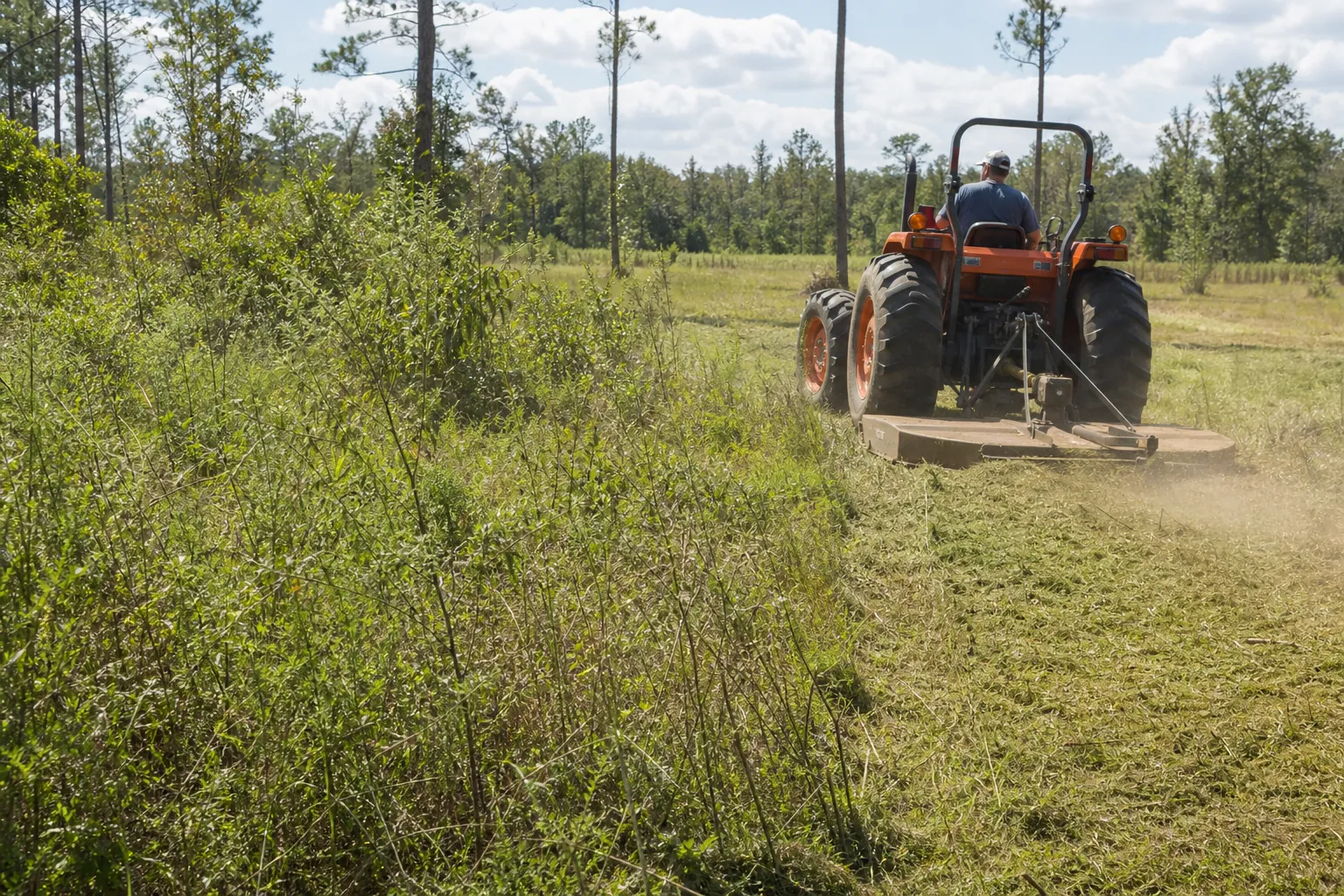
Two parcels of similar size can require very different amounts of effort. Open grass with scattered weeds is not equivalent to dense, tangled growth containing woody stems and hidden obstacles. Vegetation height is useful information, but density and stem characteristics often reveal more about the job.
Light brush that falls within the cutter's operating limits may be suitable for brush hogging. Larger woody growth may require land and lot clearing or tree removal instead. The appropriate method depends on the actual vegetation and the equipment selected for the site.
A property assessment should distinguish between standing vegetation and material already on the ground. Fallen branches, logs, and old storm debris can interfere with cutting. They also make it harder to see depressions, abandoned wire, or objects that could damage equipment.
Dense vines around trees deserve particular attention. Cutting nearby vegetation does not automatically resolve the condition of a vine-covered tree. If a tree appears damaged, unstable, or in decline, tree inspections or an arborist report may help clarify the tree-related concerns before work proceeds.
When requesting an estimate, photograph both the overall growth and representative close-up areas. Include patches that look more difficult than the rest. Showing only the easiest section can lead to a scope that does not reflect the whole property.
Acreage Matters, But Usable Access Matters Too
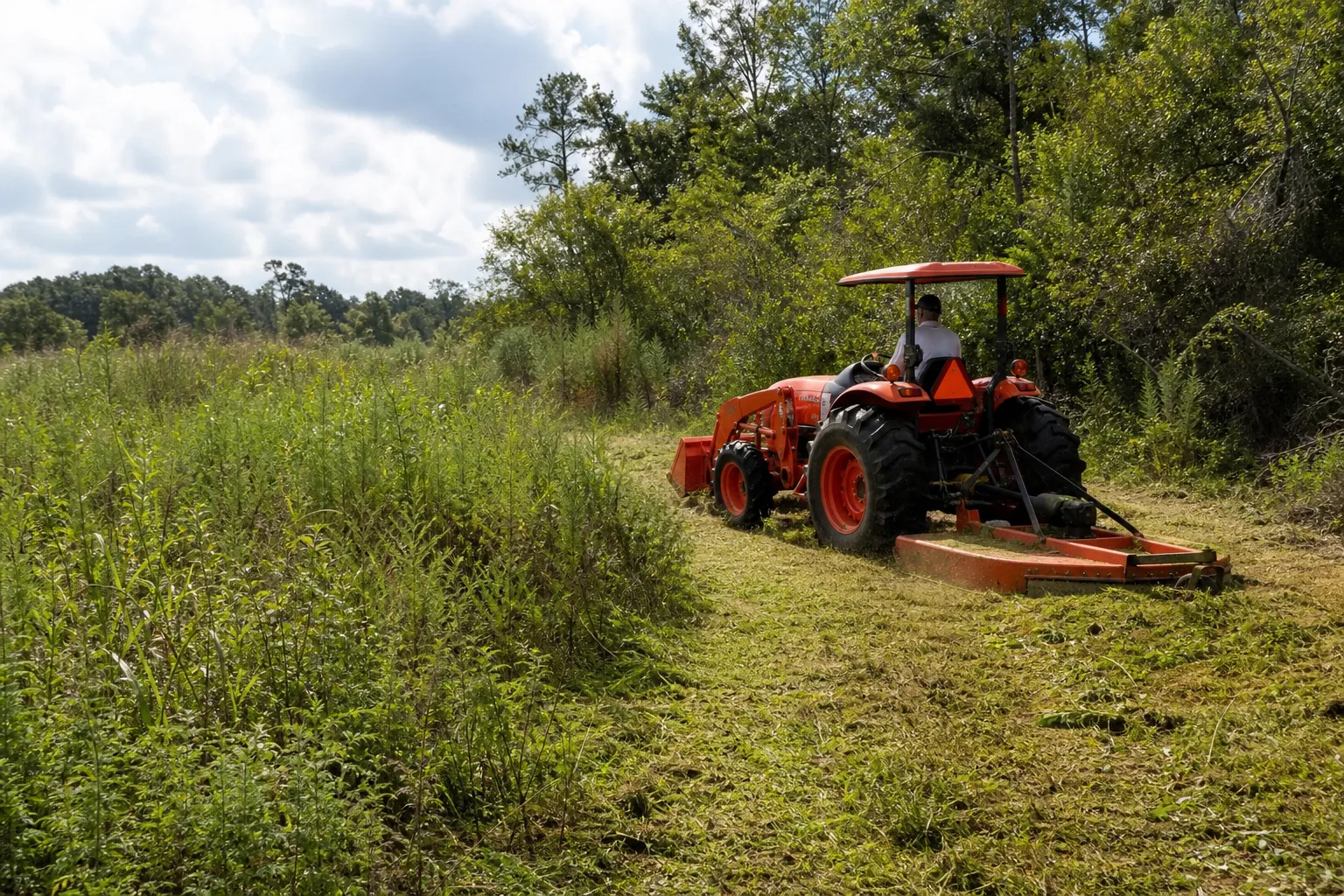
Parcel size is a starting point, not a complete description of the cutting area. A property may include a house, wooded sections, water features, fences, or areas the owner does not want disturbed. Estimates should be based on the area actually included in the work.
The shape of that area also matters. A broad, open section allows a different working pattern than several narrow strips separated by trees and structures. Frequent turns, tight corners, and isolated pockets of vegetation can add complexity even when the total area is modest.
Equipment access begins at the road. Gate openings, driveway conditions, overhead branches, and space for unloading all affect whether suitable equipment can reach the work zone. An access route should be evaluated separately from the ground that needs cutting.
- Measure gate openings and share clear photographs of the proposed equipment entrance.
- Identify narrow passages between buildings, fences, and established trees.
- Explain whether the cutting area is continuous or divided into separate sections.
- Point out overhead branches or other obstructions along the access route.
- Tell the estimator whether vehicles, stored materials, or other movable items will block entry.
Do not assume that a route accessible to a passenger vehicle will suit brush hogging equipment. Confirm the proposed entry point and any preparation needed before the crew arrives.
Ground Conditions And Weather Affect The Plan
In Florida, recent rainfall can change whether a property is suitable for equipment access. Soft soil, standing water, and saturated low spots may limit where machinery can travel without creating avoidable ground disturbance. A dry-looking entrance does not necessarily indicate dry conditions across the parcel.
Tell the estimator about areas that stay wet, become soft after rain, or have caused vehicles to get stuck. Photos taken after rainfall can be helpful because they show conditions that may not be visible during a dry-weather visit.
Slopes, drainage features, and uneven ground also influence the approach. Some conditions may require leaving a portion uncut or choosing a different scope. Existing holes and abrupt changes in elevation can be difficult to see beneath tall vegetation.
Scheduling should allow for a ground-condition check rather than relying only on a calendar date. If conditions change between the estimate and the work, ask how that affects access, the treatment area, and any proposed revision to the scope.
Brush hogging should not be described as a solution for drainage problems or unstable ground. It reduces suitable vegetation, but it does not correct the underlying terrain. Separating those issues keeps expectations realistic.
Hidden Obstacles Can Change An Estimate
Overgrowth can conceal materials left by previous owners, contractors, or storm events. Wire, scrap metal, concrete pieces, buried fence remnants, and loose objects can create hazards for operators and people nearby. They can also interrupt work or make certain areas unsuitable for cutting.
Share what you know even if you are unsure where an item is located. Mention old fence lines, former structures, past dumping, and any areas where construction materials may remain. Mark known obstacles from a safe position rather than walking into dense growth to investigate.
Property features deserve the same attention. Wells, septic components, irrigation equipment, utility fixtures, and similar features should be identified when their locations are known. Ask how the work area will be checked and what information the owner needs to provide.
If hidden material is discovered, the original scope may need review. A useful proposal explains how unexpected obstacles will be handled and how approval will be obtained before additional work is undertaken. That is more helpful than assuming every concealed condition is included.
Keep children, pets, and bystanders away from the operating area. Ask the contractor about the required exclusion area and follow the site-specific instructions provided for the equipment being used.
Brush Hogging Vs. Land And Lot Clearing
These services can overlap on an overgrown property, but they are not interchangeable. Brush hogging primarily cuts suitable aboveground growth. Land and lot clearing addresses a broader scope that may include vegetation beyond the cutter's capabilities and other work specifically identified in the proposal.
Tree removal is a separate consideration when established trees are involved. Stump grinding is also distinct from cutting surrounding grass and brush. If stumps remain in the work zone, they may affect equipment travel and the finish that can be achieved.
Tree trimming, canopy thinning, or crown reduction may be relevant when retained trees need attention, but those services should not be automatically added to a brush hogging project. Tree work should follow the condition of the tree and the property owner's objectives, not simply the presence of overgrowth nearby.
Crane tree removal may be considered for certain tree-removal situations involving access or surrounding structures. It is not a substitute for brush hogging. Likewise, emergency and hurricane tree removal addresses urgent tree-related conditions rather than routine vegetation cutting.
Ask for a proposal that separates brush hogging from any additional tree or clearing work. Clear service boundaries make it easier to understand the estimate, prioritize tasks, and decide whether the project should happen in stages.
What A Useful Brush Hogging Estimate Should Explain
A detailed scope is more valuable than a vague description such as cutting the lot. It should identify the treatment area, the expected vegetation limits, and the conditions that could prevent completion of a particular section.
The proposal should also describe the expected finish. Ask whether cut material will remain scattered on the ground, whether larger existing debris is excluded, and whether inaccessible edges will be left untreated. Those details can materially change how useful the result is to you.
- The estimate should identify the areas included and any areas specifically excluded from cutting.
- The scope should explain what vegetation is suitable for the proposed equipment and what requires separate evaluation.
- The proposal should state how known obstacles, retained trees, and property features will be approached.
- The estimate should clarify what happens if wet ground or concealed debris limits the planned work.
- The proposal should describe any separate tree removal, stump grinding, or land and lot clearing work.
- The scheduling discussion should explain what site preparation the owner must complete before arrival.
Ask about insurance coverage appropriate to the proposed work and request documentation when needed. Also confirm who will answer questions during the project. A named contact and a clear approval process help avoid misunderstandings if site conditions differ from the initial assessment.
How To Compare Proposals Fairly
Compare scopes before comparing totals. One proposal may cover only an accessible central area while another includes several difficult sections. One may leave all cut material in place while another describes a different scope for existing debris. Those are not equivalent projects.
Use the same photographs, boundaries, and desired outcome when speaking with each provider. If one assessment reveals a condition you previously overlooked, share that information with the others so the comparison remains consistent.
Look closely at exclusions rather than treating them as fine print. An excluded wooded edge, wet pocket, or debris-filled section may be exactly where you need the most improvement. Ask whether it can be evaluated separately instead of assuming it will be addressed during the visit.
A clear estimate should let you explain, in your own words, what will be cut and what will remain. If you cannot do that after reading the proposal, request clarification before approving the work.
Planning For Repeat Maintenance And Shared Properties
Once a suitable area has been cut, periodic brush hogging may help keep vegetation from returning to the same level of overgrowth. The appropriate timing depends on growth, weather, site conditions, and your intended use of the land. There is no single schedule that fits every Volusia County property.
Document the first visit with photographs and keep notes about sections that were inaccessible or particularly dense. Those records can help define the next scope and show whether the original treatment area still matches your needs.
For commercial properties, coordinate access and work zones with daily activity. Parking areas, delivery routes, and pedestrian movement may require additional planning. Commercial tree services can be discussed separately when trees also need attention.
For shared residential grounds, HOA and condo tree services may be relevant to the tree portion of a larger project. Brush hogging boundaries, owner approvals, and resident communication should be clarified before work begins so everyone understands which areas are included.
Confirm Local Requirements Before Changing The Property
Do not assume that every overgrown area can be cut or cleared without further review. Requirements may depend on the location, property conditions, vegetation involved, and proposed scope. Confirm applicable requirements with your city or Volusia County before proceeding, especially when the project extends beyond routine cutting.
Ask about requirements affecting trees, environmentally sensitive areas, or other site-specific features when relevant. Confirm property boundaries as well. An apparent clearing line or old fence does not necessarily establish the legal limit of your parcel.
If tree condition is part of the decision, arborist reports and tree inspections can provide information about the trees being evaluated. They do not replace confirmation of local requirements or ownership boundaries.
Prepare For A Practical Property Review
Gather current photos, a description of the cutting area, access details, and notes about wet ground or hidden obstacles. Explain the finish you want and whether you are considering any separate tree or clearing work.
For a discussion about brush hogging on your Volusia County property, call Florida Foliage at (386) 481-7913. A clear review of the site and your goals is the best starting point for an estimate that reflects the work you actually need.
Call (386) 481-7913 to talk through next steps.