Reviewed by Clinton Funk
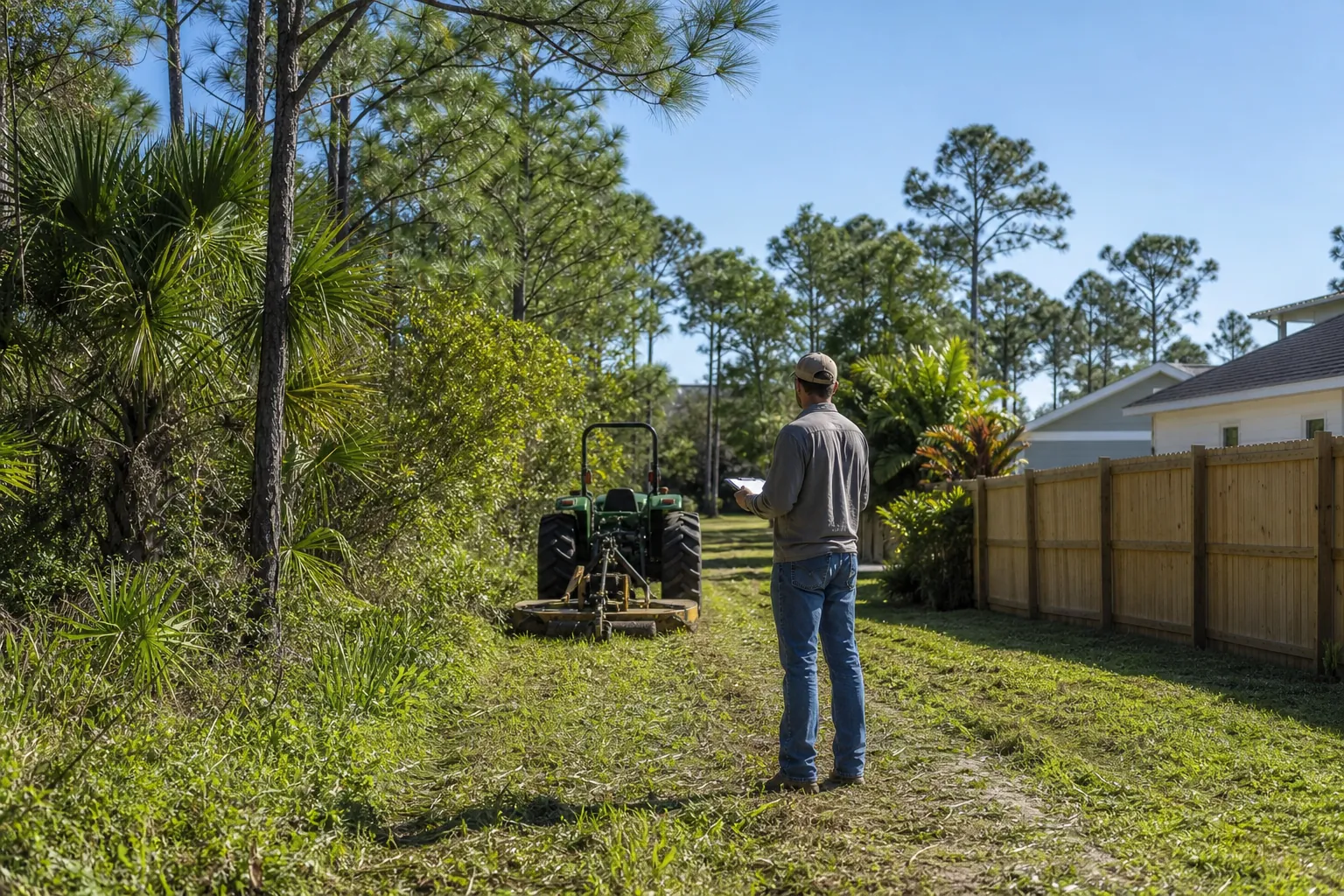
A brush-covered lot can look straightforward from the street while hiding a difficult equipment route. A narrow gate, low branches, soft ground, or an unseen drainage feature may determine whether machinery can reach the vegetation safely. In Palm Coast, checking those conditions before scheduling brush hogging helps property owners define a realistic scope and avoid unnecessary disturbance.
If you are researching brush hogging equipment access Palm Coast property owners should consider, start with the route into the property, not just the area you want cut. Access includes delivery, unloading, travel, maneuvering, and a safe exit. Each part matters, especially where vegetation borders homes, retained trees, neighboring lots, or wet ground.
This guide explains what to measure, what to identify, and what to discuss with Florida Foliage before work begins. It also clarifies when brush hogging fits the project and when tree removal, stump grinding, or land and lot clearing may require a separate plan.
Understand What Brush Hogging Can And Cannot Do
Brush hogging cuts overgrown vegetation with equipment suited to the material and site conditions. It can be appropriate for tall grass, weeds, and certain types of brush. Whether woody growth can be handled depends on its size, density, and the specific machine and attachment selected.
It is not the same as removing every obstacle from a property. Existing stumps, substantial trees, buried debris, and uneven ground do not disappear simply because vegetation is cut. Cut material may remain on the ground, and the finished area should not automatically be expected to resemble a lawn or a construction-ready surface.
Discuss the intended result before choosing a method. Opening an overgrown section for visibility is different from preparing an entire lot for a future use. Land and lot clearing may involve a broader scope, while tree removal and stump grinding address specific obstacles that brush hogging alone may leave behind.
- Explain whether your priority is improved visibility, vegetation reduction, access to part of the property, or ongoing maintenance.
- Identify trees and landscape features that should remain untouched throughout the work.
- Ask what cut material will remain and how that affects walking, mowing, or other future use.
- Separate the brush hogging area from any trees or stumps that need their own evaluation.
A clear goal helps the operator choose an appropriate approach without assuming that every overgrown area needs the same treatment.
Measure The Entire Equipment Route
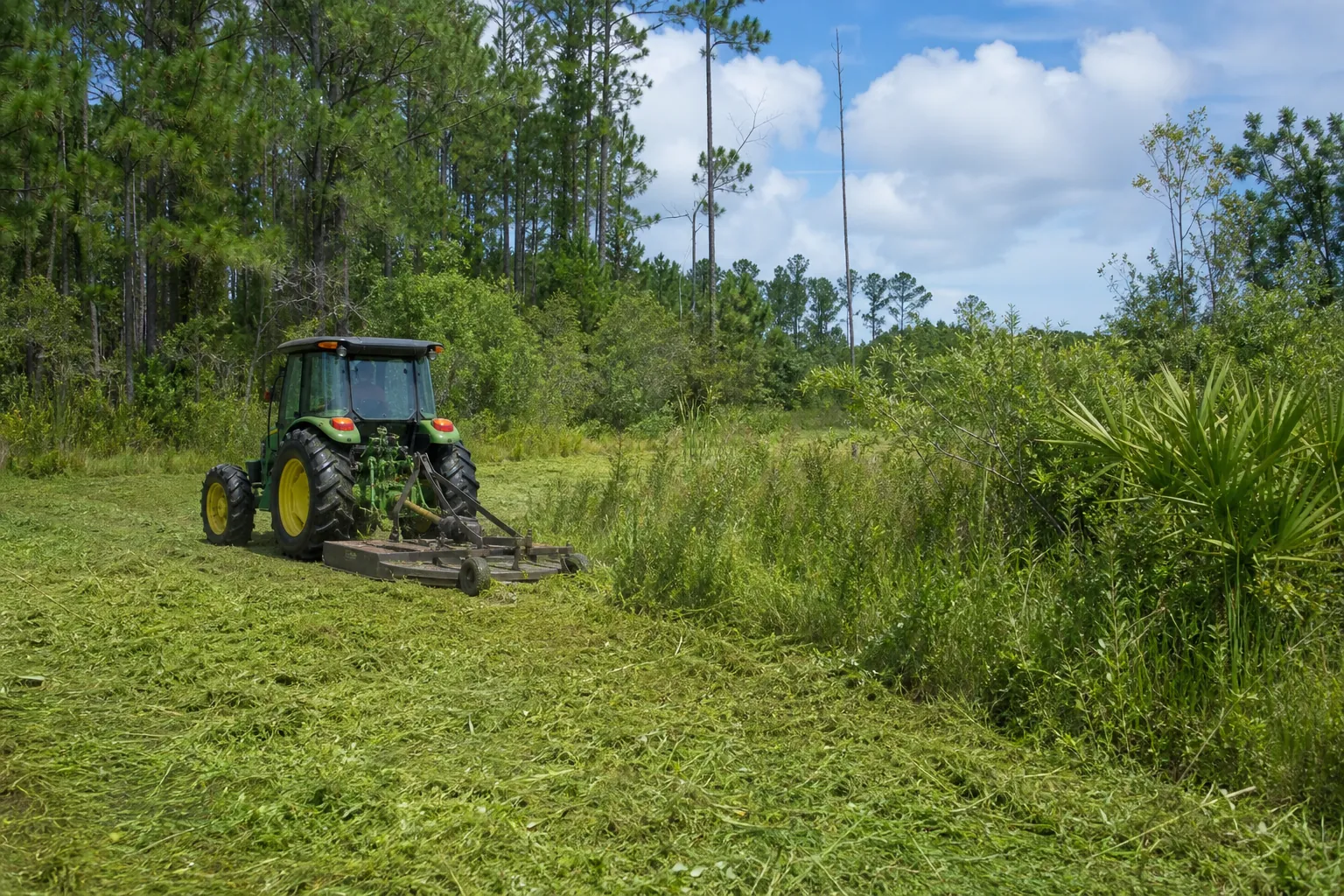
The narrowest point in the route often controls access. Measure the actual clear opening of a gate rather than relying on its advertised size. Posts, hinges, latches, leaning panels, and vegetation can reduce usable space. A gate that appears wide enough may still be difficult to approach at an angle.
Do not stop measuring at the entrance. Check the route from the unloading location to the work area, including passages beside buildings, spaces between trees, and any change in direction. Machinery needs room to travel and turn without contacting fences, structures, or retained vegetation.
Vertical clearance deserves equal attention. Low limbs, overhead wires, roof edges, and other overhead features can affect the route. Do not assume that a branch can simply be pushed aside. If tree trimming is needed for access, its scope should be assessed before equipment arrives.
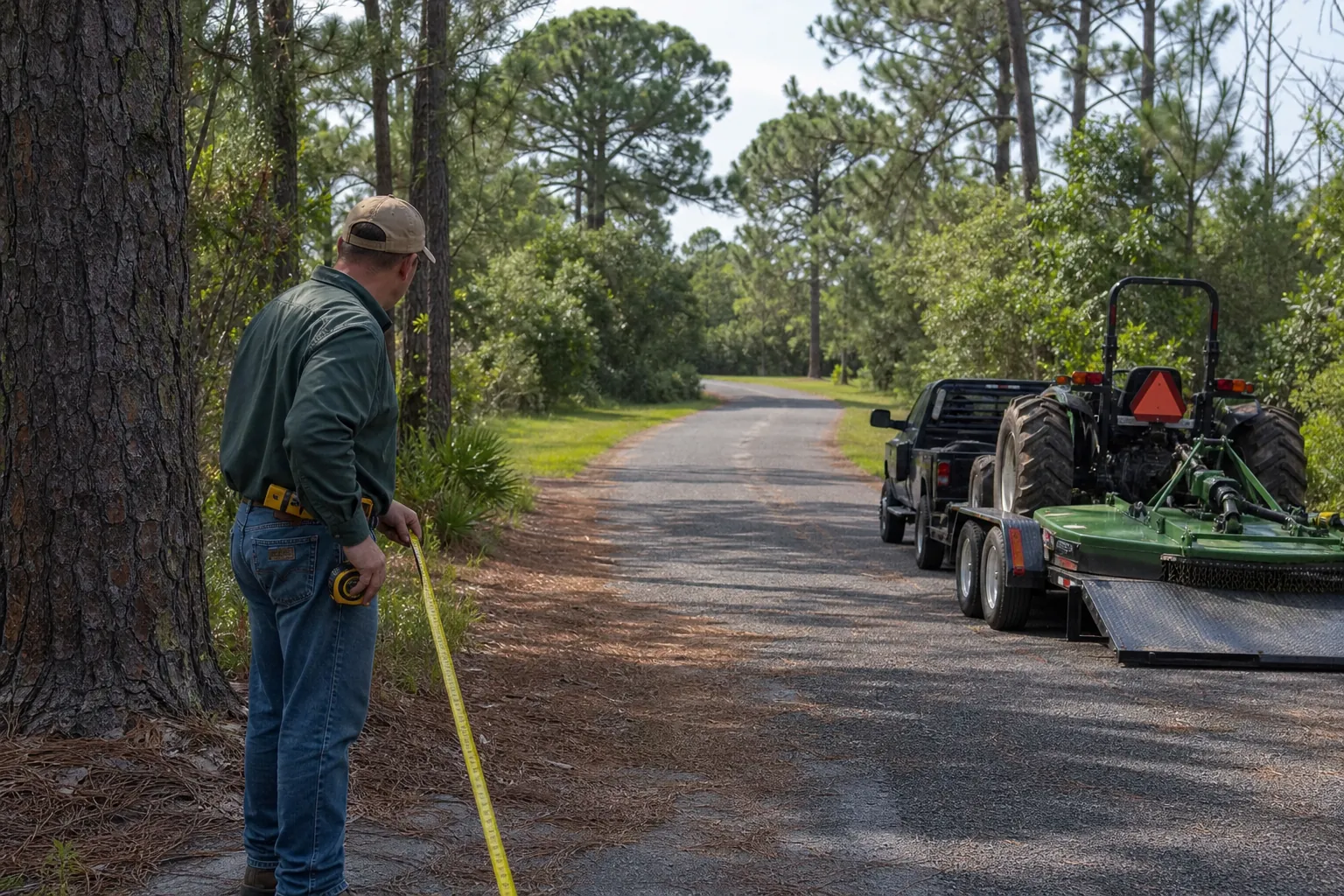
Delivery access may be more restrictive than access for the working machine. A truck and trailer need a suitable approach and a safe place to unload. Sharp turns, a sloped shoulder, or limited maneuvering space can complicate an otherwise usable entrance.
- Record the clear width of every gate and narrow passage along the proposed route.
- Photograph turns, overhead obstacles, and transitions from pavement to soil.
- Show where delivery equipment could stop without blocking another property or creating an unsafe situation.
- Ask Florida Foliage to confirm the needed clearance for the equipment being considered.
There is no single gate measurement that works for every brush hogging setup. Provide your measurements, then let the equipment requirements guide the access decision.
Evaluate Soil, Drainage, And Weather Conditions
Florida weather can change a property's trafficability quickly. Ground that seems firm during a dry period may soften after rain, particularly in low areas or places where water collects. Vegetation can hide standing water and make the soil underneath difficult to judge from a distance.
Walk the proposed route when it is safe to do so and look for persistent puddles, muddy depressions, erosion, and previous tire ruts. Note where the ground changes from a stable driveway to sand, fill, or another surface. Those transitions may matter more than conditions in the cutting area itself.
Equipment weight, tire or track configuration, slope, and soil moisture all influence how machinery interacts with the ground. Tracks do not make a site immune to rutting, and an apparently dry surface does not prove that the soil below can support equipment.
Drainage features need particular attention. Swales, ditches, culverts, and stormwater areas should not be treated as convenient crossings without evaluation. A culvert entrance or narrow crossing may have limitations that are not visible beneath vegetation.
- Tell the crew where water usually collects after rain, even if the area is dry during the visit.
- Identify drainage routes and any structures beneath the proposed travel path.
- Discuss whether recent or forecast rain could require a different route or a scheduling adjustment.
- Agree on when conditions would justify stopping rather than continuing across unstable ground.
The aim is not to promise a mark-free property. It is to recognize sensitive conditions early and choose a route and timing that reduce avoidable disturbance.
Find Hidden Obstacles Before Cutting Begins
Overgrowth can conceal hazards that affect both access and cutting. Wire, old fencing, landscape edging, discarded materials, rocks, and hidden stumps may be difficult to see until vegetation is reduced. Some objects can damage equipment or become projectiles when contacted by a cutting attachment.
Share the property's history if you know it. A former garden, demolished outbuilding, storage area, or fence line may leave obstacles even when nothing is obvious from the street. Do not reach into dense vegetation or attempt to pull unidentified wire just to inspect the area.
Underground features also matter. Septic components, irrigation lines, utility routes, and private service lines may influence where equipment can travel. Surface cutting does not eliminate the possibility of damage from machine weight or contact with exposed components.
Identify utility concerns with the appropriate utility or locating resource before work, especially if the broader project includes ground disturbance. Private lines and property-specific systems may require separate identification. Do not assume that a general marking process identifies everything on the site.
- Mark known obstacles in a way the crew can understand and review the markings together.
- Provide available information about septic systems, irrigation, and private underground lines.
- Point out old fence lines, dumping areas, and places where construction materials may remain.
- Keep people and pets away from the work area and follow the operator's exclusion-zone instructions.
If an unknown object appears during cutting, the appropriate response is to stop and assess it. A slower inspection is preferable to continuing through an unidentified hazard.
Protect Trees And Features You Want To Keep
Equipment access should be planned around retained trees, not just their trunks. Roots extend into surrounding soil, and repeated equipment traffic can compact that soil or damage roots near the surface. A route that narrowly avoids bark contact may still pass through a sensitive root area.
Before work, identify the trees that should remain and discuss protective boundaries with the crew. Where a tree's condition or root sensitivity is uncertain, arborist reports and tree inspections can help inform the plan. The appropriate protection area depends on the tree and site rather than a universal distance.
Low limbs may limit passage, but cutting them solely to fit equipment can create an unsuitable pruning outcome. Tree trimming should be considered with the tree's health and structure in mind. Canopy thinning and crown reduction are distinct tree-care approaches, not automatic solutions for a narrow machinery route.
Stumps can create another access problem. They may obstruct turns or sit just below the vegetation where they are hard to see. Stump grinding may be relevant to a broader project, but its timing, location, and resulting surface conditions should be coordinated rather than assumed.
- Identify retained trees before the crew selects a travel lane through the property.
- Discuss whether an alternate route can avoid unnecessary traffic near important trees.
- Keep equipment travel, turning, and staging away from designated protection areas.
- Ask for an assessment before requesting branch removal purely to create clearance.
These conversations also help distinguish routine access planning from a separate tree issue. A damaged or unstable tree near the route may require evaluation before brush hogging proceeds.
Set Clear Boundaries And Check Local Requirements
Vegetation is not a reliable property marker. A line of shrubs, an old fence, or a change in mowing may not match the legal boundary. Before cutting near neighboring land, establish where the work may occur and provide reliable boundary information when needed.
Access permission deserves the same care. A convenient route across a neighboring lot is not automatically available because the land appears vacant. Any necessary authorization should be resolved before equipment is scheduled.
Easements, drainage areas, wetlands, and other sensitive features may affect the scope or route. Requirements vary with the location and nature of the work. Confirm applicable rules with the City of Palm Coast, Flagler County, or the appropriate authority before proceeding. Do not assume that routine vegetation maintenance and broader land clearing have identical requirements.
For HOA and condo properties, confirm the responsible decision-maker and any community approval process. Commercial sites may also need coordination around tenant access, deliveries, and occupied areas. Commercial tree services and HOA and condo tree services can involve multiple stakeholders, making a written scope especially useful.
- Define the cutting boundary and identify areas that must remain undisturbed.
- Confirm permission for the full access route, including any off-property segment.
- Check relevant city, county, and community requirements for the planned scope.
- Identify who can approve changes if site conditions differ from expectations.
Written boundaries reduce confusion without substituting for a survey, official guidance, or other information the site may require.
Prepare A Useful Site Visit And Work Plan
A productive site visit connects your goals with the actual access conditions. Have gate measurements, photographs, known obstacle locations, and boundary information ready. Include pictures taken after rain if they reveal drainage issues that are not visible on the day of the visit.
Walk through the proposed route and the cutting area separately. Ask where equipment would unload, travel, turn, and exit. Also discuss where cut vegetation is expected to remain and which obstacles could change the planned work.
For larger or complicated properties, phased work may be worth discussing. Opening a limited section can improve visibility before the remaining area is assessed. That approach still needs a safe initial route and should not be mistaken for permission to push through unknown hazards.
Clarify how additional tree work would be handled. Tree removal, crane tree removal, or emergency and hurricane tree removal involve different considerations from routine brush hogging. If storm-damaged trees or suspended limbs are present, disclose them before anyone enters the affected area.
- Confirm the intended finish and what brush hogging will leave in place.
- Review access, retained trees, hazards, and boundaries before authorizing work.
- Ask how the crew will communicate if hidden conditions require a scope change.
- Agree on any preparation you need to complete before the scheduled visit.
A useful plan identifies both the work and its limits. It should leave room to reassess unsafe or unexpected conditions rather than treating the original route as mandatory.
Plan For Maintenance After The First Cut
Brush hogging reduces vegetation, but regrowth remains part of owning an open or partially cleared Florida property. The next visit can be easier to plan when the access route stays visible and gates remain usable.
After the work, inspect the area from a safe distance and review the result with the crew when practical. Note exposed obstacles, remaining stumps, and areas that could not be reached. Do not assume the surface is ready for unrestricted foot traffic simply because the tallest vegetation is gone.
Keep a record of useful access details, including gate openings, sensitive soil areas, and trees designated for protection. If the property's use changes, revisit the scope rather than automatically repeating the previous work.
For help planning brush hogging access in Palm Coast, call Florida Foliage at (386) 481-7913. Share your goal, the entrance conditions, and any known obstacles so the conversation can begin with the practical details that shape a safer, more suitable work plan.
Call (386) 481-7913 to talk through next steps.