Reviewed by Clinton Funk
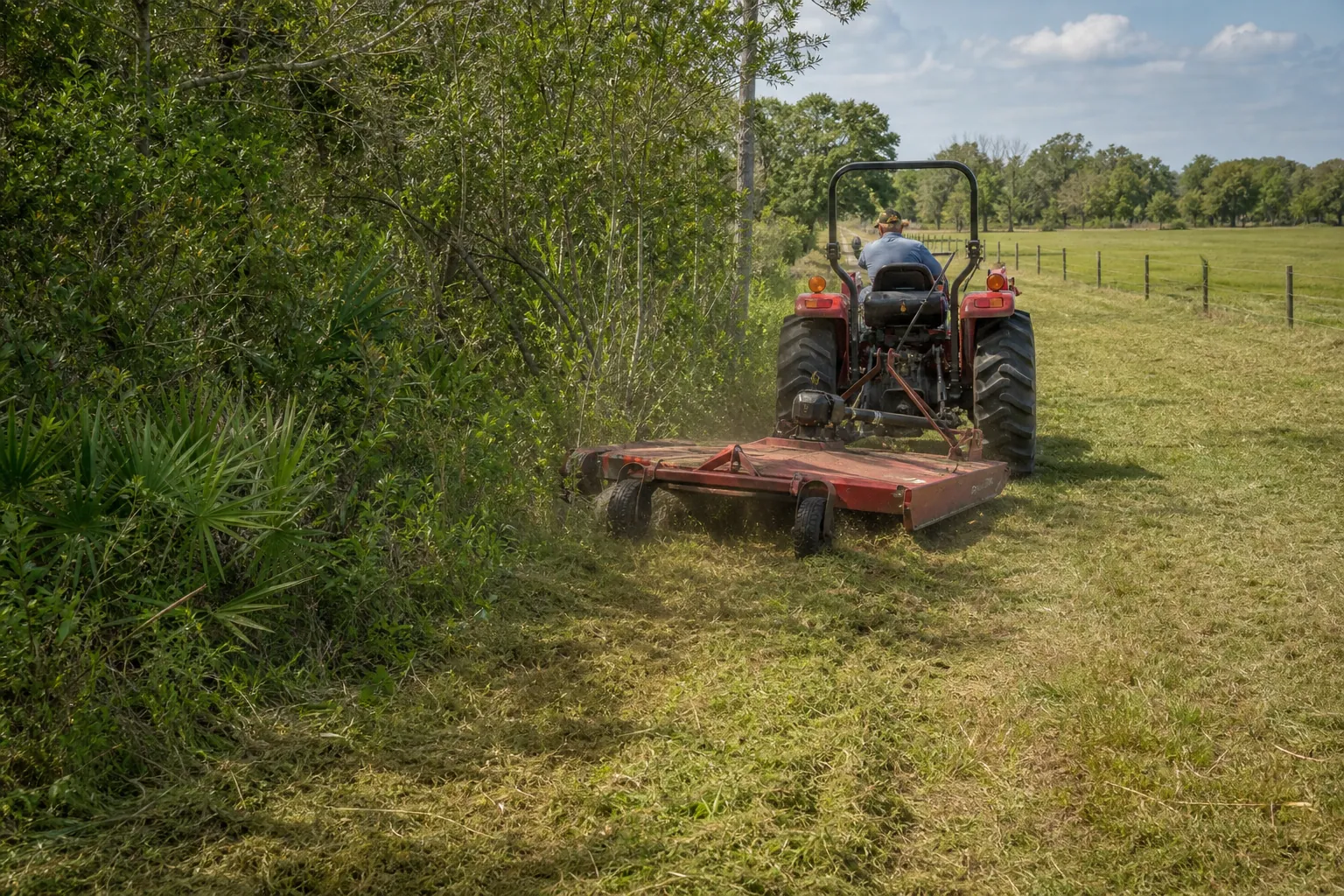
Pasture edges often become overgrown before the middle of a field does. Fence lines, shaded corners, drainage areas, and the ground beneath spreading trees can collect tall grass, woody seedlings, vines, and fallen limbs. In DeLand, Florida, keeping those boundaries manageable takes more thought than simply cutting everything to the same height.
Brush hogging can help reduce suitable vegetation along pasture margins, but the work should account for livestock, access, soil conditions, and nearby trees. A useful plan separates routine mowing from hazards that need tree trimming, tree removal, or another approach. It also identifies vegetation worth keeping.
This guide explains how to evaluate an overgrown edge, prepare the site, protect established trees, and plan follow-up maintenance. For property owners researching brush hogging pasture edges in DeLand, the goal is a workable boundary, not an unnecessarily stripped landscape.
What Brush Hogging Can And Cannot Accomplish
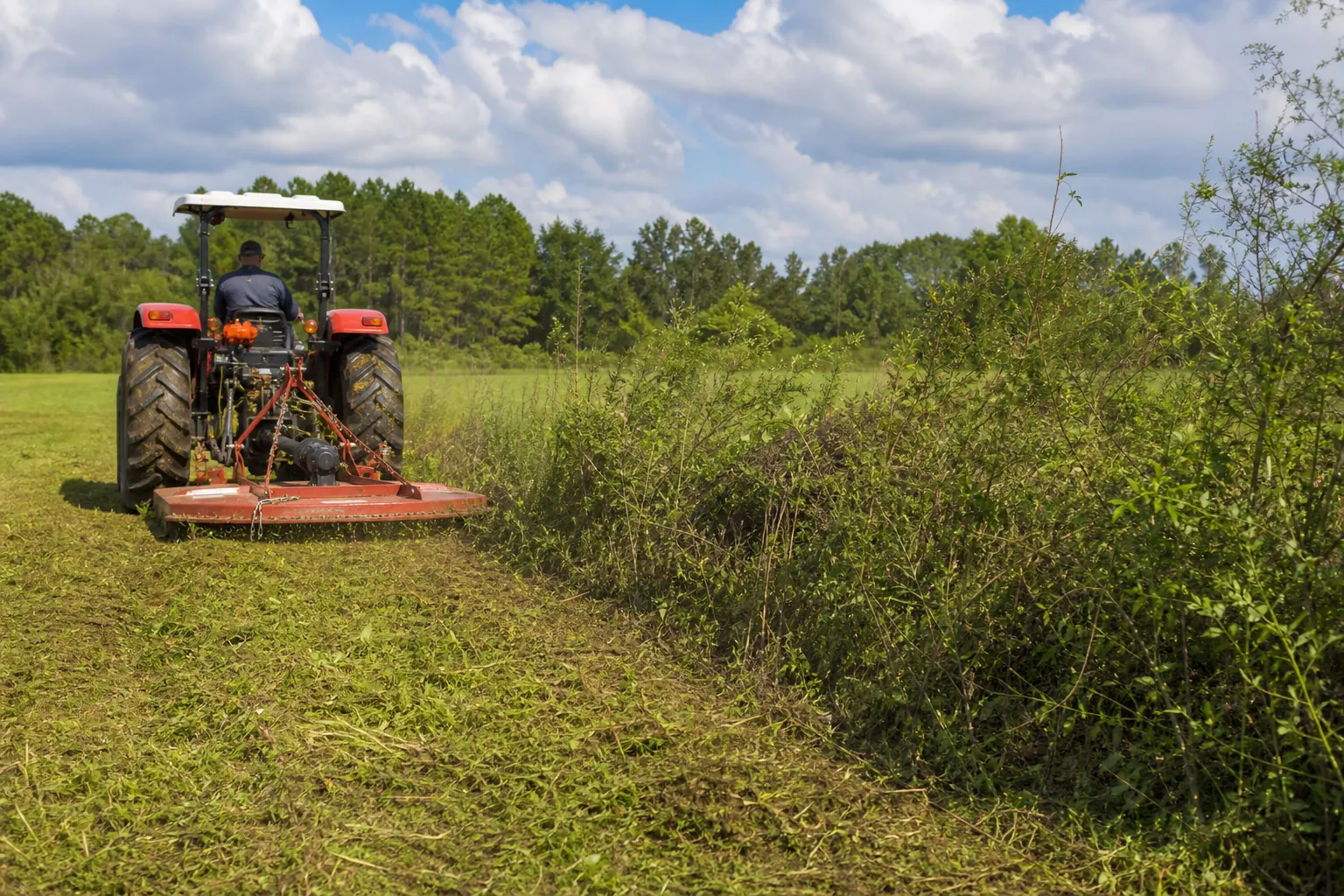
Brush hogging uses a heavy-duty rotary cutter to reduce tall grass, weeds, and some woody growth. The vegetation a machine can handle depends on its design, cutter condition, terrain, and the operator's assessment. A plant's height alone does not determine whether cutting it is appropriate.
Along a pasture edge, the main benefit is improved visibility and access. Reducing dense growth can make it easier to inspect fencing, locate downed branches, and notice where seedlings are beginning to crowd a grazing area. It can also help define the transition between pasture and woodland.
Brush hogging does not remove roots, eliminate every stump, or permanently stop regrowth. Cut material remains on the ground unless a separate handling plan is established. Some woody plants resprout after cutting, and certain vines remain attached to trees or fencing even after their lower growth is cut.
Larger stems, unstable trees, embedded wire, and hidden debris require separate evaluation. Treating every obstacle as something the cutter can handle risks equipment damage and may create hazards for people or animals using the pasture afterward.
- Use brush hogging to manage vegetation that falls within the equipment's safe operating limits.
- Identify substantial trees and stumps before choosing a cutting route.
- Plan for regrowth rather than treating one cutting as permanent vegetation control.
- Discuss the expected amount and condition of material left behind before work begins.
Walk The Pasture Boundary Before Scheduling Work
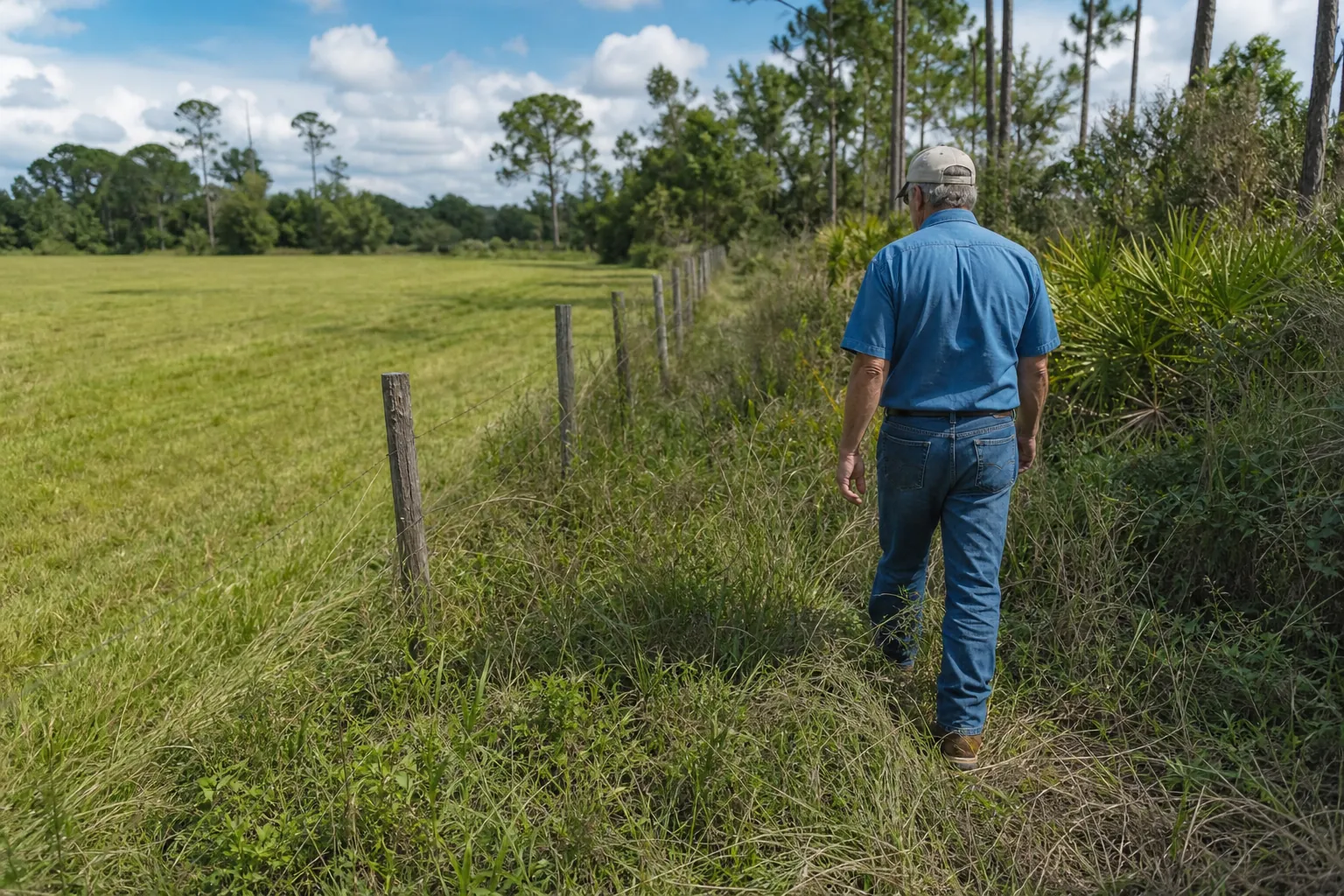
A boundary walk is the most useful first step. Inspect the edge from accessible ground, and avoid entering thick growth where footing or visibility is uncertain. Look at the fence, the vegetation, the soil, and the trees as separate parts of the same project.
Start by defining the area you want maintained. Is the priority a narrow inspection corridor beside a fence, a broader transition zone, or reclaiming a corner that has become overgrown? Clear objectives help prevent unnecessary cutting and make the scope easier to explain.
Confirm property boundaries before requesting work near adjoining land. A fence does not always establish the legal boundary. If ownership or access is uncertain, resolve that question before equipment arrives rather than relying on assumptions made in the field.
Photographs can help explain the site, especially when they show access gates, low branches, wet spots, and the desired stopping points. However, photographs cannot reliably reveal buried debris, ground firmness, or every obstacle hidden beneath vegetation.
- Mark known irrigation lines, water pipes, utility features, and other infrastructure that could affect equipment access.
- Point out old fence wire, discarded posts, concrete, rocks, and any debris you know is present.
- Identify trees you want retained and areas that should remain undisturbed.
- Explain where vehicles can enter, turn around, and leave without crossing unsuitable ground.
- Check whether gates provide enough clearance for the proposed equipment.
Protect Fence Lines And Hidden Infrastructure
Pasture fencing presents a particular challenge because vegetation can conceal both functioning wire and abandoned fencing. Wire caught in a rotary cutter can wrap around moving components or be pulled from its original position. Posts and anchors may also be difficult to see in tall growth.
The cutting plan should establish how close equipment can safely approach the fence. That distance depends on visibility, fence condition, vegetation, and machinery. A cleaner-looking boundary is not worth striking a post or compromising a livestock enclosure.
Old pasture corners deserve extra attention. Previous owners may have left rolls of wire, metal stakes, lumber, or construction debris near a tree line. Do not assume that a patch of grass is clear simply because the surrounding ground looks open.
Where underground infrastructure could be affected by the planned work or associated ground disturbance, arrange appropriate utility identification before proceeding. Surface clues alone are not a dependable way to locate buried lines. Tell the operator about private infrastructure that may require separate identification.
After the work, inspect the fence before returning livestock to the area. Look for loosened wire, damaged posts, exposed debris, and openings that were previously concealed. Improved visibility is helpful, but it may reveal repairs that still need attention.
Choose Timing Based On Ground Conditions
Florida pasture maintenance is closely tied to rainfall and soil conditions. A sunny workday does not necessarily mean the ground is ready for equipment. Low areas may remain soft after nearby higher ground has dried, and shaded edges can hold moisture longer than open pasture.
Heavy equipment on saturated ground can leave ruts and compact soil. Those effects may interfere with drainage, create uneven footing, and make later maintenance more difficult. When conditions are unsuitable, postponing the work or excluding a wet section may be the better choice.
Dry conditions bring different concerns. Dust can reduce visibility, and accumulated dry vegetation requires attention to equipment condition and safe operation. The operator should assess the site rather than rely on a calendar-based assumption about the best season.
Timing also affects how easily obstacles can be seen. Dense growth may hide hazards, while recently fallen branches can change an otherwise familiar route. A fresh inspection is worthwhile even if the same pasture edge has been maintained before.
- Check low spots separately instead of judging the entire site from the driveway.
- Delay work where equipment would sink, slide, or leave substantial rutting.
- Allow flexibility when rainfall changes the ground conditions before the scheduled visit.
- Discuss slopes and uneven terrain so the equipment choice matches the actual site.
Keep Livestock And People Away From The Work Zone
Rotary cutting equipment can throw objects, including material hidden in vegetation. Livestock, pets, bystanders, and vehicles should be kept out of the operating area and away from the equipment's discharge zone. The operator should establish the necessary separation for the machine and site.
Move animals before work begins rather than expecting them to avoid the machinery. Horses and other livestock may react unpredictably to unfamiliar noise, movement, or disturbed fencing. Use a secure alternative enclosure that does not require anyone to pass through the active work area.
Coordinate gate use with the crew. If an entrance also serves as a livestock barrier, decide who will open and close it and how animals will remain contained. A simple access plan helps prevent confusion during equipment movement.
Inspect the cut area before allowing animals back. Brush hogging can expose sharp debris, leave coarse stems, or uncover holes that were previously hidden. Some plants may remain unsuitable for livestock after cutting, so uncertain vegetation should be identified rather than assumed safe.
For questions about potentially toxic plants or grazing suitability, consult a veterinarian or qualified agricultural resource. Cutting is a vegetation-management action, not proof that a plant or the resulting clippings are safe to consume.
Protect Established Trees At The Pasture Edge
Mature trees can provide valuable shade and define the character of a pasture. They also create places where mowing equipment needs extra care. Low branches, surface roots, trunk flares, and uneven ground can limit access even when the surrounding grass is easy to cut.
Avoid scraping trunks or cutting exposed roots. Bark injury can damage living tissue, while root injury may affect tree health and stability. Repeated machinery traffic can also compact soil within the rooting area, particularly when that soil is wet.
Tree roots often extend beyond the visible canopy. Staying outside the drip line does not automatically eliminate root concerns. The appropriate route depends on the tree, the soil, the equipment, and the condition of the site.
If branches obstruct access, consider tree trimming as a separate part of the plan. Do not use machinery to push through low limbs or assume that every branch should be removed for convenience. Pruning decisions should balance access needs with the tree's structure and health.
Canopy thinning and crown reduction are distinct tree-care practices, not interchangeable ways to make room for a mower. Their suitability should be evaluated for the individual tree. Arborist reports and tree inspections can help clarify concerns when a tree appears damaged, declining, or structurally questionable.
- Identify retained trees before cutting begins so their protection is part of the work plan.
- Keep equipment from rubbing against trunks or repeatedly crossing exposed roots.
- Do not pile cut vegetation against the trunk flare.
- Have hanging, broken, or unstable limbs assessed before machinery travels beneath them.
Separate Brush Maintenance From Larger Clearing Needs
Not every overgrown pasture margin is a brush hogging project. A long-neglected edge may contain substantial saplings, downed trees, large stumps, and dense woody growth. In those conditions, the first task is to identify what needs cutting, removal, or avoidance.
Land and lot clearing may be relevant when the objective extends beyond maintaining an existing grassy edge. The scope should explain which vegetation will be removed and which trees or buffers will stay. A selective plan can be more appropriate than clearing the entire transition zone.
Tree removal may be needed where a tree presents an assessed hazard or directly conflicts with the agreed project. Large trees in restricted spaces may require a different approach, potentially including crane tree removal when site conditions justify it. Equipment selection should follow an evaluation, not a preference for the biggest machine.
Stump grinding is also separate from brush hogging. Cutting vegetation around a stump does not make the stump disappear or remove the risk of striking it during future maintenance. Known stumps should be marked and addressed according to the intended use of the area.
After severe weather, broken limbs and storm-damaged trees can change the safety of a pasture boundary. Emergency and hurricane tree removal may be the appropriate priority before routine vegetation maintenance resumes. Stay clear of damaged trees and any suspected electrical hazards.
Retain Useful Buffers And Confirm Local Requirements
A pasture edge does not have to be bare to be functional. Retained trees, stable ground cover, and selected vegetation can provide shade, habitat, and a transition between open ground and woodland. The useful width and character of that transition depend on the property.
Drainage features need particular attention. Cutting vegetation does not authorize reshaping a ditch, changing drainage, or disturbing a wet area. Avoid treating low, wet ground as an ordinary mowing strip without first understanding the site's constraints.
Before work near wetlands, drainage areas, protected trees, or property boundaries, confirm applicable requirements with the city or county. Requirements can vary with the location and scope of the project. Do not assume that a task described as maintenance is automatically exempt from every restriction.
If the pasture is part of a managed community or shared property, coordinate approval and access with the responsible parties. HOA and condo tree services or commercial tree services may involve broader scheduling and documentation needs than work on a privately managed pasture.
Plan Follow-Up Maintenance Around Regrowth
Once the edge is accessible, use that visibility to establish a manageable maintenance routine. Walk the boundary periodically, particularly after storms or prolonged wet weather. Look for new seedlings, leaning posts, fallen limbs, and vegetation beginning to hide important features again.
The right cutting interval depends on growth, weather, site access, and the condition you want to maintain. A fixed schedule may be convenient, but observation should guide adjustments. Cutting too aggressively can unnecessarily disturb the edge, while waiting too long can allow woody growth to become a different project.
Keep a simple record of problem locations. Notes about recurring wet spots, stubborn regrowth, or hidden debris help inform future visits. Updated photographs can also make it easier to explain changes without guessing where an issue occurred.
For brush hogging pasture edges in DeLand, a sound plan starts with clear boundaries, safe access, and realistic expectations. Florida Foliage can discuss brush hogging alongside tree trimming, tree removal, stump grinding, and other relevant tree-care needs. Call (386) 481-7913 to talk through your pasture edge, nearby trees, and the scope of work you have in mind.
Call (386) 481-7913 to talk through next steps.