Reviewed by Clinton Funk
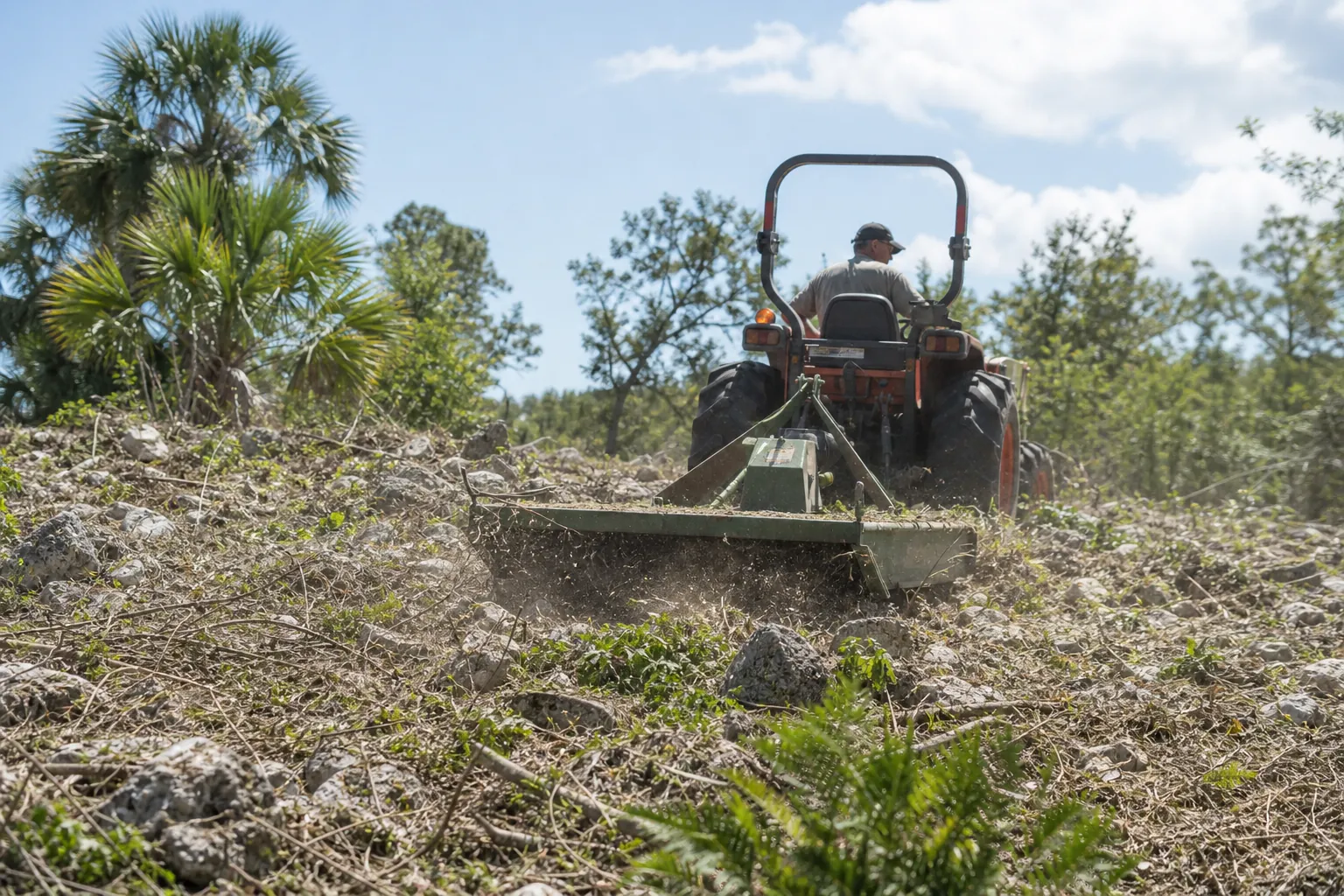
A brush-covered lot can look straightforward from the road and become much more complicated once the vegetation is opened up. Rocks, old concrete, buried debris, uneven ground, and woody stems all affect whether brush hogging is an appropriate way to manage it. In Flagler County, the first decision should be about site conditions, not simply how quickly the vegetation can be cut.
Brush hogging uses a heavy-duty rotary cutter to reduce suitable vegetation. It is not a way to crush stone, remove every stump, or turn an unknown parcel into construction-ready land. Where hard obstacles are present, equipment selection and the clearing sequence matter as much as the vegetation itself.
For property owners researching brush hogging rocky lots in Flagler County, this guide explains what to inspect, how to protect retained trees, and when land and lot clearing may require a different approach. Florida Foliage can discuss the conditions on your property and the scope of work you have in mind.
What Makes A Rocky Lot Different?
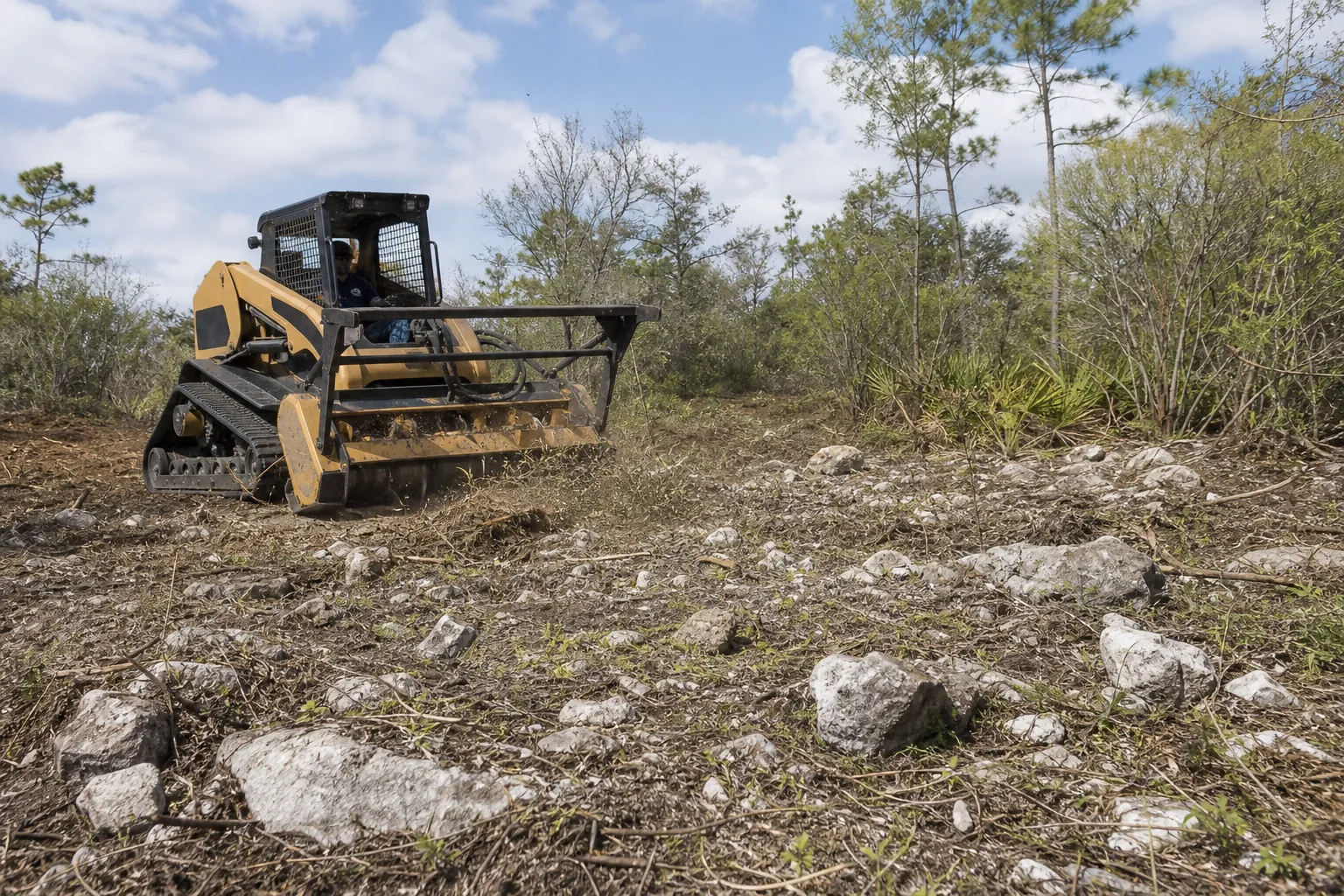
The word rocky can describe several very different conditions. A few loose surface stones are not the same as exposed rock ledges, scattered construction rubble, or hard material concealed beneath dense brush. Each condition changes how equipment can move and where a cutter can operate.
Hard objects can damage cutting components or become projectiles if struck. Dense growth also makes it difficult to judge slopes, depressions, and obstacles before equipment enters an area. A lot that appears level may contain holes, old foundations, or abrupt changes in grade.
Flagler County properties should be evaluated individually. A wooded residential parcel, an overgrown commercial tract, and an HOA common area can have different access constraints and different surroundings. The presence of nearby homes, parked vehicles, sidewalks, or retained landscaping can narrow the available working area.
The practical question is not whether brush hogging works on every rocky lot. It is whether the vegetation, ground conditions, equipment limits, and surrounding exposure allow it to be used appropriately on specific portions of your lot.
Start With A Clear Goal For The Property
Before requesting work, decide what the clearing should accomplish. Cutting tall weeds to improve visibility is a different job from opening access across a parcel or preparing an area for a future project. A precise goal helps prevent a mowing-style treatment from being mistaken for complete clearing.
Brush hogging generally reduces vegetation above the ground. Depending on the material and equipment used, it may leave cut stems, plant debris, and an uneven appearance. Roots, rocks, and stumps can remain. Owners should not assume that the finished area will resemble a maintained lawn.
If your goal involves removing trees, dealing with stumps, or opening heavily wooded sections, the scope may include tree removal, stump grinding, or land and lot clearing. Those services address different obstacles and should be discussed separately rather than treated as automatic parts of brush hogging.
- Identify whether you want better visibility, easier property access, or ongoing control of suitable vegetation.
- Mark the areas that should remain untouched, including trees and planting beds you want to preserve.
- Explain whether cut material can remain on the site or whether its handling needs to be included in the agreed scope.
- Describe the finish you expect so the contractor can explain what the proposed method can realistically produce.
Inspect The Lot Before Equipment Arrives
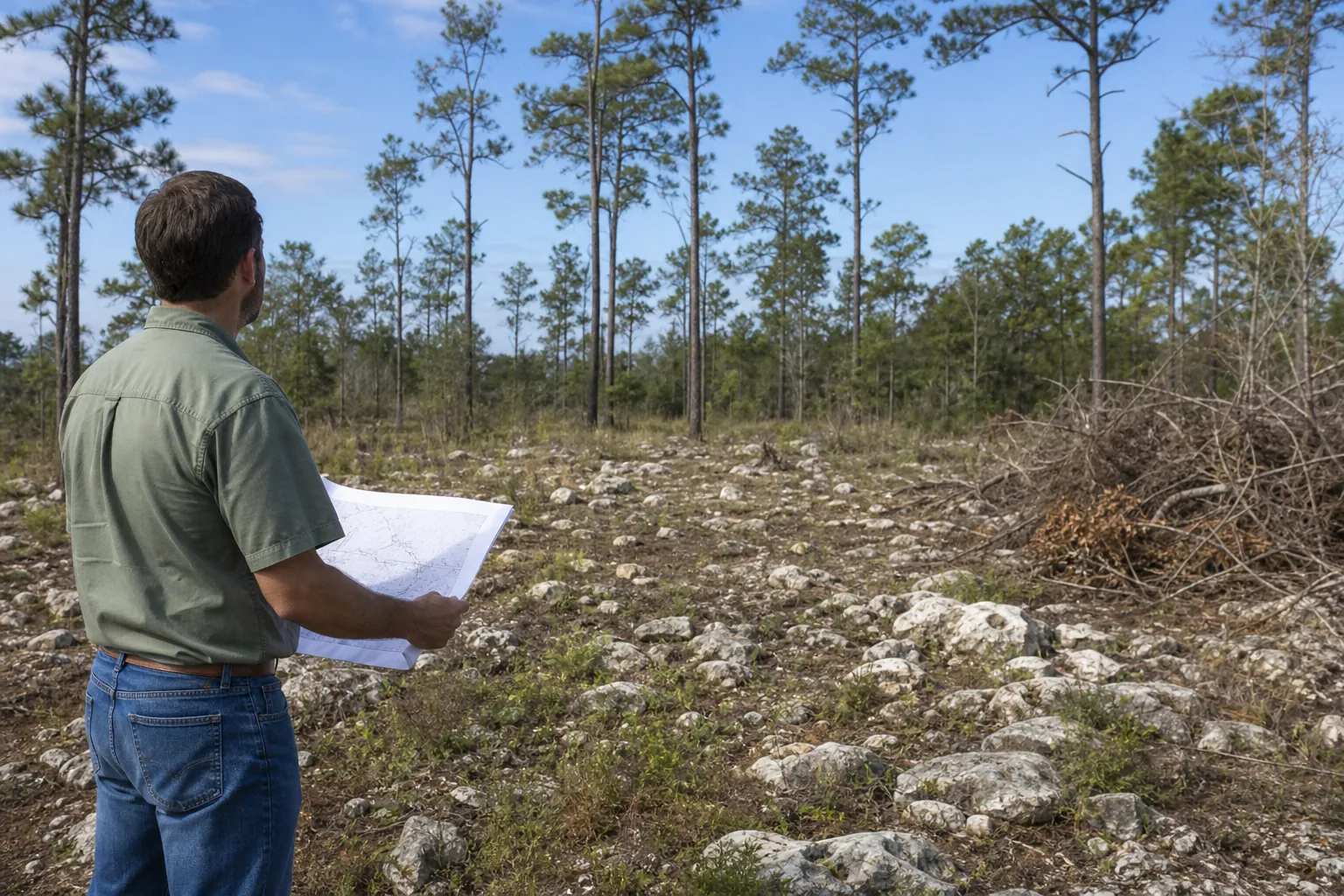
A site inspection should look beyond the height of the brush. Access, terrain, hidden objects, overhead hazards, and neighboring activity all influence the plan. When growth prevents a complete inspection, that uncertainty should be acknowledged rather than treated as proof that the ground is clear.
Walk only where footing and visibility are adequate. Do not enter dense vegetation simply to search for obstacles, and do not handle unidentified debris. Share photographs taken from safe locations and explain anything you already know about past dumping, construction, or changes to the property.
Boundary information is also important. Fences and mowing lines do not always establish legal property boundaries. If the limits of work are uncertain, resolve that uncertainty before clearing begins. Confirm applicable requirements with your city or Flagler County, particularly where clearing could affect protected resources or regulated areas.
- Point out known rocks, concrete fragments, metal, wire, old fence lines, and other hard obstacles.
- Identify wells, septic components, irrigation equipment, utility features, and other installations that could be concealed by vegetation.
- Note soft ground, standing water, ditches, steep transitions, and areas that become difficult to access after rain.
- Show the contractor narrow gates, overhead branches, fences, and neighboring improvements that restrict equipment movement.
- Keep people and animals out of the proposed work area while the site is being assessed and operated on.
Do not assume visible utility markings identify every private installation. Discuss utility-location needs before ground-disturbing work, and arrange appropriate verification for private systems where necessary.
When Brush Hogging Is Appropriate, And When It Is Not
Brush hogging can be useful where the target vegetation falls within the cutter's capabilities and the ground provides a workable operating surface. Open sections with grasses, weeds, and suitable light woody growth may be candidates after obstacles and exposure have been evaluated.
A rocky parcel does not necessarily need one method across its entire area. Some sections may be suitable for brush hogging while others require exclusion or a separate clearing plan. Dividing the property into manageable zones can be more practical than trying to force the same equipment through every condition.
Brush hogging becomes a poor fit where unavoidable hard obstacles, unstable footing, heavy debris, or dense woody material exceed the equipment's limits. Hidden wire is especially concerning because it can entangle moving parts. Large stumps and rock outcrops can also prevent an even cut.
Changing the cutting height is not a complete solution to an unsafe site. A higher setting may help avoid some low obstacles under appropriate conditions, but it does not make unknown debris harmless or eliminate the potential for thrown material.
If a contractor cannot establish a suitable operating area, the sensible response is to revise the scope. That could mean clearing only accessible sections, addressing identified obstacles first, or considering a different land and lot clearing approach. The objective is a workable plan, not use of a particular machine at all costs.
Plan Access And A Controlled Work Area
Access planning includes more than measuring a gate. Equipment needs space to enter, turn, and operate without striking fences, buildings, or retained trees. Loading and unloading locations also need to be considered, especially on narrow residential streets or properties with limited frontage.
Nearby activity can determine when a job is practical. A commercial property may have customers and deliveries throughout the day. An HOA or condo property may have shared walkways, parked cars, and residents moving through common areas. These conditions require coordination before work starts.
A contractor should determine the necessary separation around operating equipment based on the machine, site, and manufacturer guidance. Property owners should not stand nearby to watch the cutting or approach an operator while equipment is running.
- Move vehicles, outdoor furniture, and other portable belongings away from the agreed work area.
- Arrange access without blocking emergency routes or creating conflicts with neighboring properties.
- Tell residents, tenants, or site managers which areas will be unavailable during the work.
- Keep gates and access points controlled so children, visitors, and pets do not enter unexpectedly.
Even with precautions, site conditions can change as vegetation is reduced. A newly exposed obstacle may require a pause and a revised plan. Allowing room for that adjustment is part of responsible scheduling.
Protect Trees You Intend To Keep
Clearing around trees requires attention to their roots, trunks, and lower branches. A tree can remain standing after a job yet still be harmed by bark injuries, repeated equipment traffic, or changes to the surrounding soil.
Roots commonly extend beyond the visible trunk area. Parking machinery beneath a canopy, repeatedly driving over the same ground, or placing cut material against the trunk can create avoidable stress. Protective boundaries should be established before work, with the tree's condition and surrounding site taken into account.
Brush hogging should not be treated as a substitute for tree trimming. If branches interfere with access, discuss whether tree trimming is appropriate. Canopy thinning and crown reduction also serve specific tree-care purposes and should be selected based on the tree's needs, not simply to make equipment access easier.
Arborist reports and tree inspections may be useful when a retained tree has visible decay, significant lean, broken limbs, or other concerns. An inspection can help clarify whether clearing around the tree is sensible and whether separate tree work should be considered.
Where tree removal is needed, sequencing matters. Trees, stumps, and brush may require different equipment and working space. Crane tree removal may be considered in suitable circumstances when access or nearby structures complicate a removal, but it is not a routine requirement for clearing brush on a rocky parcel.
Account For Rain, Drainage, And Sensitive Areas
Florida weather can change a workable site quickly. Rain may soften the ground, conceal depressions, or make slopes more difficult to traverse. A parcel that supports equipment under dry conditions may not be suitable immediately after heavy rainfall.
Ground disturbance deserves particular attention near ditches, low areas, and places where water collects or moves across the property. Removing vegetation can expose the soil surface, and equipment traffic can leave ruts that alter how water moves locally.
Do not assume every wet area is available for clearing or that vegetation removal has no regulatory implications. Requirements can depend on the location and the type of work. Confirm applicable rules with your city or Flagler County before starting, and seek clarification when wetlands or other potentially protected features may be involved.
The work plan should identify areas to avoid and conditions that would trigger postponement. Leaving a sensitive or unstable section untouched can be more appropriate than including it solely to make the cleared area look uniform.
Following a storm, hidden debris and damaged trees can complicate the assessment further. Emergency and hurricane tree removal addresses tree-related storm hazards, while brush hogging addresses suitable ground-level vegetation. One should not be assumed to resolve the risks covered by the other.
Ask For A Scope That Explains The Method
A useful scope describes where work will occur, what vegetation will be addressed, what will remain, and how obstacles will be handled. It should also explain any exclusions so that expectations match the proposed method.
For rocky ground, ask how the site will be evaluated before cutting and what happens if concealed hard material is discovered. The answer should allow for stopping or changing the approach rather than continuing regardless of conditions.
Ask about the contractor's experience with comparable sites and appropriate insurance for the proposed work. Equipment names alone do not establish that a plan suits your property. The explanation should connect the equipment to the vegetation, terrain, access, and surrounding risks.
- Ask which portions of the lot are suitable for brush hogging and which are excluded.
- Confirm whether trees and stumps are outside the brush hogging scope or require separate services.
- Ask what appearance and remaining material you should expect when the work is complete.
- Clarify how newly discovered rocks, wire, or debris will affect the agreed plan.
- Confirm who will coordinate access and communicate with residents or neighboring occupants when needed.
For shared or business properties, commercial tree services and HOA and condo tree services may be relevant to related tree work. Clear communication with the responsible manager helps keep that work aligned with the site's access rules and daily use.
Evaluate The Results And Plan For Regrowth
After clearing, inspect the area from a safe location once equipment has stopped and the contractor says access is appropriate. Reduced vegetation often reveals conditions that were previously hidden, including stones, holes, stumps, and leftover debris.
Do not begin regular lawn mowing simply because the brush is shorter. The ground may still be unsuitable for smaller mowing equipment. Review any newly exposed obstacles and confirm the appropriate next step before changing how you maintain the area.
Vegetation can regrow after brush hogging because many roots remain in place. The timing and extent of regrowth depend on the plants, growing conditions, and the treatment performed. Rather than assuming a fixed maintenance interval, watch how the site responds and discuss future brush hogging based on actual conditions.
If remaining stumps interfere with your intended use, stump grinding may be worth discussing separately. It does not remove surrounding rock or automatically produce finished grade. Likewise, additional land and lot clearing should be tied to a defined goal rather than undertaken simply because an area is now easier to see.
Discuss Your Flagler County Lot With Florida Foliage
A practical clearing plan starts with the property itself: the vegetation, the hard obstacles, the trees you want to retain, and the access available. Brush hogging may be appropriate for part of a rocky lot, while other sections need a different approach or should remain untouched.
Florida Foliage can discuss brush hogging, land and lot clearing, and related tree-care needs for your Flagler County property. Have the location, a brief description of the growth, and any known obstacles ready when you call.
To talk through your goals and the next steps for assessing the site, call Florida Foliage at (386) 481-7913. A clear scope helps you choose work that fits the lot rather than expecting one method to solve every condition.
Call (386) 481-7913 to talk through next steps.