Reviewed by Clinton Funk
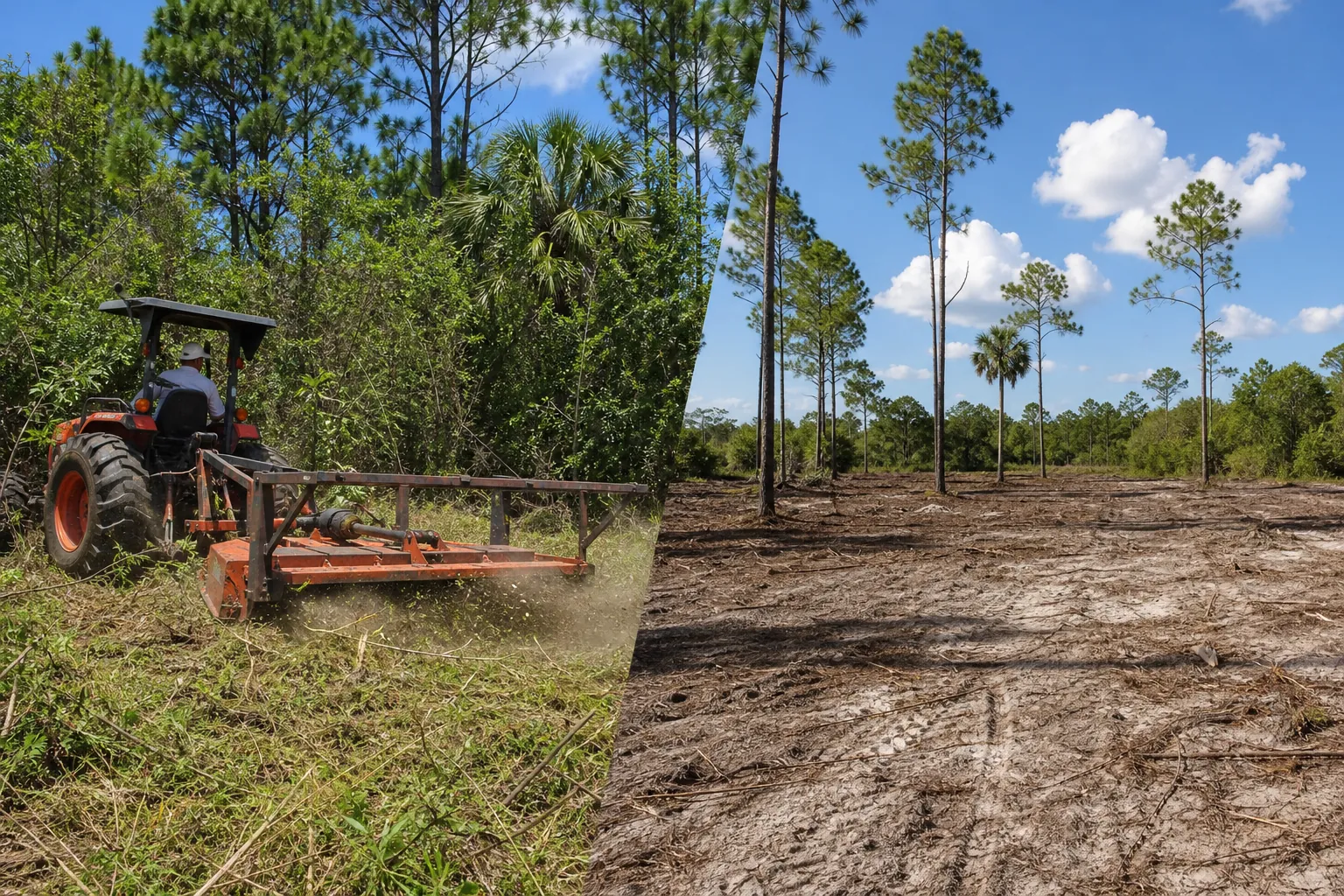
An overgrown Florida property can hide very different conditions beneath the same wall of green. One parcel may need tall grass and light brush cut back. Another may contain mature trees, dense woody growth, stumps, and fallen limbs that must be addressed before the owner can use the space.
That difference matters when comparing brush hogging vs lot clearing in Florida. The best choice depends on what is growing, what should remain, how equipment can reach the area, and what you want the property to become.
Florida Foliage provides brush hogging and land and lot clearing, along with tree removal, tree trimming, stump grinding, and arborist reports and tree inspections. This guide explains how those services fit different property needs and what to clarify before work begins.
What Brush Hogging Does And Does Not Do
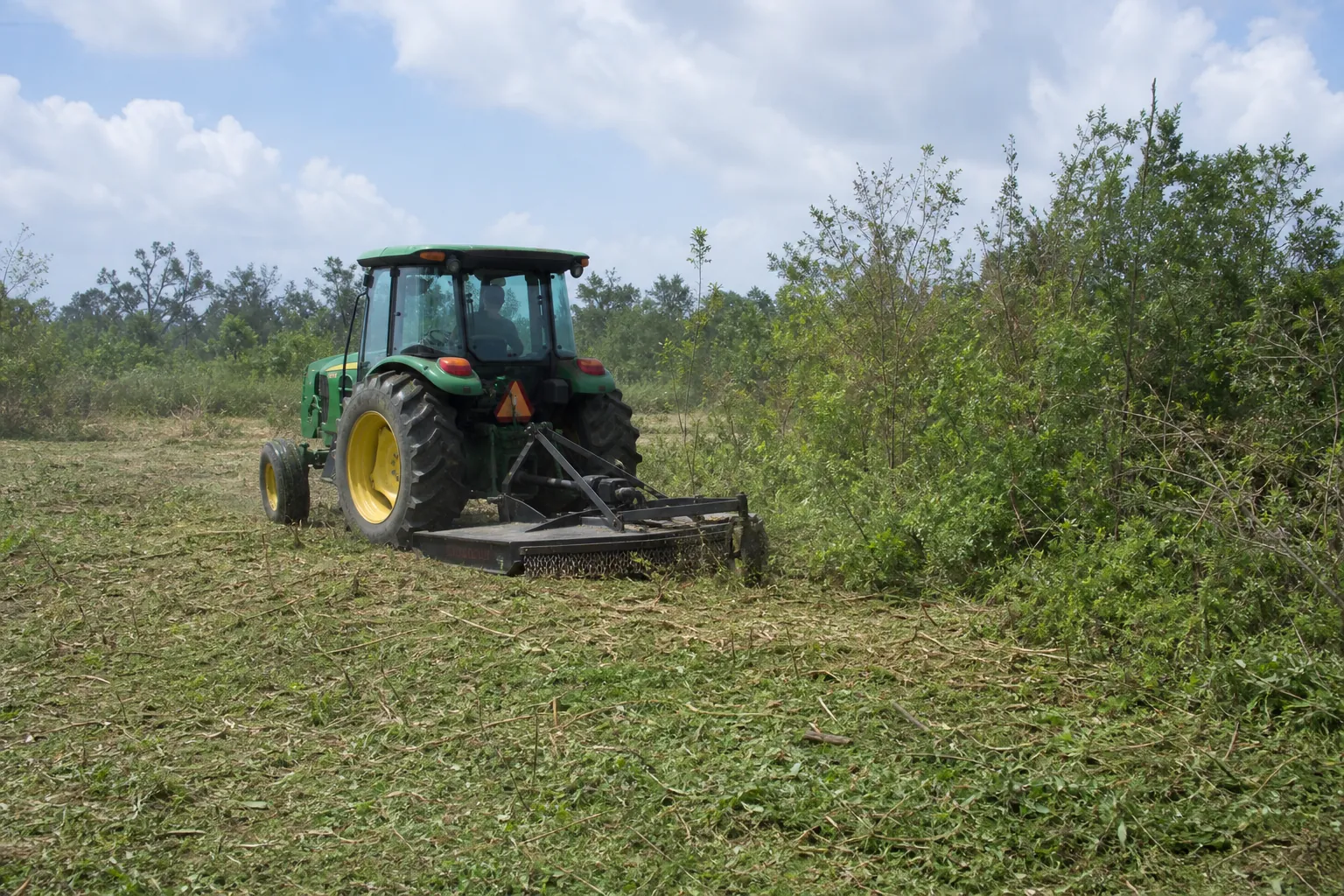
Brush hogging cuts tall grass, weeds, and suitable brush using heavy-duty rotary cutting equipment. It is generally a vegetation-control approach rather than a complete property transformation. The goal is to knock back growth so the area becomes more manageable and easier to see.
On an appropriate site, brush hogging can help reopen an overgrown field, maintain unused portions of a property, or reduce low vegetation around established trees. The equipment selected must match the vegetation, terrain, and available access.
Brush hogging does not normally remove established root systems or produce a smooth, bare surface. Cut vegetation may remain on the ground, and some plants can regrow from roots or remaining stems. Larger woody material may fall outside the equipment's safe cutting capacity.
- Brush hogging is often suitable when the main problem is tall grass and manageable brush.
- Brush hogging can preserve an existing open landscape without removing every plant.
- Brush hogging should not be assumed to include tree removal, stump grinding, or removal of cut material.
Ask what the finished area will look like. A cut-back lot and a cleared lot can both look tidier, but they are not the same result.
What Land And Lot Clearing Can Include
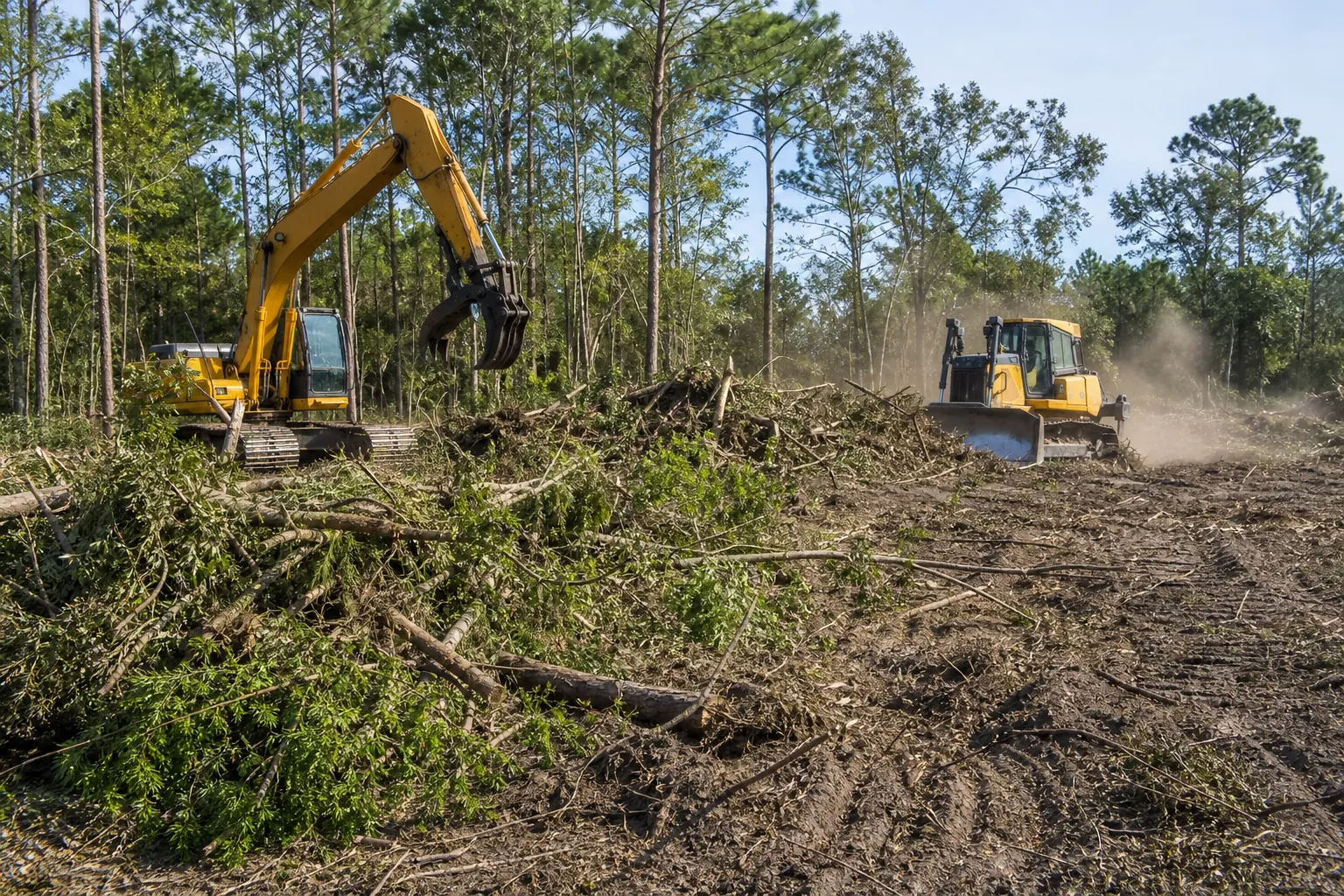
Land and lot clearing addresses vegetation more broadly. Depending on the agreed scope, it may involve removing brush, selected trees, fallen woody material, and other vegetation that prevents the intended use of a parcel.
Unlike brush hogging, clearing can change the structure of the landscape. That makes planning important. A shaded property with several desirable trees should not automatically be treated the same way as a densely wooded area where extensive removal is necessary.
Stumps also need a separate discussion. Removing a tree does not mean the stump disappears, and stump grinding does not mean every underground root is removed. The appropriate treatment depends on how the area will be used afterward.
- Define which vegetation will be removed and which trees will remain before equipment arrives.
- Confirm whether stump grinding is included where trees are removed.
- Ask whether woody debris will remain, be consolidated, or be removed under the agreed scope.
- Clarify the expected surface condition so clearing is not confused with a finished construction surface.
Land and lot clearing is not automatically site preparation for every future project. Additional requirements may apply to whatever comes next.
Start With The Intended Use Of The Property
The most useful question is not which service sounds more thorough. It is what you need to accomplish. A property owner who wants to walk an unused field has different needs from someone planning a new structure or reclaiming an area around existing buildings.
If your objective is routine control of tall growth, brush hogging may be enough. If substantial woody vegetation blocks access or conflicts with a planned use, land and lot clearing may be more appropriate.
Sometimes the best scope combines both. Brush hogging might address an open section while tree removal and stump grinding address a smaller area with established woody growth. Combining services should follow actual site needs, not an assumption that the entire parcel needs the same treatment.
- For an overgrown open area, identify whether cutting vegetation will provide the access you need.
- For a future building area, clarify the required clearing limits before deciding which trees must go.
- For a property with valuable shade trees, identify trees to retain before planning vegetation removal.
- For recurring maintenance, consider how quickly the remaining vegetation may return.
A clear end goal makes it easier to compare proposals and avoid unnecessary removal.
Evaluate Vegetation Beyond Its Height
Tall vegetation is not always difficult vegetation, and short growth is not always easy to cut. Stem thickness, density, plant structure, and hidden obstacles can matter more than height alone.
A stand of tall grass may be appropriate for brush hogging, while shorter but densely packed woody stems may require a different approach. Vines can conceal trees, fences, discarded objects, and uneven ground. A property inspection helps separate visible growth from the conditions underneath it.
Florida properties can also contain mixed vegetation within a small area. One corner may be open and grassy, while another contains mature trees and dense understory. That variation can support a selective plan rather than uniform clearing.
Do not estimate equipment suitability based only on photographs of the lot's edge. Interior conditions may be different, especially on a property that has gone unmanaged for years.
Tell the provider about known fallen trees, old fence lines, buried or partly concealed objects, and previous land uses. These details help establish a realistic scope and identify areas that need closer assessment before cutting begins.
Account For Florida's Wet Ground And Seasonal Growth
Florida's rainfall and growing conditions can affect both scheduling and the finished result. Vegetation may recover quickly during active growth periods, while saturated ground can limit equipment access or increase the risk of rutting.
A site that appears firm near the entrance may contain soft interior areas. Standing water, drainage paths, and low sections deserve attention during planning. Choosing an approach without considering ground conditions can create avoidable disturbance.
Timing should reflect the property's condition rather than a fixed calendar rule. Recent rainfall, soil firmness, vegetation density, and safe access all influence whether work can proceed as planned.
- Point out places where water collects after rain so they can be evaluated before equipment enters.
- Discuss whether sensitive or soft areas should be excluded from the initial scope.
- Expect the schedule to account for weather and safe operating conditions.
- Plan for follow-up vegetation management if the goal is to keep an area consistently open.
Brush hogging reduces aboveground growth, but it does not eliminate the conditions that support regrowth. Clearing also does not make a property permanently maintenance-free. Both approaches work best with realistic expectations about what follows.
Protect Trees You Want To Keep
Healthy, well-positioned trees can be an important part of a property's long-term value and usability. Before clearing around them, identify which trees are intended to remain and discuss how nearby work could affect their roots, trunks, and canopy.
Tree roots often extend beyond the area immediately beside the trunk. Repeated equipment travel, scraping, or unnecessary disturbance near retained trees can create problems that are not obvious on the day of the work.
Arborist reports and tree inspections can help when tree condition or retention decisions are uncertain. An inspection may also help distinguish a tree that needs removal from one whose canopy needs attention.
Tree trimming, canopy thinning, and crown reduction are different from clearing vegetation around a tree. Each addresses specific tree-care objectives and should be selected based on the tree's condition and structure, not simply to make the property look more open.
- Mark retained trees and discuss protection areas before vegetation removal starts.
- Keep access routes away from retained trees where practical.
- Ask for a tree inspection when visible defects or uncertain condition complicate the clearing plan.
A selective approach can improve usable space while preserving the trees that belong in the finished landscape.
Check Access And Hidden Site Hazards
Equipment needs a workable route into and through the property. Gate width, sharp turns, overhead branches, fencing, and nearby structures can all affect which equipment is suitable and where it can operate.
Hidden hazards deserve equal attention. Old wire, metal objects, rocks, and abandoned materials can be concealed by grass or brush. Cutting equipment should not be sent into an unknown area without an appropriate assessment.
Identify known utilities, septic components, wells, irrigation lines, and other site features before work. Discuss how relevant locations will be confirmed and communicated to the crew. Do not assume that a vegetation-removal provider can infer underground features from surface conditions.
Where tree removal is needed near structures or in restricted spaces, the removal method requires its own planning. Crane tree removal may be considered for certain situations, but it is not a standard requirement for every wooded lot.
The practical question is whether the proposed equipment and methods fit this particular property. A clear access plan helps prevent misunderstandings about untouched areas, difficult corners, or vegetation that cannot be safely reached within the original scope.
Confirm Local Requirements Before Removing Vegetation
Rules affecting tree removal and land clearing vary across Florida. Before authorizing work, confirm applicable requirements with your city or county. Do not assume that a neighboring property's project establishes what is allowed on yours.
Ask about any requirements relevant to the parcel, the trees involved, and the proposed extent of clearing. If wetlands, protected habitat, or other environmentally sensitive areas may be present, ask the appropriate authorities what review is necessary before disturbance.
Property boundaries also matter. A fence or a maintained edge may not establish the legal boundary. Where limits are uncertain, resolve them before directing a crew to remove vegetation near adjoining property.
For HOA and condo properties, confirm the association's approval process and who is authorized to approve the scope. Community landscape plans may also influence which trees should remain.
Florida Foliage offers HOA and condo tree services and commercial tree services, but property-specific approvals still need to be clarified. Good planning separates permission to perform the work from the practical decisions about how the work should be done.
Compare Proposals By Scope, Not Just Service Names
Two proposals labeled lot clearing may describe very different outcomes. One may focus on cutting brush, while another includes selected tree removal and stump grinding. Compare the written tasks and exclusions rather than relying on the headline.
A useful proposal should make the work area and finish expectations understandable. It should also identify retained trees, access limitations, and any conditions that could require the scope to be revisited.
- Ask which sections of the property are included and how those limits will be identified.
- Confirm whether the work cuts vegetation or removes specified woody growth.
- Ask how cut material and larger debris will be handled.
- Clarify whether tree removal and stump grinding are included or separate.
- Discuss what happens if concealed obstacles or unsuitable ground conditions are discovered.
- Agree on what the property should look like when the stated work is complete.
Photographs and a marked property sketch can help document the plan, but they do not replace a site assessment where conditions are uncertain. Clear communication is especially important when only part of a larger parcel will be treated.
Plan For Maintenance And Storm-Related Needs
Once vegetation is cut back or cleared, decide how the area will be managed. Otherwise, new growth can gradually recreate the access problem that prompted the work.
Brush hogging may be appropriate as recurring maintenance for suitable open areas. The timing depends on actual growth, site use, and conditions rather than a universal schedule. Watch for woody stems becoming established and for vegetation hiding obstacles again.
Retained trees need a separate plan. Tree inspections and appropriate tree trimming can address concerns that mowing or clearing cannot. Canopy thinning or crown reduction should be based on a tree-care assessment, not treated as automatic additions to every project.
Storm damage also changes the situation. Broken limbs, fallen trees, and unstable trees are not simply overgrowth. Emergency and hurricane tree removal may be needed when damage creates an immediate concern.
Keep people away from unstable trees and downed lines, and contact the appropriate utility when electrical hazards are present. Do not attempt to clear storm debris with cutting equipment until the hazards and scope have been assessed.
Choose The Least Disruptive Approach That Meets Your Goal
Brush hogging is often the practical choice when manageable grass and brush are the main issue. Land and lot clearing is more appropriate when selected trees, dense woody growth, or other substantial vegetation must be removed to achieve the intended use.
The right plan may treat different parts of the property differently. Preserve useful trees, identify obstacles, confirm local requirements, and define how debris and stumps will be addressed before work starts.
If you are unsure which approach fits your Florida property, call Florida Foliage at (386) 481-7913 to discuss brush hogging, land and lot clearing, or related tree-care needs. Describe the vegetation, access, and desired result so the conversation can focus on a practical scope.
Call (386) 481-7913 to talk through next steps.