Reviewed by Clinton Funk
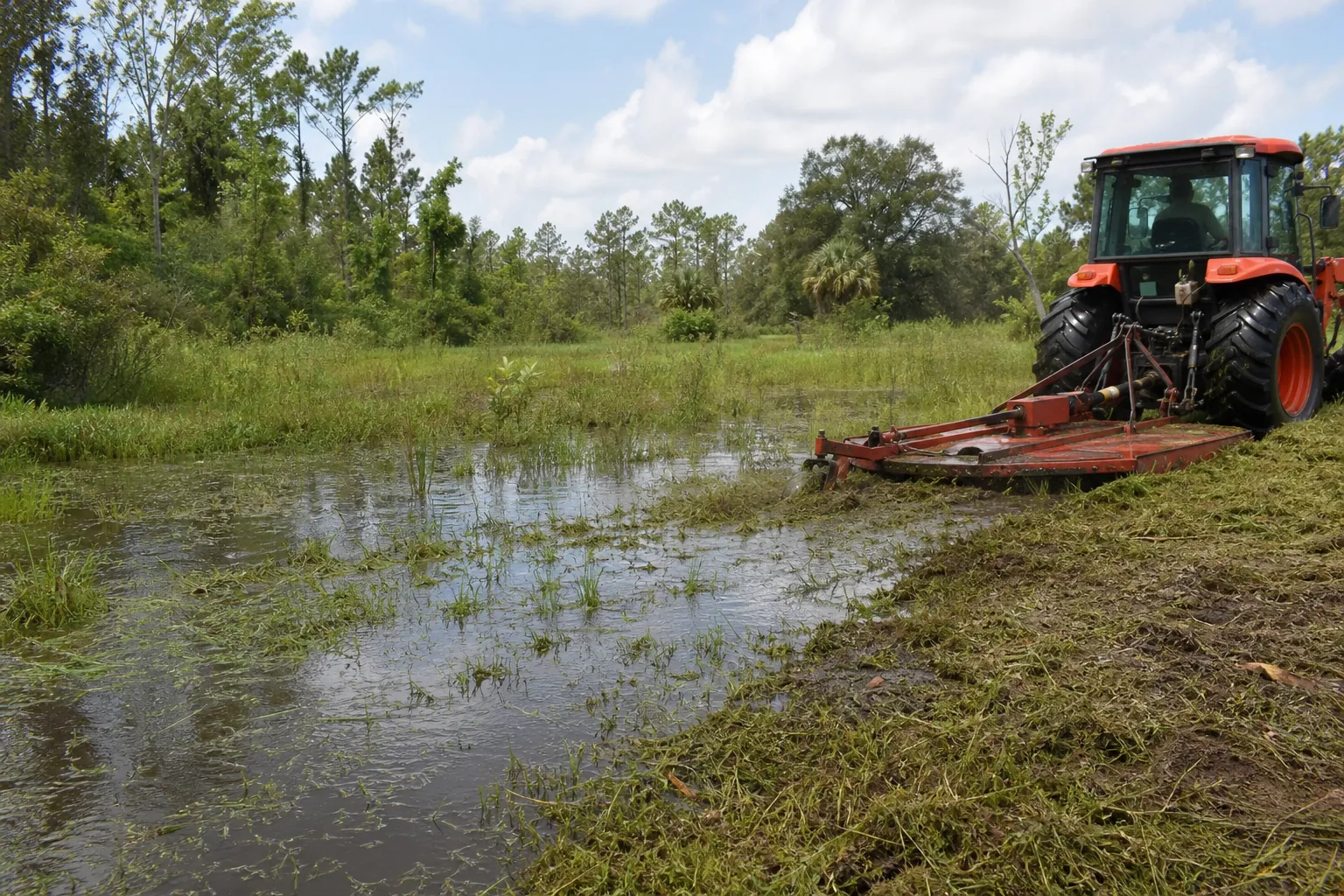
A Deltona lot can look ready for mowing while the ground beneath the grass is still too soft for equipment. Tall vegetation hides standing water, shallow depressions, roots, and saturated soil. Bringing a brush hog onto that surface too soon can leave ruts, compact soil, and make later maintenance more difficult.
For property owners researching brush hogging wet ground in Deltona, the first question should not be how quickly the vegetation can be cut. It should be whether the ground can support the equipment without unnecessary damage. Florida rain patterns, drainage conditions, and tree locations all affect that decision.
This guide explains what to check before work begins, when waiting makes sense, and how to coordinate brush hogging with tree care and land and lot clearing. A site-specific assessment is more useful than a fixed waiting period after rain.
Why Wet Ground Changes The Job
Brush hogging cuts tall grass, weeds, and suitable brush with a rotary cutter. The machine carrying or towing that cutter needs stable ground for travel, turning, and stopping. When soil is saturated, equipment weight can push waterlogged soil aside instead of remaining supported at the surface.
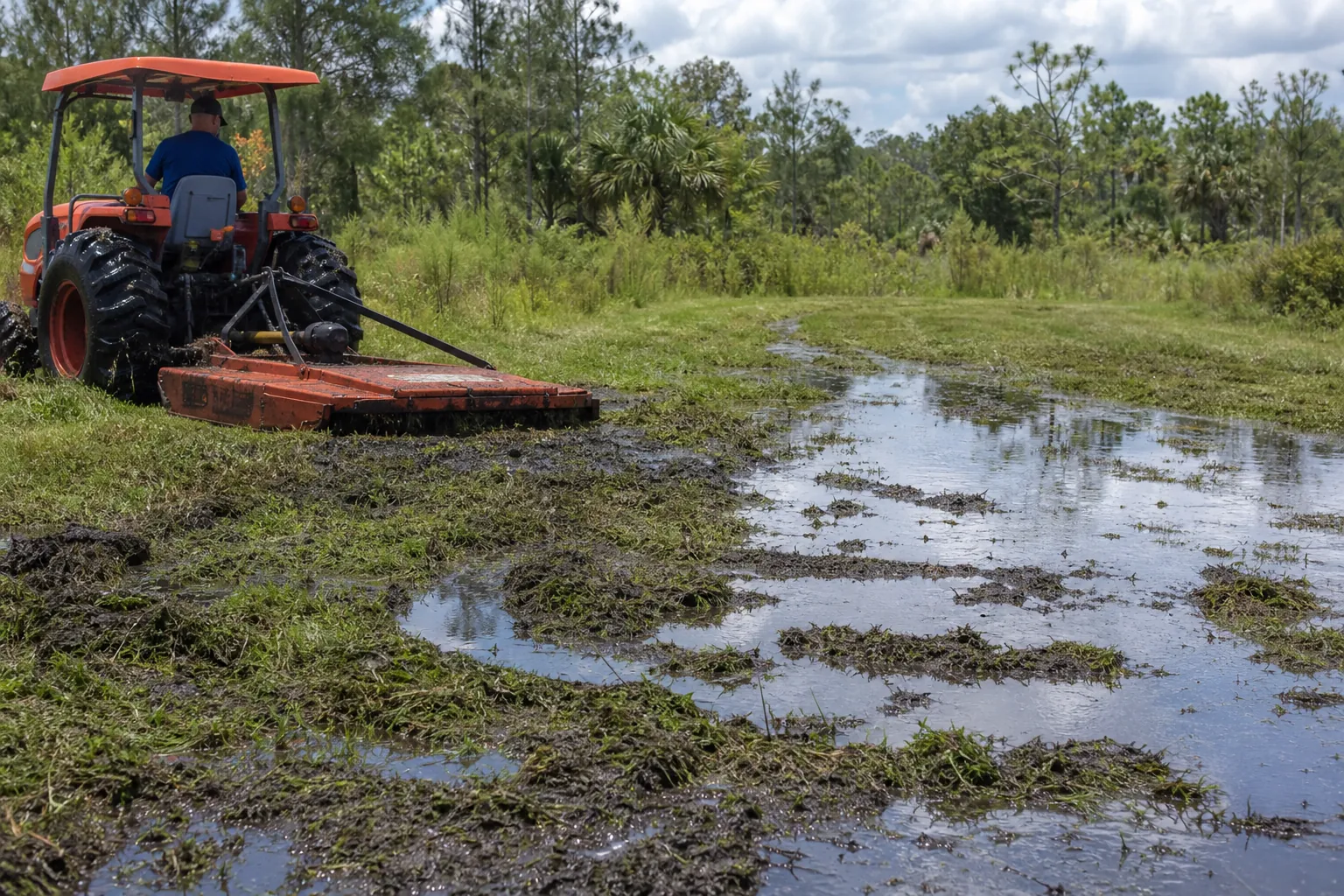
The result may be more than a temporary tire mark. Deep ruts can redirect runoff, collect water, and create uneven ground. Repeated passes can compact soil, reducing the spaces that allow water and air to move through it. Those changes matter around established trees as well as across open lots.
Wet vegetation adds another complication. Dense grass can conceal obstacles and low areas, while clippings may collect in heavier clumps rather than spreading evenly. Visibility and footing become less predictable, particularly where vegetation has not been managed for some time.
Deltona properties do not all dry at the same rate. A relatively open, sandy area may become workable before a shaded depression nearby. Soil texture, previous grading, groundwater, and drainage patterns can produce very different conditions within the same parcel.
Read The Site Before Scheduling Equipment
A useful assessment starts with the whole property, not just the tallest patch of weeds. Consider the equipment entrance, the route to the work area, turning locations, and the way out. A firm cutting area is not enough if reaching it requires crossing a saturated strip.
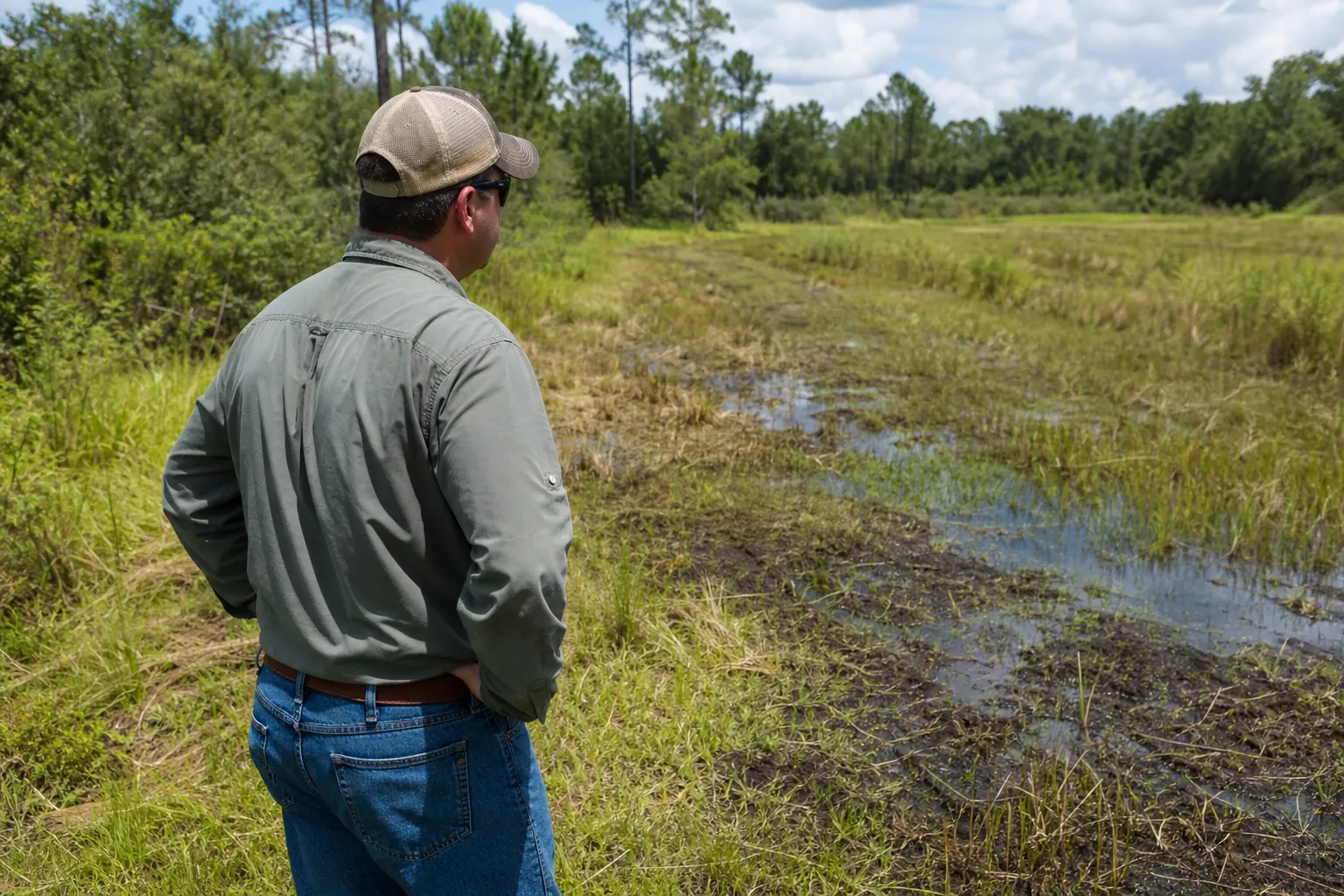
Where it is safe and accessible, walk the intended work area before equipment arrives. Avoid entering deep water or dense vegetation where footing and hazards cannot be seen. Photograph low spots and note whether water remains after surrounding areas have dried.
- Look for standing water, a water sheen on bare soil, or fresh water collecting in footprints.
- Notice whether ordinary foot traffic leaves pronounced depressions or causes the surface to shift.
- Check shaded areas separately because they may remain wet longer than nearby open ground.
- Identify ditches, drainage paths, and depressions that equipment should not cross without assessment.
- Mark visible stumps, large roots, debris, and other obstacles without assuming the vegetation hides nothing else.
- Confirm where equipment can enter and turn without crossing sensitive tree areas or neighboring property.
These observations help explain the site, but they do not prove that it will support a machine. Equipment loads differ substantially from a person walking across a yard. The operator should evaluate ground conditions and access before deciding whether to proceed.
When Waiting Is The Better Decision
There is no universal rule that a Deltona lot becomes suitable a certain number of days after rain. A brief storm on already dry ground is different from repeated rain on a property with poor drainage. Even sunny weather may not dry a low area if water continues moving into it.
Waiting is usually the more practical choice when standing water covers the intended route, the surface visibly deforms under light use, or the soil remains saturated beneath a thin dry crust. Another warning sign is an access point that has already begun to rut.
A dry-looking surface can be misleading. Vegetation and leaf litter may disguise soft soil, and a firm upper layer may sit over wetter material. Conditions should be evaluated across the work area rather than judged from the roadside alone.
Partial work may sometimes be appropriate if firm sections can be reached independently. That does not mean crossing the wet area to reach them. A workable plan needs a stable approach, room to maneuver, and a clear boundary around sections being left untouched.
Ask the contractor what conditions would cause the work to stop. Discussing that decision beforehand is better than continuing simply because equipment is already on site. Schedule flexibility can help avoid turning a vegetation-management task into a soil-repair problem.
Match The Equipment To The Conditions
Brush hogging equipment varies in size, weight, tire configuration, and cutting capacity. Those differences affect access and ground pressure, but no machine choice makes saturated soil automatically safe. Equipment selection should follow the site assessment, not replace it.
Wider tires or tracks may distribute loads differently, yet turning and repeated travel can still disturb wet ground. A lighter setup may suit some areas, while dense woody growth or hidden obstacles may require a different approach. The appropriate choice depends on both vegetation and soil conditions.
Cutting height also matters. Trying to cut too close on uneven ground can increase the chance of contacting soil, roots, or concealed debris. Brush hogging should be planned as vegetation control, not assumed to produce the same finish as routine lawn mowing.
- Ask which equipment is proposed and why it fits the vegetation, access, and ground conditions.
- Discuss how turning areas and repeated travel routes will be managed.
- Clarify what sizes and types of growth the planned cutter can handle.
- Ask how hidden obstacles will be addressed if they are discovered during work.
- Agree on areas that should remain uncut until they become suitable for access.
A thoughtful plan also limits unnecessary passes. Repeated movement over the same damp strip can be more damaging than a single crossing, especially near entrances. Establishing suitable travel routes helps reduce avoidable disturbance.
Protect Trees And Their Root Zones
Tree roots often extend beyond the visible canopy, and many important roots occupy shallow soil. Wet-ground equipment traffic can compact that soil or injure roots even when the trunk is never touched. A tree that appears safely outside the cutting path may still be affected by nearby travel.
Avoid treating the drip line as a precise boundary for every tree. Root distribution varies with species, soil, age, and site conditions. Trees on previously disturbed lots may have irregular root systems that require closer evaluation.
Brush hogging near trunks also creates a risk of bark injury and contact with exposed roots. Dense growth can hide young trees that the owner wants to retain. Identify those trees before cutting and establish clear exclusion areas with the contractor.
Florida Foliage's arborist reports and tree inspections can help inform decisions where tree health or structural condition is a concern. Tree trimming, canopy thinning, or crown reduction may be relevant to a separate tree-care goal, but they are not substitutes for protecting soil and roots during equipment work.
If a tree appears unstable, has a damaged trunk, or shows significant root disturbance, have it assessed before equipment works nearby. Tree removal or crane tree removal may be considered when appropriate to the tree and site, rather than assuming all vegetation can be handled by the cutter.
Separate Brush Hogging From Clearing And Stump Work
Brush hogging and land and lot clearing have different scopes. Brush hogging generally reduces suitable standing vegetation. It does not automatically remove substantial trees, eliminate stumps, remove every woody stem, or prepare a parcel for construction.
That distinction becomes especially important on overgrown, wet properties. A cutter may reduce the visible growth while leaving obstacles that affect future access. Cutting first without understanding the site can also make it harder to track the locations of hazards previously visible above the vegetation.
Start by stating the intended outcome. Are you trying to keep an unused lot manageable, regain access for inspections, maintain common grounds, or plan a broader clearing project? The answer determines which services belong in the scope and which should be evaluated separately.
- Use brush hogging to discuss control of suitable grass, weeds, and brush rather than removal of every obstacle.
- Discuss land and lot clearing when the goal includes a broader change to an overgrown parcel.
- Identify trees requiring evaluation before planning any tree removal.
- Discuss stump grinding separately when remaining stumps interfere with the intended use.
- Confirm how existing trees, boundaries, and retained vegetation will be distinguished from material to be cut.
Sequencing should follow site conditions. It may make sense to inspect trees first, address a specific hazard, and then schedule vegetation work when access is suitable. The right order is not necessarily the one that gets a machine onto the lot fastest.
Account For Drainage And Sensitive Areas
A wet patch may simply reflect recent rainfall, but persistent wetness deserves closer attention. Low terrain, runoff from surrounding land, blocked drainage, or seasonal groundwater can all influence the surface. Cutting vegetation does not correct those underlying conditions.
Do not assume a ditch, pond edge, or consistently wet depression is ordinary mowing ground. These locations may require different handling, and some areas may have environmental restrictions. Confirm applicable requirements with the city or county and, when appropriate, the relevant agency before clearing or disturbing the site.
Property lines and drainage features also deserve attention. Avoid directing equipment onto adjacent land or creating ruts that channel water toward a neighbor. An uncertain boundary should be resolved before work begins, particularly on vacant lots with few visible markers.
For commercial tree services and HOA and condo tree services, site coordination can include shared access, resident activity, and designated areas to avoid. Identify who can authorize the work and how temporary restrictions will be communicated. Keep residents, pets, and vehicles outside the operator's designated work zone.
If wetness repeatedly prevents maintenance, document where and when it occurs. That information can support a separate evaluation of the drainage issue. It is better to understand the cause than repeatedly force equipment through the same soft ground.
Plan Around Florida Rain And Storm Conditions
Florida weather can change a workable schedule quickly. A forecast helps with planning, but observed conditions on the property should guide the final decision. Recent rainfall at another location may not accurately describe what happened on your lot.
Before the scheduled visit, share any new information about standing water, flooding, or access changes. Photographs taken from safe locations can help show the extent of wet areas. They are useful context, though they cannot fully establish soil strength.
After severe weather, inspect from a safe distance for fallen limbs, leaning trees, hanging branches, and other obvious hazards. Do not walk under damaged trees to check whether the ground has dried. A storm-damaged tree can make an otherwise routine vegetation job unsafe.
Emergency and hurricane tree removal addresses a different need from routine brush hogging. If storm damage is present, explain that when contacting Florida Foliage so the tree hazard and access conditions can be considered together. Vegetation maintenance should not distract from an immediate tree-safety concern.
A flexible schedule is especially useful when multiple tasks are planned. Dry access may be needed for tree work, stump grinding, and brush hogging, but each operation has its own equipment requirements. Readiness for one does not automatically establish readiness for all.
Inspect The Results And Set A Maintenance Plan
After the work, review the area once it is safe to enter. Look at access routes and turning spots as well as the cut vegetation. Note any depressions, exposed roots, remaining obstacles, or sections intentionally left untouched.
Freshly cut growth can reveal features that were difficult to see before. Record their locations for future visits. Do not assume newly visible ground is suitable for heavier traffic, especially if the soil remains damp.
If marks or ruts are present, discuss them before attempting repairs. Driving back over wet soil or moving saturated material can worsen the disturbance. Any response should account for drainage and nearby tree roots rather than simply making the surface look level.
Future maintenance is easier to plan when vegetation is checked before it becomes dense enough to hide the ground again. Keep notes about persistent wet spots and seasonal access limitations. Those observations help guide timing without relying on a rigid calendar.
Discuss Your Deltona Property With Florida Foliage
The best plan for wet-ground brush hogging starts with the property's actual conditions: soil firmness, equipment access, vegetation type, drainage, and trees worth protecting. Sometimes the sensible decision is to work only in suitable sections. Sometimes it is to wait.
Before calling, gather the property location, a description of the growth, recent photos if safely available, and your intended outcome. Mention standing water, hidden stumps, storm damage, or shared access so those concerns are part of the initial discussion.
To discuss brush hogging, land and lot clearing, or related tree-care needs in Deltona, call Florida Foliage at (386) 481-7913. A clear scope and a ground-condition assessment can help you choose a practical next step without rushing equipment onto a wet lot.
Call (386) 481-7913 to talk through next steps.