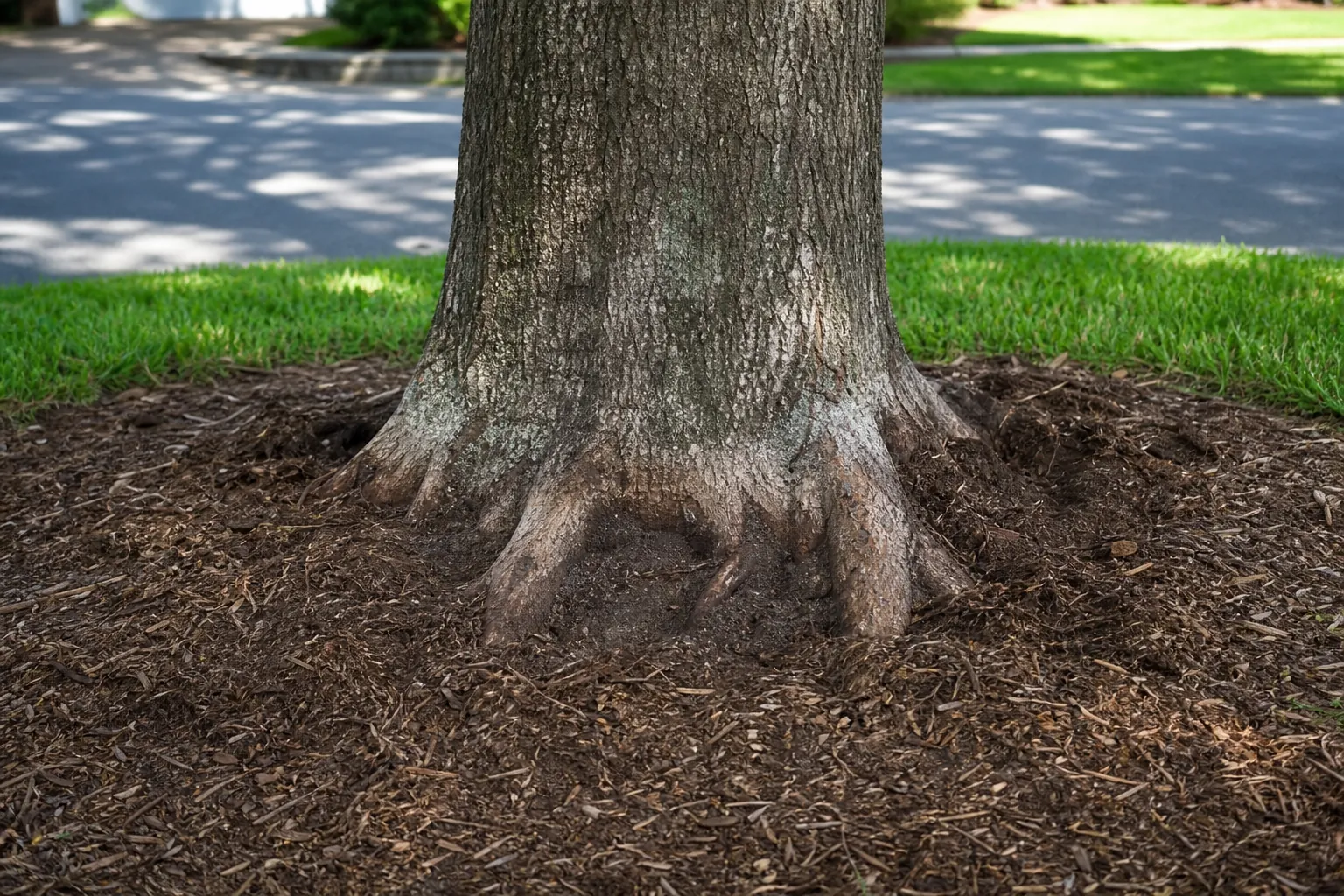
A healthy tree should usually widen where its trunk meets the ground. That widening is the root flare, the transition between the trunk and the larger supporting roots. When soil, mulch, or landscape changes hide it, a tree may look tidy while developing problems below the surface.
For homeowners researching buried root flare tree health in Port Orange, the important question is not simply whether the trunk looks straight. It is whether the tree has been planted or maintained at an appropriate depth, and whether its roots and lower trunk remain healthy.
Florida's warm growing conditions, frequent landscape maintenance, and periods of heavy rain make the area around a tree's base worth checking. A buried flare does not automatically mean a tree must be removed. It does mean that identifying the cause and checking for damage are sensible next steps.
What A Root Flare Looks Like And Why It Matters
The root flare is often easiest to recognize on an established tree. Instead of entering the ground like a fence post, the trunk broadens toward the base, sometimes with several large roots visible as they extend outward. The exact appearance varies by species, age, and growing conditions.
A young tree may have a subtle flare, and some species naturally show less dramatic widening. Palms have different growth and root characteristics than broadleaf trees, so a palm should not be assessed using exactly the same visual expectations. When identification is uncertain, a tree inspection can help distinguish normal structure from a planting problem.
Trunk tissue and root tissue function differently. Roots belong in soil, while the lower trunk should not remain covered by damp soil or mulch. When material stays against the bark, it can hold moisture and conceal deterioration, injuries, or roots growing in problematic directions.
Deep planting can also place the original root system in less favorable conditions. Roots need oxygen as well as water. Excessive soil over them, particularly in compacted or poorly drained areas, can make it harder for a tree to establish and maintain a healthy root system.
A visible flare is a useful starting point, not a complete health test. A tree can have an exposed flare and still have root disease, construction damage, or structural defects. Likewise, a hidden flare requires investigation rather than an immediate conclusion about safety.
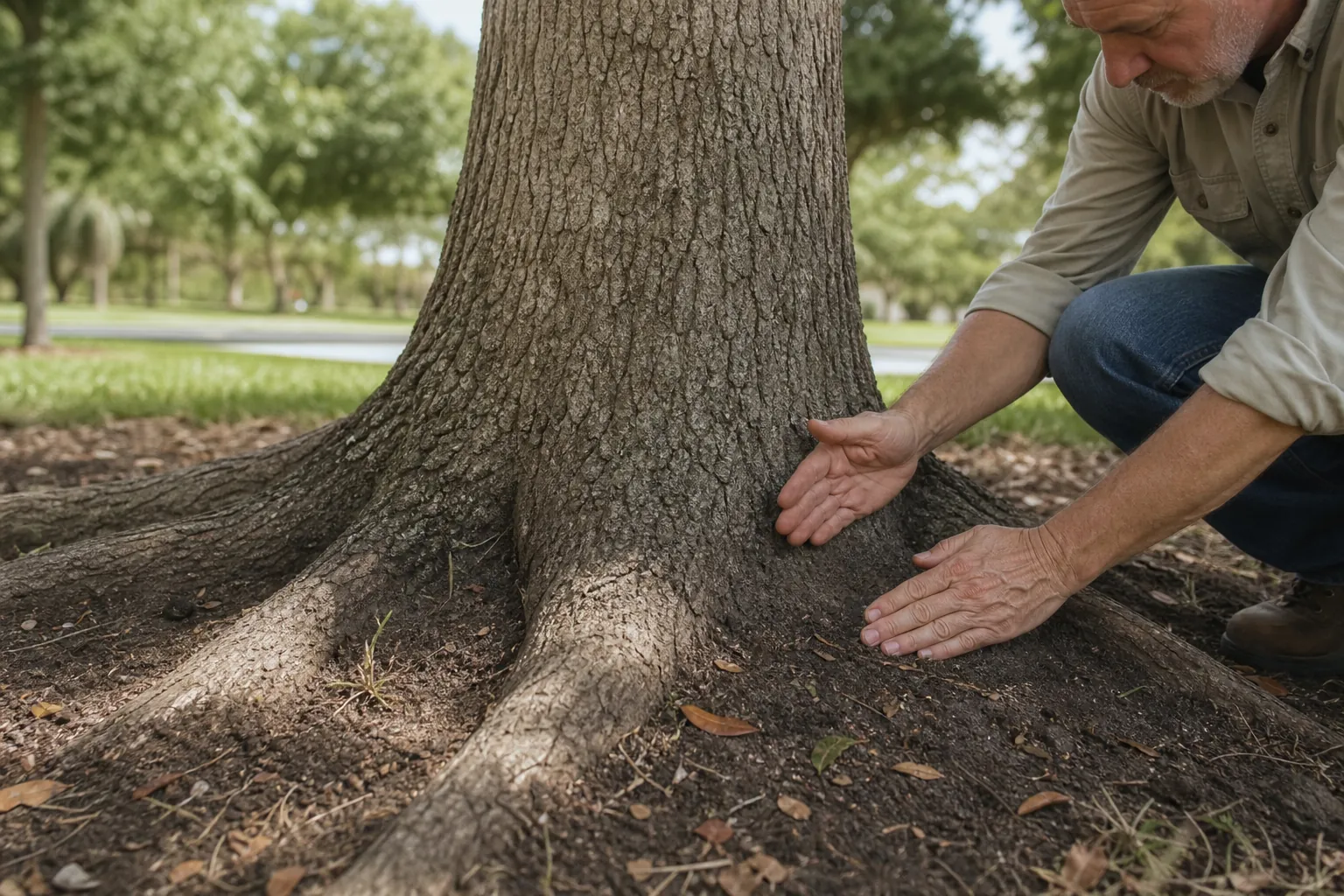
How Root Flares Become Buried In Port Orange Landscapes
Some trees begin with the problem. A nursery tree may already have excess growing material over its first major roots. If planting depth is based only on the top of the container or root ball, those roots can end up too far below the surrounding grade.
Other trees become buried gradually. Each new layer of mulch may seem minor, but repeated additions can raise the surface around the trunk. Soil added for a garden bed, lawn repair, or landscape renovation can produce the same result.
Port Orange properties may combine turf, ornamental beds, irrigation, and paved areas within a relatively small space. Those features can change how water moves around a tree. A raised bed that looks attractive may also hold damp material against a trunk that previously stood at the correct grade.
- Repeated mulching can create a mound that covers the flare and keeps bark damp.
- Soil added during landscaping can bury the base of an established tree.
- A tree installed too deeply can appear normal at first while struggling as it grows.
- Construction traffic can compact soil and worsen the effects of excessive planting depth.
- Edging or retaining features can trap soil and water close to the trunk.
Before changing anything, consider the property's history. Recent sod installation, drainage work, or bed expansion may explain why a previously visible base has disappeared. Older photographs can help show whether the surrounding grade has changed.
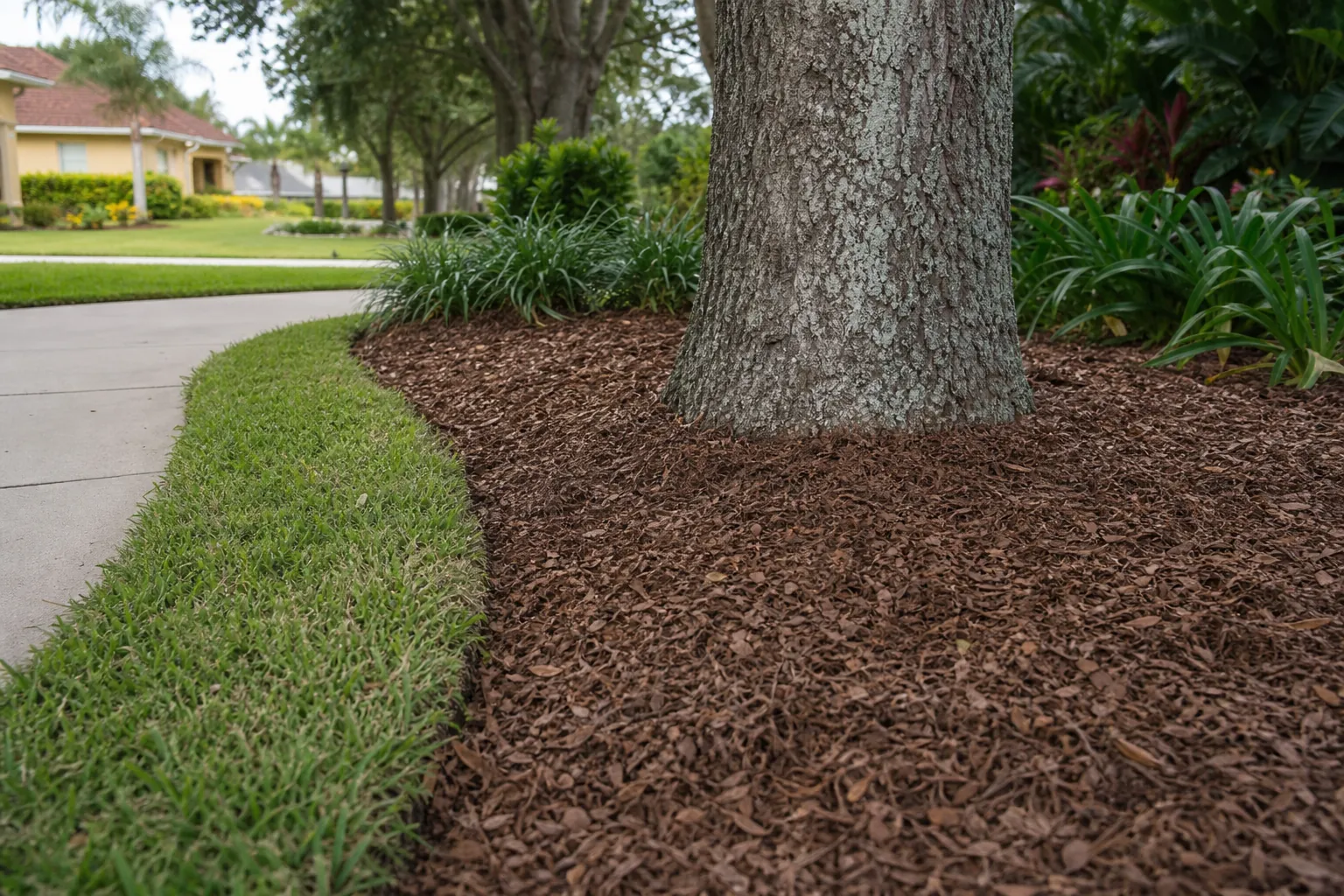
Warning Signs Worth Checking At Ground Level
Start with a visual check from a safe position. Look for a trunk that enters the soil without widening, a cone of mulch against the bark, or soil resting above the apparent base. These clues suggest the flare may be hidden, but they do not reveal how deeply it is buried.
Inspect the visible lower trunk without cutting, scraping, or probing it. Persistent wetness, soft-looking bark, cavities, fungal growth, or areas of missing bark deserve professional attention. Fungal growth alone does not identify the extent of decay, so avoid making a diagnosis from appearance alone.
Roots that circle or press against the trunk are another concern. A stem-girdling root can restrict the tissues responsible for moving water and sugars. Some girdling roots are visible above ground, while others remain concealed beneath soil or mulch.
Above-ground symptoms can include smaller leaves, thinning foliage, dead twigs, or reduced growth. These symptoms are not specific to a buried flare. Drought, drainage problems, pests, disease, and root damage can produce similar changes.
- Photograph the trunk base and the whole canopy so changes can be compared over time.
- Note whether symptoms appeared after landscaping, heavy rain, or nearby construction.
- Look for sprinkler spray repeatedly wetting the trunk or water collecting at its base.
- Check nearby trees to see whether the same maintenance practice affects multiple planting areas.
- Request an inspection if you find bark deterioration, trunk compression, or unexplained canopy decline.
If the tree has developed a new lean, visible ground movement, or major storm damage, stay away from the area beneath it. Those signs require a safety assessment rather than a routine mulch adjustment.
Safe First Steps For Homeowners
Loose surface mulch is different from compacted soil or buried roots. Where access is safe, homeowners can gently pull loose mulch away from the trunk by hand. The goal is to stop mulch from touching the bark, not to dig a deep hole or expose every root.
Work slowly and stop if you encounter roots, damaged bark, dense soil, or uncertainty about the original grade. Do not use a shovel blade against the trunk. A small injury at the base can create another problem while you are trying to correct the first one.
Removing loose mulch may reveal the flare immediately. If the trunk still disappears straight into soil, the issue may involve planting depth or a later grade change. That situation calls for evaluation before more material is removed.
Avoid creating a basin that collects rainwater around the trunk. Exposing a buried base without considering surrounding drainage can leave it in a low pocket. The appropriate approach depends on the tree, soil conditions, nearby features, and the extent of burial.
- Keep loose mulch from resting directly against the trunk.
- Leave attached roots intact until their function and condition have been evaluated.
- Avoid adding fertilizer as a substitute for diagnosing the underlying problem.
- Do not use a pressure washer to strip soil from the tree's base.
- Keep mowers, string trimmers, and digging tools away from exposed bark and roots.
These limited steps can improve visibility and prevent additional buildup. They cannot establish whether a buried tree has healthy structural roots or whether hidden decay is present.
What A Tree Inspection Can Help Determine
A useful inspection considers the entire tree and its setting. The visible flare, lower trunk, canopy condition, rooting space, drainage, and nearby targets all matter. A target can be a home, parked vehicle, walkway, or other area where tree failure could cause harm.
Florida Foliage provides arborist reports and tree inspections. For a suspected buried flare, an inspection can help identify visible concerns, evaluate the need for further investigation, and explain whether monitoring or another course of action is appropriate.
Not every concealed problem can be evaluated during a visual inspection. If buried tissue needs examination, ask what additional assessment is recommended, who should perform it, and what limitations remain. Controlled exposure of a root collar is specialized work, not a reason to excavate indiscriminately.
The inspector may consider whether roots are circling, whether bark has deteriorated, and whether the tree has enough healthy rooting space. Recent landscape changes and the owner's observations can help connect visible symptoms with possible causes.
Bring photographs and any available planting or maintenance records. Explain when mulch or soil was added, where irrigation runs, and whether standing water occurs after rain. This information can make the inspection more useful than simply pointing out that the tree looks unhealthy.
If written documentation is needed for property planning, ask about an arborist report. An inspection or report should explain its scope and limitations, rather than imply that a brief visit can predict every future tree failure.
Why Cutting Roots Or Pruning The Canopy Is Not A Simple Fix
It can be tempting to cut a visible circling root immediately. However, root size, position, and contribution to support matter. Removing the wrong root can reduce stability or damage an already stressed tree. Roots pressing against the trunk need individual evaluation.
Likewise, heavy pruning does not correct a buried root flare. Leaves produce the energy a tree uses for growth and maintenance. Removing too much foliage from a struggling tree can add stress without addressing the soil or trunk problem.
Tree trimming may be appropriate for dead, damaged, or otherwise problematic branches. Canopy thinning and crown reduction may also have a role when justified by the tree's structure and management goals. None of these services should be presented as an automatic treatment for deep planting.
When both root concerns and branch defects exist, the work should follow an assessment-based plan. That plan may prioritize immediate hazards, limit additional stress, and establish observations for follow-up. The safest sequence depends on the condition of the individual tree.
A tree with extensive decay, serious root damage, or unacceptable risk may be a candidate for tree removal. A hidden flare alone is not enough to make that decision. The condition of the tree and the consequences of failure must be considered together.
Mulch, Irrigation, And Landscape Habits That Protect The Base
Preventing another layer of burial is often easier than correcting years of buildup. Before adding mulch, check what is already present. Existing material may only need to be redistributed rather than covered with another application.
Maintain a clear area immediately around the trunk and spread mulch outward without forming a mound. The appropriate depth depends on the material and site conditions. Avoid assuming that more mulch always offers better protection.
Adjust irrigation so it supports the landscape without repeatedly soaking the trunk. Both excessive wetness and inadequate watering can stress trees, and watering needs vary with establishment stage, weather, soil, and species. A damp trunk is not evidence that the root zone is being watered appropriately.
When renovating a bed, protect the existing grade around established trees. Adding soil for ornamental plants can affect tree roots even when the work seems shallow. Digging, edging, and installing hardscape can also injure roots beyond the visible trunk base.
- Check the trunk base before each mulch application.
- Tell landscape crews not to pile soil or mulch against trees.
- Keep heavy equipment and material stockpiles out of important rooting areas.
- Discuss grade changes near established trees before work begins.
- Recheck drainage after changes to beds, paving, or irrigation.
For commercial properties, HOAs, and condo landscapes, consistent instructions help prevent the same problem across many trees. Florida Foliage offers commercial tree services and HOA and condo tree services, including tree inspections that can inform property-level maintenance decisions.
Storm Planning And Decisions About Tree Removal
Root health is part of storm preparation, but an exposed flare does not make a tree hurricane-proof. Species, structure, decay, rooting conditions, wind exposure, and surrounding changes all influence how a tree responds to severe weather.
Schedule evaluation before a storm threat when possible. That leaves more time to understand findings and consider appropriate work. After a storm, avoid trees with hanging branches, new leaning, or lifted soil around the base, and keep clear of any utility hazards.
Florida Foliage provides emergency and hurricane tree removal. Crane tree removal may be appropriate for some access or site conditions, but the method should be selected after evaluating the property and the tree.
If removal is recommended, discuss the reason, the work area, and what happens afterward. Stump grinding addresses the remaining stump, but replacement planting still requires suitable space, correct depth, and attention to the conditions that affected the previous tree.
Before removal or other regulated work, confirm applicable requirements with your city or county. Rules can depend on the property and the tree, so general online guidance should not replace current local confirmation.
Get A Clearer Picture Of Your Tree's Condition
A buried root flare is a reason to look more closely, not a reason to panic. Gently moving loose mulch away from bark, documenting symptoms, and avoiding unplanned digging are practical first steps. More complicated conditions deserve a tree inspection.
If your Port Orange tree has a hidden base, declining canopy, or changes following landscape work, call Florida Foliage at (386) 481-7913 to discuss arborist reports and tree inspections. An informed assessment can help you understand the concerns and choose an appropriate next step for your property.
Call (386) 481-7913 to talk through next steps.