Reviewed by Clinton Funk
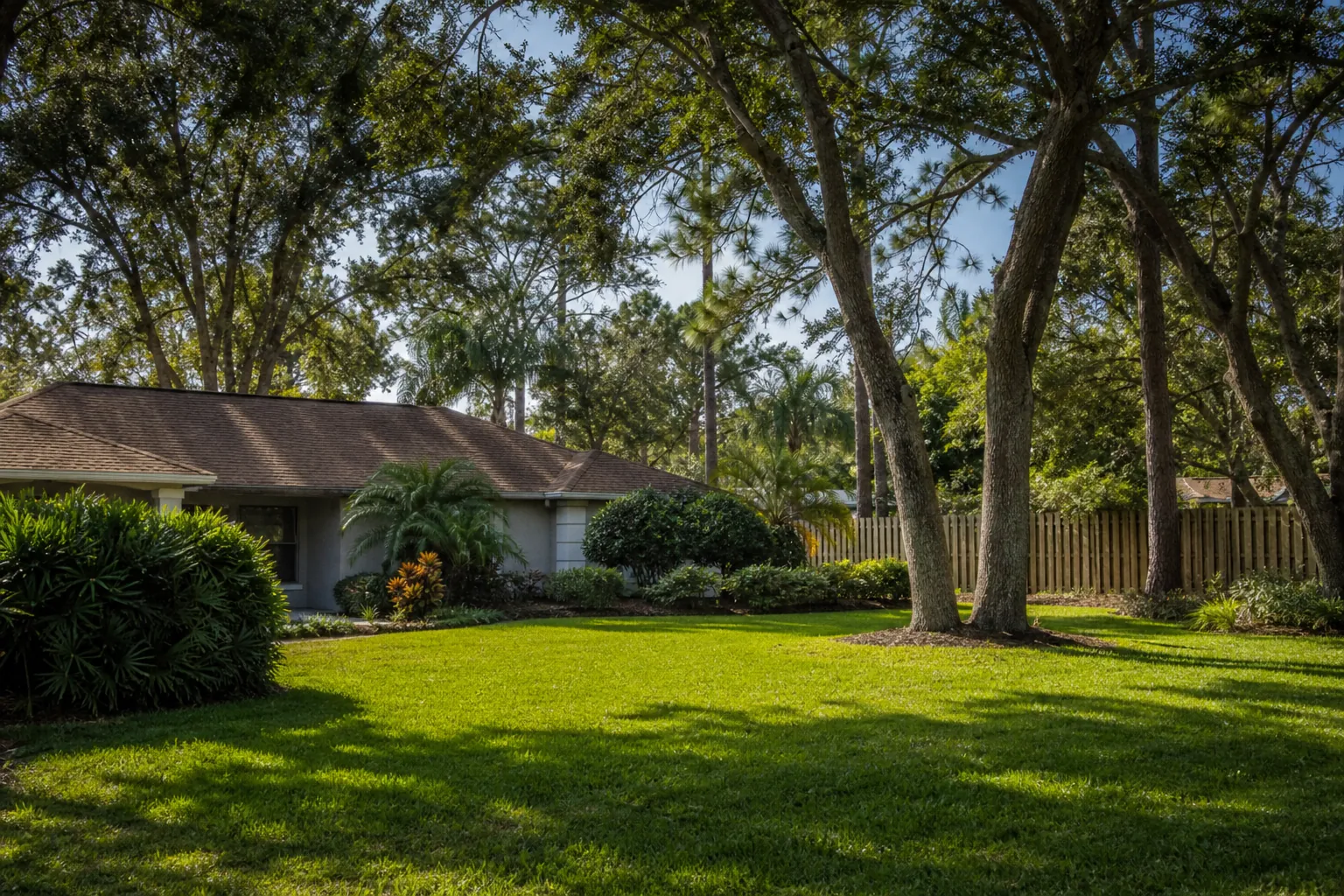
A lawn beneath mature trees can be comfortable to walk across but difficult to keep thick. In Port Orange, broad crowns, overlapping branches, and neighboring trees may limit the sunlight reaching grass. Before removing a valuable shade tree, it helps to understand whether selective canopy thinning could improve light without compromising the tree.
Canopy thinning for lawn sunlight in Port Orange is not simply a matter of cutting more branches. The useful question is whether carefully selected cuts can improve growing conditions while preserving a healthy crown. Grass type, tree species, sun direction, soil conditions, and existing tree defects all influence that decision.
Florida Foliage provides canopy thinning, tree trimming, and arborist reports and tree inspections. This guide explains what homeowners should observe, what thinning can reasonably accomplish, and when another approach may be more appropriate.
Why Shade Can Leave A Port Orange Lawn Thin
Grass needs enough light to produce the energy required for growth and recovery. When a tree crown blocks much of the available sunlight, turf may become sparse, stretch toward brighter areas, or struggle to recover from foot traffic. Dense shade can also keep leaves and soil surfaces damp longer.
However, shade is not always the only cause. Tree roots and grass share soil space, and established trees can compete strongly for water and nutrients. Compacted ground, unsuitable irrigation, drainage problems, and lawn disease may create symptoms that look similar to inadequate sunlight.
Florida lawns also contain different turf varieties with different tolerances. Some St. Augustinegrass cultivars tolerate partial shade better than many other commonly used lawn grasses, but even shade-tolerant turf has limits. A lawn professional or local Extension resource can help identify the grass and clarify its needs.
Look at the pattern rather than one bare spot. A thin area that closely follows a tree's shadow suggests that light deserves attention. A patch near a frequently used gate or a persistently wet low spot may point to another problem.
- Compare shaded grass with nearby grass receiving more sunlight, while noting differences in traffic and watering.
- Check whether thinning extends beneath several trees or only beneath one particularly dense crown.
- Notice standing water, exposed roots, or hard-packed soil before assuming that pruning will solve the problem.
- Identify your grass variety before deciding how much additional light it needs.
What Canopy Thinning Actually Changes
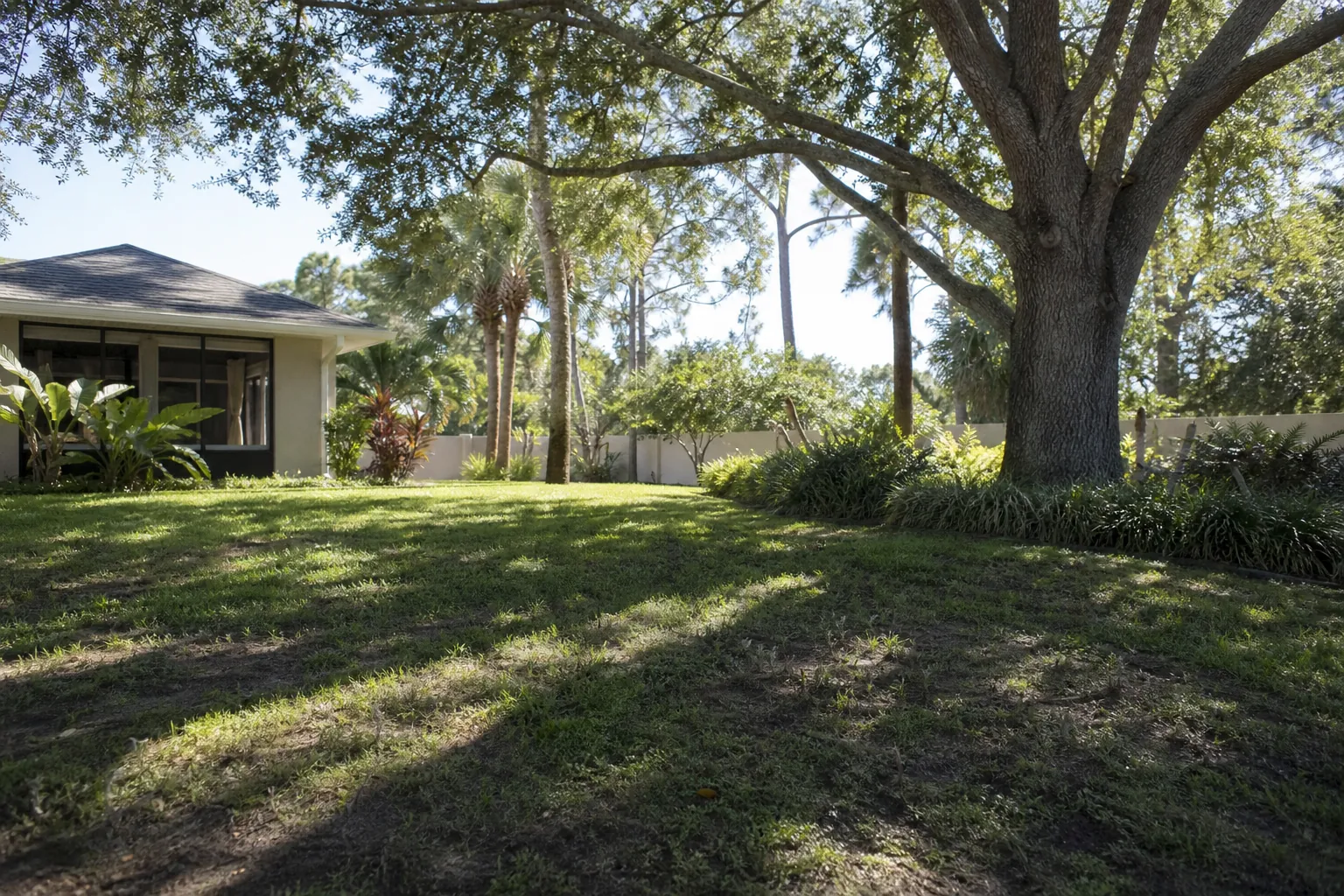
Canopy thinning selectively removes branches within a tree's crown while retaining its general shape. Appropriate cuts may reduce crowding and create small openings through which sunlight can reach the ground. The goal is a balanced crown, not a hollow tree with foliage only at the ends of branches.
Thinning differs from crown reduction. Crown reduction decreases a tree's spread or height through cuts back to suitable lateral branches when the tree's structure and condition support that approach. Thinning mainly addresses crown density. Choosing between them requires understanding the actual source of shade.
A broad crown that extends far over the lawn may still cast substantial shade after thinning. Likewise, opening one tree may do little when another tree blocks the same portion of the sky. The assessment should consider the combined canopy rather than treating every tree separately.
Thinning also differs from topping, which cuts branches or stems back indiscriminately. Topping can create large wounds and poorly attached regrowth, and it is not a sound way to obtain lawn sunlight. Removing excessive interior growth can also leave long, heavily end-weighted branches.
A sensible plan identifies which cuts are useful and which branches should remain. It balances the homeowner's lawn goals with the tree's ability to maintain foliage, respond to wounds, and retain an appropriate structure. Sometimes the right recommendation is limited work or no thinning at all.
Study The Sun Before Scheduling Tree Work
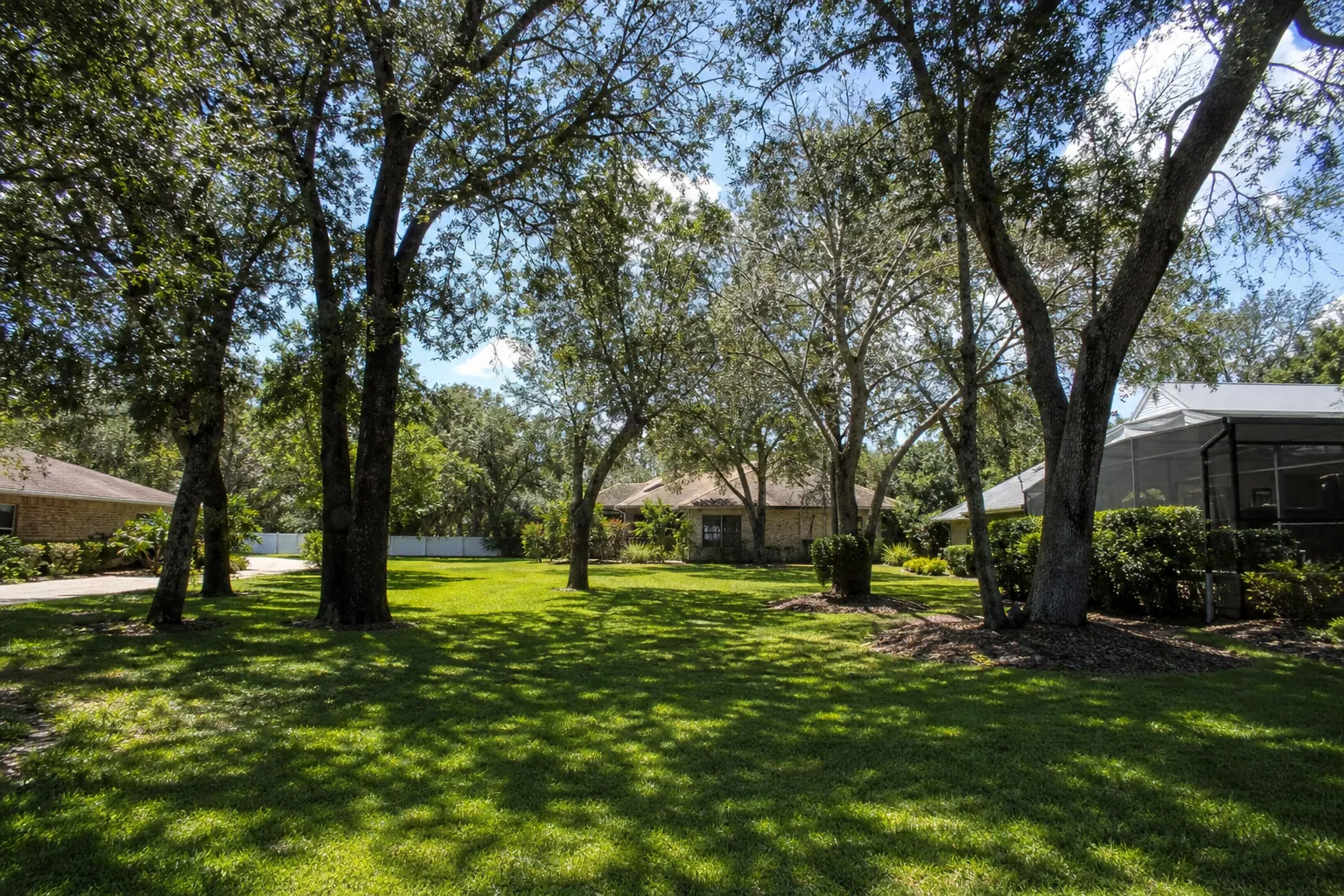
A lawn can look bright without receiving much direct sunlight. Reflected light and brief sunflecks are not equivalent to a sustained period of sun. Observing the yard at different times helps establish whether the tree is the main obstacle and where selective openings could matter.
On a reasonably clear day, photograph the lawn in the morning, around midday, and later in the afternoon. Repeat this on another day if cloud cover obscures the pattern. Mark the areas that receive direct light and those that remain under dense shade.
Sun angles change through the year. An area that receives afternoon sunlight in summer may have a different pattern in winter. A single observation is useful, but it should not be treated as a complete picture of annual growing conditions.
Buildings, fences, neighboring trees, and closely spaced crowns can all block light. If a house shades the lawn for much of the day, removing interior tree branches may provide only a modest improvement. This matters when deciding whether the benefit justifies the pruning.
- Record when direct sunlight first reaches the struggling lawn and when it disappears.
- Take photographs from the same position so the shadow pattern is easy to compare.
- Identify whether the shade comes from your tree, a neighboring crown, or a permanent structure.
- Bring these observations to the tree inspection so the discussion focuses on specific areas.
Choose Pruning That Respects Tree Health
Not every tree responds to thinning in the same way. Species, age, prior pruning, canopy condition, and branch structure affect how much work is appropriate. A mature tree with a healthy, balanced crown presents a different situation from one already struggling with dieback or repeated heavy pruning.
Before selecting branches, an inspection should consider visible defects, dead growth, branch attachments, and overall vigor. Conditions around the trunk and root zone matter as well. Signs such as cavities, cracks, fungal growth, or recent soil disturbance warrant closer evaluation rather than an automatic thinning prescription.
Sound pruning uses appropriate cuts and avoids unnecessary injuries. Flush cuts can damage protective tissues, while long stubs can interfere with proper wound response. The objective is to remove selected branches without creating avoidable damage to the remaining tree.
Removing too much living foliage reduces the tree's capacity to produce energy. Heavy thinning can expose previously shaded branches and bark to stronger sunlight and encourage vigorous regrowth. That regrowth may eventually restore much of the shade the homeowner wanted to reduce.
It is also important to avoid lion-tailing, where excessive interior branches are removed and foliage remains concentrated near branch tips. A crown may appear open afterward, but the resulting weight distribution and loss of inner foliage can be undesirable.
Rather than asking for the maximum amount of sunlight, ask what improvement is reasonable for this particular tree. A conservative plan can preserve more options for future care. If the tree is stressed, postponing optional thinning may be more sensible than trying to correct the lawn immediately.
Match The Plan To Grass, Roots, And Soil
Additional sunlight helps only if the lawn's other growing conditions are suitable. Before and after canopy work, consider irrigation coverage, drainage, mowing practices, and traffic. Tree pruning cannot correct compacted soil or make an unsuitable grass variety thrive in persistent shade.
A shaded lawn may use water differently from a nearby sunny area. Keeping the same irrigation schedule everywhere can leave one zone too wet and another too dry. Adjustments should reflect actual soil moisture and turf needs, with attention to current local watering requirements.
Visible roots require particular care. Cutting roots to flatten the lawn, burying them beneath added soil, or disturbing the root zone during landscaping can damage the tree. Turf goals should not come at the expense of structural roots or the trunk flare.
Repeated foot traffic also matters. If a shaded shortcut is always bare, redirecting traffic may be more helpful than increasing light alone. Grass recovering slowly under shade can be especially vulnerable to regular wear.
- Keep mowing height appropriate for the identified turf variety rather than cutting shaded grass unusually short.
- Check soil moisture before adding irrigation to a sparse area that already stays damp.
- Avoid piling soil against the trunk or over exposed roots to create a smooth lawn surface.
- Discuss persistent turf problems with a lawn specialist so pruning and lawn care support the same goal.
Set Realistic Expectations For Lawn Recovery
Canopy thinning changes the light environment, but it does not instantly replace missing grass. Recovery depends on the turf's growing season, the remaining grass, soil conditions, watering, and how much useful sunlight actually reaches the site. A heavily worn or mostly bare area may need separate lawn attention.
Results are also site-specific. A lawn beneath one dense crown may respond differently from a narrow side yard shaded by multiple trees and a building. Even successful thinning may leave substantial shade because preserving a healthy crown requires keeping considerable foliage.
After the work, repeat your sunlight observations from the same locations. Compare the duration and distribution of direct light rather than judging only how open the tree looks from the street. Small openings overhead may shift across the ground as the sun moves.
Monitor the tree as well as the grass. Note unusual leaf loss, new dieback, or rapid clusters of shoots. These observations can inform future inspections and help prevent a cycle of increasingly aggressive pruning.
If the light gain is limited, do not immediately request more branches be removed. Revisit the original constraints first. Where turf and mature shade trees remain incompatible, a smaller lawn footprint or a different landscape use may be more sustainable than repeatedly thinning a valuable tree.
Consider Storm Exposure Without Overpromising Safety
Port Orange homeowners understandably think about tropical weather when planning tree work. Lawn sunlight and storm preparation may be discussed during the same inspection, but they are not interchangeable goals. A more open crown does not guarantee that a tree will withstand severe weather.
Tree performance in wind depends on many factors, including species, root condition, defects, branch architecture, soil saturation, and exposure. Thinning alone cannot correct a compromised root system or a serious trunk defect. Excessive pruning may introduce additional problems instead of resolving them.
Tree trimming or crown reduction may be appropriate for certain structural concerns, while other situations require a different recommendation. The decision should follow an inspection, not an assumption that every tree needs to be opened up before hurricane season.
Florida Foliage offers emergency and hurricane tree removal when those services are needed. For routine lawn-light concerns, planning ahead allows time to assess the tree and select a measured approach. Keep people away from visibly damaged trees and avoid attempting overhead cutting yourself.
When Thinning Is Not The Right Answer
Some trees are unsuitable candidates for additional thinning because they have already lost substantial foliage, have serious defects, or are in poor condition. Others cast shade primarily because of their size and location rather than dense interior branching. In those cases, thinning may not deliver meaningful lawn benefits.
Tree removal can be considered when supported by the tree's condition, site constraints, and the owner's broader goals. It should not be the automatic response to sparse grass. Mature trees provide shade and landscape value that should be weighed against the desire for continuous turf.
Where removal is selected, access and nearby structures affect planning. Crane tree removal may be relevant for certain difficult locations, depending on the assessment. Stump grinding addresses the remaining stump, but does not mean every root beneath the former tree disappears.
Before substantial pruning or removal, confirm applicable requirements with your city or county. Rules can vary by property, tree, and scope of work. HOA or condo requirements may also apply separately from local government requirements.
For shared landscapes, Florida Foliage offers HOA and condo tree services and commercial tree services. A coordinated plan can help account for multiple lawn areas, neighboring trees, access needs, and the priorities of the property as a whole.
Prepare For A Useful Canopy Thinning Consultation
The most productive consultation starts with a clear description of the problem. Identify the lawn areas you want to improve, explain how long they have struggled, and share photographs of the daily shade pattern. Mention previous tree work and any recent construction or changes near the roots.
Ask how the proposed cuts connect to the sunlight goal. The explanation should distinguish crown density from crown size and address the shade contributed by other trees or structures. It should also clarify why the tree is a suitable candidate and what limitations remain.
- Ask whether canopy thinning, tree trimming, or crown reduction best fits the tree and the site.
- Request an explanation of which branches would be removed and how the remaining crown would stay balanced.
- Discuss visible defects and whether arborist reports and tree inspections would help document the condition.
- Confirm access arrangements and how equipment activity will account for the lawn and root zone.
- Ask what changes to observe afterward and when another assessment might be appropriate.
Improving a shaded lawn starts with matching the solution to the actual limitation. Selective canopy thinning may help, but tree health, grass requirements, and the yard's overall light pattern should guide the decision. The best plan respects both the lawn and the tree rather than trading one problem for another.
For help evaluating canopy thinning for lawn sunlight in Port Orange, call Florida Foliage at (386) 481-7913. Discuss your shaded areas, tree concerns, and practical goals so the next step is based on the conditions at your property.
Call (386) 481-7913 to talk through next steps.