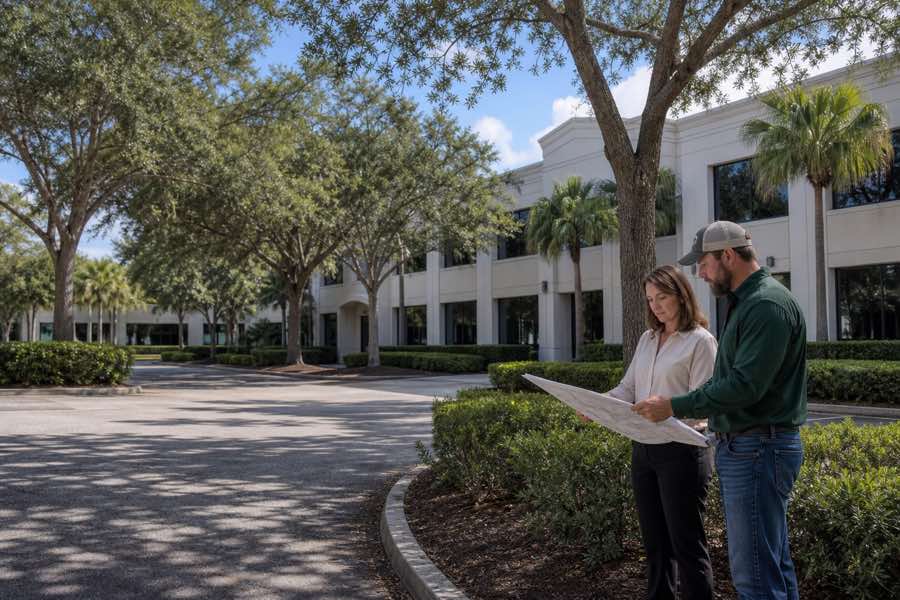
Choosing a commercial tree removal service for an office park parking area in Daytona Beach, FL starts with traffic control, tenant access, and cleanup planning. The tree is only one part of the job. A good scope also covers parking closures, delivery routes, pavement protection, stump work, and the checks that reopen the site with less disruption.
Scope Snapshot
- Define which parking rows stay open.
- Map tenant doors and delivery paths first.
- Put stump work in writing.
- Protect pavement, curbs, and signs.
- Confirm the reopening check before work starts.
Florida Foliage serves Volusia and Flagler counties, with Daytona Beach as the primary market. The company has ISA Certified Arborists on staff, and Florida Foliage is licensed and insured. That matters when a commercial tree services scope affects an active lot and shared entrances. For a property manager, the quote should fit operations, not the other way around.
Coastal Florida adds real site limits. Sandy soil can affect equipment paths. Afternoon storms can change staging. Tight drive lanes can leave little room for trucks, cones, and chip flow. A strong commercial tree removal service should account for those limits before anyone approves access or schedules the crew. If you want a local review, you can request a commercial quote or request a free estimate from Florida Foliage. You can also call (386) 481-7913.
Who Is a Commercial Arborist?
A commercial arborist is a tree professional who plans work for occupied properties, and a commercial tree removal service should understand parking, access, and tenant schedules as well as tree removal itself. That wider view helps the scope fit an office park, where a bad plan can block entrances or delay deliveries.
For this kind of site, the contractor should be able to talk through parking rows, loading zones, walk paths, and emergency access before the job is accepted. Florida Foliage has ISA Certified Arborists on staff, which helps when a manager needs a site-focused plan rather than a quick guess. For general arborist hiring guidance, see Trees Are Good.
In a busy office park, the right questions are practical. Who can close spaces? Which doors stay open? Where will the crew stage? A commercial arborist should help answer those points in plain language, so the quote reflects the real site instead of a vague tree-only description. That is where a commercial tree removal service becomes useful to property management.
Why Should Stump Work Appear in the Removal Scope?
Stump work should appear in the removal scope because a commercial tree removal service is not complete if it leaves a stump that still blocks parking, creates a trip concern, or delays restoration. The scope should say whether grinding, removal, backfill, and surface finish are included so the office park can plan its next step.
Stump details matter in a parking area. A leftover stump can affect striping, wheel stops, drainage, and the return of a closed space. If the quote stops at trunk removal, management may still need another contractor for the ground finish. That can change timing for the lot and make a simple removal harder to coordinate.
Florida Foliage can review how the stump location fits the parking layout and the next maintenance task. Ask for the final grade, debris handling, and any limits on surface repair in the same scope. A clear commercial tree removal service proposal helps the manager compare bids without guessing what happens after the stem is gone.
| Scope Item | Why It Matters | What to Confirm |
|---|---|---|
| Tree removal | Clears the trunk and canopy | Which tree, which access route |
| Stump work | Opens the space for reuse | Grinding depth, root debris, finish grade |
| Pavement protection | Limits rutting and surface damage | Mats, barricades, truck paths |
| Debris flow | Controls where wood and chips move | Staging area, haul route, cleanup path |
| Reopening check | Confirms the site is ready | Clearance, residue, access, closure notes |
When stump work is clear on paper, later repairs are easier to assign. That helps if one contractor handles the tree and another handles striping, irrigation, or paving. A commercial tree removal service should state what it will leave behind, what it will remove, and what the site will still need before the area returns to use.
Who Controls Tree Removal Access on an Easement?
Access on an easement is controlled by the easement terms, the property owner, and the party named in the document. A commercial tree removal service should not assume it can use a shared drive, rear lane, or utility corridor without written direction. The scope must match the recorded access rules.
In an office park, an easement can affect delivery routes, utility clearances, and shared parking edges. That means the site plan should show where vehicles can enter, where equipment can stage, and which spaces must stay open. The contractor’s quote should follow those limits rather than invent a different route.
Because easement rights can be specific, property managers may need the recorded document, the owner’s written approval, or advice from a legal professional to confirm access. Florida Foliage can help organize the site facts, but it cannot replace the document itself. When the path is clear on paper, the crew can plan around tenants with fewer surprises.
If access must cross active parking, the manager should define the route, cones, and hours of use before the crew arrives. That gives the contractor room to work without guessing. It also helps a commercial tree removal service avoid blocking a back door, a delivery dock, or another tenant entrance that stays busy all day.
What Permission Is Needed Before Removing a Tree?
Permission before removal depends on ownership, lease terms, governing rules, and any permit requirement from the local authority. A commercial tree removal service should ask who can approve the work in writing before it mobilizes. A tenant request may start the conversation, but it may not be enough for a shared office park.
Management should verify who owns the tree, who controls the parking area, and whether the site sits under an association, condominium, or city review process. In Daytona Beach, permit decisions may depend on the local jurisdiction. Florida Foliage can help gather site facts, but the approval call belongs to the proper authority.
For a site near a public street or utility corridor, extra coordination may be needed if access affects curb space or service lanes. OSHA guidance also points to planning and site control for tree care and tree removal operations. See the OSHA tree care and tree removal guidance for that safety focus.
Good permission records reduce confusion. They identify who can approve parking closures, who signs off on the access route, and who receives the closeout note. That is useful when an office park has multiple tenants with different hours and different tolerance for disruption. A well-documented commercial tree removal service stays aligned with the site, more than the tree.
What Should You Ask a Commercial Tree Removal Service?
You should ask a commercial tree removal service how it will protect parking access, mark the work zone, handle debris, and reopen the site. The best questions focus on operations, more than the tree. A useful scope should name tenant entrances, delivery windows, pavement protection, stump work, and cleanup duties.
Use this checklist before approval:
- Identify all tenant entrances and delivery routes.
- Reserve parking spaces and fire lanes in writing.
- Confirm who places cones and barricades.
- List stump work and surface finish separately.
- Ask for the reopening inspection notes.
Florida Foliage can review those items during a site visit or estimate. If the lot stays active during work, the contractor should explain where equipment stages, where debris moves, and how vehicles avoid the work zone. You can request a tree removal service scope that puts those details in writing.
Ask about overhead lines, irrigation heads, signs, curbs, and planted islands too. Those details matter in commercial parking areas because damage can spread beyond the tree pit. A focused commercial tree removal service should explain the protection steps it will use and the limit of its cleanup area, so the quote stays clear.
It also helps to ask who will notify tenants and who will clear parked cars. That coordination can change the crew’s timing and staging needs. A careful commercial tree removal service should describe those assumptions up front, so the proposal is easier to compare with others.
How Is a Commercial Tree Removal Job Priced?
A commercial tree removal service is priced from site conditions, access, tree size, debris handling, and the coordination needed around occupied parking. The quote should show how the contractor will reach the tree, where it will stage, whether stump work is included, and what pavement protection is required.
In an office park, a small tree can become a more complex job if trucks must move around parked cars, if work must pause for deliveries, or if debris needs a separate haul route. The quoted scope should describe those logistics so management can compare bids on the same terms. Florida Foliage can provide a free estimate based on the site.
Ask whether access control, cones, debris haul-off, and final cleanup are included, or whether any of those are separate. Pricing clarity matters because a short bid can leave out the very items that keep tenants open. A good commercial tree removal service puts those assumptions in writing so the manager can review them line by line.
It is also wise to ask what the contractor needs from management before arrival. Who will reserve spaces? Who will move cars? Who will notify tenants? Those items affect labor and staging, and they can affect the final plan for the day. Florida Foliage can walk through those details at the quoting stage, including a request a commercial quote option for larger office park work.
Can Permit Rules Change an Office Park Removal Plan?
Yes, permit rules can change an office park removal plan because a commercial tree removal service may need to adjust timing, access, or cleanup after the governing jurisdiction reviews the request. In Daytona Beach, those rules can affect whether the tree can be removed as planned and what paperwork is needed.
Permit review may also affect the order of work. A contractor may need photos, tree details, or proof of ownership before scheduling the site. If the tree sits near a protected area, a property line, or a public right of way, the plan may need another review before mobilization. Florida Foliage can help gather facts, but the permit decision belongs to the authority that controls the property.
University of Florida IFAS resources are useful for general tree management context and site conditions. See UF IFAS for supporting information. That kind of reference can help managers ask better questions without turning the tree quote into a legal call.
Do not let the permit process blur parking operations. A plan can still define which rows stay open, where deliveries can pass, and how the crew will restore access after the work ends. That is the practical job of a commercial tree removal service on an active property.
Florida Foliage serves Volusia and Flagler counties, with Daytona Beach as the primary market. For office parks, the goal is to protect access first, then remove the tree under a scope that matches the site. If the plan is clear, tenants notice less disruption and management has better control of the day.
For broader service planning, review commercial tree services and tree removal service pages. If you are comparing proposals, ask how each one handles parking, deliveries, debris flow, and closeout. A strong commercial tree removal service should make those items easy to see, not hide them in a short bid note.
Final recommendations vary with the tree, the access route, nearby targets, and what a ground-based inspection shows. Florida Foliage can review those items with the site manager and help organize the scope before work is scheduled.
Final recommendations vary depending on tree condition, access, nearby targets, and findings from a ground-based inspection.
Who should authorize office-park tree removal?
The person or party with authority under the property records, lease, association rules, or management agreement should authorize the work. A tenant request may start the conversation, but it should not replace written approval. The contractor should know who can approve access, parking closures, and final cleanup before work is scheduled.
How should parking and tenant entrances be coordinated?
Parking and tenant entrances should be mapped before the crew arrives, with reserved spaces, barricades, and delivery routes shown on the plan. The contractor should know which doors stay open, which lanes stay clear, and which hours are best for disruptive work. Coordination keeps an office park usable while the tree is removed.
Should stump work be a separate line item?
Yes, stump work should be a separate line item if the manager needs clarity on grinding depth, debris removal, backfill, or surface finish. That keeps later repairs from being assumed or missed. A separate line item also helps compare bids, especially when another contractor will handle paving, striping, or irrigation afterward.
What reopening checks should management retain?
Management should retain notes showing that the work zone is clear, debris is removed, pavement is not damaged beyond the agreed scope, access is restored, and any stump area is left as specified. Photos can help document the closeout. A written reopening check is useful if tenants, insurers, or another contractor ask about the site later.
How can a Daytona Beach office park request a commercial quote?
A Daytona Beach office park can request a commercial quote or request a free estimate from Florida Foliage. It helps to share the site map, tree location, parking limits, tenant entry points, and any permit concerns. You can also call (386) 481-7913 to discuss the scope with Florida Foliage.
For office parks, the best commercial tree removal service is the one that protects access as carefully as it removes the tree. Florida Foliage can help define the scope, review parking impacts, and prepare a plan that fits the property. To get started, request a free estimate or call (386) 481-7913 for Florida Foliage.