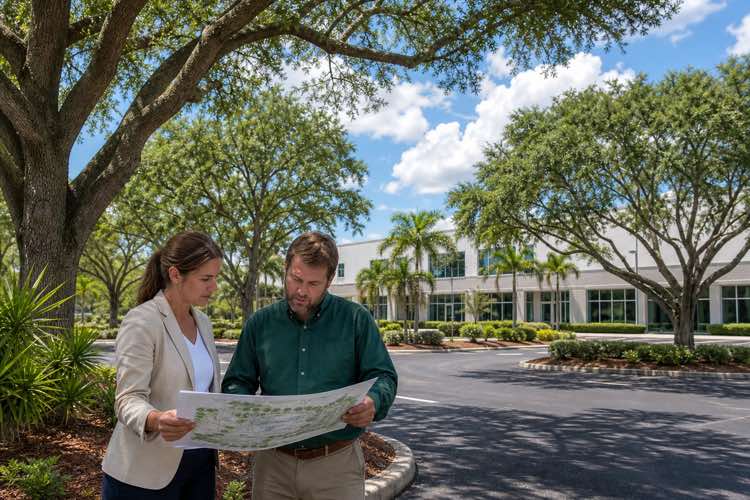
Choosing a commercial tree service in Daytona Beach often comes down to one question: is this a one-time corrective job, or should it become a documented maintenance scope? That choice affects inspection, access, authorization, and follow-up. Florida Foliage helps commercial buyers sort those decisions with clear scopes and practical records.
- One-time work fits a defined, limited tree issue.
- Maintenance fits repeat inspections and recurring site needs.
- Access, staging, and approvals should be written into scope.
- Documentation should show what was checked and completed.
For properties in Volusia and Flagler counties, the setting matters. Coastal wind, sandy soil, salt exposure, and busy drive lanes can change priorities fast. A Daytona Beach site may need different timing than an inland property. Florida Foliage serves this market with ISA Certified Arborists on staff, and the company is licensed and insured.
Start with the inspection, not the invoice. A commercial tree service should identify the trees involved, sort the work by priority, and explain what needs attention now versus later. That first review helps property managers compare a corrective project with a recurring maintenance plan before anyone authorizes crews.
What Should Be Included in a Commercial Tree Maintenance Contract?
A commercial tree maintenance contract should include inspection frequency, task types, access rules, reporting, and follow-up. A commercial tree service built on maintenance should say what gets checked, who receives updates, and what triggers new work. That structure helps buyers compare a recurring plan against a single corrective project.
The contract should name the tree areas included, such as entrances, parking islands, pedestrian routes, loading zones, and buffer lines. It should also define what happens after each visit. Florida Foliage can shape commercial tree services around those records so managers know what was reviewed and why.
Communication matters as much as pruning. The plan should identify who approves work, how hazards are reported, and what happens if a tree shifts from monitoring to action. That gives property teams a cleaner paper trail and helps budgets stay tied to actual site conditions instead of guesswork.
For a more detailed look at how scope wording changes the job, see tree service scope options. If the site needs a defined project rather than recurring care, a clear commercial tree service quote can separate tasks and keep the agreement focused.
What Is a Commercial Tree?
A commercial tree is any tree managed in a business setting where public access, liability, and site use matter. A commercial tree service may work around storefronts, offices, apartments, schools, industrial yards, resorts, or municipal property. The tree itself may be ordinary, but the setting changes the work.
That setting changes the scope because trees near customers, vehicles, signs, sidewalks, or utilities need more coordination. In Daytona Beach, salt spray, storm wind, and tight access can affect how a crew plans the visit. Florida Foliage uses commercial tree service planning to match those site demands.
Commercial trees also create documentation needs. Property managers may need a record of what was inspected, what was prioritized, and what was completed. A one-time project can solve a specific issue. A recurring plan may fit better when a site has many trees, repeated complaints, or seasonal storm pressure.
If you are comparing service types, ask how the provider defines the tree list. That list should show which trees are included, which spaces are excluded, and what extra approval is needed before work starts. Clear boundaries help a commercial tree service stay on scope and keep the contract readable.
What Is a Commercial Arborist?
A commercial arborist is a tree professional who evaluates trees in business settings and recommends work based on condition, risk, and site use. A commercial tree service with ISA Certified Arborists on staff can help separate cosmetic requests from corrective work that needs documented review.
The value is more than pruning skill. The arborist should help prioritize trees, note stress or decay, and explain why one tree belongs in maintenance while another belongs in a one-time project. That triage is useful when a manager needs to explain the choice to ownership, tenants, or facilities staff.
For general background on why tree expertise matters, the International Society of Arboriculture notes that arborists are trained to manage tree health and safety concerns in the field: Why Hire an Arborist. That does not replace a site review, but it does support the need for qualified judgment.
Florida Foliage uses that arborist review to decide whether a site needs corrective pruning, a pruning cycle, or a different approach. A commercial tree service should not guess from a photo alone. A live inspection gives better direction, especially near buildings, travel lanes, and shared access areas.
What Should You Know Before Hiring a Commercial Tree Service?
Before hiring a commercial tree service, know what problem you are solving, who controls access, and what documentation you need after the work. That is the line between a one-time corrective job and a maintenance scope. It also keeps the quote tied to the actual site conditions.
Start by deciding whether the request is urgent, routine, or preventive. Then identify the trees, note utility conflicts or customer traffic, and confirm any limits on vehicles, equipment, or hours. Coastal Florida sites often need access coordination because of tight lots, wet ground, shared drives, or nearby storm drains.
OSHA has inspection guidance for tree care and tree removal operations that addresses worksite hazards and the need to assess conditions before work begins: inspection guidance for tree care and tree removal operations. That does not decide your scope, but it supports careful site review before crews arrive.
If your site has repeat pruning needs, ask whether the contractor offers recurring reporting. If the issue is isolated, ask for a project scope with a clear start and finish. Florida Foliage can help compare those structures for properties that need commercial tree services without paying for a longer plan than they need.
- List every tree and area needing attention.
- Mark access points, staging areas, and restrictions.
- Sort urgent hazards from routine maintenance items.
- Confirm who approves the work before mobilization.
- Ask how completion and follow-up will be documented.
One more practical point: if the scope touches sidewalks, parking stalls, or shared drives, managers should coordinate with tenants before work day. A commercial tree service quote that ignores access can miss the real cost in blocked entries or repeated rescheduling. That is why details matter before approval.
For properties that need a defined scope from the start, Florida Foliage can help shape a request a free estimate around the actual site needs. The company serves Volusia and Flagler counties, with Daytona Beach as the primary market, and commercial buyers can call (386) 481-7913 to discuss the next review.
What Questions Should You Ask a Tree Service?
Ask a commercial tree service what is included, what is excluded, and what triggers extra approval. The best questions focus on scope, access, documentation, and follow-up, more than the visible tree issue. That helps you compare a one-time project against a maintenance plan on equal terms.
Good questions include: Which trees are covered? Is this pruning, removal, deadwood reduction, or monitoring? Who will document completed work? What happens if the crew finds hidden hazards? Will the provider note conditions that may need future action? Florida Foliage encourages that level of clarity before work begins.
Also ask how the company handles work authorization. Some properties need approvals from management, owners, or tenant reps before tree work starts. Others need coordination with security, facilities, or an onsite contact. Commercial tree services run more smoothly when the authorization chain is settled before the truck arrives.
If you are comparing bids, ask whether the estimate is tied to a defined corrective project or to a recurring maintenance scope. Those are different contracts. A one-time project is usually easier to compare line by line. A recurring plan is better when the site needs continuing oversight and documented status updates.
What Should You Look for in a Tree Service Company?
Look for a commercial tree service company that can explain scope in plain language, send qualified personnel, and document what was inspected and completed. Florida Foliage brings ISA Certified Arborists on staff, is licensed and insured, and offers free estimates for commercial buyers who need a clear scope review.
You should also look for consistency. The company should identify the trees, record the work categories, and explain how follow-up is handled after the job. That matters when property teams change and someone else must read the file later. A clean record reduces repeat questions and missed work.
| Decision item | One-time corrective project | Recurring maintenance plan |
|---|---|---|
| Primary goal | Fix a defined issue | Track ongoing tree needs |
| Best use | Visible hazard or specific request | Multiple trees or repeat concerns |
| Documentation | Before-and-after work record | Inspection notes and updates |
| Authorization | Approve once for the project | Approve schedule and follow-up rules |
That table shows the choice is not about size alone. A small site can still need maintenance if trees face storms, salt, or heavy traffic. A larger site can still need a one-time commercial tree service if the issue is isolated and the rest of the canopy is stable.
To compare a scope in person, commercial buyers can commercial tree services with Florida Foliage and ask how the work would be documented. If the job is more than a single visit, ask whether the provider can structure the agreement as a maintenance cycle rather than a one-off call.
For direct contact, Florida Foliage can be reached at (386) 481-7913. The team serves Daytona Beach and the surrounding counties, and the goal is to give property managers enough detail to choose a sensible contract structure, not a rushed answer.
Can Permit Questions Affect Commercial Tree Work?
Yes, permit questions can affect a commercial tree service because the governing jurisdiction may require review for certain work. The answer depends on location, tree type, work type, and local rules. Property managers should not assume a permit is needed or not needed without checking the proper authority.
That is especially true in coastal Florida, where jurisdictions may treat removals, protected trees, or right-of-way work differently. A contractor can help flag the issue, but the property-specific permit decision belongs to the city, county, or other governing body. Florida Foliage can help you identify when that question should be raised.
Permit planning matters more when a scope includes removals or changes near public areas. A one-time corrective project may need one review path. A recurring maintenance plan may need a standing check each cycle so the property team knows when a tree has moved from routine care into a regulated issue.
For that reason, the best commercial tree service contracts do not promise conclusions before review. They define who checks access, who confirms authorization, and who raises permit questions early. That keeps the project organized and reduces the risk of a work stoppage later.
If your site needs a property-specific review, Florida Foliage can help with the decision process and the paperwork trail. Ask for a site visit, compare the scope, and decide whether the tree issue belongs in a one-time project or a recurring plan. For a commercial tree service in Daytona Beach, call (386) 481-7913 or request a free estimate.
When is one-time commercial tree work enough?
One-time commercial tree work is enough when the issue is specific and the rest of the site does not need ongoing attention. That can include a single hazardous limb, a limited pruning project, or a removal tied to a clear condition. A commercial arborist should inspect the site before you decide.
What belongs in a recurring maintenance plan?
A recurring maintenance plan should include inspection intervals, priority lists, reporting, and the kinds of work that may repeat. It often fits campuses, shopping centers, multifamily sites, and coastal properties with repeated storm stress. The plan should say who gets updates and how new hazards are documented.
Should the scope identify access and staging areas?
Yes, the scope should identify access and staging areas because those details affect how a commercial tree service is performed. Parking limits, delivery lanes, gates, soft soil, and utility conflicts can change the plan. Clear access notes help the contractor coordinate equipment and keep the property moving.
Can a commercial arborist guarantee a tree is safe?
No commercial arborist can honestly guarantee a tree is safe from a brief description or photo. Trees change with weather, decay, roots, and site use. An arborist can assess visible conditions, flag concerns, and recommend work, but final risk decisions may need inspection, documentation, or another professional review.
How can a Daytona Beach property request an estimate?
A Daytona Beach property can request an estimate by contacting Florida Foliage through the website or by calling (386) 481-7913. Share the address, the tree areas involved, and whether you want a one-time project or a maintenance scope. That helps the commercial tree service estimate match the site needs.
Commercial buyers can keep the process simple: inspect, prioritize, coordinate access, authorize work, document the result, and schedule follow-up only if the site needs it. That is the clearest way to compare a commercial tree service with a maintenance plan without paying for more than the property requires.
For Florida Foliage in Daytona Beach, the next step is a focused commercial tree service conversation, a request a free estimate, or a call to (386) 481-7913. If your property needs defined corrective work or recurring care, the scope should match the need.