Reviewed by Clinton Funk
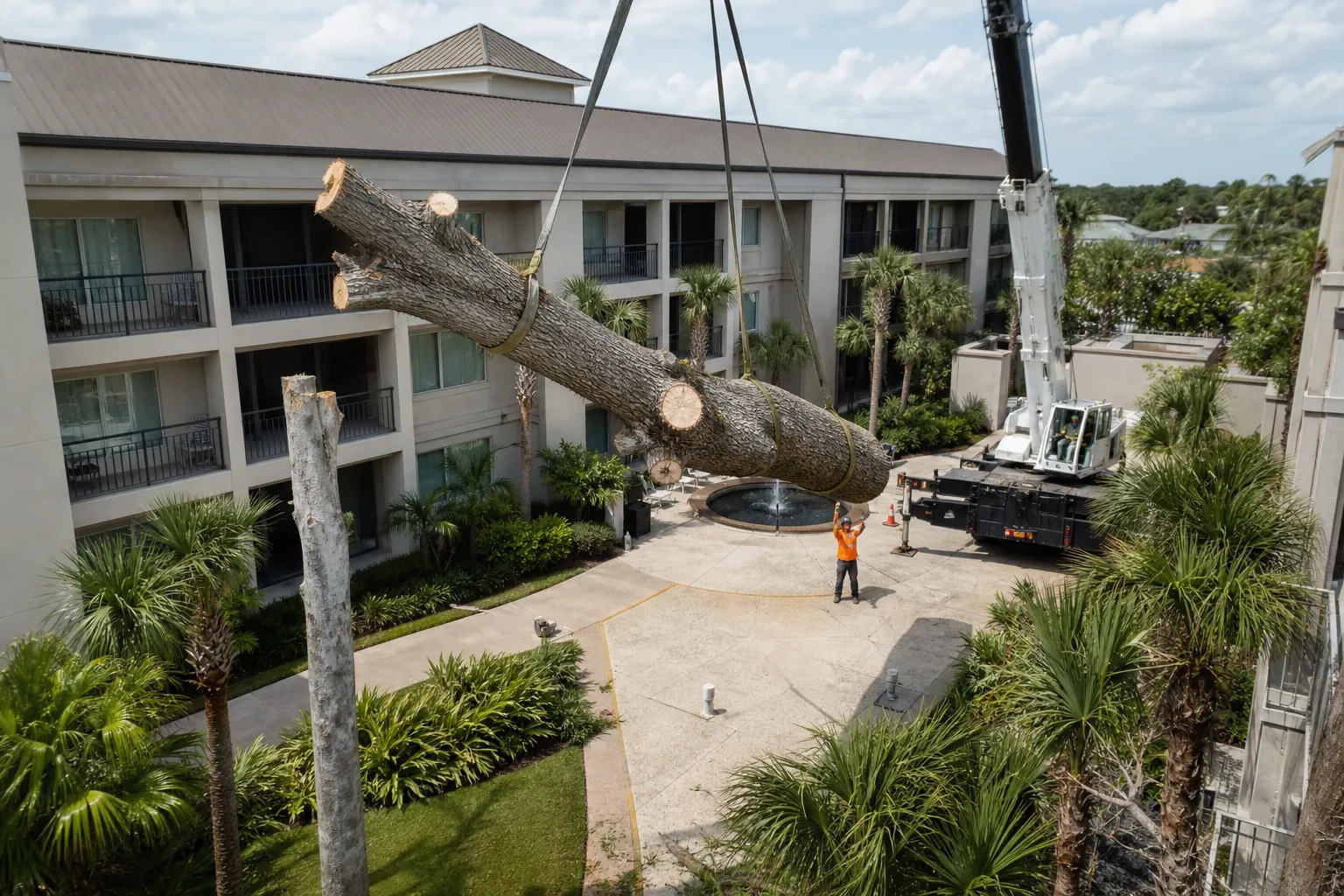
A tree inside a courtyard can be difficult to remove without affecting the space around it. Rooflines, pool enclosures, narrow gates, balconies, and landscaped walkways may leave little room for branches to come down. In some situations, a crane allows sections of the tree to be lifted out rather than lowered through the courtyard.
For property owners researching crane tree removal over courtyard Ormond Beach projects, the important question is not simply whether a crane can reach the tree. It is whether the entire removal can be planned around the tree’s condition, the lifting equipment, surrounding structures, and safe working areas. Florida Foliage can discuss tree removal options and the site conditions that need closer review.
Why Courtyard Trees Need A Different Removal Plan
Courtyards create a confined work environment. A tree may have grown comfortably for years, but its branches can now extend above roofs or into neighboring spaces. Even a small courtyard tree can present a complicated removal if its trunk is close to a wall or its limbs hang over occupied areas.
Traditional removal methods sometimes involve lowering cut branches with ropes. That approach needs suitable attachment points and a clear path for each piece. In a tightly enclosed courtyard, there may not be enough space to move larger sections without contacting buildings or outdoor features.
A crane can provide another way to control selected sections. Depending on the plan, a section may be supported before cutting and then lifted toward a designated landing area. This can reduce the need to move heavy wood through narrow passages, although crane use brings its own access and setup requirements.
The layout outside the courtyard matters just as much as the space inside it. A driveway or nearby open area may appear convenient, but its surface, underground features, and position relative to the tree must be evaluated. Reach alone does not establish that a setup is workable.
When Crane Tree Removal May Be Appropriate
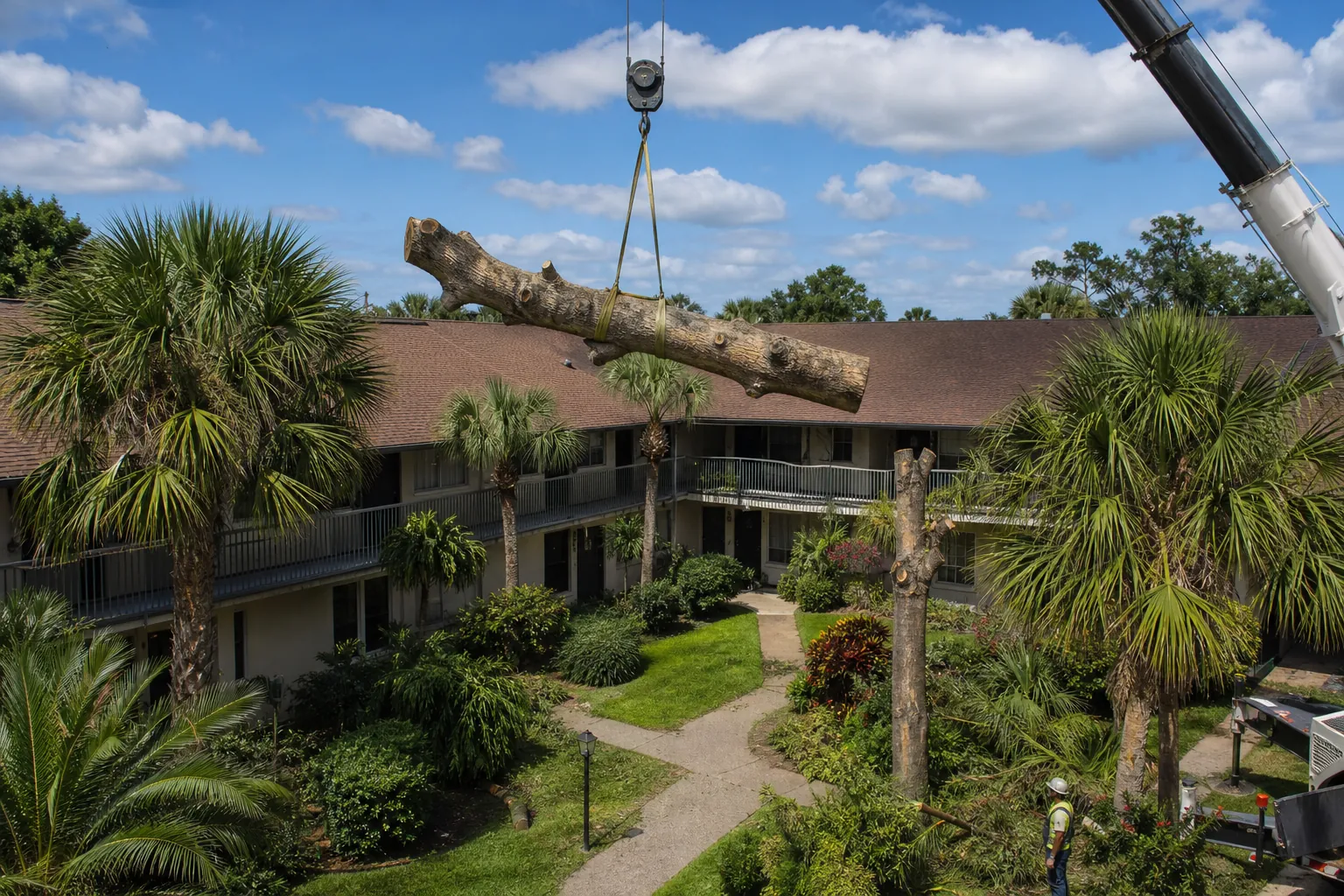
Crane tree removal is worth considering when a tree cannot be dismantled efficiently within the available space. The decision should follow an inspection rather than assumptions based on tree height or courtyard size. Some trees are better handled through other removal methods, and others may not require removal at all.
A tree inspection can help identify structural concerns and distinguish them from manageable maintenance issues. Tree trimming, canopy thinning, or crown reduction may be appropriate in some cases, but those options should match the tree’s species, health, structure, and the property’s needs.
- A crane may be considered when branches extend above a roof, enclosure, or other feature that limits the available lowering area.
- A crane may be useful when narrow gates and enclosed walkways make moving large sections through the property impractical.
- A crane may be considered when the tree’s condition makes conventional climbing or rigging more complicated.
- A crane may help when a suitable landing area exists outside the courtyard and the equipment can operate within its lifting limits.
None of these conditions automatically makes crane removal the right choice. A decayed trunk, for example, requires careful evaluation because damaged wood may not support loads as expected. The crew must determine how the tree can be approached and which removal sequence is appropriate.
What The Site Assessment Should Cover
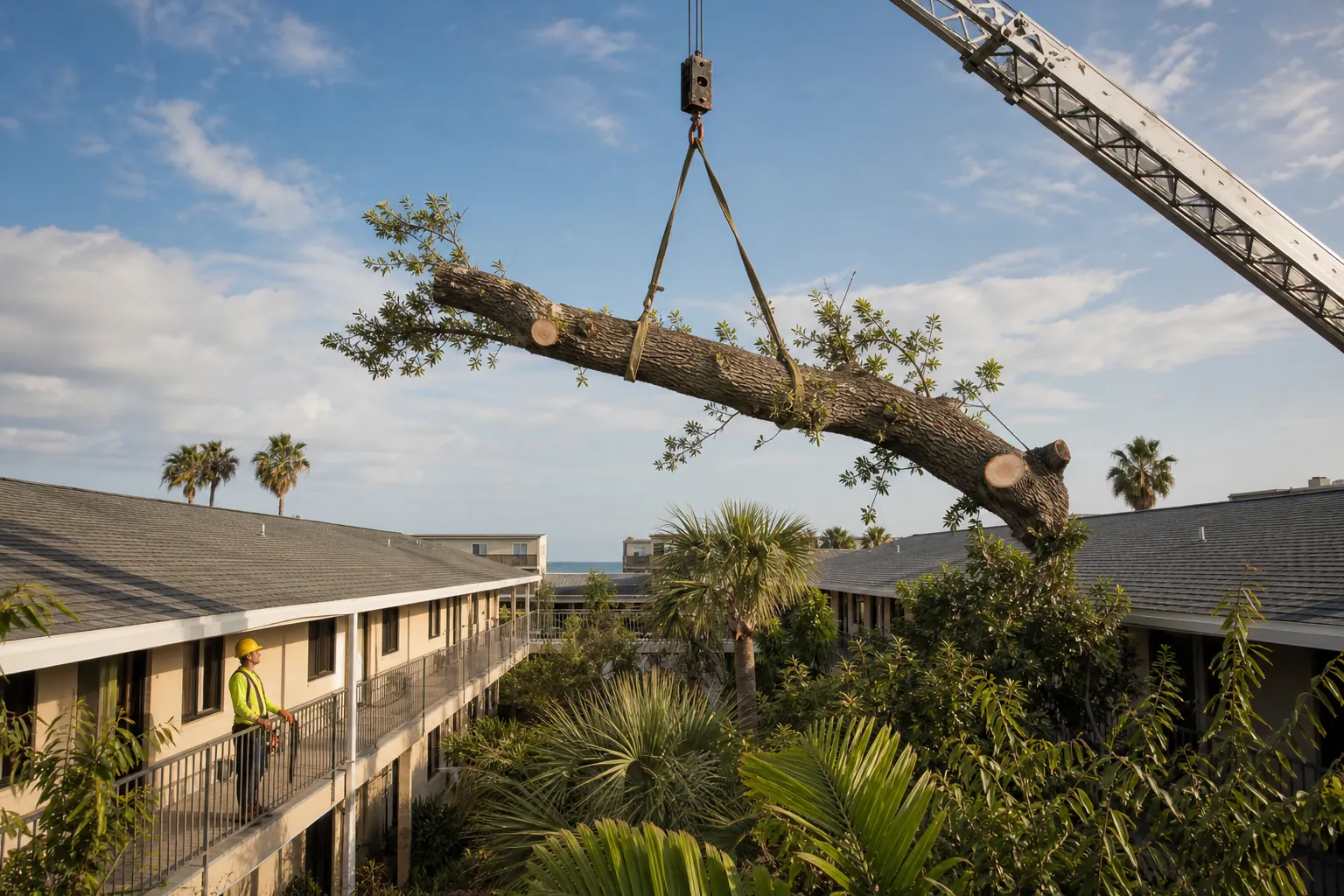
A useful assessment looks beyond the tree itself. It should consider how workers, equipment, and removed material will move through the property. For an Ormond Beach courtyard, this often means reviewing both the enclosed space and the areas surrounding the building.
The tree’s condition and structure
The inspection should consider visible decay, dead branches, cracks, lean, branch attachments, and storm damage. Dense foliage can hide defects, so an initial view from the ground may not answer every question. Some findings may change the removal approach or require further evaluation.
Arborist reports and tree inspections can help document observed conditions and support a property owner’s decision. When requesting a report, explain whether it is for personal planning, an HOA discussion, a property management file, or another purpose so the expected scope is clear.
Crane setup and lifting distance
A crane’s capacity depends on its configuration and the distance between the crane and the load, among other factors. A tree that looks close on a map may still require a challenging setup because buildings, setbacks, or access restrictions affect the crane’s position.
The setup area must also be evaluated for support. Pavers, concrete, soil, underground utilities, drainage structures, septic components, and irrigation lines can affect where equipment may be placed. Property owners should share any available information about concealed features rather than assuming a paved surface is suitable.
Overhead and neighboring obstacles
Power lines require particular attention. A removal plan must account for electrical hazards and any necessary coordination with the utility. Homeowners should never try to move a branch that is touching, or may be energized by, a power line.
Neighboring roofs, balconies, trees, and parking areas can also restrict the lifting path. If access or temporary use of another property is needed, permission and responsibilities should be clarified before work begins. A plan should not depend on an unconfirmed assumption about neighboring space.
How A Courtyard Crane Removal Typically Proceeds
Every removal sequence is site-specific, but understanding the general stages helps property owners prepare. The work should begin with a shared plan for equipment placement, restricted areas, communication, and the location where tree sections will be set down.
The crew then prepares the tree and equipment for the planned lifts. Depending on the conditions, workers may access the tree using suitable methods and attach lifting gear to a selected section. The section’s size and attachment arrangement need to account for its expected weight and behavior during the lift.
Once a section is ready, the cutting and crane operations are coordinated. The section is separated and moved along the planned path to the landing area. There, the crew can process it into manageable pieces. The sequence continues as the tree is dismantled.
Branches do not all behave alike. Their shape, foliage, moisture, and balance affect how they move. A careful plan accounts for these differences instead of treating every section as an identical load. Wind conditions can also affect control and may require a change in timing or method.
After the upper tree is removed, the remaining trunk is handled according to the site plan. Stump grinding is a separate consideration because a crane lifting branches out of a courtyard does not resolve access to the stump. Discuss stump work before removal so the final condition of the space is understood.
Protecting Courtyard Features And Managing Access
Courtyards often contain items that are easy to overlook during an initial conversation. Outdoor furniture, planters, lighting, fountains, screened structures, and small decorative walls can all affect work zones. Removing movable items ahead of time gives the crew a clearer space and reduces avoidable exposure.
Fixed features need a different discussion. Ask how the plan accounts for pools, glass doors, roof edges, paving, and irrigation. Protective measures may be appropriate, but they do not replace a workable lifting path or a properly evaluated equipment setup.
- Move furniture, grills, portable planters, and loose decorations out of the agreed work area before the crew arrives.
- Identify irrigation controls, drainage openings, buried lines, and other features that may not be obvious during a walkthrough.
- Arrange for children and pets to remain away from the courtyard, landing area, and equipment throughout the operation.
- Keep vehicles out of designated access and setup areas, including spaces needed for processing removed wood.
- Confirm how residents will enter and leave the building if the usual courtyard route becomes temporarily unavailable.
Do not enter the work area to retrieve an item or watch from beneath the lifting path. Ask where you can safely remain if you need to be on the property. Clear boundaries are especially important when the courtyard is a shared route between residences or commercial spaces.
Planning For Ormond Beach Weather And Storm Damage
Florida weather can change the conditions of a removal project. Wind, lightning, and heavy rain may affect whether crane work can proceed. Wet ground can also change access conditions and the suitability of a proposed setup location.
Scheduling should allow for weather-related adjustments. A calm morning forecast does not eliminate the need to monitor conditions during the work. Equipment operating limits and site safety considerations should guide decisions about continuing, pausing, or rescheduling.
After a hurricane or strong storm, a courtyard tree may have hanging limbs, split branches, or a changed lean. Keep people out of the affected area until the hazards have been assessed. Avoid placing ladders against damaged trees or pulling on suspended branches.
Emergency and hurricane tree removal may require a different sequence from a planned removal. Immediate hazards, blocked access, electrical concerns, and unstable structures can affect what happens first. When contacting Florida Foliage, describe what you can see from a safe position and mention whether the tree is touching a building or utility line.
City, County, HOA, And Condo Coordination
Before scheduling removal, confirm whether your property is subject to applicable tree removal requirements. Requirements can vary by location, tree characteristics, and property circumstances. Check with the appropriate city or county office rather than relying on a neighbor’s experience or an older project.
If equipment placement affects a sidewalk, roadway, or other public area, ask what permissions or coordination may be needed. Do not assume that a convenient roadside setup is available without review. Clarifying access early can prevent a plan from depending on a location that cannot be used.
HOA and condo properties may have additional approval and notification procedures. Determine who can authorize the work, who controls common areas, and whether the courtyard tree is an association responsibility or an individual owner’s responsibility.
For HOA and condo tree services, a written access plan can help management coordinate residents, parking, and temporary closures. Commercial tree services may require similar coordination with tenants, deliveries, and business entrances. The goal is to keep the work area controlled without leaving occupants uncertain about access.
Questions To Ask Before Agreeing To The Work
A clear proposal should help you understand the intended scope and the practical effect on your property. Ask questions about the removal method, access arrangements, cleanup, and any work that is excluded. Answers should relate to your courtyard rather than describe crane removal only in general terms.
- Ask why crane tree removal is being recommended for this tree instead of another removal method or appropriate tree care.
- Ask where the crane will be positioned and which surfaces or underground features need further evaluation.
- Ask where tree sections will be landed and how that area will be separated from residents and visitors.
- Ask whether the plan depends on utility coordination, neighboring access, or city or county confirmation.
- Ask what cleanup is included and whether stump grinding is part of the agreed scope.
- Ask how weather changes or newly discovered tree defects could affect the schedule and removal sequence.
You should also discuss insurance and any credentials relevant to the proposed work. Request current documentation and clarify who is responsible for each part of the operation. If your association or property manager has documentation requirements, share them before scheduling.
Photos can support an initial conversation, but they cannot show every structural defect or ground condition. Provide wide views of the courtyard, the full tree, nearby roofs, and possible access areas. An on-site review is still important for determining whether the proposed approach is practical.
What To Consider After The Tree Is Removed
The courtyard’s use may change once the tree is gone. Areas previously shaded can receive more direct sunlight, and planting beds may need different watering practices. Take time to observe the space before making major landscaping decisions.
If stump grinding is planned, confirm whether equipment can reach the stump and what will remain afterward. Roots may extend beneath nearby paving or structures, and grinding does not automatically remove the entire root system. Discuss the intended depth and cleanup scope in relation to future use.
Other trees around the courtyard may benefit from a separate inspection. Removing one tree does not mean the remaining trees need aggressive pruning. Tree trimming, canopy thinning, or crown reduction should address specific objectives and preserve appropriate structure where possible.
Discuss Your Courtyard With Florida Foliage
A successful planning conversation starts with the tree’s condition, the surrounding buildings, and the available access. Crane tree removal can be a useful option for a constrained Ormond Beach courtyard, but its suitability depends on the whole site, not just the height of the tree.
To discuss tree removal, crane tree removal, or arborist reports and tree inspections with Florida Foliage, call (386) 481-7913. Share whether the property is a home, commercial site, HOA, or condo, and describe any storm damage or access limitations. Those details help guide the next step toward a site-specific assessment.
Call (386) 481-7913 to talk through next steps.