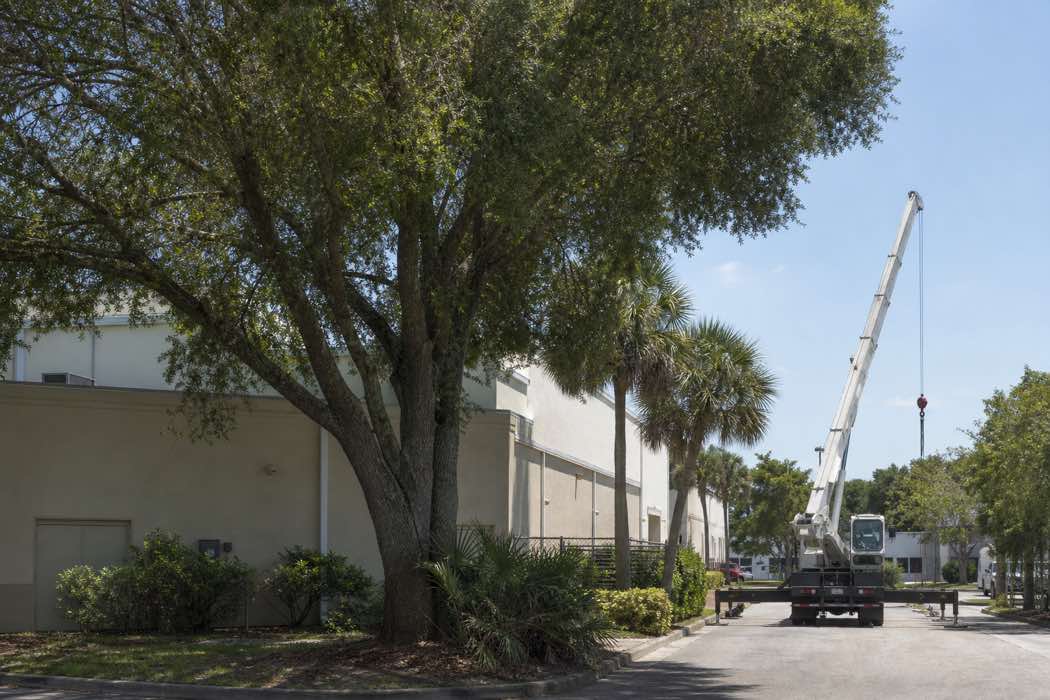
When a lot is cramped, crane tree removal is a planning question before it is a work question. The real issue is more than height. It is access, lift zones, traffic, utilities, tree condition, landing space, and the written exclusions in the quote. Those site facts shape the plan in Daytona Beach and across coastal Volusia and Flagler counties.
- Access often drives the plan more than tree height.
- Lift zones and landing areas need usable space.
- Traffic, wires, and soft ground can change scope.
- Tree condition affects how pieces can be handled.
- Written exclusions help compare quotes fairly.
Buyers comparing a contractor, scope, or estimate should ask what is included, what is assumed, and what is left out. A careful crane tree removal service should explain setup space, debris flow, and site limits in plain language. In Daytona Beach, narrow drives, sandy soil, and overhead utility lines can shape the plan as much as the tree itself.
Florida Foliage serves Volusia and Flagler counties, with Daytona Beach as the primary market. The team has ISA Certified Arborists on staff, is licensed and insured, and offers free estimates. If you are comparing scope or need a site visit, call (386) 481-7913 to talk through the property details with Florida Foliage.
On a tight lot, the best quote is the one that matches the site. That may mean crane tree removal, or it may mean another removal method. A photo alone cannot answer that. The goal is to understand the constraints before any equipment plan is set.
What Size Crane Is Used for Tree Removal?
Crane tree removal can use different crane sizes, but the right choice depends on reach, lift weight, and where the machine can set up. A smaller tree in open space may need a very different plan than a larger tree trapped by roofs, fences, pools, wires, or narrow lanes.
Do not try to choose the machine from tree height alone. A tall pine with open side access may be easier than a shorter oak hemmed in by buildings. The crew has to look at the full site, then map the lift zone, swing path, and landing area before picking equipment.
That is why a photo can help with early screening but cannot settle the job. A large tree removal project on a narrow parcel may still be handled without a crane if the site allows. The access pattern matters as much as the trunk diameter or canopy spread.
OSHA’s crane rules cover assembly, operation, and hoisting work, which is one reason qualified planning matters when a crane enters the picture. See OSHA cranes and derricks for the general framework. That source does not choose a crane size for your property, but it shows why site-specific planning is important.
If a contractor recommends equipment from a picture alone, that is a caution sign. Tight-access work needs measurements, not guesses. Florida Foliage can review those details during an estimate and help decide if the property supports crane tree removal or another removal plan.
How Much Does Tree Removal With a Crane Cost?
Crane tree removal cost depends on access, time on site, tree condition, and how much coordination the job requires. A narrow driveway, street staging, utility concerns, or the need to protect a shared access lane can add planning time and change the scope. The removal method matters, but the site often matters more.
A dead, split, leaning, or storm-damaged tree can also change the method and the handling time. That is why an estimate should be tied to the property, more than the species. If a quote does not explain access limits, cleanup, or exclusions, it is hard to compare it fairly with another bid.
Florida Foliage offers free estimates, and the estimate should translate the site facts into a written scope. That scope is more useful than a figure with no explanation. Ask what is included before you ask what it costs. A low number that skips setup, coordination, or debris handling can mislead a buyer.
For a tighter read on tree condition, a tree risk assessment can help clarify whether the tree itself changes the removal method. In coastal Florida, wind exposure, root issues in sandy soil, and storm history can all matter. Those facts should be part of the estimate discussion when the site is constrained.
Florida Foliage can review those details during an estimate in Daytona Beach or nearby areas. If you need to compare scope before choosing a contractor, call (386) 481-7913 and ask how the job is being framed.
How Do You Estimate Crane Tree Removal Cost?
Crane tree removal cost is estimated by combining access, lift distance, tree condition, and the work needed to land and clear each section. The estimate should also show whether the crane can stage on the property, on the street, or only from a distant setup point. That one fact can change the whole plan.
Useful measurements include driveway width, gate openings, overhead wire height, roof setbacks, and any place a truck or crane can safely sit. In Daytona Beach, soft sand, irrigation lines, pool enclosures, and drainage swales can also affect where equipment can travel or stand. Those details are practical, not optional.
The estimate should also say whether the tree can be reduced in sections from one side or whether pieces must be picked over obstacles. If the lot is tight, written exclusions matter. Buyers should know what the contractor is assuming and what could trigger a scope change after arrival.
| Scope item | Why it matters |
|---|---|
| Access path | Shows whether equipment can reach a workable setup zone |
| Lift and swing space | Helps define movement over roofs, fences, or trees |
| Landing area | Supports debris handling, bucking, and cleanup |
| Traffic control | Can affect timing near roads or driveways |
| Utility clearance | May limit where equipment and tree sections can move |
| Tree condition | Changes cut method, rigging needs, and risk level |
When Florida Foliage prepares a free estimate, the goal is to turn site facts into a workable scope. That is better than a guess based on species alone. If the property sits on a busy street or in a dense neighborhood, those realities should be written down before any work is scheduled.
OSHA also has inspection guidance that is relevant to tree care and tree removal operations. Review the limited safety point at OSHA inspection guidance for tree care and tree removal operations. It does not replace a site visit, but it reinforces why inspection and planning matter before lifting begins.
How Many Crane Tree Removal Quotes Should You Get?
Crane tree removal buyers should usually compare more than one quote when the site is tight or the tree is complicated. Two or three written scopes can show which company is accounting for access, staging, traffic, and exclusions, rather than only naming a number. That comparison often exposes missing items.
Look for consistency in what each quote covers. Does one company include debris hauling while another leaves it vague? Does one spell out street use or utility restrictions? A shorter quote is not always weaker, but it should still explain what is and is not included. Buyers need apples-to-apples scope, more than totals.
If one bid is much lower, ask what it leaves out. A complete plan for crane tree removal should describe setup assumptions, the removal sequence, and cleanup. Florida Foliage can help you compare those details during an estimate, and you can reach the office at (386) 481-7913.
Comparing more than one scope is especially useful when the tree sits near a shared driveway, retaining wall, or pool enclosure. Those features can change the work method in a way that is easy to miss in a short quote. Written detail helps the buyer make a cleaner choice.
What Questions Should You Ask a Crane Tree Removal Company?
Crane tree removal quotes are easier to compare when you ask each company the same questions. Start with access, then move to lift zones, landing areas, traffic needs, and any exclusions. Ask who will handle permits or traffic control, and what happens if the site conditions differ from the estimate.
It also helps to ask how the company evaluates the tree itself. A damaged trunk, decay, included bark, or storm break can change the method. If the contractor cannot explain how tree condition affects the plan, the scope may be too thin for a tight lot. A buyer should want clarity, not assumptions.
- Where will the crane set up?
- What space is needed for staging?
- Which utilities affect the work zone?
- What written exclusions appear in the quote?
- Who handles permits or traffic control?
Ask for those answers in writing whenever possible. That makes it easier to compare a crane tree removal service with another contractor on the same terms. Florida Foliage can review the property and provide a free estimate if you want help framing the questions before the visit. For that, call (386) 481-7913.
When the tree is beside a house, fence, or utility line, the right questions can prevent a scope mismatch. A clear quote should show what the crew is planning to do and what site limits could change that plan. That is the buyer-facing value of the estimate.
Is Hiring an Arborist Worth It Before Crane Tree Removal?
Hiring an arborist before crane tree removal is often worth it when tree condition, access, or neighborhood constraints are unclear. An ISA Certified Arborist can help identify failure signs, weight distribution issues, and site factors that change the removal method. That can make the quote more precise and easier to compare.
An arborist review is especially useful when the tree leans toward a structure, has decay, or stands near utilities. It also helps when the goal is to protect nearby trees, hardscape, or a pool enclosure during removal. The point is not to choose a method from a photo. It is to understand the risk first.
Florida Foliage has ISA Certified Arborists on staff, which matters when a buyer wants a scope based on tree condition rather than guesswork. The Trees Are Good site explains why hiring a qualified arborist can help tree owners make better decisions; see Why Hire an Arborist?. That is a limited point, but it is important for difficult removals.
For a property with tight access in Daytona Beach, a tree risk assessment may be more useful than a quick visual opinion. It can clarify whether the issue is the tree, the site, or both. Florida Foliage can discuss that during an estimate and help you decide what level of review fits the job.
Not every removal needs that extra layer of review, but many confined properties benefit from it. The more complex the site, the more value there is in a structured look at tree condition and surrounding hazards before the quote is finalized.
Do Florida Permits Affect Crane Tree Removal?
Florida permits can affect crane tree removal when local rules, HOA rules, street use, or utility coordination apply. The answer depends on the governing jurisdiction and the property facts, not on a general rule. A crane may also trigger separate traffic or access requirements if equipment must use public space.
In Daytona Beach and nearby communities, the issue is often less about tree species and more about where the equipment can legally and safely operate. Tight lots can force a plan that touches sidewalks, streets, easements, or utility corridors. Those questions should be checked before the crew arrives.
Florida Foliage does not guess on permit authority. The right approach is to confirm local requirements during the estimate and write any assumptions into the scope. If a permit, HOA approval, or utility clearance is needed, the buyer should know that before work is scheduled. That protects the project from avoidable delays.
If the work zone affects public space, nearby traffic, or utilities, the contractor should identify that early. A buyer should also ask what information the jurisdiction wants and who is expected to secure it. Those answers are property-specific, so a general answer is not enough.
OSHA guidance also shows that crane work and tree care work require careful inspection and planning around site hazards. The memo at OSHA inspection guidance for tree care and tree removal operations is a useful reference for the inspection mindset, not a substitute for local permit review.
Does tight access always mean a crane is required?
No. Tight access can make crane tree removal a strong option, but it does not mean a crane is always required. The answer depends on tree size, drop space, utility layout, and how much room exists for equipment. A site visit is the right way to decide.
What property measurements help plan crane tree removal?
Useful measurements include driveway width, gate openings, setbacks to roofs and fences, overhead wire height, and any area that can serve as a landing zone. It also helps to note soft soil, slopes, pool cages, and nearby traffic lanes. Those details shape the scope more than the tree’s height alone.
Should a crane quote identify landing and staging areas?
Yes. A useful crane tree removal quote should identify where the crane may stage and where sections or debris can be landed. Without those details, the quote may hide a real access problem or leave out work that becomes necessary once the crew arrives. Written assumptions make comparisons fairer.
Who coordinates traffic or utility restrictions?
That depends on the job, the jurisdiction, and the scope agreement. Sometimes the contractor handles coordination, and sometimes the owner or a permit office must be involved. The important point is that the quote should say who is responsible for each restriction so nothing is left unclear.
Can Florida Foliage inspect a tight-access removal site?
Yes. Florida Foliage serves Volusia and Flagler counties and can inspect tight-access properties in Daytona Beach and nearby areas. A site visit helps identify access limits, lift zones, landing areas, and possible permit or utility concerns before the scope is finalized. Free estimates are available.
For buyers in Daytona Beach, the best crane tree removal quote is the one that explains the site, not the one that skips the hard parts. Florida Foliage can review access, tree condition, and the constraints that shape the work. For a free estimate, call (386) 481-7913 or visit request a free estimate. If you need crane tree removal, start the conversation with Florida Foliage today.