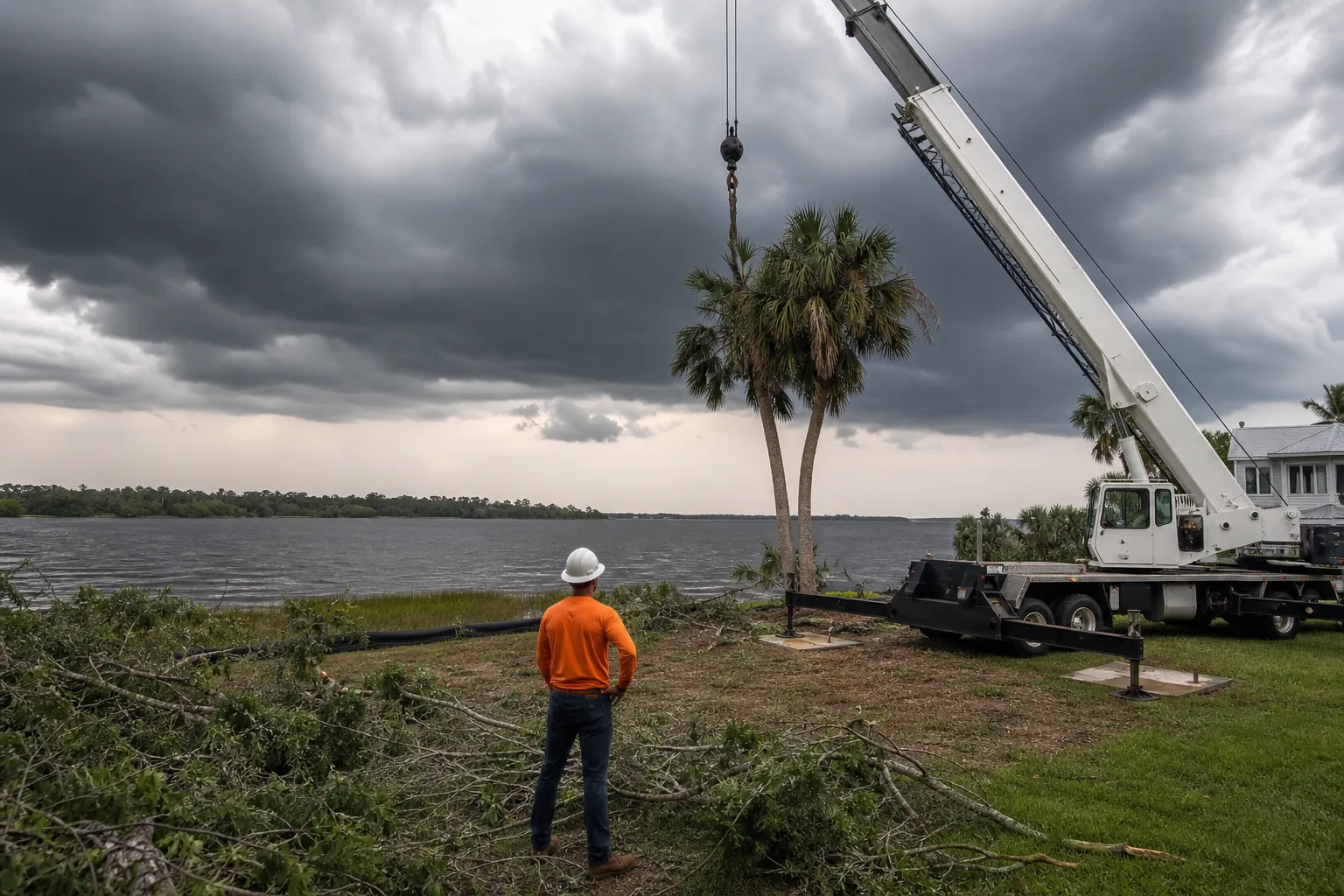
A crane can help remove a tree in controlled sections when nearby buildings, fences, or limited access make conventional removal difficult. However, the equipment does not eliminate weather concerns. In Florida, lightning, gusty winds, heavy rain, and saturated ground can change whether a planned lift is appropriate.
For homeowners researching crane tree removal weather delays in Florida, the most useful question is not simply whether rain is in the forecast. It is whether conditions allow the crew to position the crane, secure each tree section, and complete the work without exposing people or property to unreasonable risk.
Understanding those decisions makes scheduling less frustrating. It also helps you prepare your property, recognize when a damaged tree needs prompt assessment, and discuss next steps with Florida Foliage.
Why Weather Matters During Crane Tree Removal
During crane tree removal, a cut section becomes a suspended load. Its weight, shape, attachment points, and movement all matter. Wind can push branches or rotate a section, while rain can make access routes and working surfaces slippery.
The crane also needs a suitable setup area. Its supporting equipment transfers substantial forces into the ground. A driveway that looks firm at the surface or a lawn that appeared dry yesterday may require closer evaluation after prolonged rain.
Weather decisions therefore involve more than the tree itself. The operator and tree crew must consider equipment limitations, ground support, visibility, worker access, and the path that each section will travel.
A delay does not necessarily mean the entire day is lost. Sometimes conditions require a temporary pause. In other cases, the setup area, forecast, or tree condition makes rescheduling the more appropriate choice. That distinction depends on the site rather than a universal rule.
Lightning Can Interrupt Work Before Rain Arrives
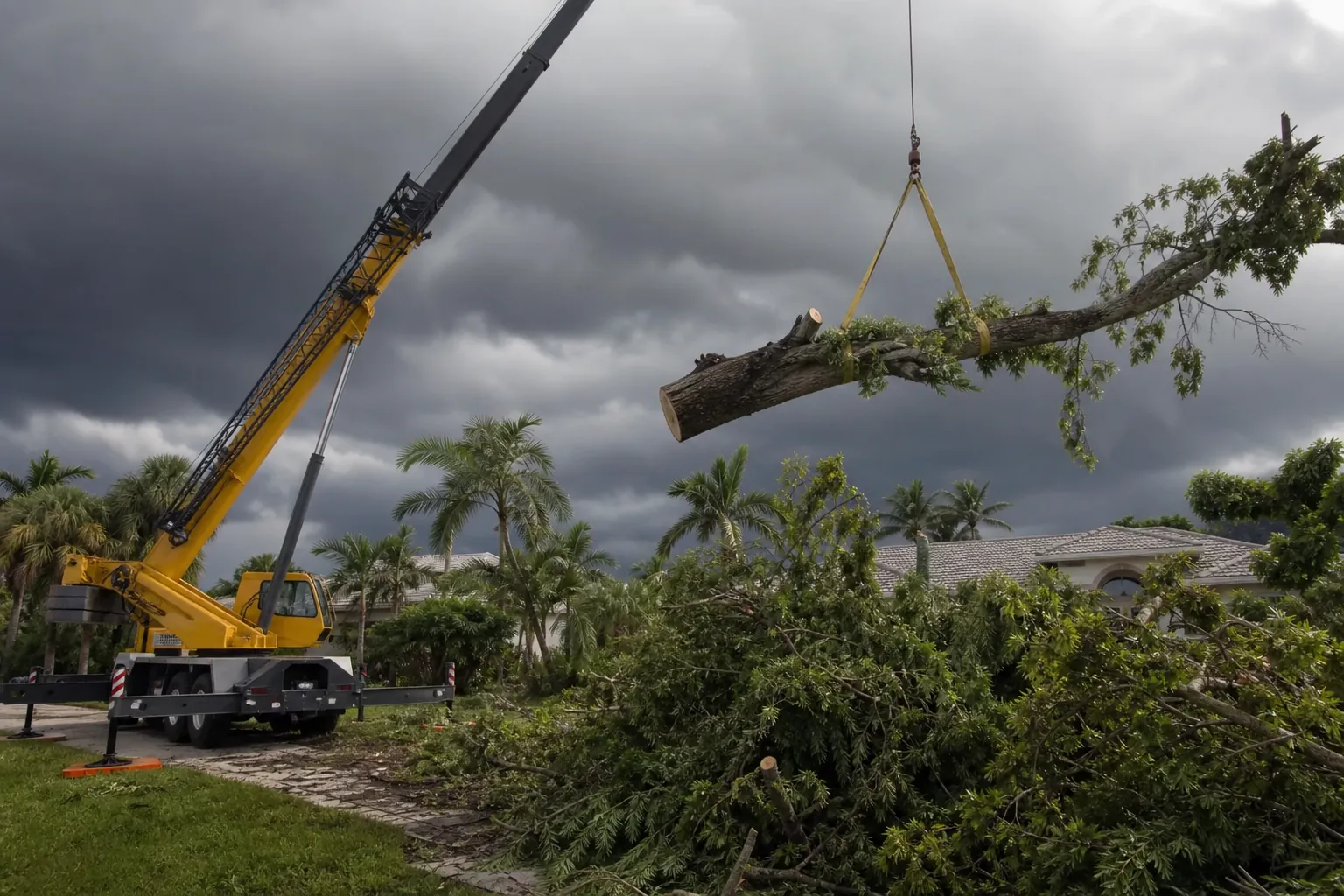
Florida thunderstorms can develop quickly, and lightning may become a concern before heavy rain reaches a property. A dry driveway or a break in the clouds does not establish that outdoor crane work can proceed.
Crane operations involve tall equipment and workers in exposed locations. Tree crews may also be working above ground. When thunderstorms approach, those circumstances require attention to weather monitoring and the crew's established safety procedures.
Property owners should not pressure a crew to finish one more lift because the yard is still dry. The decision to stop may be based on nearby storm activity that is not obvious from the front porch.
- Ask how weather-related pauses and schedule changes will be communicated before the work date.
- Keep household members and pets away from the work area while equipment is being secured.
- Do not enter the yard to inspect cut sections or move debris during a storm interruption.
- Wait for the crew's direction before returning to an area that was closed for operations.
Resuming work requires another assessment. A passing storm may leave behind stronger gusts, reduced visibility, or ground conditions that differ from those present when the crew arrived.
Wind Affects Both The Tree And The Suspended Load
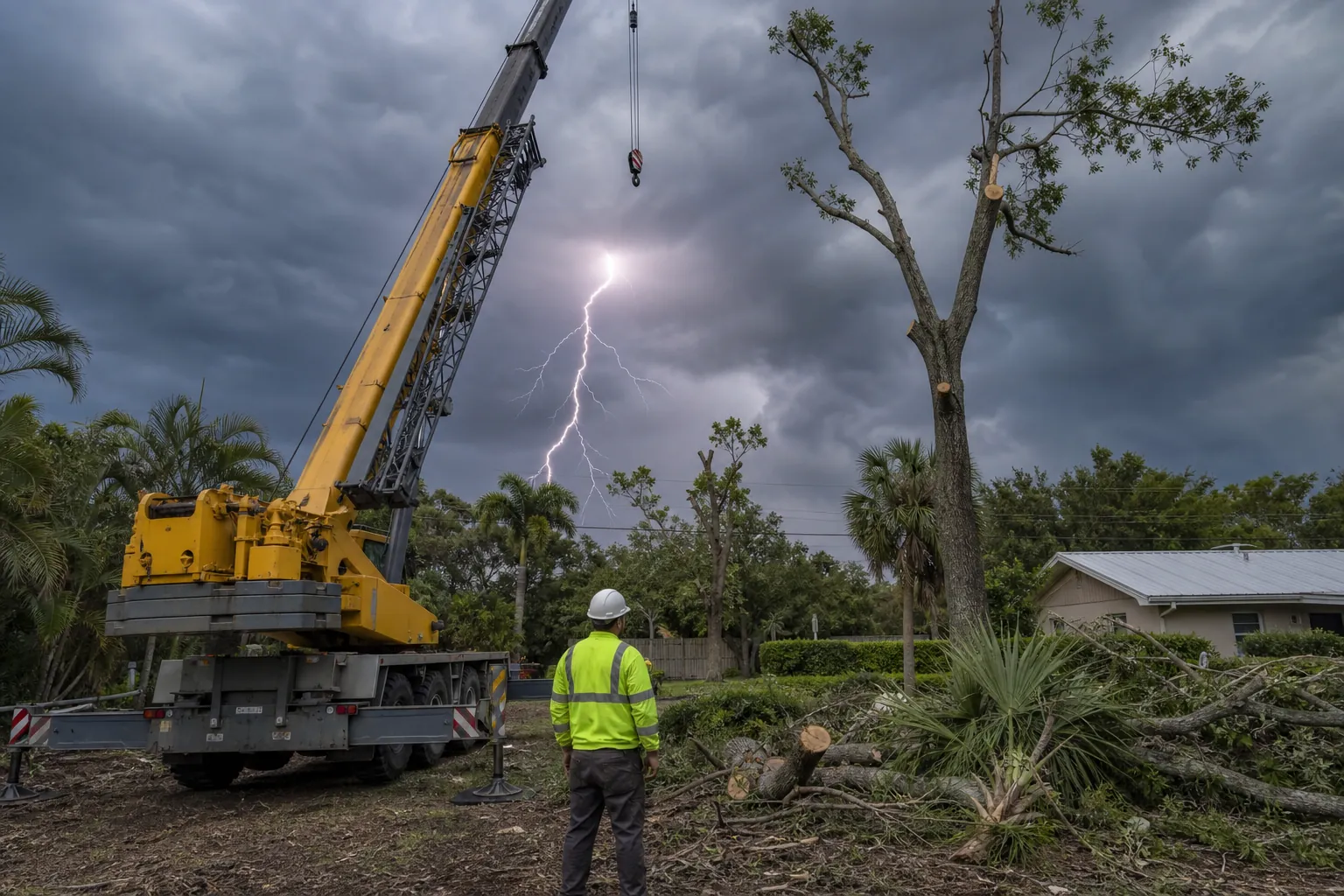
Wind is especially important when removing broad, leafy sections. A branch canopy can catch moving air, making a suspended piece harder to control. Gusts may also move the standing tree while workers are positioning attachments or making cuts.
There is no single wind number that a homeowner should use to approve every crane tree removal. Equipment requirements, load shape, boom configuration, tree condition, and site exposure all influence the decision. The crane operator must work within applicable equipment limitations.
A weather app showing a modest average wind speed does not capture every gust at the tree canopy. A coastal property, open lot, or exposed corner of a building may experience different conditions from a sheltered yard nearby.
Strong wind can also change the removal plan. Smaller sections may reduce some handling challenges, but that does not make work appropriate in all conditions. Adjusting the plan is a professional decision, not a reason to disregard unsafe weather.
If you are concerned about a tree moving during a windy period, describe what you observe from a safe location. New leaning, visible root movement, or a hanging broken limb should prompt a discussion about assessment and access restrictions.
Rain And Saturated Ground Create Different Problems
Rainfall intensity matters, but accumulated moisture can be just as important. A brief shower on a well-drained site differs from several days of rain on soft soil. Even after the sky clears, the ground may not be ready to support the planned equipment setup.
Heavy rain can reduce visibility, interfere with communication, and make climbing or ground work more difficult. Water may also conceal holes, uneven surfaces, and obstacles along access routes.
Saturated soil raises another set of questions. The crew must evaluate where equipment will travel and where the crane will be supported. Surface protection or support materials may be part of a setup plan, but they do not automatically make unsuitable ground acceptable.
- Tell the crew about low areas that collect water after storms.
- Identify septic components, underground utilities, irrigation lines, and other known features near the proposed setup area.
- Explain whether a driveway has cracking, settlement, drainage problems, or uncertain construction beneath its surface.
- Report recent grading, filled areas, or excavation that could affect ground support.
Do not test a wet access route by driving across it yourself. Tire tracks, rutting, or a stuck vehicle can make access worse without answering whether the area is suitable for crane operations.
How Florida's Seasonal Patterns Affect Scheduling
Florida weather varies across the state, so a scheduling approach that works for one property may not suit another. Coastal exposure, inland thunderstorms, local drainage, and recent rainfall all influence planning.
During periods with frequent afternoon thunderstorms, an earlier start may provide a better working window. However, morning scheduling is not a promise that the job will avoid weather. Storms can arrive earlier, persist overnight, or develop in unexpected locations.
Tropical weather presents a broader challenge. Forecast changes can affect equipment availability, access, and the priority of damaged-tree assessments. Work may need to stop well before the most severe conditions arrive so equipment and crews are not left exposed.
After a tropical system passes, clear skies do not mean every property is ready for removal. Flooding, unstable trees, downed power lines, blocked roads, and softened ground can all affect the sequence of work.
When scheduling Florida crane tree removal, allow some flexibility if possible. Avoid arranging other activities around an assumed completion time, especially during an unsettled weather period.
What A Weather Delay Means For Your Removal Plan
A weather delay can occur before the crew travels, after equipment arrives, or between stages of removal. Each situation creates different practical questions, but the central issue remains whether the next step can be performed appropriately.
If the forecast is clearly unfavorable, the work may be rescheduled before setup. If conditions change unexpectedly, the crew may pause and reassess. A tree that has already been partly removed may require particular attention to the remaining structure and the secured work area.
Ask for a clear explanation of what is delayed and what happens next. Avoid assuming that the crane, tree crew, and any related work will all be available immediately when the weather improves.
- Confirm whether the appointment is postponed or still being evaluated.
- Ask whether another site visit is needed because rain or wind changed the property conditions.
- Clarify whether vehicles should remain outside the access area until a revised date is confirmed.
- Ask which parts of the property should remain off limits if work has already begun.
- Discuss whether stump grinding will occur separately from the tree removal.
Keep communication focused on the next decision rather than a guaranteed finish date. A realistic update is more useful than a firm time that does not account for changing weather.
Prepare Your Property Without Creating New Risks
Good preparation can reduce avoidable access problems, even though it cannot prevent weather delays. Before the appointment, discuss where equipment may enter, where vehicles should be moved, and which areas need to remain clear.
Move patio furniture, toys, portable planters, and other small belongings only when it is safe to do so. If an item is beneath a damaged limb or near an unstable tree, leave it in place and tell the crew.
Keep gates accessible and explain any restrictions that affect entry. For HOA and condo tree services, property managers should coordinate resident notices, parking arrangements, and access expectations before the scheduled work.
Commercial tree services may involve additional coordination around employees, customers, deliveries, and shared entrances. A weather delay can change those arrangements, so identify one contact who can distribute updates.
- Provide a phone number where the scheduling contact can reach you on the work day.
- Arrange for children and pets to stay away from the operating area.
- Keep vehicles out of the agreed access route rather than relying on a last-minute move.
- Tell the crew about locked gates and any access instructions before arrival.
- Confirm local requirements with your city or county if tree removal approvals may apply.
Do not trim branches yourself to make room for the crane. Changing the tree before assessment can introduce hazards and alter the planned removal approach.
When A Damaged Tree Needs Prompt Attention
Some situations should not wait quietly for the next convenient weather window. A newly leaning tree, a split trunk, a large suspended limb, or visible lifting of the root area can indicate a serious problem. Stay clear and request professional guidance.
Emergency and hurricane tree removal still requires a workable safety plan. Urgency does not eliminate lightning exposure, ground instability, or equipment limitations. The immediate recommendation may include keeping people away while the crew determines an appropriate response.
If a tree or branch contacts a power line, stay away from the tree, nearby objects, and the affected area. Contact the utility, and call emergency services if there is an immediate danger. Do not assume a line is harmless because it is quiet or appears insulated.
Photographs taken from a safe location can help describe a problem, but they cannot replace an on-site assessment. Avoid approaching a damaged tree solely to obtain a better picture.
Arborist reports and tree inspections can help evaluate concerns about tree condition and document observations. They are particularly useful when the question is whether removal is needed, rather than simply when the crane can arrive.
Removal Is Not Always The Only Appropriate Option
A weather-related scheduling discussion may reveal that the underlying concern needs a closer look. Not every large tree near a home requires removal, and not every overextended branch requires a crane.
Depending on tree health, structure, and the surrounding site, tree trimming, canopy thinning, or crown reduction may be worth discussing. These approaches have different purposes and should be selected based on the tree, not offered as interchangeable solutions.
Canopy thinning should not be treated as a way to make a tree storm-proof. Likewise, crown reduction must account for suitable pruning points and the tree's ability to respond. Excessive or poorly planned pruning can create additional problems.
When removal is appropriate, ask why a crane is recommended. The explanation may involve controlled handling over structures, limited drop space, or the condition of the tree. Understanding that reasoning helps you understand why certain weather conditions affect the job.
After removal, stump grinding can be discussed as a separate step. Wet ground and equipment access may affect that scheduling too, even when the crane portion is complete.
Questions To Ask Before Confirming A Crane Removal Date
A productive scheduling conversation covers both the tree and the site. You do not need to decide whether a lift is technically acceptable, but you should understand how updates will reach you and what preparation is expected.
- Ask what property conditions could cause the planned crane setup to change.
- Ask how you will be notified if the forecast leads to postponement.
- Ask whether recent rain warrants another look at the access route or setup area.
- Ask what you should do if the tree's condition appears to worsen before the appointment.
- Ask whether your city or county has requirements you need to confirm before removal.
- Ask how follow-up work and access arrangements will be coordinated if the schedule changes.
It is also helpful to describe deadlines honestly. An upcoming gathering, construction activity, or parking restriction may affect coordination, but it should not override weather-related safety decisions.
If multiple properties are involved, make sure the relevant owners or managers understand the access plan. Permission to use neighboring space should be settled before equipment arrives, not improvised during a narrow weather window.
Plan For Flexibility And Clear Communication
Weather delays are part of planning crane tree removal in Florida. Lightning can stop work before rain starts, gusts can complicate suspended loads, and saturated soil can remain a concern long after a storm passes.
The best preparation is practical: share accurate site information, keep the access route clear, stay outside the work area, and understand how scheduling updates will be handled. If the tree becomes more concerning, report the change rather than trying to manage it yourself.
For help discussing crane tree removal, tree inspections, or a storm-damaged tree, call Florida Foliage at (386) 481-7913. Explain the tree's location, any visible damage, and recent weather conditions so you can discuss an appropriate next step.
Call (386) 481-7913 to talk through next steps.