Reviewed by Clinton Funk
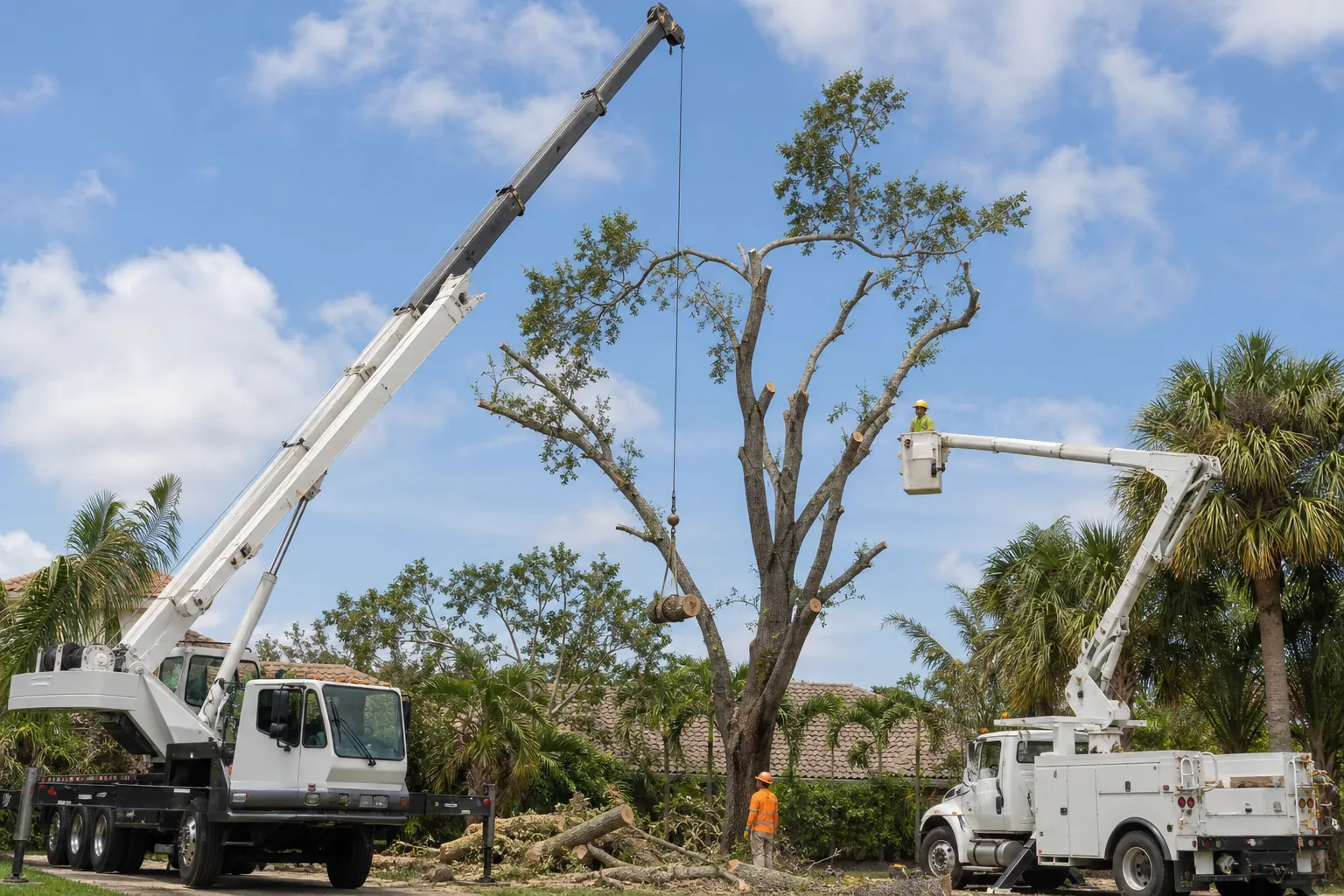
A large tree beside a Florida home can present a difficult removal problem. Its branches may extend over the roof, its trunk may lean toward a driveway, and the available work area may be limited by fences, landscaping, or neighboring buildings. Choosing equipment is about managing those conditions, not simply bringing the biggest machine.
When comparing crane vs bucket truck tree removal in Florida, the central distinction is straightforward: a crane can support and lift cut tree sections, while a bucket truck raises a worker into position. Either may be appropriate, and some projects benefit from both. The tree's condition, equipment access, ground stability, and available landing space determine the plan.
This guide explains what each machine does, when it may be useful, and which questions to ask before arranging tree removal with Florida Foliage.
What A Crane Does During Tree Removal
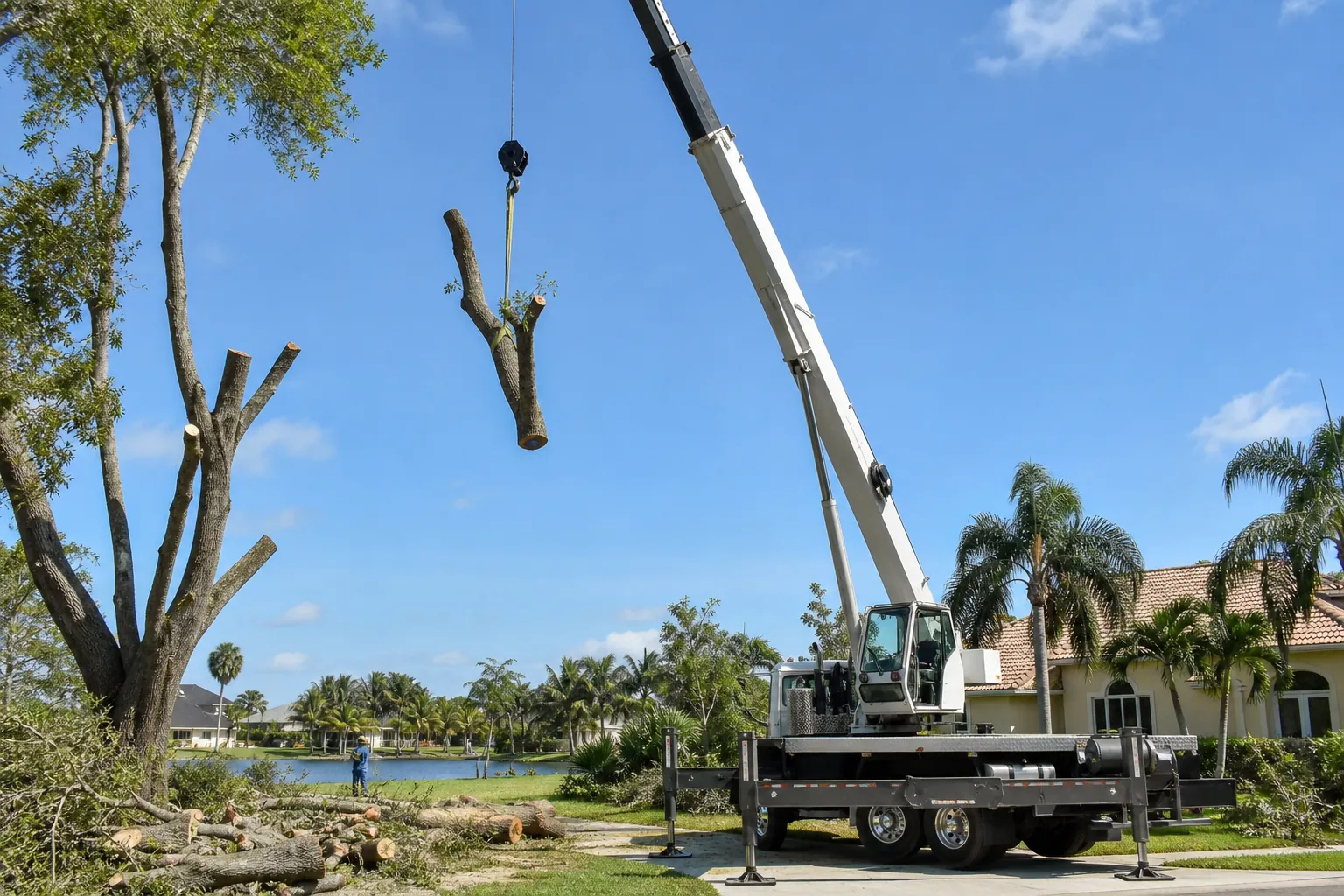
A crane provides lifting support for sections of a tree. In a planned removal, the crew connects a selected section to the crane before cutting it free. The crane then moves that section to a designated landing area, where workers can process it without dropping it directly onto the surrounding property.
This approach can be useful when a tree stands close to a house, pool enclosure, or other structure. Rather than lowering every piece through the canopy into a small space beneath the tree, the crew may be able to lift sections out and move them elsewhere.
Crane tree removal still requires careful cutting, secure attachments, communication, and an appropriate setup location. The crane operator and tree workers must coordinate each lift. Section size depends on estimated weight, lifting radius, machine configuration, and the condition of the wood.
A crane is not automatically suitable just because a tree is tall. A machine parked farther from the tree may have different lifting capabilities than one positioned nearby. Overhead obstacles, buried infrastructure, and space for stabilizing equipment can also affect whether the approach is practical.
What A Bucket Truck Does During Tree Removal
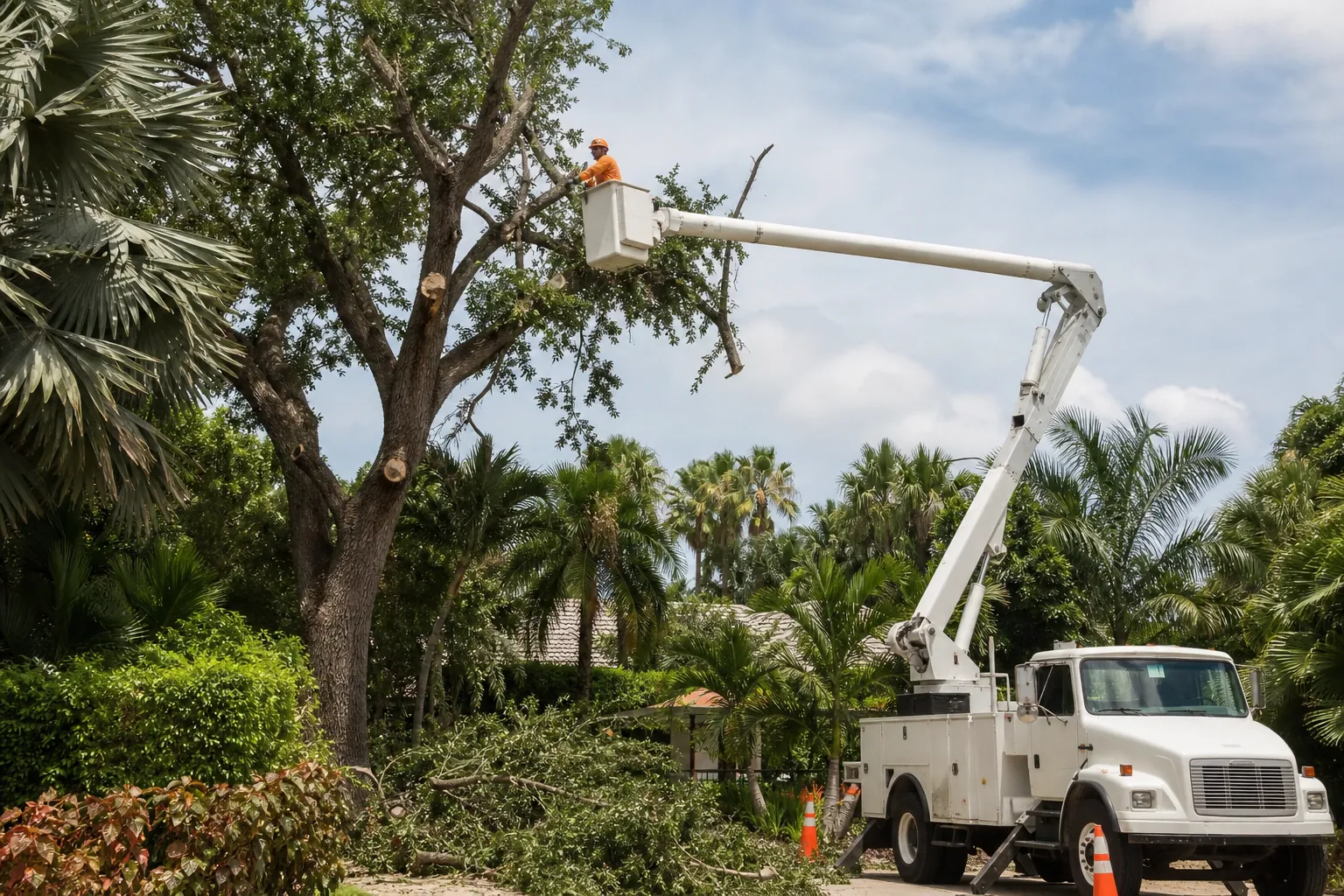
A bucket truck, also called an aerial lift truck, carries a worker in an elevated platform. It provides access to branches and cutting positions without requiring the worker to climb every part of the tree.
The bucket positions the worker; it does not replace a crane's lifting function. During removal, cut branches or trunk sections may need to be lowered with rigging or directed into a suitable drop zone. The method depends on the tree, the equipment, and the space below.
Bucket access can be valuable when a tree is difficult or inappropriate to climb. However, reaching the upper canopy does not by itself solve the problem of moving heavy wood safely away from a roof or fence.
The truck needs a suitable place to park and stabilize. Its useful reach depends on its specifications and its position relative to the tree. A backyard tree may remain inaccessible if the truck cannot get close enough or if buildings and other obstacles block the boom's movement.
The Main Differences That Affect Your Property
Both machines can support a controlled removal, but they solve different problems. Understanding that distinction helps homeowners evaluate a proposed approach rather than choosing equipment based on appearance.
- A crane supports and relocates selected tree sections, which can help when there is little usable space directly beneath the canopy.
- A bucket truck gives a worker elevated access, but cut material still needs a planned route to the ground.
- A crane requires a lifting plan that accounts for section weight, operating radius, ground support, and a suitable landing area.
- A bucket truck requires adequate reach and positioning, along with a cutting and rigging plan suited to the surroundings.
- Either machine may need room for stabilizers, access routes, and an exclusion area that keeps people away from the work.
- Some removals use both machines because worker access and section handling are separate challenges.
Neither option eliminates risk. A well-matched method reduces avoidable exposure, but the crew still needs to address damaged wood, falling material, changing weather, and nearby structures.
When Crane Tree Removal May Be The Better Fit
A crane may be considered when large sections cannot be lowered easily into the space around the trunk. For example, a broad canopy over a home may leave few practical paths for conventional lowering. Lifting selected sections toward a separate landing area can provide another route.
Large trunk sections can also influence the decision. If a removal would otherwise require many small cuts and complicated rigging over vulnerable features, a crane-assisted plan may offer a more manageable sequence. That judgment depends on the actual tree and site.
Severely compromised trees sometimes require an approach that limits how much load is placed on the tree itself. A crane may help support sections, but decay, cracks, and storm damage can also complicate attachment and cutting decisions. An inspection is essential.
- Ask whether the proposed crane location provides a workable lifting radius for the tree's largest planned sections.
- Ask where lifted material will be placed and whether that area can remain clear throughout the work.
- Ask how the crew will protect surfaces and identify underground features near the equipment setup.
- Ask what conditions would require changing the removal sequence or postponing the work.
A crane can be a useful tool without being the right tool for every constrained property. Limited street access or unsuitable ground may rule it out.
When A Bucket Truck May Be Sufficient
A bucket truck may be suitable when it can reach the necessary cutting positions and the crew has a workable way to handle the resulting material. Trees near accessible driveways or open work areas may fit this approach, provided the equipment can be positioned safely.
With adequate clearance below, workers may remove manageable pieces in a controlled sequence. Where structures are nearby, rigging may be necessary even though the worker is operating from a bucket. Elevated access and material control must be evaluated together.
A bucket truck can also be useful for tree trimming, canopy thinning, or crown reduction when those services are appropriate for the tree. Removing the entire tree should not be assumed to be necessary solely because branches extend over a building.
However, pruning is not a substitute for addressing serious structural problems. An arborist assessment can help distinguish between a tree that may benefit from appropriate pruning and one whose condition warrants tree removal.
If a proposal recommends a bucket truck, ask how the worker will reach the far side of the canopy and how wood above sensitive areas will be lowered. A clear explanation should cover more than the truck's maximum height.
Florida Ground Conditions And Equipment Access
Florida properties can present sandy soils, saturated ground, drainage features, and narrow side yards. These conditions affect whether heavy equipment can enter and where it can be stabilized. A dry-looking surface does not necessarily reveal the strength of the ground below it.
Recent rainfall matters. Soft areas can limit access or require a different setup, and conditions may change between the inspection and the scheduled removal. The crew should reassess the site if weather has altered the ground.
Driveways and paved areas also deserve attention. Their suitability depends on construction, condition, underlying support, and the loads involved. Equipment mats may help distribute loads or protect surfaces, but they do not make every location suitable.
- Tell the estimator about septic systems, drain fields, irrigation components, and known buried lines.
- Point out areas that regularly hold water or have previously settled under vehicle traffic.
- Identify narrow gates, low branches, pool enclosures, and other obstacles along the access route.
- Explain whether access crosses shared property or an area controlled by an HOA or condominium association.
- Keep parking and delivery conflicts in mind when discussing the equipment's proposed location.
Do not assume that a machine can reach a backyard because it fits through the front entrance. Turning space, overhead clearance, setup dimensions, and the route's load-bearing condition all matter.
Storm Damage Changes The Removal Plan
Emergency and hurricane tree removal can involve conditions that differ sharply from routine work. A tree may be resting on a roof, caught in another canopy, split along its trunk, or partially uprooted. Those conditions can create forces that are difficult to judge from the ground.
A bucket truck may provide access without climbing damaged wood, while a crane may provide support for selected sections. Neither should be chosen without considering how the tree could move as pieces are cut.
Uprooted trees can shift during removal, and limbs under tension can move unexpectedly when released. Wind and lightning can also make elevated work unsuitable. A plan may need to change as the crew uncovers damage or weather conditions deteriorate.
If a tree or branch is touching a power line, stay away and contact the utility or emergency services as appropriate. Do not approach the tree, attempt to move branches, or assume a line is safe because it appears inactive.
Keep people and pets out of damaged areas while awaiting assessment. Photographs taken from a safe distance can help explain the situation, but they do not replace an on-site evaluation.
Tree Condition Matters As Much As Tree Size
Height is only one factor in choosing equipment. A shorter tree with a split trunk over a building can require a more involved plan than a taller, sound tree with open space around it.
The assessment should consider branch structure, lean, trunk condition, root stability, and evidence of decay. Previous pruning can matter too, particularly where weakly attached regrowth or large old wounds affect the proposed cutting sequence.
Tree species can influence wood characteristics and branch structure, but species alone does not determine the removal method. Two trees of the same species may require different approaches because their condition and surroundings differ.
Arborist reports and tree inspections can help clarify concerns and document findings where appropriate. Ask whether the assessment supports removal or whether tree trimming, canopy thinning, or crown reduction could reasonably address the identified issue.
The aim is to select an appropriate treatment first, then choose equipment that fits that treatment. Starting with a preferred machine can overlook options or site limitations.
Questions To Ask Before Approving The Work
A useful proposal should explain the scope, equipment approach, and responsibilities. It should also distinguish tree removal from stump grinding so you understand what remains after the tree is taken down.
- Ask why the recommended method fits this tree's condition and the available space.
- Ask whether the plan uses a crane, a bucket truck, or a combination, and what each machine will do.
- Ask where equipment will enter, stabilize, and operate, including any access needed beyond your property.
- Ask how branches and trunk sections will be handled near roofs, fences, screened enclosures, and neighboring property.
- Ask what debris handling is included and what the property will look like when the agreed work is complete.
- Ask whether stump grinding is included or should be discussed as a separate part of the scope.
- Ask about applicable insurance and who will be responsible for operating specialized equipment.
- Ask who will check any required approvals before work begins.
Tree removal requirements vary by location and property circumstances. Confirm applicable requirements with your city or county rather than assuming that a damaged tree, private ownership, or a particular species automatically creates an exemption.
For HOA and condo tree services, confirm association authorization and access arrangements as well. Association approval and local requirements are separate matters, and both may need attention.
Preparing Homes, Businesses, And Shared Properties
Once the work plan is established, practical preparation can help keep access clear. Move vehicles and portable belongings from the agreed work area, and arrange to keep children and pets away during operations.
Tell the crew about features that may not be obvious during a walk-through. These can include concealed irrigation, delicate paving, underground tanks, or a gate that cannot remain open. Share relevant information before equipment arrives.
For commercial tree services, discuss employee parking, customer entrances, delivery routes, and pedestrian movement. The work area may require temporary restrictions, and occupants should understand where they can safely travel.
HOA and condo tree services may require coordination across multiple residents and shared spaces. Give residents clear instructions about parking and access, and designate an authorized contact who can answer property questions during the work.
If removal is part of land and lot clearing, discuss the wider scope separately. Brush hogging and stump grinding address different site needs and should not be assumed to be included simply because a crane or bucket truck is present.
Choose The Plan Before Choosing The Machine
The best comparison is not whether cranes are better than bucket trucks in general. It is whether the proposed combination of access, lifting, cutting, and ground operations fits your tree and property.
A crane may be useful for moving heavy sections away from tight surroundings. A bucket truck may provide sufficient access when there is a practical way to handle material below. Some situations call for both, while others need a different removal approach.
Look for an assessment that addresses tree condition, ground support, nearby structures, weather, and the final scope of work. Those details tell you more than a recommendation based only on tree height or equipment size.
To discuss tree removal, crane tree removal, or arborist reports and tree inspections in Florida, call Florida Foliage at (386) 481-7913. Explain the tree's location, any visible damage, and the available access so the conversation can focus on the conditions that matter.
Call (386) 481-7913 to talk through next steps.