Reviewed by Clinton Funk
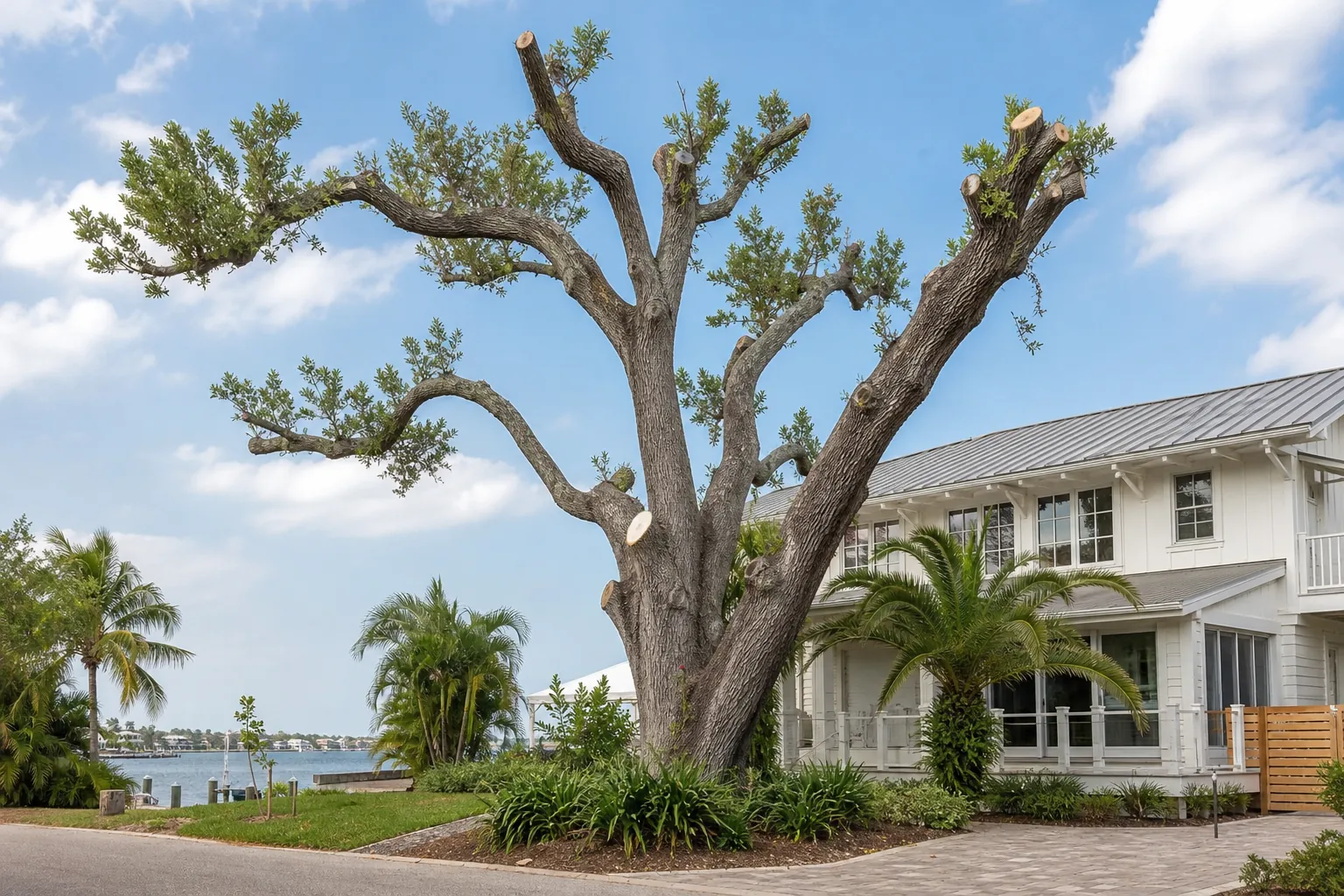
A tree that towers above a Florida home can raise practical questions. Is it too tall for its location? Can pruning bring it below the roofline? Does the city require a particular height? The answers depend on the tree, the property, and any local rules that apply.
Crown reduction can shorten selected limbs and reduce the outer dimensions of a tree's canopy. It does not turn a naturally large tree into a permanently small one, and it is not the same as cutting the top off. Understanding those differences helps homeowners make better decisions about clearance, storm concerns, and long-term tree care.
If you are researching crown reduction tree height limits in Florida, start with two separate questions: what your local authority allows, and what your particular tree can tolerate. Florida Foliage can help you consider the tree-care side through tree inspections, arborist reports, tree trimming, and crown reduction.
What Crown Reduction Actually Changes
Crown reduction shortens selected branches back to suitable lateral branches. Those remaining laterals help continue the branch's growth rather than leaving a large stub with no clear growing direction. Proper cuts preserve a functioning crown while reducing specific portions of its height or spread.
The work may address an overextended limb above a driveway, a canopy reaching toward a building, or selected upper branches that create a clearance conflict. Depending on the tree's structure, a useful reduction may affect width more than height. Not every tree can be shortened meaningfully without causing excessive injury.
A suitable lateral must be large enough and appropriately positioned to assume the growth role of the shortened branch. That makes cut selection a structural decision, not simply a matter of choosing a target height and cutting everything above it.
Tree species, age, condition, and previous pruning all influence the plan. A young, vigorous tree with well-positioned branches presents different options from an old tree with hollow limbs or a history of topping.
- Crown reduction can shorten selected limbs when suitable lateral branches are available.
- The finished canopy should reflect the tree's existing structure rather than an arbitrary flat line.
- The amount of reduction should be based on tree health and branch architecture.
- Future growth means a reduced crown will still need periodic evaluation.
Are There Tree Height Limits In Florida?
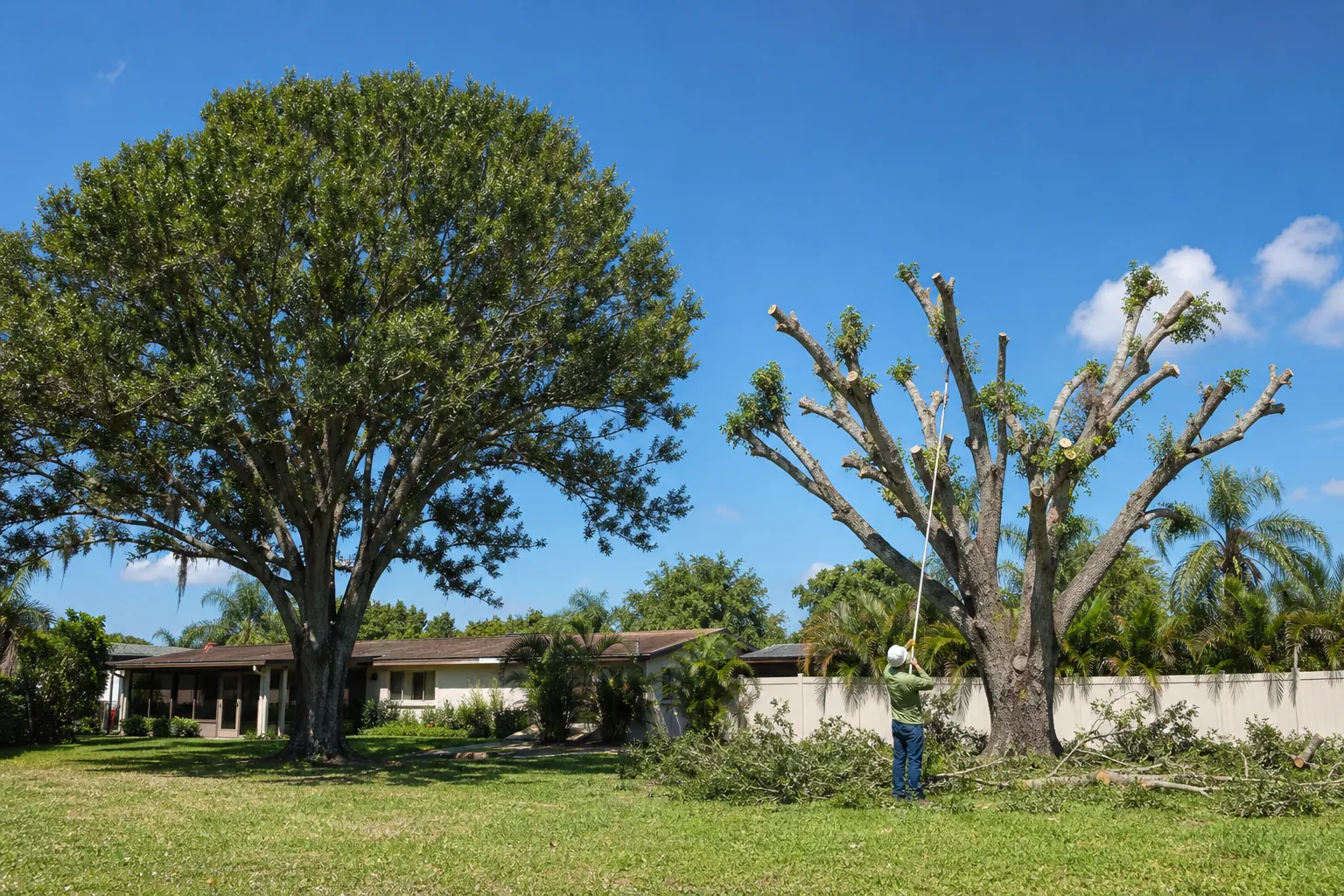
Do not assume there is one statewide maximum height that applies to every tree on every residential property. Height questions can involve municipal or county requirements, property-specific approvals, utility clearance needs, and private community restrictions. The applicable rules depend on the location and circumstances.
Ask your city or county whether the proposed pruning or removal requires review, documentation, or a permit. Explain the species if known, the property's address, and the work being considered. A general question about tree height may not identify requirements affecting a protected tree or a particular site.
HOA and condo rules are a separate consideration. A community may have landscape standards or an approval process, but community approval does not necessarily replace government requirements. Likewise, a local authorization does not automatically resolve an association's restrictions.
Before requesting a quote for a fixed height, gather the relevant written requirements. If someone says a tree must be shortened, ask whether that direction concerns actual height, clearance from a structure, sightlines, or a specific branch. Those are different objectives and may require different solutions.
Florida Foliage's HOA and condo tree services and commercial tree services can address tree-care needs on shared properties. Owners and managers should still confirm applicable requirements directly with their city or county and the governing association.
Why Topping Is Not A Substitute For Crown Reduction
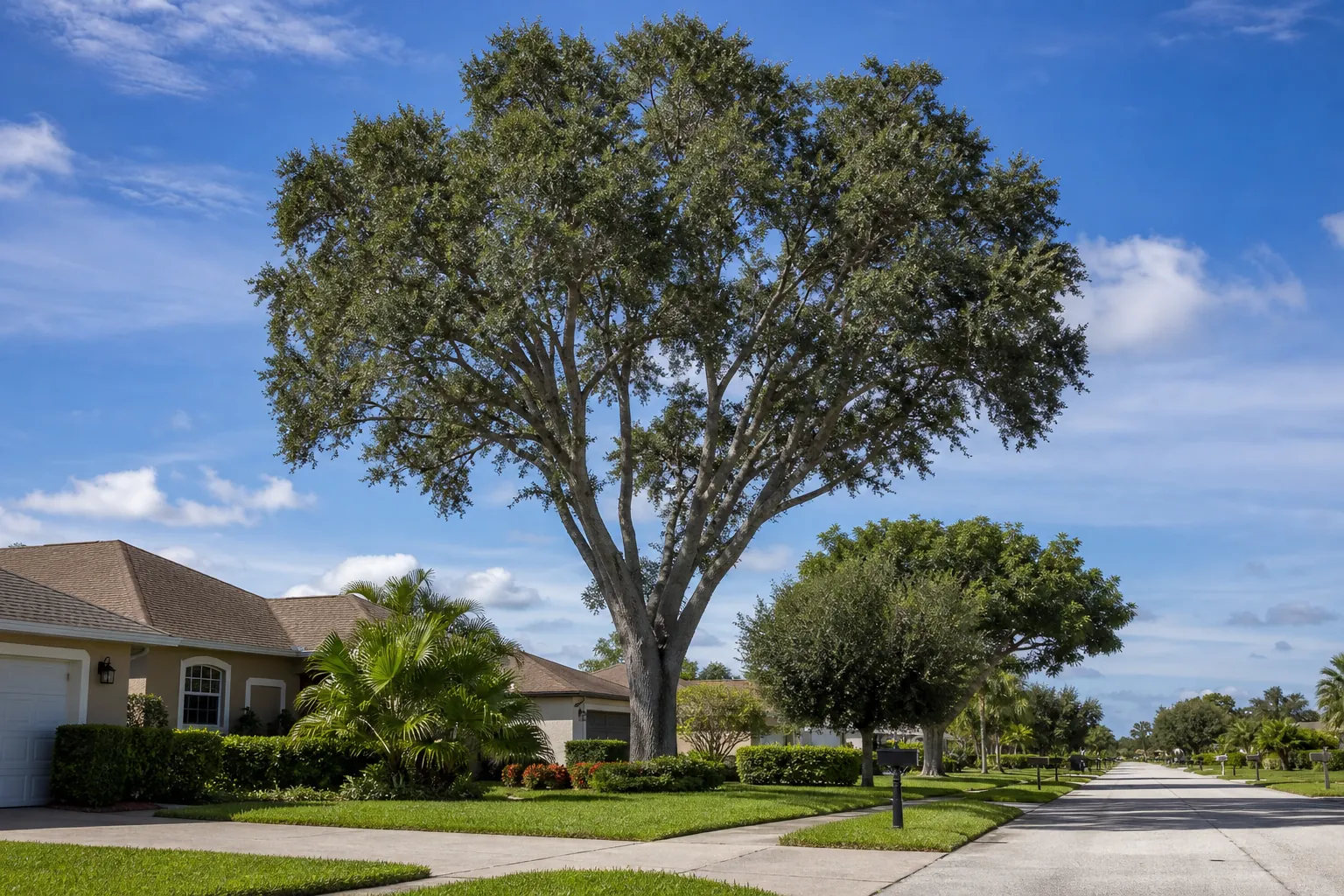
Topping usually means cutting main stems or large branches back to stubs without suitable laterals. It may make a tree shorter immediately, but the visible height change can hide significant long-term problems.
Large topping cuts remove substantial leaf-bearing growth and leave wounds that a tree must respond to over time. Some species produce vigorous shoots after this treatment. Those shoots can restore height quickly, and their attachment and future stability require careful evaluation.
The result may be a cycle of repeated cutting rather than dependable height management. A tree that appears compact after topping can become dense, uneven, and more complicated to maintain as new growth develops around damaged areas.
Proper crown reduction also creates wounds, so it is not harmless or appropriate in unlimited amounts. The difference is that reduction cuts are selected to work with existing branch structure and retain suitable growing points.
Be cautious about instructions such as 'take half the height off' or 'make every tree roof height.' A responsible pruning plan should explain which limbs can be shortened, why those cuts are appropriate, and what limitations remain.
When Crown Reduction May Be Appropriate
Crown reduction is most useful when a specific branch or canopy section conflicts with a realistic management objective. The goal should be clear enough that the finished work can be evaluated without relying on appearance alone.
For example, a long lateral limb extending over a roof may be a better reduction candidate than the entire upper crown. Shortening that limb to an appropriate lateral may address the actual concern while retaining more healthy foliage elsewhere.
A tree inspection can also identify whether apparent height is distracting from a more important issue. A tall tree with sound structure may present fewer concerns than a shorter tree with a cracked union, damaged roots, or substantial decay.
- Consider crown reduction when selected branches need shortening to address a building or access conflict.
- Consider it when an overextended limb has suitable laterals that allow a structurally appropriate cut.
- Discuss it when a previous pruning pattern has created a canopy that needs careful, staged management.
- Reconsider it when meeting the requested height would require large cuts through major stems.
A workable plan may combine selective reduction with other tree trimming. However, each cut should serve an identified purpose. Removing additional foliage merely to make the tree look uniformly smaller can undermine the original objective.
Species And Condition Set Practical Height Limits
The biological limit on crown reduction is not a simple number of feet. It comes from the tree's growth pattern, available branches, wound response, and ability to retain enough foliage after pruning.
Many broadleaf trees have branching structures that allow selected reduction cuts. Even within that group, individual trees vary greatly. A tree with long, sparsely branched stems may offer few suitable cut locations near the desired height.
Palms require a different approach. Their height generally cannot be controlled by crown reduction as it can in a branching shade tree. Cutting the growing point of a single-stem palm can kill it. Removing healthy fronds does not stop the trunk from growing taller.
Mature trees also deserve particular caution. Large cuts can create lasting management concerns, especially when the tree already has decay or reduced vigor. A smaller change may be more appropriate than the substantial height reduction an owner first imagines.
Previous damage matters as well. Old topping wounds, storm-broken limbs, construction injuries, or altered soil conditions can change what the tree can reasonably tolerate. An inspection should look beyond the outline of the canopy to the trunk, branch unions, and visible root area.
Crown Reduction Vs Canopy Thinning
Crown reduction and canopy thinning address different features of a tree. Reduction shortens selected branches to decrease portions of the canopy's dimensions. Thinning selectively removes branches within the crown, generally without substantially changing its overall height.
If your concern is an overextended limb, thinning alone may leave that limb just as long. If the concern is interior crowding, reducing the top may remove foliage without correcting the problem inside the crown.
Neither approach should strip out so much interior growth that foliage remains mainly at branch ends. That pattern can leave long limbs with poor distribution of foliage and make future management more difficult.
Ask for the proposed work to be described in terms of individual goals. 'Shorten the branch above the garage' is more informative than 'thin the tree heavily.' The right scope may involve reduction, limited thinning, other tree trimming, or no pruning at all.
Florida Foliage offers both canopy thinning and crown reduction. Choosing between them should follow the tree's condition and the property's needs, not an assumption that every large canopy requires the same treatment.
Florida Storm Concerns: Height Is Only One Factor
Hurricane concerns often drive requests to make trees shorter. Height matters in the overall assessment, but it does not determine risk by itself. Branch attachments, decay, root condition, exposure, and nearby targets also deserve attention.
Pruning cannot make a tree hurricane-proof. Excessive reduction or topping may create new problems rather than solve existing ones. A sound plan focuses on defects and appropriate branch management while acknowledging that severe weather carries uncertainty.
Start the evaluation before a storm is approaching. This allows time to inspect the tree, confirm any local requirements, and decide whether trimming, crown reduction, or tree removal is appropriate. Rushed decisions can overlook both tree condition and site limitations.
After a storm, hanging limbs, split stems, or a newly leaning tree require caution. Keep people away from the affected area. If a tree or branch is contacting a power line, stay clear and contact the utility or emergency authorities as appropriate.
Florida Foliage provides emergency and hurricane tree removal. Where a damaged tree cannot reasonably be retained, removal may be more appropriate than trying to disguise the damage with aggressive height reduction.
What To Cover During A Tree Inspection
A useful inspection begins with your concern. Explain whether you want more roof clearance, less overhang above parking, compliance with a written requirement, or an assessment of a tree that changed after a storm.
The evaluation should consider the tree as a whole. Upper branches are only part of the picture. Trunk defects, changes around the roots, nearby construction, and the location of buildings or pedestrian areas can affect the recommendation.
Photos from the ground can help communicate your concern, but they do not reveal every defect. Some conditions require closer examination, and uncertainty should be explained rather than hidden behind a confident height target.
- Ask which branches would be reduced and what suitable laterals would remain.
- Ask whether the requested final height is realistic for the tree's structure.
- Ask what defects or limitations affect the recommendation.
- Ask whether the work should be staged and when the tree should be reassessed.
- Ask whether an arborist report would help document the findings for property management or local review.
Arborist reports and tree inspections can support informed decisions, but a report is not a promise that a tree will never fail. It should clarify observations, limitations, and recommended next steps for the conditions assessed.
When Removal Deserves Consideration
Sometimes a tree's natural size and its planting location are fundamentally incompatible. Repeatedly forcing it below a restrictive height may require damaging cuts and ongoing intervention that still does not resolve the conflict.
Tree removal deserves discussion when there is no suitable pruning solution, when major defects make retention unreasonable, or when meeting a required clearance would leave an unacceptable structure. The decision should account for local requirements and the consequences for the surrounding property.
Access also matters. A tree close to buildings, fences, or other obstacles requires a removal plan suited to the site. Crane tree removal may be an option in some situations, but its suitability depends on access, setup space, and the work involved.
If removal is selected, stump grinding is a separate consideration. Discuss how the remaining stump affects access, mowing, or future use of the area. Do not assume that a removal scope automatically includes every follow-up task.
Removal is not the default answer for a tall tree. It is an alternative to evaluate when appropriate pruning cannot meet the objective without creating larger problems.
Planning For Regrowth And Follow-Up
A reduced tree continues to grow. The pace and pattern of regrowth depend on species, site conditions, health, and the pruning performed. Crown reduction should therefore be viewed as part of a management plan, not permanent height control.
Keep a record of the original concern, the branches treated, and any inspection findings. Photos taken from consistent locations can make later changes easier to recognize. Watch for new cracks, dead branches, unusual leaf loss, or changes in lean, and seek reassessment when something changes.
A follow-up schedule should fit the individual tree rather than an automatic annual cutback. Some trees need closer observation, while others may not need additional pruning for some time. Unnecessary repeat cutting removes foliage and adds wounds without a clear benefit.
For shared properties, keep inspection notes and approved work scopes available to the next manager or board. Consistent records help prevent conflicting instructions and repeated requests for excessive height reduction.
Choose A Realistic Goal Before Cutting
The best starting point is not a number of feet. It is a clear description of the problem, confirmation of applicable local requirements, and an assessment of what the tree can reasonably support.
Crown reduction can help manage selected height and spread conflicts, but it has limits. Topping is not an equivalent solution, palms cannot be shortened like branching trees, and storm concerns require more than a glance at canopy height.
For help evaluating a Florida tree, call Florida Foliage at (386) 481-7913. Discuss tree inspections, arborist reports, crown reduction, or tree trimming, and confirm any required approvals with your city or county before work begins.
Call (386) 481-7913 to talk through next steps.