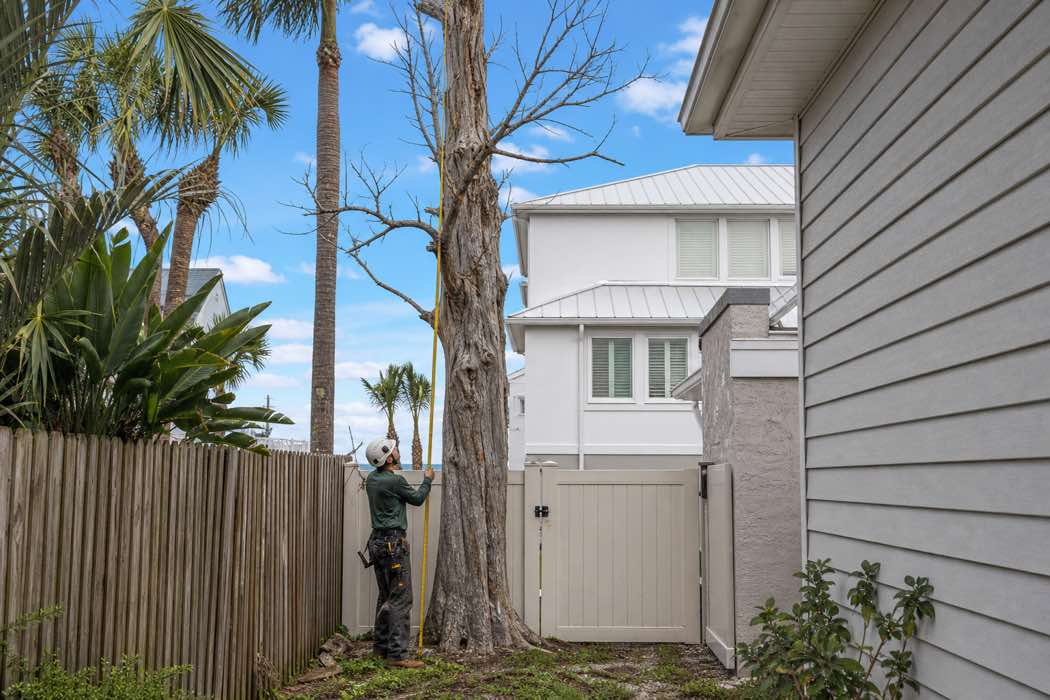
Dead tree removal in a narrow side yard demands more than a quick look at the trunk. In Daytona Beach, a tight gate, brittle limbs, and nearby rooflines can change the whole scope. Florida Foliage starts with access, protection, and debris movement so the quote matches the yard, not a guess.
Scope Snapshot
- Measure gate width, turns, and overhead clearance before work starts.
- Check brittle wood, lean, and drop zones around the home.
- Plan roof, fence, and utility protection before cutting begins.
- Decide ahead of time how debris leaves the side yard.
- Confirm stump work and restoration items before you approve the scope.
For property owners comparing bids, the real question is more than who can cut the tree. It is who can complete dead tree removal without damaging the house, fence, or neighboring yard. That is why Florida Foliage serves Daytona Beach and the rest of Volusia and Flagler counties with an ISA Certified Arborist on staff, along with licensed and insured service.
A dead tree can look simple from the curb and still be difficult from the side yard. Dry wood breaks differently, and narrow access can force more hand work, more rigging, and more time spent protecting the property. A careful scope starts with what can fit through the access path, what must stay out of reach, and what debris can leave by hand.
What Should You Do With a Dead Tree in Your Yard?
You should arrange dead tree removal once the tree is confirmed dead and the access risks are understood. Dead wood can shed limbs, split unpredictably, and fail faster during Florida wind and rain. Florida Foliage recommends an on-site look so the plan accounts for the yard, the house, and the debris path before work is approved.
Do not assume the tree will hold together long enough for a simple cut. In coastal Volusia County, sandier soil, storm season, and close lot lines can affect how crews stage the job. If the tree stands near a fence or roof edge, the scope should include protection zones and a clear landing plan for every section removed.
If you are trying to decide when the tree becomes urgent, see when to remove a dead tree for signs that justify a faster inspection. For a property-specific quote, you can request a free estimate from Florida Foliage.
- Keep people away from the drop zone.
- Check for roof, fence, and wire proximity.
- Photograph the yard from gate to trunk.
- Note any locked gates or narrow turns.
- Ask for an on-site access assessment.
How Close Is Too Close for a Dead Tree Near a House?
A dead tree is too close when its failure could reach the roof, gutters, fence, or windows before it can be controlled. Dead tree removal near a house should be scoped by distance, lean, limb size, and the room available for rigging. A photo alone cannot show those limits, especially in a narrow side yard.
Close does not mean the same thing on every property. A trunk ten feet away from a roof might still be risky if large brittle limbs hang over the structure. A smaller tree may also be hard to remove if the only access is a narrow side yard with soft turf, air-conditioning equipment, or a high fence. The crew needs room to protect surfaces and place cut sections.
OSHA’s tree-care inspection guidance emphasizes that tree work hazards depend on the site and task, not a quick guess from afar. That is useful when comparing dead tree removal quotes because the access plan should match the actual conditions: tight entry, unstable wood, and nearby structures that need protection. See the guidance here: OSHA inspection guidance for tree care and tree removal operations.
When a house, fence, and narrow passage all crowd the same side of the lot, Florida Foliage may need to use more controlled cuts and smaller debris pieces. That does not mean a crane or lift will be used. It means the actual method must be set after an inspection, not assumed from the street.
Is Dead Tree Removal More Expensive?
Dead tree removal is often more complicated when access is narrow, because the crew may need more hand labor, more rigging, and more time to move debris safely. Cost is shaped by access width, brittle limbs, nearby structures, and stump expectations, so a fair quote should explain the scope instead of naming a one-size price.
The hardest part is usually not the trunk itself. It is the access path. A narrow side yard can prevent equipment from entering, which can change how debris is carried, where it is lowered, and how much surface protection is needed. If a contractor gives a quote without asking about gate width or roof clearance, the number may not reflect the work.
The Tree Care Industry Association's arborist resource notes that hiring an arborist helps with tree risk and work planning, which matters when dead wood and tight access complicate the job. Florida Foliage uses that kind of planning mindset on dead tree removal projects in Daytona Beach and surrounding coastal neighborhoods.
For a side yard, compare bids on scope, more than the bottom line. Ask whether the estimate includes protection for fence panels, roof edges, and AC units. Ask whether debris will be carried through the house side or lifted over barriers, if that is possible. If the quote avoids those details, it may not be complete.
| Scope Item | Why It Matters in a Narrow Side Yard |
|---|---|
| Gate width | Shows what can pass through without damage. |
| Brittle limbs | Changes how the tree must be cut and supported. |
| Roof and fence protection | Reduces impact from falling pieces and tools. |
| Debris exit path | Determines whether material can be hand-carried out. |
| Stump plan | Clarifies whether grinding or finish work is included. |
Why Should Stump Work Be Decided Before Removal?
Stump work should be decided before dead tree removal because stump grinding changes access, cleanup, and final grading. If the side yard is narrow, stump equipment may need a separate entry path or extra surface protection. Florida Foliage prefers to define that scope up front so the property owner knows what is included.
Stump decisions also affect how the crew handles roots, mulch, and restoration. If grinding is included, the work area may need more room than the tree removal itself. If stump work is excluded, the final result may leave a flush cut or stump remnant that the owner must address later. That should be clear before the job starts.
Not every dead tree removal quote should bundle the stump. In some yards, the tree can come out by careful rigging and hand carry, while the stump requires separate equipment access. In others, the stump is better left for a later phase because the side yard cannot support the needed machine route. Either way, ask for the stump scope in writing.
Florida Foliage can talk through those options when you request a free estimate. If you are in Daytona Beach, the crew can also review the access path before you commit to a plan.
Who Is Responsible for Removing a Dead Tree?
Responsibility for dead tree removal depends on property ownership, local rules, and any insurance or association rules that apply. In general, the property owner should confirm who controls the tree and who must approve the work. If the tree is near a boundary, the jurisdiction or a legal professional may need to weigh in on the exact duty.
In a rental, shared lot, or HOA setting, the answer may not be obvious from the yard alone. The tree might stand on one parcel but threaten another. A contractor can assess access and scope, but not settle a property dispute. That is why Florida Foliage keeps the discussion focused on the tree, the site, and the work plan rather than legal conclusions.
If the tree is on your property and you want a professional opinion about work planning, Florida Foliage can help with dead tree removal throughout Volusia and Flagler counties. The team serves Daytona Beach as the primary market and can prepare a practical estimate after an on-site look.
For general guidance on hiring a qualified tree professional, the ISA discusses why training and tree knowledge matter on complex jobs: Why Hire an Arborist. That is especially relevant when brittle wood and tight access raise the stakes.
When Should Dead Tree Removal Be Scheduled?
Dead tree removal should be scheduled before the tree fails on its own or blocks safe access around the property. In Daytona Beach, storm season, high winds, and saturated ground can turn a manageable job into a tighter one. Scheduling ahead also gives the crew time to inspect the side yard and plan protection.
If the tree is near a home, fence, or utility line, waiting can narrow the work window. Dead limbs may drop after a wind event, and the access path may become softer or blocked. A timely inspection helps Florida Foliage decide whether the tree can be handled with controlled cuts and hand-carried debris or needs a different approach.
Do not wait for a storm prediction to start comparing contractors. A simple call can help you sort out scope, access, and stump work before the tree becomes an emergency. To discuss a narrow-yard project in Daytona Beach, contact Florida Foliage at (386) 481-7913. You can also review the local service area on the Daytona Beach page.
When the job is in a tight side yard, early scheduling also helps the crew account for neighbor access, gate placement, and debris staging. That reduces surprises on workday and makes dead tree removal more likely to follow the plan you approved.
What Should You Ask a Dead Tree Removal Company?
You should ask a dead tree removal company how it will measure access, protect nearby structures, move debris, and handle stump work. In a narrow side yard, the best quote explains what the crew can do by hand, what needs rigging, and what is excluded from the scope. Florida Foliage welcomes those questions.
Ask whether the company will inspect the gate width, any tight turns, and the path from the tree to the street. Ask how brittle limbs will be controlled and what roof or fence protection will be used. Also ask if the estimate includes cleanup, stump grinding, and final restoration, or if those items are separate. That clarity helps you compare bids fairly.
If you want a local team that understands coastal access issues, Florida Foliage serves Volusia and Flagler counties with ISA Certified Arborists on staff and licensed, insured service. The office can discuss dead tree removal details by phone at (386) 481-7913, or you can request a free estimate online.
One more useful question is whether the contractor will give a measured scope before work begins. A narrow side yard often changes the amount of hand labor, the debris path, and the need for roof and fence protection. If those points are not answered, the estimate may leave out important work.
Why can dead wood change a tight-access plan?
Dead wood can change a tight-access plan because brittle limbs may break before or during cutting, which affects how the crew protects the house and fence. In a narrow side yard, that means the scope may shift toward smaller sections, more rigging, and slower debris movement. A photo cannot show all of that.
How should gate width be measured?
Gate width should be measured at the narrowest clear opening, not the panel size on paper. Measure the usable width, note any hinges or latches that reduce space, and include turns just beyond the gate. For dead tree removal, the crew also needs to know if the path narrows near AC units, fences, or steps.
Can debris be carried out by hand?
Debris can sometimes be carried out by hand when the pieces are small enough and the side yard stays clear enough for safe movement. That decision depends on access width, the amount of brittle wood, and the route to the curb or truck. A narrow yard may require more trips and more controlled piece sizes.
Does dead tree removal include stump grinding?
Not always. Dead tree removal may include only the tree above grade, while stump grinding is a separate line item or a separate visit. In a narrow side yard, stump equipment access can be the deciding factor. Ask Florida Foliage to state clearly whether stump work, cleanup, and restoration are included.
Can Florida Foliage inspect the side yard before quoting?
Yes. Florida Foliage can inspect the side yard before providing a quote, which is the best way to judge gate width, roof clearance, brittle limbs, and debris access. That on-site view helps the estimate reflect the actual scope instead of relying on a photo. You can call (386) 481-7913 to discuss the visit.
For property owners in Daytona Beach, a narrow side yard does not rule out dead tree removal, but it does require a measured plan. The right contractor should explain access, protection, debris handling, stump decisions, and exclusions before work starts. Florida Foliage keeps the scope clear so you can compare service fairly.
To move forward with dead tree removal, request a free estimate from Florida Foliage or call (386) 481-7913. The team serves Volusia and Flagler counties, with Daytona Beach as the primary market.