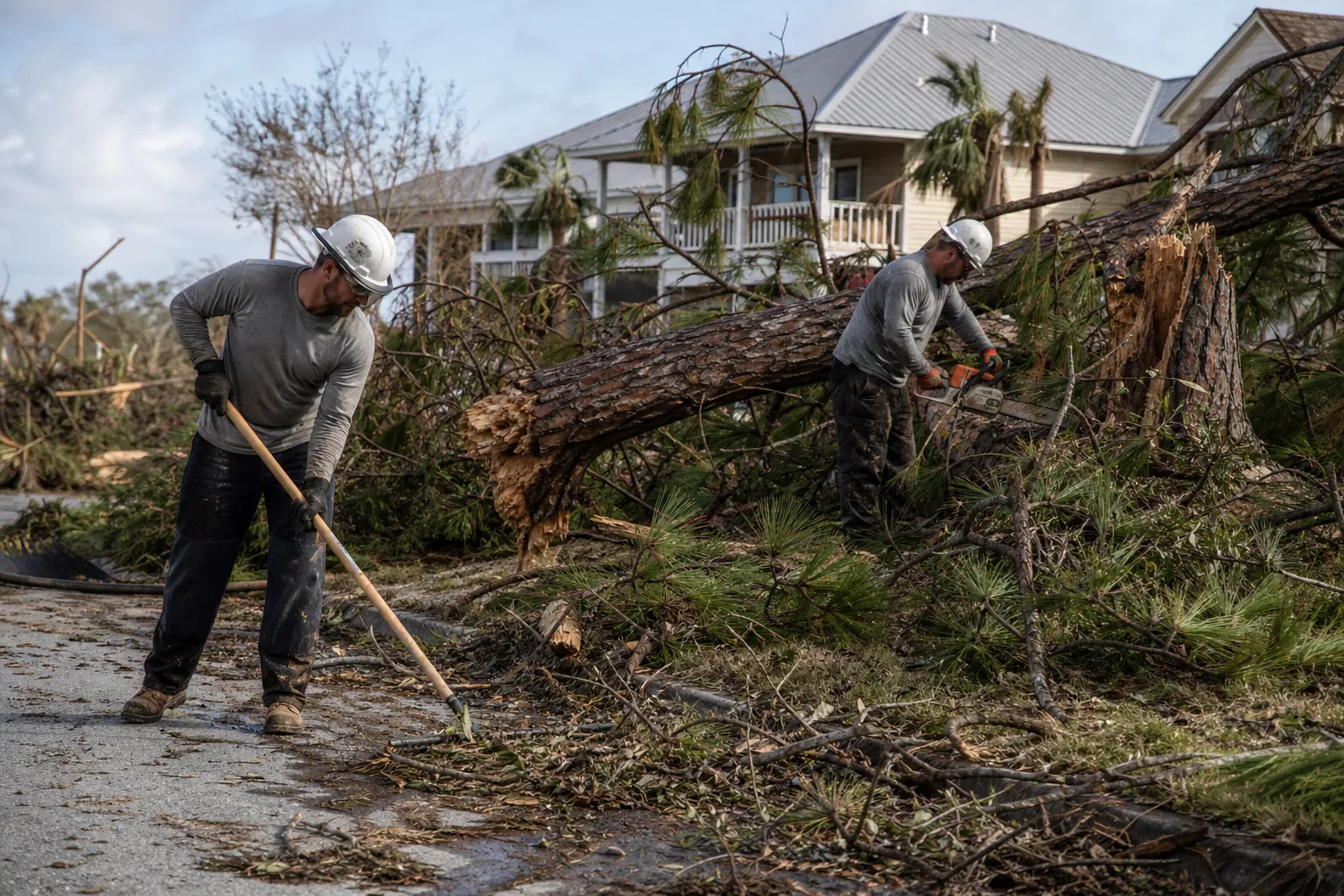
Emergency hurricane tree removal details start with the tree’s location, damage, and nearby hazards; In Pensacola, note what has fallen and what still hangs overhead; Keep clear of damaged trees while you gather these facts. A clear description helps shape the next steps without putting you near unstable wood.
The sections below explain what to record and how to plan cleanup; It also shows why removal isn't always the right choice; Florida Foliage’s headquarters remains in Daytona Beach. This guide does not state that a Pensacola crew is nearby or available.
What details matter for emergency hurricane tree removal?
Use the UF/IFAS urban forest hurricane recovery guidance for storm-damaged trees; OSHA provides hurricane debris collection safety guidance for cleanup hazards.
The most useful details describe the damage and its surroundings; Note the tree’s size, where it rests, and nearby structures; Explain what you can see from a safe spot. Photos can help show the scene, but they cannot replace a close inspection when tree stability is in doubt.
Start with a simple view of the whole area; Say if the tree has fallen fully or remains partly upright; Note if the trunk broke, roots lifted, or large limbs split. These are different problems, and each can call for a different work plan.
Describe where the damaged wood sits. A tree across an open lawn differs from one resting on a roof. A limb caught in another tree needs its own assessment; Wood resting against a fence can shift when the load changes.
Give a rough size rather than an exact measurement; You don't need to stand beside damaged wood for scale. A photo taken from a safe place can show nearby objects; Mention if thick vines or dense growth hide part of the tree.
- Describe the fallen tree, broken trunk, split limbs, or lifted roots you can see.
- Explain where the wood rests and which paths or spaces it blocks.
- Note nearby wires, buildings, fences, vehicles, and other trees without moving closer.
- Share photos from safe locations, with a wide view of the scene.
- List any known access limits, such as narrow gates or soft ground.
Keep your notes plain and short; You don't need to name the tree if you're unsure; State what you saw rather than guessing about the cause. For example, “the roots lifted on one side” is useful, clear information.
Record when you first noticed the damage, too; If the view changes, describe that change from the same safe spot; Don't return beneath the tree to get better photos. The goal is useful information, not a complete close-up record.
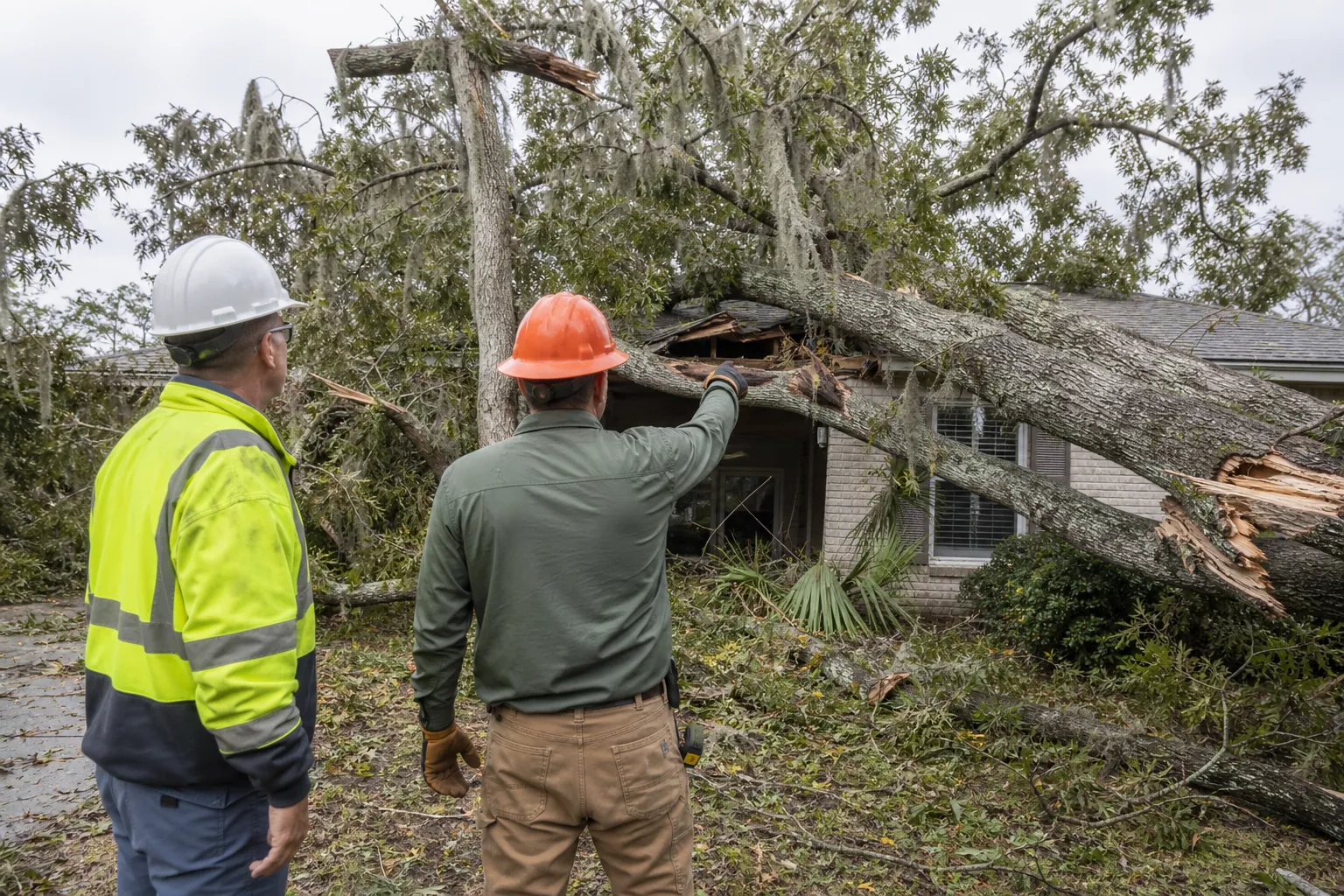
How can you check hurricane damage without approaching hazards?
Begin with a distant view, after local officials say conditions are safe; Avoid loose limbs, damaged trees, and any downed wires; Don't enter standing water to inspect tree damage. Ready.gov advises staying away from floodwater and fallen power lines during hurricane recovery. Read Ready.gov’s hurricane safety guidance.
A yard may look calm while hazards remain. A broken branch can be hard to see among leaves. A fallen tree may hide a wire beneath its crown; Treat the whole damaged area as a place to avoid, rather than checking each object closely.
Don't touch a branch or fence that contacts a wire; Don't try to move wood off a line. OSHA warns that downed lines can energize nearby objects and ground; Leave those conditions to trained responders and utility workers. See OSHA’s downed-wire precautions.
Use a window view if outdoor access is unsafe; You can describe damage without stepping into the yard; If trees block the view, report that limit. A partial description is more useful than a risky attempt to see everything.
Keep household members away from the affected area; Explain which doorway or yard space they should avoid; Choose a clear place for pets away from debris. Don't ask someone to stand beside damaged wood to show its size.
Watch for more than damage to the largest tree; Nearby trees may have caught broken branches in their crowns; Fallen wood can hide holes or uneven ground. OSHA identifies unstable trees and debris as storm cleanup hazards. Review OSHA’s hurricane response and recovery guidance.
If safe access isn't clear, stop gathering details; Say that the site needs a hazard check first; You can still share the address and a distant photo. A useful initial report does not require walking the whole property.
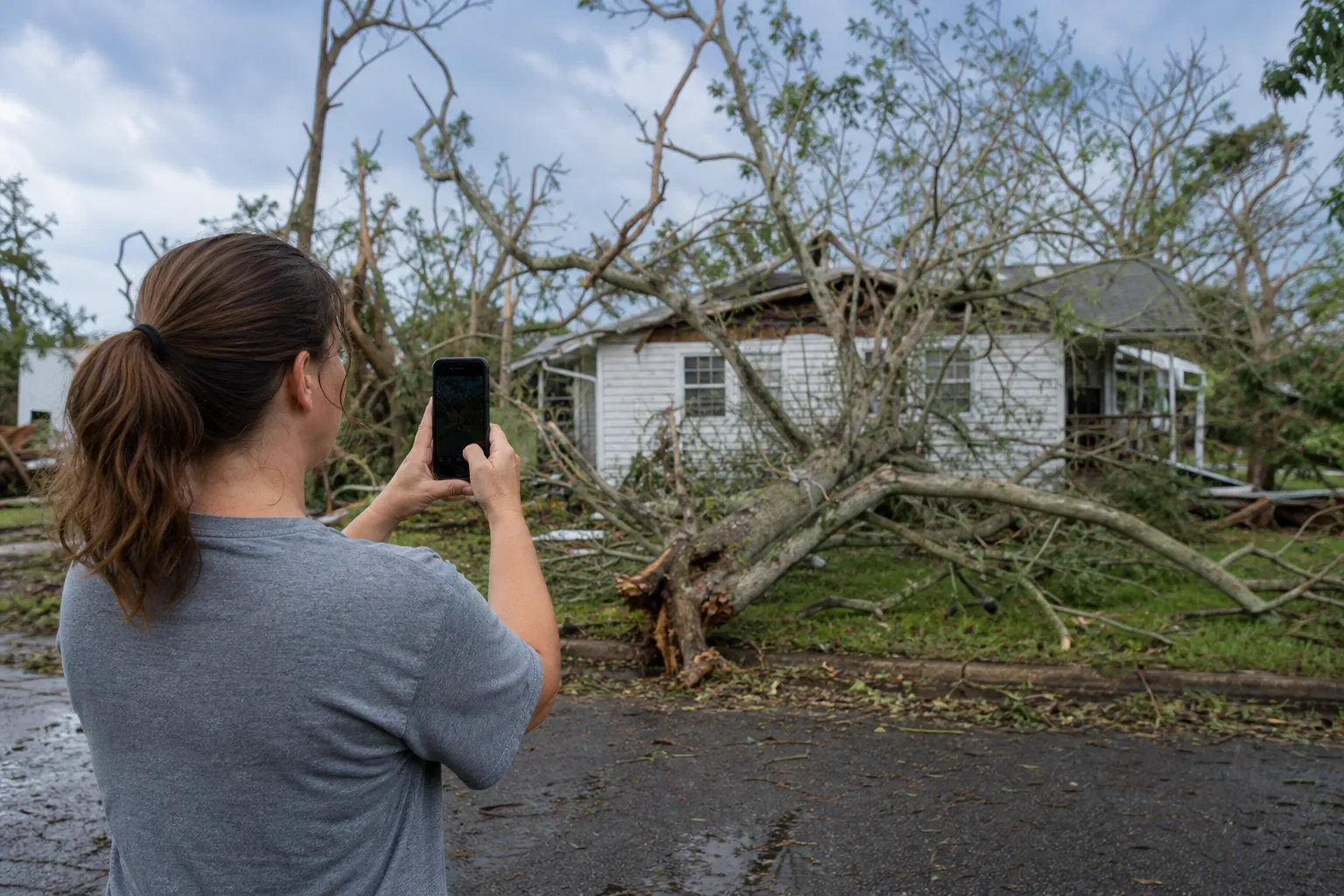
Does a hurricane-damaged tree always need removal?
No, hurricane damage does not always mean a tree needs removal; The choice depends on roots, trunk strength, branch loss, and nearby targets. A tree inspection can help define those issues; Some trees may need trimming, while severe damage may support removal after a close assessment.
Separate visible leaf loss from damage to the tree’s structure. A thin crown alone doesn't explain the trunk’s condition; Likewise, a tree with green leaves may still have a deep split; Looks from the street can leave key questions unanswered.
Lifted roots deserve careful attention during an inspection; Describe any new soil mound or gap near the base; Don't press the soil back or pull on the trunk. Leave decisions about stability to an on-site assessment of the full tree.
Large branch loss can change the tree’s shape and balance; The remaining crown may need planned cuts, rather than quick shaping; Tree trimming, canopy thinning, and crown reduction serve different goals. Ask which method fits the damage found during the inspection.
Canopy thinning removes selected branches within the crown; Crown reduction makes suitable parts of the crown shorter; Neither should be treated as a routine fix for every damaged tree. The proposed work should match the tree’s structure and storm condition.
Tree removal may be considered when damage is too severe to retain the tree; That decision should account for the trunk, roots, and remaining crown; It should also consider the space around the tree. A photo alone may not show enough detail.
Arborist reports and tree inspections can help document what was found; Ask for clear notes about damage and proposed work; The notes should distinguish urgent hazards from later care needs. Don't assume that every tree on the property needs the same treatment.
For Pensacola homeowners, the useful question is practical: what work fits this tree? Avoid choosing a method based on appearance alone; Start with the damage, then discuss the goal; That keeps hurricane cleanup focused on the tree’s actual condition.
How should you plan the hurricane cleanup scope?
A clear cleanup scope states which trees and debris need attention; It also describes access, nearby objects, and the desired end condition; Separate tree removal from stump grinding and broader clearing. These tasks may fit one plan, but each needs its own description before work is arranged.
Begin by naming the affected areas; Use simple labels such as front yard or back fence; Mark trees on a photo if you can do so remotely. That helps prevent confusion when several trees have storm damage.
Describe what you want done with each tree; One may need removal, while another needs damaged branches trimmed; Include fallen limbs already on the ground. Don't assume that a request for one tree includes every pile nearby.
- Identify each damaged tree and describe the work you want assessed.
- State which fallen branches and debris piles belong within the cleanup area.
- Describe gates, driveways, tight turns, and other known access limits.
- Ask how nearby plants and yard features will affect the work plan.
- Discuss stump grinding as a separate step from removing the tree.
- Confirm which areas should remain untouched during hurricane cleanup work.
Access details help shape the plan before equipment is chosen. A narrow gate can limit entry to the backyard; Soft ground may affect where equipment can travel; Share those facts without testing the ground near a damaged tree.
Crane tree removal may be considered for some difficult sites; It is not the default answer for a large tree; Placement, reach, access, and the tree’s condition all matter. Ask why a crane is proposed for the specific storm damage.
Land and lot clearing should have clear boundaries when used after a hurricane; State which damaged growth is included and which trees should stay; Brush hogging may address suitable low growth within the plan. It is distinct from removing unstable trees or overhead limbs.
A complete scope also explains the stopping point; You may want fallen wood removed while leaving a stump temporarily; You may want stump grinding assessed for a later step. Clear wording helps everyone understand the intended result.
What should happen before cutting or lifting storm-damaged wood?
The work plan should address unstable wood, access, and nearby hazards before cutting starts; Storm-damaged branches can hold tension and move when cut; This is a reason to avoid do-it-yourself cutting around tangled or loaded wood. OSHA describes these risks in its hurricane tree-removal guidance. Read OSHA’s tree-removal safety guidance.
A fallen tree can still be under pressure; Its trunk may bend against the ground or another object; Branches beneath it may hold part of its weight. Removing one piece can change how the rest of the tree moves.
Don't treat a chainsaw as a quick answer to blocked access; Saw use adds hazards to an already damaged site. OSHA calls for trained workers, suitable protection, and hazard checks during tree work. See OSHA’s precautions for storm tree work.
Ask how the work area will be kept separate from household activity; Make plans for pets before the work begins; Keep vehicles out of the planned access route when asked. Don't enter the cutting area to check progress or collect wood.
Point out features that may be hard to see. These can include drains, irrigation parts, and low garden walls. Share their locations before equipment enters the yard. Don't step into the hazard area to mark them yourself.
Weather remains part of hurricane recovery planning. Check current alerts before outdoor tasks or site visits. The National Weather Service provides local forecasts and warnings for the Pensacola area. Check NWS Mobile/Pensacola weather updates.
Work plans may change when a closer view reveals more damage. A branch hidden in the crown may need separate handling. Equipment access may differ from the first description. Ask for a plain explanation of any change to the planned tree work.
How can you prepare trees for the next hurricane?
Use storm cleanup as a chance to plan later tree care. Start with trees that showed new cracks, branch loss, or root changes. Keep notes and photos for a future inspection. The goal is a clear care plan, rather than cutting every tree back in the same way.
After debris is removed, the remaining trees may be easier to view. Note damage that was hidden by fallen branches. Ask which trees need another inspection and when. Some care decisions need a closer look beyond the first cleanup visit.
Keep a simple storm tree record for your property. Include the date, tree location, and work completed. Save useful photos with those notes. This can help explain changes when you request another tree inspection.
- Record which trees lost major limbs or showed changes at the base.
- Ask which remaining branches need assessment after the first cleanup stage.
- Keep photos that show the tree before and after storm work.
- Discuss trimming goals before choosing canopy thinning or crown reduction.
- Plan future inspections around the damage found, rather than a blanket cutting schedule.
Hurricane readiness also includes checking household plans before another storm. Ready.gov recommends planning communications and following local evacuation directions. Tree care does not replace those steps. Review Ready.gov’s hurricane preparation advice.
Shared properties need a clear way to report tree damage. HOA and condo tree services can be scoped by affected area. Commercial tree services can follow the same approach for storm-damaged grounds. Keep reports focused on tree condition, access, and cleanup needs.
Hurricane tree cleanup questions for Pensacola homeowners
Can photos show if a damaged tree needs removal?
Photos can show visible damage and help explain the site. They may miss trunk cracks, root problems, or hidden branches. Use them for an initial discussion, not a final diagnosis. Ask for a tree inspection when the tree’s condition or best next step remains unclear.
Should I move small branches near a downed wire?
No. Stay clear of the wire and nearby debris. A branch or other object may contact an energized line. Don't touch or test it, even if it looks harmless. OSHA advises keeping away from downed electrical lines and related hazards. Read OSHA’s electrical hazard guidance.
Is stump grinding included with hurricane tree removal?
Don't assume that it is included in the work plan. Tree removal and stump grinding are distinct tasks. Ask which stump will be addressed and what the intended finish is. Discuss access after fallen wood is removed, since that may affect the next step.
When should I ask about crane tree removal?
Ask when storm damage involves a tree in a tight space. Nearby structures or difficult access may affect the method. A crane may suit some sites, but it isn't always needed. The choice should follow an assessment of the tree, access, and planned work area.
What should I share when contacting Florida Foliage?
Share the Pensacola location, visible tree damage, and known access limits. Include photos only if you can take them safely. Explain if you want removal, trimming, or an inspection assessed. Florida Foliage’s headquarters is in Daytona Beach, so ask about service-area fit and current availability.
For a neutral estimate discussion, call Florida Foliage at (386) 481-7913. Describe the hurricane damage and the work you want assessed. Confirm service-area fit and availability before planning a visit.
AI-assisted draft with editorial oversight by Tim Francis; Clinton Funk is the named approving reviewer.
Call (386) 481-7913 to talk through next steps.