Reviewed by Clinton Funk
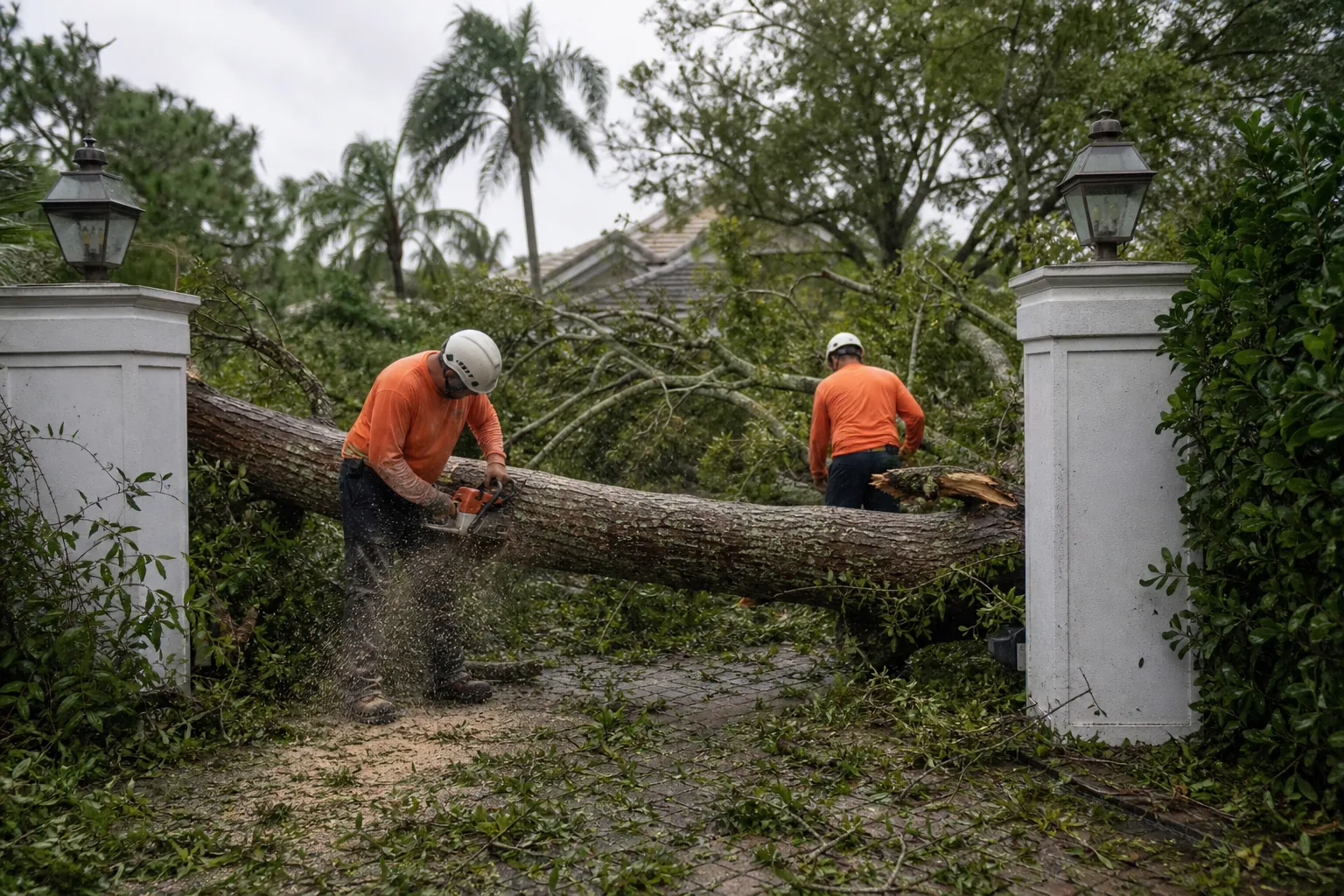
A fallen tree across a driveway, front gate, or building entrance creates an immediate access problem. You may be unable to leave for work, reach a parked vehicle, or receive a delivery. More importantly, blocked access can complicate an urgent medical situation or prevent responders from reaching the property. The right first step is not necessarily to move the tree. It is to understand what makes the area unsafe.
For homeowners and property managers seeking emergency tree removal for a blocked entrance in Deltona, a careful response starts with keeping people away, checking for utility involvement from a safe distance, and explaining the situation clearly when requesting help. Florida Foliage provides emergency and hurricane tree removal, along with other tree services that may be appropriate after the immediate obstruction is addressed.
Check For Immediate Danger Before Approaching
Look at the scene from a protected location, preferably inside the building or well away from the fallen tree. A trunk on the ground can still move. Branches may be bent under heavy pressure, and a partially uprooted tree may shift if someone cuts or pulls the wrong section.
Start by identifying whether anyone is injured, trapped, or facing an immediate threat. If so, call emergency services. A tree service is not a substitute for medical assistance, fire response, or utility crews when those hazards are present.
Do not assume that a wire touching a tree is harmless because it is quiet or appears insulated. Treat any downed or sagging line as potentially energized. Keep away from the tree, wires, nearby fences, standing water, and anything else that could conduct electricity. Contact the utility provider and emergency services as appropriate.
- Keep children, pets, visitors, and neighbors away from the entire affected area.
- Stay clear of suspended branches, leaning trunks, and exposed root plates.
- Do not climb over the fallen tree to reach your vehicle or gate.
- Avoid opening a gate or garage door if branches are pressing against it.
- Watch for broken limbs hanging in nearby trees without walking underneath them.
If wind, lightning, or heavy rain is continuing, remain sheltered rather than inspecting the obstruction outside. The need to restore access matters, but entering an unstable area can turn a property problem into an injury.
Decide Whether The Blockage Is An Emergency
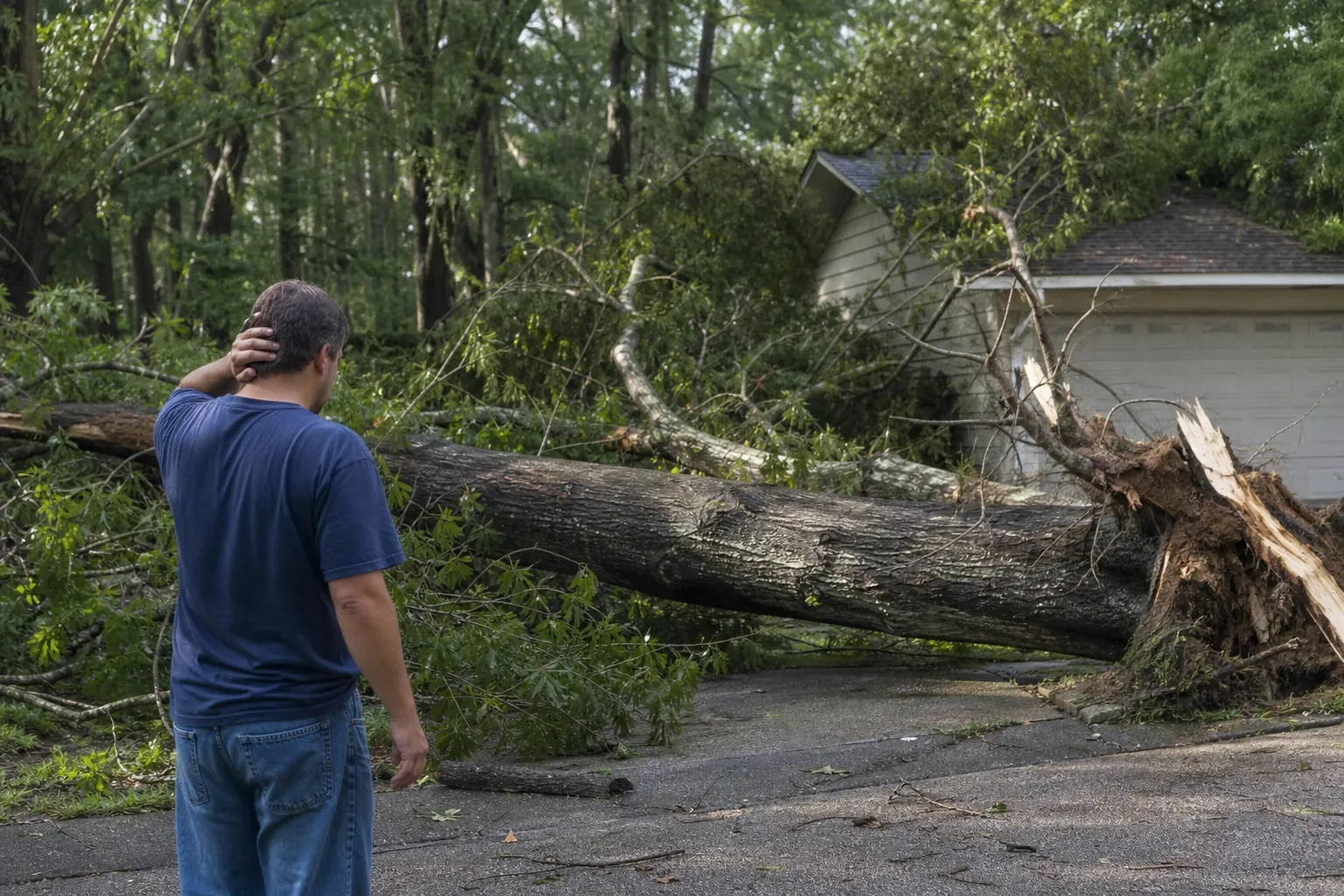
Not every fallen branch requires an emergency response. A small limb lying beside a driveway is different from a large trunk across the only exit. The urgency depends on access, ongoing instability, utility hazards, and the needs of people at the property.
A blocked entrance deserves prompt attention when there is no safe alternative route, someone needs time-sensitive medical access, or a damaged tree could fall farther onto an occupied area. Commercial properties, condos, and HOA communities may also have multiple residents or customers depending on the same entrance.
When assessing access, think beyond whether a person can squeeze past. A narrow gap may not accommodate a vehicle, mobility device, or emergency responder. Do not test a questionable gap if doing so puts you beneath damaged branches or close to wires.
- Explain if the fallen tree blocks the property's only usable entrance or exit.
- Identify whether vehicles are trapped behind the obstruction.
- Mention any residents who cannot safely use an alternate route.
- Report whether the tree is still leaning, shifting, or attached to a damaged standing section.
- Describe any contact with a roof, fence, gate, vehicle, or utility line.
If the obstruction extends into a public roadway or sidewalk, notify the appropriate local agency. Responsibility for work near public access and utilities can involve more than one party. Do not redirect traffic yourself or enter the road to photograph the tree.
What To Tell A Tree Service When You Call
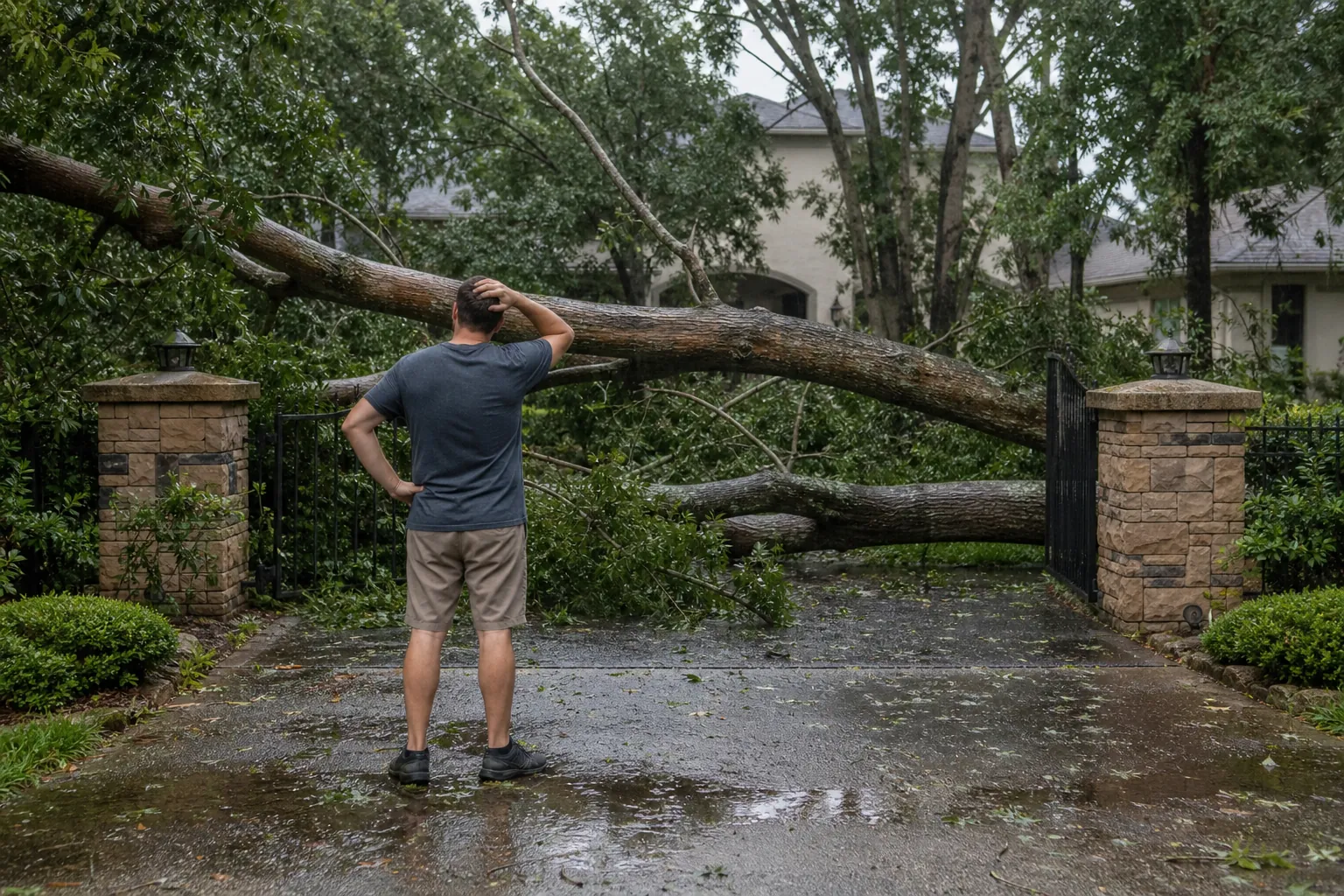
A clear description helps a tree service understand the site before arriving. Start with the Deltona property address and identify the entrance that is blocked. A front driveway, rear service gate, shared private road, and condo entrance can each create different access and equipment needs.
Describe the tree in practical terms rather than guessing its exact weight or species. Say whether the trunk is fully down, hanging above the entrance, split at the base, or resting on a structure. Estimate its size only if you can do so from a safe location.
Photos may help, but they should never require approaching a hazard. A wide view from a window or safe observation point can show the overall obstruction. Additional views can show the driveway layout, gate opening, nearby structures, and available access without placing you beneath unstable wood.
- Provide your address, contact information, and a description of the blocked entrance.
- Explain whether there is another safe route onto the property.
- Describe visible wires, poles, utility equipment, or standing water nearby.
- Identify structures and vehicles beneath or beside the tree.
- Share whether the ground is saturated or whether the entrance has a steep slope.
- Tell the crew about locked gates and access restrictions without approaching the damaged area.
Ask what information is needed for an assessment and whether utility clearance must happen first. If you are requesting work for an HOA, condo association, or commercial property, identify who is authorized to approve the work. Clear authorization helps avoid confusion during an already stressful situation.
Why Pulling Or Cutting The Tree Yourself Can Be Risky
A fallen tree can look stationary while holding considerable stored force. A bent branch may spring outward when cut. A trunk supported at both ends can pinch a saw or roll unexpectedly. An uprooted tree's root plate may move as weight is removed from the trunk.
These conditions are difficult to evaluate without training and appropriate equipment. Even a cut that seems simple can change how the entire tree is supported. Working next to a building or vehicle adds another concern because the wood may shift into something it was not touching before.
Pulling the tree with a vehicle, rope, or chain can create additional hazards. The pulling equipment may fail, the tree may move unpredictably, or the vehicle may lose traction. A tree entangled with electrical lines must not be moved until the responsible utility has addressed the electrical hazard.
Do not cut branches to free a gate if the gate is supporting part of the tree. Similarly, do not attempt to remove a limb wedged against a garage door or roof. What looks like a minor obstruction may be part of the tree's current support system.
Small, loose debris outside the hazard area may be manageable after conditions are safe. That is different from cutting loaded limbs, working under suspended sections, or moving a trunk. When the tree blocks an entrance, preserving distance is often the most useful action you can take before professional assessment.
How Removal Planning Changes With The Site
Emergency tree removal begins with evaluating the tree's position and the surrounding property. The removal approach depends on how the wood is supported, where it can safely be lowered or moved, and whether equipment can reach the work area. Two similar-looking driveway blockages may require very different methods.
A tree lying flat on open ground presents different challenges from one resting partly on a roof. A narrow entrance between buildings may limit equipment placement. Soft ground after a Florida storm can affect access and make it important to assess where equipment can operate.
Crane tree removal may be considered when large sections cannot be safely handled through other access routes. It is not automatically necessary for every blocked driveway. Suitability depends on factors such as reach, lifting conditions, setup space, overhead clearance, and the tree's condition.
In other situations, controlled removal of smaller sections may be appropriate. The important point is that the sequence should follow an assessment rather than a rush to cut the most visible branch. Removing one piece can alter the pressure and support holding another piece in place.
Discuss the immediate objective with the crew. Restoring safe access and completing the full removal are related but not always identical tasks. Ask how the work area will be managed and when you should consider the entrance usable. Do not assume access is safe simply because a vehicle-sized opening has appeared.
Prepare The Property Without Entering The Hazard Area
You can often help organize the response while staying away from the tree. Keep the household informed, secure pets indoors, and make sure everyone understands which entrance is off limits. If there is a safe alternate route, use it consistently rather than allowing people to improvise paths around the obstruction.
Move vehicles only when they can be reached and driven away without crossing the danger area. Do not retrieve a car parked beneath damaged limbs. Let the tree service know where the vehicles are so their positions can be considered during planning.
- Keep a phone available so the crew can reach you about arrival and access.
- Arrange for a responsible adult or authorized property representative to communicate about the work.
- Point out irrigation equipment, septic areas, and other known ground features from a safe location.
- Keep uninvolved people away from equipment access routes.
- Pause deliveries or visitor arrivals if they would lead people into the blocked entrance.
Photograph visible damage before work if you can do so safely. Record when you discovered the obstruction and what areas it affected. If insurance may be involved, contact your insurer about documentation and claim procedures. Coverage depends on the policy and circumstances, so do not assume tree removal or related damage is covered.
Special Considerations For Shared And Commercial Entrances
A fallen tree at a shared entrance can affect several households or an entire business property. The first priority remains safety, but communication becomes more important. Residents, employees, and visitors need a consistent message about which areas to avoid and whether an alternate entrance is available.
For HOA and condo properties, determine whether the tree and blocked access are within common areas or an individually maintained parcel. The association or property manager may need to coordinate authorization. Ownership questions should not prevent you from reporting immediate danger to emergency services or the utility provider.
Commercial properties should also consider pedestrian access separately from vehicle access. A cleared driveway does not necessarily mean the nearby walkway is safe. Damaged canopy branches, displaced fencing, and tree sections near doors can continue to create hazards after the main trunk is moved.
Florida Foliage offers commercial tree services and HOA and condo tree services, in addition to emergency and hurricane tree removal. When contacting the company, explain the shared-access situation and identify the person responsible for approving work and communicating with occupants.
Inspect Remaining Trees After Access Is Restored
Once the immediate obstruction is removed, look beyond the tree that fell. Nearby trees may have broken limbs, fresh splits, or changed lean. Storm damage is not always obvious from the driveway, and a tree that remains standing can still warrant assessment.
Arborist reports and tree inspections can help evaluate concerns and document observed conditions. An inspection may support decisions about tree trimming, crown reduction, canopy thinning, or tree removal. The appropriate choice depends on the individual tree, its structure, its condition, and the targets around it.
Do not assume every nearby tree needs removal. Conversely, a tree's green leaves do not establish that its trunk or roots are sound. Share changes you have noticed, including soil lifting near the base, newly exposed roots, cracks, or branches that now hang lower than before.
Stump grinding may be a separate consideration after removal if the remaining stump interferes with the entrance or future use of the space. Confirm what the removal scope includes rather than assuming the stump and surface roots will disappear with the trunk.
Before additional work, ask whether city or county requirements apply. Rules can vary by location, tree, and property circumstances. Confirm requirements with the relevant local office rather than relying on an assumption that all storm-related work is treated the same way.
Reduce Future Entrance Obstructions With Planned Care
No maintenance plan can eliminate storm damage, but regular attention can help identify concerns before a driveway is blocked. Focus on trees within falling distance of entrances, frequently used walkways, parking areas, and buildings.
Tree trimming may address damaged or problematic branches when appropriate. Canopy thinning and crown reduction serve different purposes and should be selected based on the tree rather than applied indiscriminately. Excessive cutting can harm a tree and is not a shortcut to storm readiness.
Keep access considerations in mind when planning the landscape. A tree's mature size, branch spread, and location can affect the driveway long after planting. Periodic tree inspections are especially useful when you notice changes or when previous storms have damaged nearby trees.
Discuss A Blocked Deltona Entrance With Florida Foliage
If a fallen tree blocks your entrance, keep people clear and address immediate threats first. Then gather a safe description of the obstruction, utility involvement, and available access.
Call Florida Foliage at (386) 481-7913 to discuss emergency tree removal in Deltona. Explain what is blocked and any hazards you can observe safely. A clear conversation can help establish the next steps without putting you closer to an unstable tree.
Call (386) 481-7913 to talk through next steps.