Reviewed by Clinton Funk
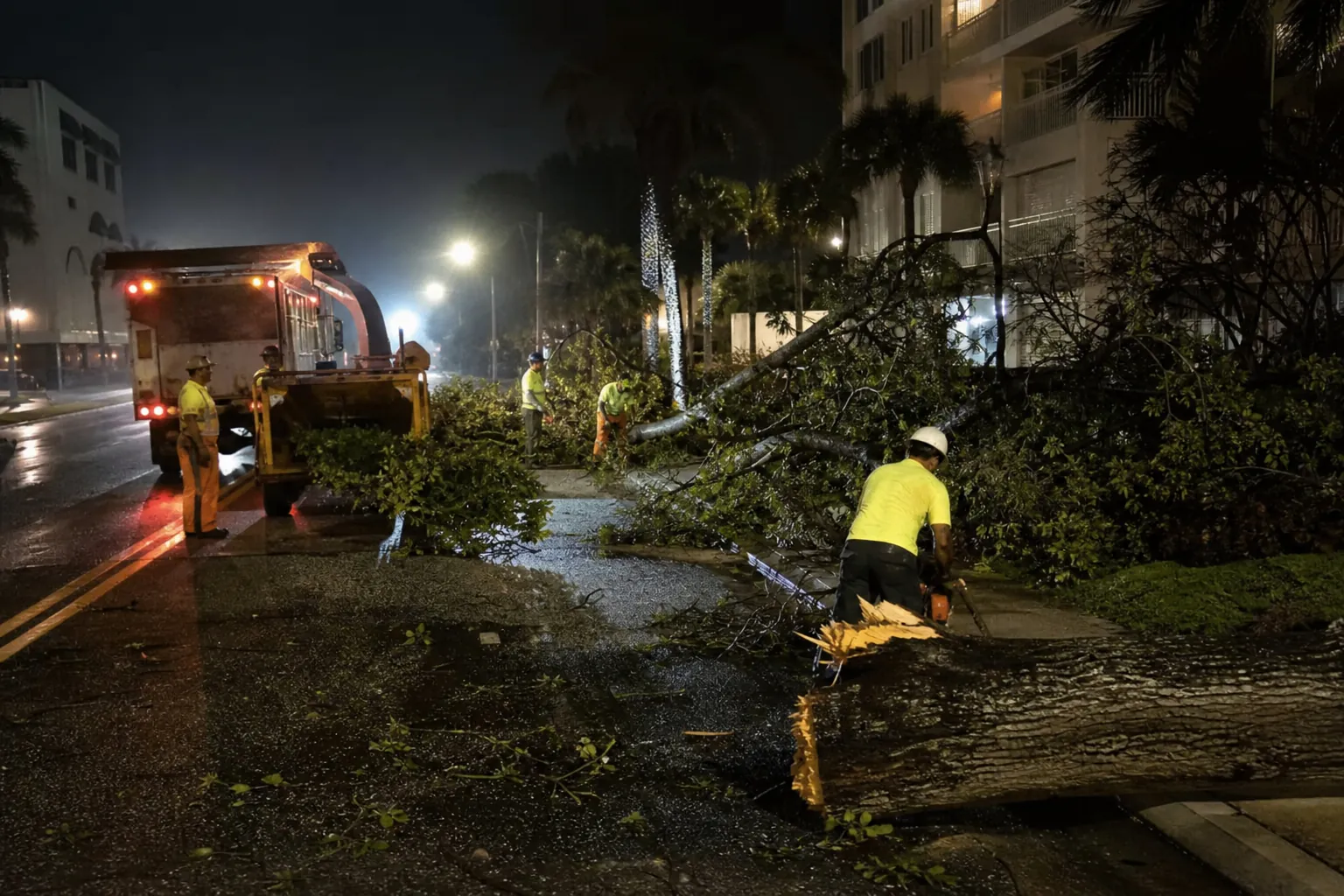
A cracking limb or a tree falling after dark can turn a quiet evening into an urgent safety problem. In Daytona Beach, heavy rain, gusty weather, and hurricane conditions can leave trees leaning over driveways, resting on roofs, or blocking access. Darkness makes the damage harder to judge, especially when branches hide wires or a tree remains partly attached to its stump.
The first priority is not clearing the debris. It is keeping people away from hazards and determining who needs to respond. Emergency tree removal at nighttime in Daytona Beach requires a different approach from routine daytime tree work because visibility, access, electrical hazards, and unstable wood all affect the next step.
This guide explains what homeowners and property managers can do safely, what information helps a tree service evaluate the situation, and why some work may need to wait until conditions improve. For help discussing emergency and hurricane tree removal, contact Florida Foliage at (386) 481-7913.
Start With People, Power Lines, And Safe Distance
Before inspecting a fallen tree, account for everyone on the property. Keep children, visitors, and pets indoors or in a safe location away from the damaged area. Do not walk beneath a leaning trunk or a branch caught in another tree.
If someone is injured, trapped, or facing immediate danger, contact emergency services first. A tree service is not a substitute for emergency responders, electrical utility crews, or a structural safety assessment when a building has been seriously damaged.
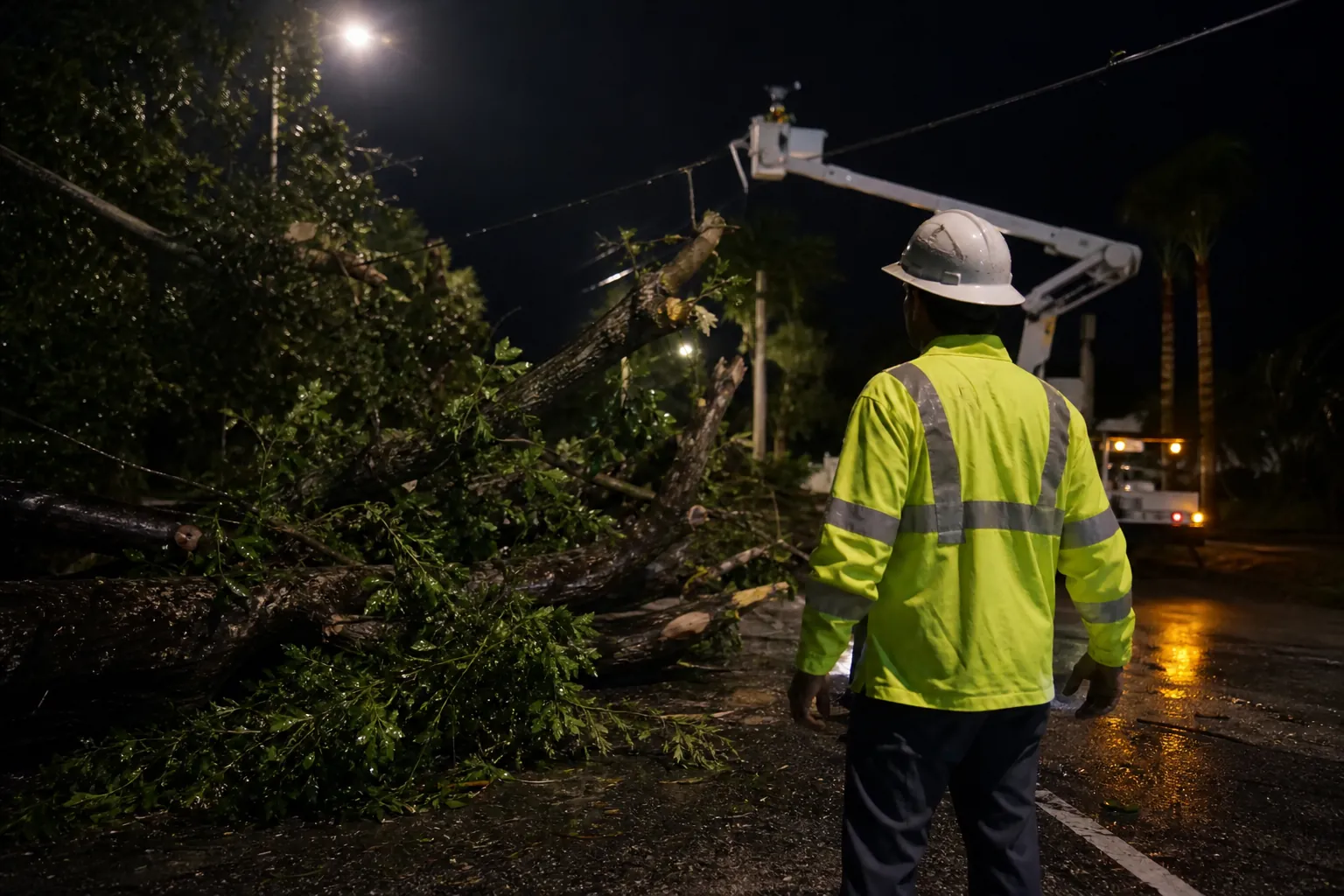
Treat every wire near a fallen tree as potentially energized. You may not be able to distinguish a utility line from another cable at night. Wet branches, fences, vehicles, and standing water can complicate the hazard. Stay away and notify the utility or emergency services as appropriate.
- Keep people away from the tree, its root plate, and any branches suspended overhead.
- Do not touch a tree, fence, vehicle, or other object that may be contacting a wire.
- Avoid entering a damaged room or walking beneath a roof section struck by a tree.
- Do not cross flooded ground to get a closer view of the damage.
- Use a flashlight from a safe position rather than approaching unstable wood for a better look.
A fallen tree may still move. A trunk supported by a roof, another tree, or a fence can shift when its support changes. Roots lifted from the ground can also settle unexpectedly. Keep your distance even if the tree appears motionless.
Decide Whether The Situation Needs Immediate Attention
Not every fallen branch requires overnight removal. The important question is whether the tree creates an active threat to people, occupied buildings, necessary access, or nearby infrastructure. A small limb lying in an open yard is different from a split trunk hanging above a bedroom.
From a safe location, identify what the tree is touching and what it could reach if it moves again. Look for a blocked entrance, a damaged roof, or a leaning tree aimed toward an occupied structure. Do not enter the potential fall area to make that assessment.
Situations that deserve prompt professional discussion include:
- A tree or large limb has struck an occupied building, and additional movement could worsen the damage.
- A broken branch remains suspended above a walkway, driveway, or entrance that people need to use.
- A newly leaning tree has exposed roots or visible ground movement near a home.
- A fallen tree blocks the only practical access route to the property.
- A damaged tree threatens a neighboring property or a shared area used by residents.
Electrical contact changes the response sequence. Tree work near energized equipment may need to wait until the appropriate utility personnel address the electrical hazard. Never assume the power is off simply because your home has lost electricity.
If the debris is stable, away from structures, and easy to isolate, waiting for daylight may allow a clearer assessment. Describe the conditions accurately rather than assuming every storm-damaged tree needs immediate cutting.
What To Tell A Tree Service When You Call
A clear description helps a tree service understand the hazard before discussing access or equipment. Start with your address in Daytona Beach, your name, and a callback number. Then explain what happened and whether the damage is still changing.
Use observable facts. Saying that a trunk is resting on the garage roof is more useful than guessing its weight. Mention whether the tree is fully down, leaning, split, or holding broken limbs overhead.
- Explain whether anyone is injured or whether emergency responders or the utility have already been contacted.
- Identify what the tree is touching, including buildings, vehicles, fences, other trees, or visible wires.
- Describe access restrictions such as narrow gates, parked vehicles, soft ground, or a blocked driveway.
- Report active conditions, including strong wind, lightning, heavy rain, or standing water.
- State whether the property is a single-family home, commercial site, condominium, or HOA-managed community.
- Explain whether you own the affected tree or whether ownership is uncertain.
If you can take photographs without approaching the hazard, capture a wide view and a few closer views using zoom. Include nearby structures and the route into the property. Never stand beneath damaged branches to provide a more detailed image.
When calling Florida Foliage at (386) 481-7913, ask about current availability and the information needed to evaluate your situation. Discuss whether an on-site assessment is appropriate and whether conditions could limit work that night.
Why Nighttime Tree Removal Needs A Careful Plan
Darkness reduces the ability to see cracked limbs, hanging debris, uneven ground, and overhead obstructions. Artificial lighting helps, but shadows can still hide hazards. A safe plan considers the entire work area rather than only the trunk that fell.
Weather also matters. Continuing wind can move damaged limbs, while saturated soil may make equipment access difficult. Lightning, poor visibility, and unstable footing can prevent a crew from proceeding safely even when the need is urgent.
A professional assessment looks at how the tree is supported and where forces are concentrated. Wood pinned against a building or bent beneath another section may be under tension or compression. Cutting in the wrong place can release that force suddenly.
The work sequence may involve addressing an immediate hazard before completing the broader removal. In some cases, a controlled partial response followed by daylight work may be more appropriate than trying to finish everything overnight. That decision depends on the actual tree, surroundings, weather, and available equipment.
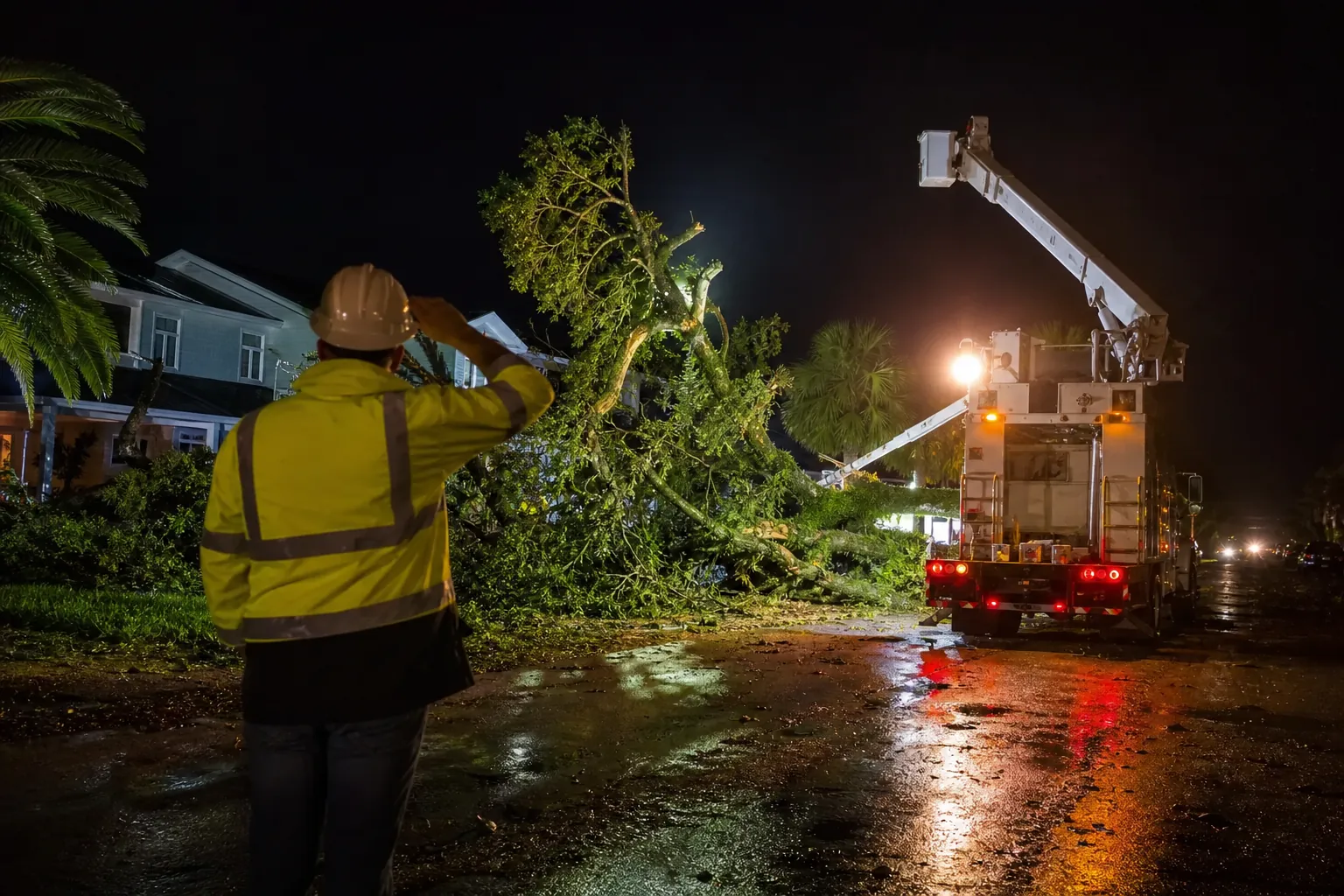
Equipment selection also depends on site conditions. Crane tree removal may be considered when large sections cannot be handled appropriately through other methods, but crane access, setup space, ground conditions, and overhead clearance must be evaluated. A crane is not automatically the right solution for every tree on a roof.
Ask how the proposed work will address the immediate concern and what will remain afterward. Understanding the scope helps prevent confusion between emergency tree removal, later tree trimming, and stump grinding.
Do Not Attempt A Nighttime Chainsaw Cleanup
A chainsaw does not make storm debris predictable. Fallen trunks and branches can be loaded with hidden force, and a damaged tree may have several unstable sections. Darkness makes it harder to identify those conditions before a cut.
Household ladders add another risk. A ladder placed against a damaged trunk or beneath a broken branch can put you directly in the path of movement. Climbing onto a roof to free a limb can also expose you to damaged roofing and unseen openings.
Avoid pulling a tree with a vehicle or attaching ropes to unstable sections. Moving one part can shift the entire tree, including sections resting on structures. Do not assume a branch is safe to handle because it looks small from the ground.
- Do not cut limbs that are supporting a trunk or another large branch.
- Do not stand on a fallen trunk to inspect or photograph the damage.
- Do not climb a damaged tree or work beneath hanging branches.
- Do not use a vehicle to drag wood away from a building or utility line.
- Do not enter a neighbor's property to begin cutting without addressing access and authorization.
Useful tasks are limited to actions outside the hazard area. You can gather property information, contact the appropriate responders, and keep others away. If safe access allows, you can move uninvolved vehicles before a crew arrives, but never enter the danger zone to do so.
Document Damage Without Delaying Safety Decisions
Photographs and notes can help explain what happened to a property manager or insurer. Documentation should never come before personal safety. If you cannot get a clear view without approaching the tree, wait until the area has been assessed.
Record when you first noticed the damage and what you observed. Note whether a tree struck a structure, blocked access, or damaged a fence. Keep descriptions factual rather than guessing the cause or claiming the tree was diseased.
Save photographs from before and after the tree work when available. Retain written descriptions of the work performed and communications about the incident. Ask your insurer what documentation it needs and how it wants urgent work recorded.
Insurance coverage varies by policy and circumstances. Do not assume that all tree removal, stump grinding, or damage to nearby property will be covered. A tree service can describe its proposed work, but coverage questions belong with your insurer.
When a neighboring tree is involved, avoid assigning responsibility based only on where the trunk landed. Ownership, prior knowledge, and other facts may matter. Contact the relevant property owner and insurer, and seek appropriate advice if responsibility is disputed.
Plan For Daytona Beach Properties And Shared Spaces
Daytona Beach properties range from compact residential lots to larger commercial sites and shared condominium grounds. The same fallen tree can create very different access problems depending on fences, buildings, parking areas, and available work space.
Coastal exposure, heavy rain, and storm winds can affect how a damaged tree behaves. However, location alone does not establish whether a tree is hazardous. Its condition, root support, structure, and surroundings need to be evaluated individually.
For rental properties, notify the owner or manager promptly. For HOA and condo communities, identify the person authorized to approve work in common areas. Residents should not independently arrange cutting on shared property unless they have the necessary authority.
Commercial properties may need to keep employees, customers, and delivery drivers away from the affected area. Redirect activity only through routes that are clearly outside the hazard zone. Do not reopen a walkway simply because the largest visible branch has been moved.
Florida Foliage's relevant services include commercial tree services and HOA and condo tree services. When discussing emergency work, explain who controls the property, where people normally travel, and whether shared entrances or parking areas are affected.
Requirements for tree work can vary by location and property circumstances. Confirm applicable requirements with your city or county, and ask how any required approvals affect the proposed work. Do not assume that a storm eliminates every local requirement.
Follow Up After The Immediate Hazard Is Addressed
Removing the fallen section does not necessarily resolve every concern. The remaining trunk may have a split, neighboring trees may contain broken limbs, or the root area may show movement. A daylight inspection can reveal damage that was difficult to see overnight.
Tree inspections and arborist reports can help document condition and inform decisions about remaining trees. Not every storm-damaged tree needs removal. The appropriate response depends on the extent of damage and whether the remaining tree can be managed responsibly.
Tree trimming may address particular broken or damaged branches. Canopy thinning or crown reduction may be considered for suitable trees when supported by an assessment, but neither should be treated as a universal fix for storm exposure. Excessive cutting can create additional problems.
Stump grinding is a separate consideration after tree removal. Discuss the stump's location, nearby features, and intended use of the area. Emergency work may focus on the immediate hazard, with stump grinding scheduled as a later task.
For larger properties, land and lot clearing or brush hogging may be relevant to separate site-management needs. Those services should not be confused with diagnosing a damaged tree or resolving a hanging-limb hazard. Choose the scope that matches the actual problem.
Prepare Before The Next After-Dark Tree Emergency
Preparation makes the first few decisions easier. Keep a flashlight accessible, know how to contact your utility, and make sure household members understand that fallen wires and hanging branches are areas to avoid. Maintain a current contact list for property managers where applicable.
Arrange tree inspections when you notice changes such as new leaning, visible cracks, dead limbs, or soil lifting near roots. Avoid waiting for severe weather to investigate a concern that is already visible. Routine attention can identify issues without promising that any tree is stormproof.
If a tree falls tonight, stay clear, assess only from a safe position, and contact emergency responders or the utility when the situation requires them. Then discuss the tree hazard, site access, and next steps with a qualified tree service.
For emergency and hurricane tree removal questions in Daytona Beach, call Florida Foliage at (386) 481-7913. Describe what you can safely observe and ask about current availability. A careful conversation helps establish the appropriate next step without rushing into unsafe cleanup.
Call (386) 481-7913 to talk through next steps.