Reviewer and contributor: Clinton Funk, Owner, Florida Foliage. Clinton has decades of hands-on tree care experience.
Tim Francis is responsible for the research and editorial quality of this article. AI tools assisted with drafting and the editorial images. This general information does not assess a particular tree.
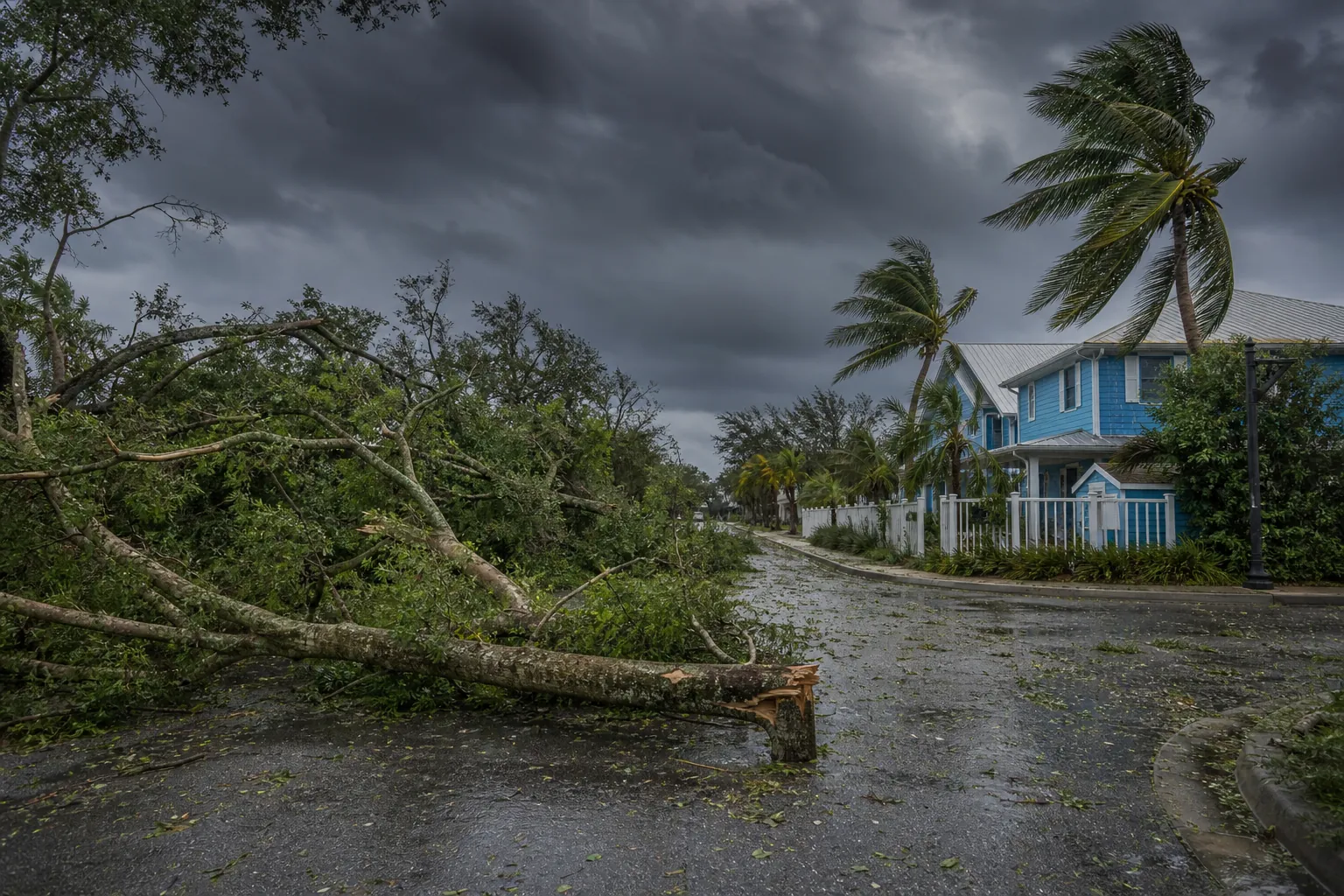
Hurricane Emergency Tree Work in Pensacola, FL calls for clear notes and a careful household plan.
After a hurricane in Pensacola, keep people away from tree work and drop areas. OSHA advises this. You can plan a later talk about the trees. You do not need to decide if a tree is safe or what service it needs. Write down what you know. Leave open questions open. Then contact a tree service provider to discuss next steps. Florida Foliage is based in Daytona Beach. Call (386) 481-7913 to ask about current service options for your Pensacola property.
What Comes First For Hurricane Emergency Tree Work?
Keep people away from tree work and drop areas, as OSHA advises. Read the tree removal overview for background. Use the contact page to start a later talk. These pages cannot assess the conditions at your property.
A household message can be brief: the yard has storm damage. Visitors should stay away. You can use the same short message with family, neighbors, or anyone who needs an update. Do not ask people to enter the yard to check the damage. OSHA lists falling limbs and unstable trees as hazards during storm-damaged tree work. Source: OSHA tree trimming guidance.
Keep planning separate from tree work. One person can collect questions. Another can track messages. Everyone can use the same wording. This avoids mixed accounts and repeated retellings. Keep the notes in one place so the household can share the same known details. No one needs to inspect the damage.
- Tell household members that unneeded people should stay outside work and drop areas. Source: OSHA.
- Choose one person to maintain the household's notes and contact record.
- Write down what is unknown instead of trying to settle every question immediately.
What Can You Record Without Diagnosing a Tree?
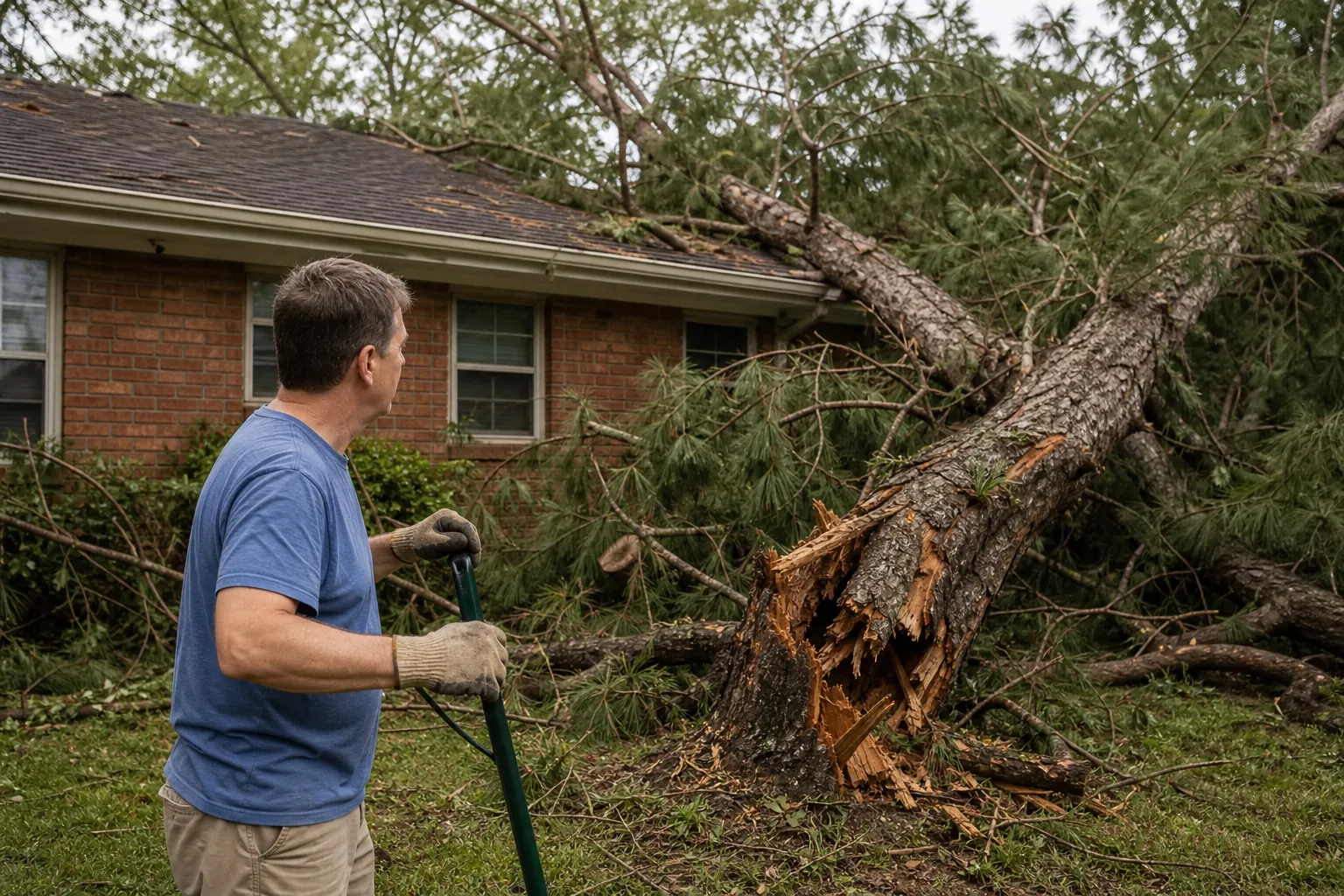
Record what you can see, without guessing about the tree’s condition. Note what is already known and leave any open point open. A brief account helps keep later messages clear. The tree trimming overview can help frame service questions. The tree removal overview explains another topic for talk. These pages give background. They cannot tell you which service a damaged by the storm tree needs.
Useful accounts are simple: a branch is on the ground, a limb appears broken, or a tree looks different from before the storm. Each statement describes something seen. It does not establish why the change happened, whether the tree is stable, or what work should follow.
Use details you already have, such as what someone saw before leaving the area. Do not enter a damaged yard for this task. Storm-damaged tree work can involve falling limbs and unstable trees. Keep the written record limited to those known what you see. Do not use it to decide what work is needed. Source: OSHA tree trimming guidance.
- Separate a note headed “What was visible” from one headed “Questions for talk”.
- Use ordinary accounts rather than technical terms you cannot confirm.
- Label older information clearly so it is not mistaken for a current what you see.
- Do not use photographs as proof that a tree is safe.
If you are unsure, write “not known.” A short, accurate note helps more than a long account with guesses.
How Should You Treat Wires and Nearby Fences?
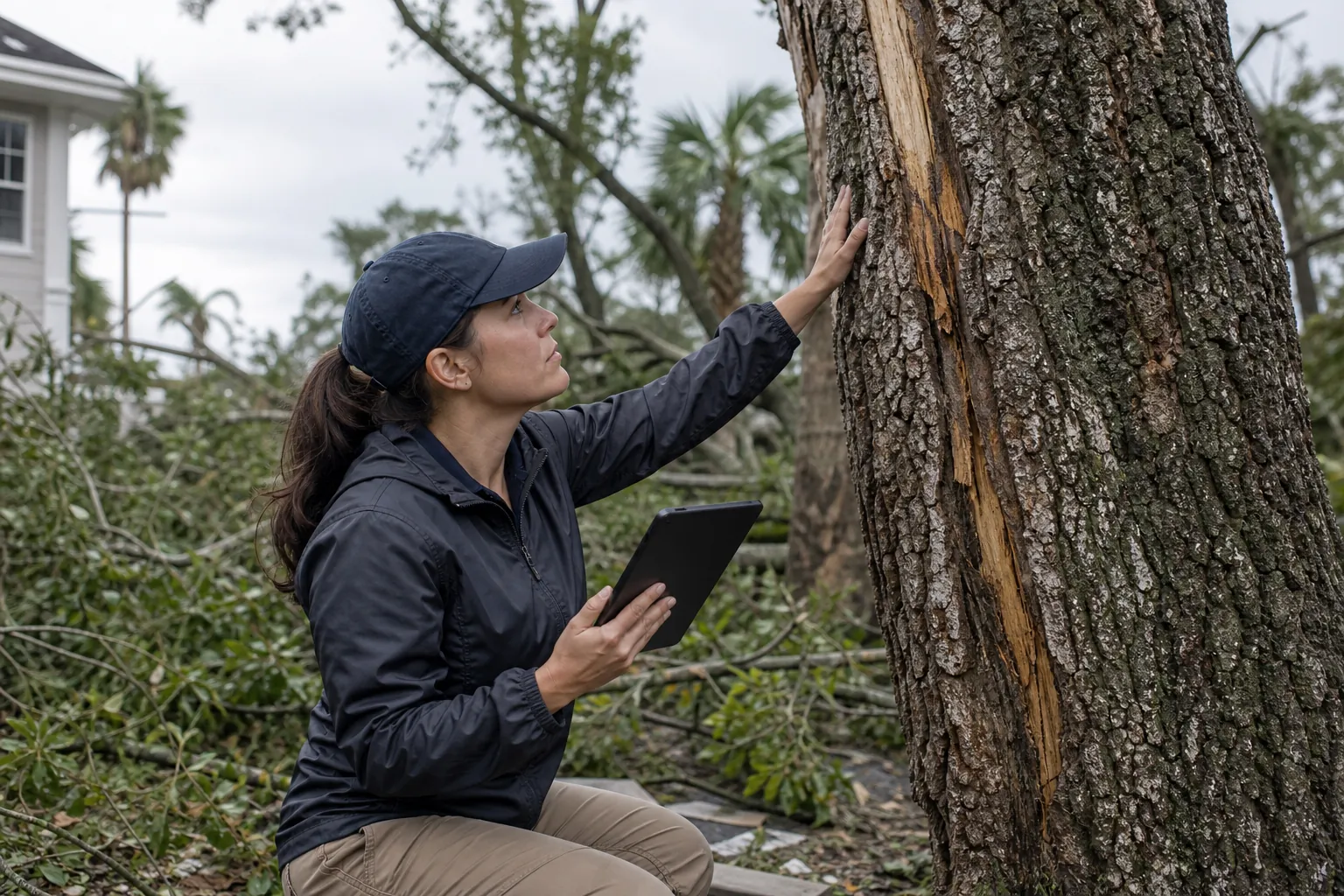
Avoid direct and indirect contact with downed electrical conductors. They can energize trees and fences, according to OSHA. The request page supports a later talk. The company background explains Florida Foliage. These pages do not assess electrical hazards or promise an immediate response.
A tree question differs from an electrical concern. A tree-service talk cannot confirm that trees, fences, or conductors are safe to touch. OSHA warns that contact can happen indirectly through energized objects. Source: OSHA tree trimming guidance.
In your notes, describe what you know. “A wire is visible near the tree” is an observation. “The wire is inactive” is a guess you cannot confirm here.
- Avoid direct or indirect contact with downed conductors and potentially energized trees or fences. Source: OSHA.
- Put any known wire-related what you see near the top of your talk notes.
- Keep open electrical questions keep apart from questions about future tree work.
Why Does Fallen Material Need Careful Planning?
The removal overview and trimming overview offer background for a later talk. They do not explain how to handle storm debris. OSHA lists tensioned tree material and limbs that roll or slide as hazards. Source: OSHA tree trimming guidance.
A fallen limb may look like ordinary cleanup. Its appearance does not answer the hazards OSHA describes. This article gives no steps for moving, separating, or working on tree material. It helps you plan details and leave technical questions open.
Remove “finish the yard” from the household checklist for now. Instead, collect contact details, note messages, and prepare questions. Keep the tasks planning and manageable. You can plan the known details without deciding what work should happen. These tasks do not ask you to choose a tree-work method.
- Keep unneeded people outside work and drop areas. Source: OSHA.
- Note already observed fallen material without assigning it a handling method.
- Ask what information is needed for a later talk rather than proposing a technical solution.
Keep your note focused on the tree concern. You do not need to list every cleanup task for an initial conversation.
Account for Other Debris Concerns
Use the contact form to plan tree-related questions and the Florida Foliage background to understand the company. Other debris concerns stay distinct: OSHA says debris can hide meters and fire hydrants and advises keeping unneeded people away from debris machinery. Source: OSHA debris collection guidance.
A tree-service request does not cover every object in storm debris. OSHA says to stay clear of leaking hazardous chemical containers. It says assessment by hazardous-material response personnel is needed. Source: OSHA debris collection guidance.
Use keep apart headings for tree what you see and other debris concerns. This keeps unrelated questions clear. A tree-work talk does not answer questions about chemicals or machinery.
- Keep unneeded people away from debris machinery. Source: OSHA.
- Stay clear of leaking hazardous chemical containers, which need assessment by hazardous-material response personnel. Source: OSHA.
- Record a known concern about an obscured meter or fire hydrant without turning the note into an inspection task.
A heading called “Other concerns” is enough. You do not need to name every material before asking about tree work.
Organize a Later Tree-Work Discussion
Use the contact page to ask about tree work when you are ready. The removal overview explains one possible topic. Start with your place and a plain account. A message does not confirm service, a visit, or a type of work.
Keep your request short. Say the property is in Pensacola. Describe the known tree concern after the storm. Ask whether Florida Foliage can discuss it and current service options. You can ask what details would help the company understand your request. Leave the type of work open if you are unsure.
- Write the property place clearly, including Pensacola, Florida.
- Summarize the visible tree concern in ordinary language.
- Separate known what you see from details that stay unknown.
- List the questions you want answered about a later tree-work talk.
- Record the contact method, date, and any actual reply without adding assumptions.
For example: “We have a after the hurricane tree concern at a property in Pensacola. A branch is on the ground, and another limb appears damaged. We have not decided what work is needed. Can you clarify whether a talk is possible and whether service is available for this place?”
- Use one shared version of the request so household members do not send conflicting accounts.
- Keep the original message and any reply together for reference.
- Distinguish “message sent” from “availability known” in your notes.
Know Who You Are Contacting
Read company information for background. Use the contact page to send an inquiry. Florida Foliage is based in Daytona Beach. Owner Clinton Funk has decades of hands-on tree care experience. Tim Francis is responsible for this article’s content.
This article does not assess the trees at your property.
Call (386) 481-7913 or use the contact page to ask about a later talk. The company can explain current options for your place.
- Ask directly whether a talk about your Pensacola place is possible.
- Use the service pages as background rather than answer of local availability.
- Record what the company actually communicates, not what you hoped the request would arrange.
If you do not receive an answer, mark the request open. A form or call does not show that anyone assessed the trees.
Keep Household Messages Clear While Questions Remain
The trimming overview can help plan questions for later. Use the contact page to send an inquiry. While you wait, share a short update. Avoid guessing about the tree or the work it may need.
An update can say: “We recorded the tree concern and sent an inquiry. We do not have a service answer or tree assessment.” This shares the status without making a safety judgment. Keep updates factual. Avoid adding guesses about the tree or the possible work.
Share this yard message too: people should stay out of tree work and drop areas. Source: OSHA tree trimming guidance. A giver’s silence, a photo, or an unchanged appearance does not show that a tree is safe.
- Update the shared note when a reply arrives instead of starting a new, conflicting record.
- Keep what you see, contact status, and open questions in keep apart parts of the note.
- Avoid choosing removal or trimming simply to make the household checklist feel complete.
The goal is simple: share one clear message, write down known facts, and start a later talk without presenting guesses as findings. Keep open questions visible, so no one mistakes them for known details.
Frequently Asked Questions
The tree removal overview explains the service. The company background describes Florida Foliage. The answers below do not assess a tree or confirm Pensacola service.
Does this page promise emergency tree service in Pensacola?
No. This page helps homeowners plan a later tree-work talk after a hurricane. Florida Foliage is based in Daytona Beach. This page does not confirm a Pensacola office, local crews, response time, or emergency service. Call to ask about current options for your property.
Can a photograph show that a damaged tree is safe?
A photograph cannot prove a tree is safe. You may include a picture with your account, but it is not a diagnosis. Separate what you see from what you conclude. OSHA lists falling limbs and unstable trees as hazards during storm-damaged tree work. Source: OSHA tree trimming guidance.
What should I say about a wire near a tree?
Describe what you know, such as a visible wire near a tree. Do not decide if it is energized. OSHA warns that downed electrical conductors can energize trees and fences. Avoid direct and indirect contact. Keep this concern keep apart from a tree-service question. Source: OSHA.
Should I request trimming or removal right away?
Leave that question open. Describe what you see and ask what details are useful for a later talk. The trimming and removal pages offer background. They do not diagnose your yard. You do not need to name a service before asking for information.
How can I contact Florida Foliage without assuming availability?
Call (386) 481-7913 or use the contact page. Say the property is in Pensacola. Ask whether you can discuss the tree concern. Keep your account brief and factual. The company can explain current options for your property.
Call (386) 481-7913 to talk through next steps.