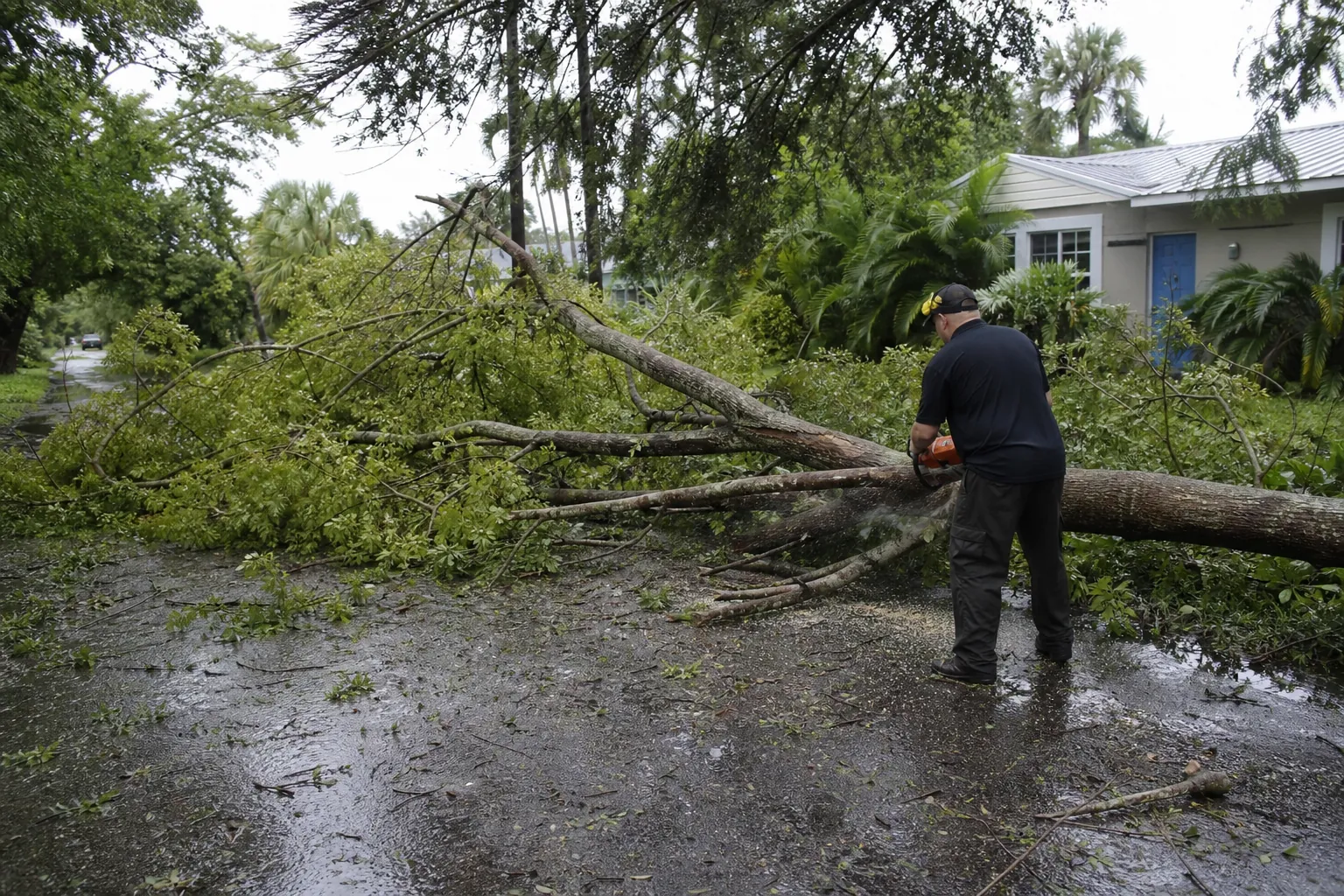
Heavy rain can create tree problems before a trunk ever falls. Waterlogged soil may loosen a tree’s anchorage, gusty onshore wind can load an already weakened canopy, and damaged limbs may remain suspended above a driveway or walkway. For Melbourne property owners, the October 7-10, 2026 storm window calls for practical preparation and careful decisions about debris.
Fallen tree cleanup after heavy rain in Melbourne, FL, starts with identifying hazards, not starting a saw. This guide explains how to check your property from a safe location, separate manageable debris from dangerous tree damage, and plan appropriate tree care with Florida Foliage.
What The October 7 Forecast Means For Melbourne
As of the National Hurricane Center’s Intermediate Advisory 4A, issued at 1 PM CDT on October 7, 2026, Tropical Storm Isaias had formed in the southern Gulf of Mexico. The hurricane, tropical storm, and storm surge watches described in that advisory covered only the northern Gulf Coast, including areas such as Bay St. Louis to Indian Pass. Those watches did not cover Florida’s east coast.
The NWS Melbourne forecast discussion issued the morning of October 7 called for high coverage of showers and lightning storms through late week. It identified a marginal risk of excessive rainfall across east central Florida, with minor flooding possible where heavy rain repeats. That is the relevant local backdrop for Melbourne tree preparation.
The NWS Jacksonville discussion that morning reported saturated ground along the Northeast Florida I-95 corridor, strengthening onshore winds, and additional periods of heavy rain Friday and Saturday. Those observations describe Northeast Florida, not a measurement of soil conditions at your Melbourne property. They reinforce why rain and wind deserve attention without implying identical conditions everywhere.
Use the National Hurricane Center, NWS Melbourne, and NWS Jacksonville for updates. This October 7 snapshot is not a claim of a hurricane, direct hit, landfall, or storm surge on Florida’s east coast.
Why Saturated Soil Changes Tree Stability
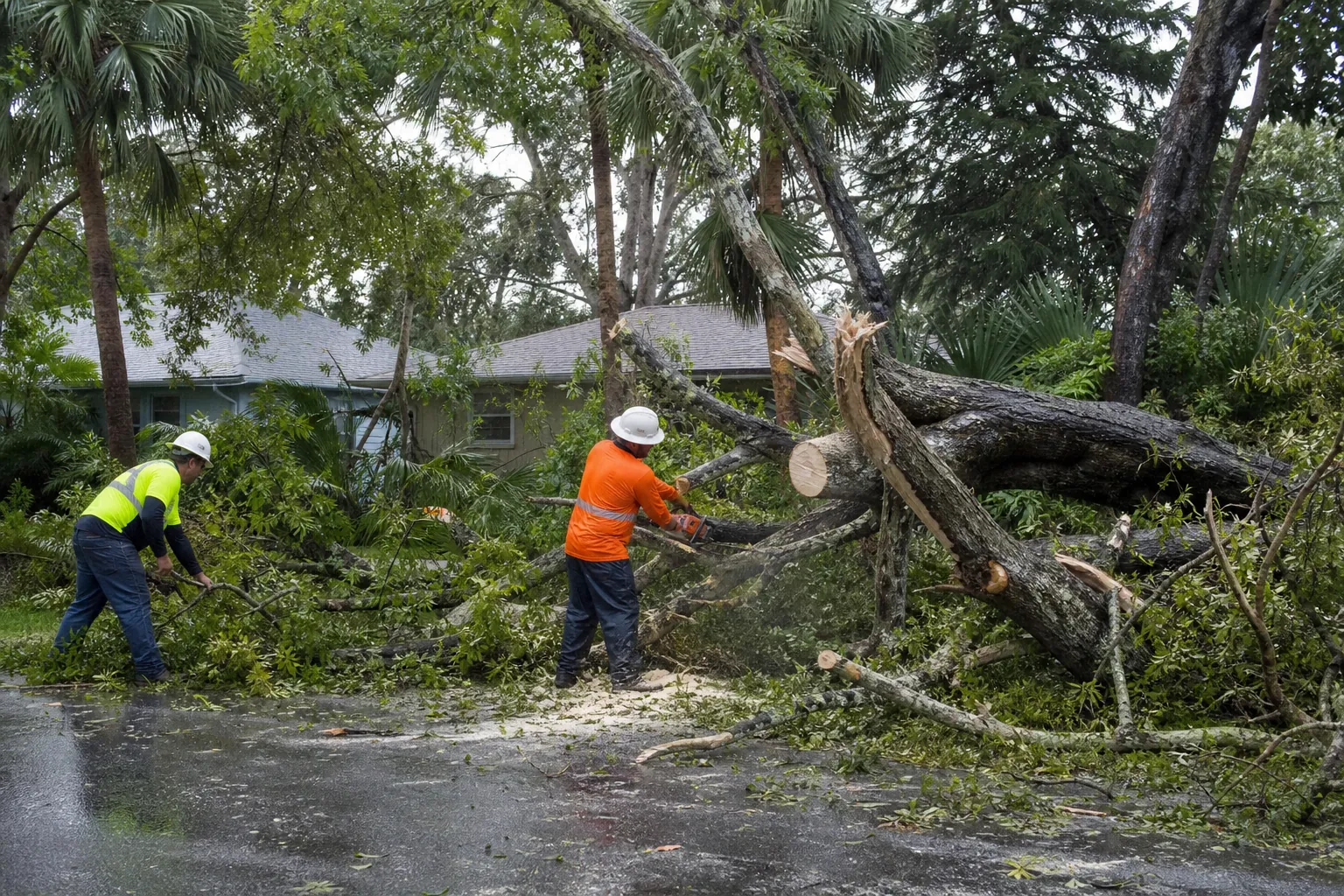
A tree’s roots and the surrounding soil work together to resist movement. As soil becomes saturated, its ability to support that root system can change. A tree with restricted roots, previous excavation damage, decay, or an existing lean may be especially concerning when wind pushes against its canopy.
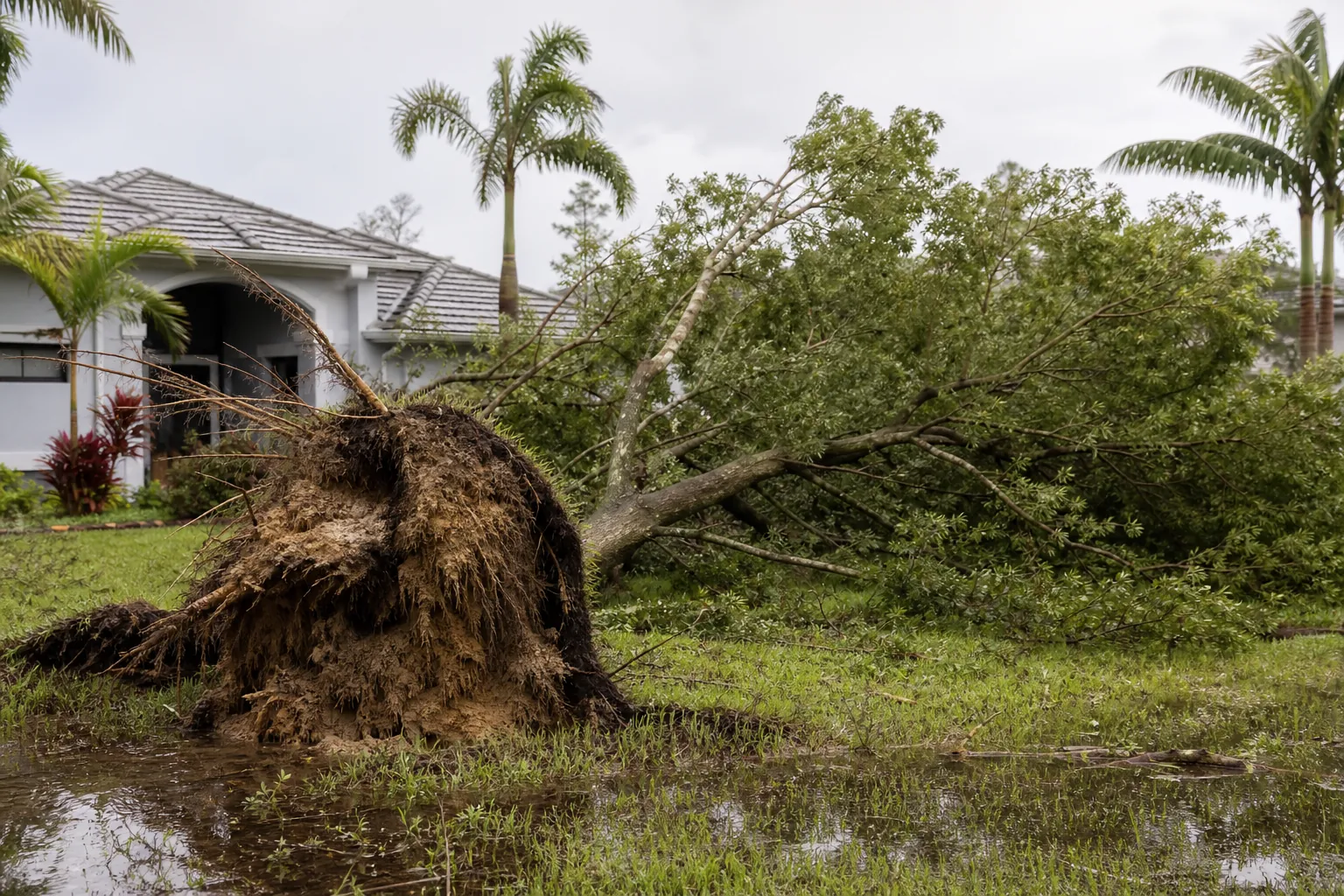
Not every tree in wet soil will fall, and appearance alone cannot establish structural safety. The useful question is whether something has changed. A newly leaning trunk, fresh soil cracks near the base, or a lifting root plate deserves more attention than an unchanged lean that has been present for years.
Watch from a protected location rather than walking beneath a questionable tree. A root plate can move suddenly, and a partly uprooted tree may remain supported only by another tree, a structure, or a few roots. Do not assume that a temporary pause in wind makes close inspection safe.
- Look for fresh mounding or separation of soil around the trunk without approaching the root plate.
- Notice whether the tree’s position has changed relative to a fence, building, or neighboring tree.
- Report recent digging, paving, drainage changes, or root cutting when requesting a tree inspection.
- Keep people and pets out of the possible fall area until the concern has been assessed.
Prepare Before The Heavier Rain Arrives
Preparation during the October 7-10 window should focus on access, loose objects, and known tree defects. If conditions are already unsafe, postpone outdoor work. Do not rush into last-minute pruning while lightning, gusty wind, or unstable branches are present.
From the ground, identify limbs that are broken, hanging, or contacting a roof. Note trees with visible cavities, major trunk splits, or a recent change in lean. These observations help prioritize a tree inspection; they do not substitute for one.
Move vehicles away from visibly compromised trees when you can do so safely. Bring loose yard items inside, and keep gates and essential walking routes accessible. Know which indoor area you will use if a tree makes a room unsafe, especially where large limbs extend over the house.
- Photograph existing tree conditions from a safe distance so you can compare them after the rain.
- Store outdoor tools rather than leaving them where flooding or falling branches could make retrieval hazardous.
- Keep children and pets away from trees with hanging limbs, even before rainfall intensifies.
- Plan how to contact your electric utility without needing to walk outside to inspect a damaged line.
Florida Foliage’s tree inspections and arborist reports can help organize concerns. Tree trimming, canopy thinning, or crown reduction should be based on the tree’s condition, not a blanket instruction to cut every canopy back.
Make The First Post-Rain Check From A Safe Place
Once conditions permit, begin with a view from indoors or another protected position. Look for downed wires, broken poles, branches resting on roofs, displaced trunks, and blocked access. Also look upward: debris on the ground may have come from a branch that remains partly attached.
Stay away from downed power lines. Treat any fallen or damaged line as potentially energized, and do not touch a tree, fence, vehicle, puddle, or other object that may be in contact with it. Call your electric utility for any line contact. Tree work must wait until the utility has addressed the electrical hazard.
If there is an immediate threat to life, use emergency services rather than attempting a rescue through debris. Do not enter a damaged structure simply to retrieve photographs, tools, or insurance paperwork.
Keep your initial assessment simple. Identify where people should not go, whether a safe access route remains, and what you can describe without approaching the damage. A tree leaning onto a house is not just a cleanup problem; it can involve both tree stability and building safety.
Do not stand beneath hanging limbs to take a better photograph. A clear image taken from farther away is less important than avoiding the fall zone.
Separate Light Yard Debris From Hazardous Tree Work
Small, detached twigs on stable ground may be manageable after lightning and other immediate hazards have passed. Large limbs, trunks, suspended branches, and uprooted trees are a different category. Their weight and stored tension are difficult to judge from appearance.
A limb bent against the ground can spring when cut. A trunk supported at two points may pinch a saw or shift unexpectedly. A tree resting against another tree can release when either one moves. Partly uprooted trees can also move at the root plate when branches or trunk sections are removed.
- Leave debris alone if it is touching a line or if you cannot confidently rule out electrical contact.
- Do not climb onto a fallen trunk, since wet bark and unstable supports can cause a fall.
- Do not use a ladder to reach storm-damaged limbs or work beneath suspended branches.
- Do not pull a lodged tree with a vehicle, because the direction of movement may be unpredictable.
- Stop light cleanup if you hear cracking, see movement, or discover hidden damage overhead.
Even ordinary lifting carries more risk on wet ground. Wear appropriate footwear and gloves for minor debris handling, avoid overloading yourself, and leave heavy or awkward material for professional assessment.
Match The Tree Service To The Actual Damage
Different damage calls for different work. Tree trimming may address a damaged branch when the remaining tree can be retained. Tree removal may be appropriate when a tree has failed or presents an unacceptable structural concern. A tree inspection helps clarify the difference.
Emergency and hurricane tree removal is a service category, not a statement that a hurricane is affecting Melbourne. During this rain-focused window, urgent tree work may involve an uprooted tree blocking access, a hanging limb threatening an occupied area, or a tree resting on a structure.
Crane tree removal may be considered where access, tree size, or the position of damaged material makes controlled lifting useful. It is not automatically necessary for every fallen tree. The work area, equipment access, nearby structures, and ground conditions all influence the approach.
Canopy thinning and crown reduction are selective tree-care options, not substitutes for correcting root failure or serious decay. Excessive or poorly placed cuts can create additional problems. Ask how proposed pruning relates to the tree’s condition and remaining structure.
Florida Foliage offers these tree-care services along with stump grinding. Describe the damage first rather than requesting a particular machine or cutting method. That gives the assessment room to identify the appropriate scope.
Plan Access Without Making Wet-Ground Damage Worse
Cleanup involves more than the tree itself. Saturated ground may not support equipment as it would during dry weather. Access routes should account for soft lawns, narrow gates, drainage features, buried utilities, and nearby landscaping.
Tell the tree service where you know irrigation, septic components, or other underground features are located. Do not assume a driveway edge or grassy side yard can safely carry equipment simply because it looks level. Ground conditions need evaluation before work begins.
Keep unaffected vehicles and movable items clear of the proposed work area, but only when doing so is safe. Do not walk under damaged branches to open a gate or relocate patio furniture. The crew may need to establish a safe approach first.
Discuss where removed material can be placed without blocking drainage, sidewalks, or necessary access. A debris pile that looks convenient during cleanup can become an obstacle during another round of rain.
For larger properties, land and lot clearing or brush hogging may be relevant to separate vegetation-management needs. Those services should not be treated as interchangeable with removing a hazardous fallen tree. Establish the immediate tree-safety scope before planning broader property work.
Document Damage And Confirm Local Debris Rules
Photographs and brief notes can make cleanup planning easier. Record the tree’s location, what it is resting on, and whether it has blocked an entrance or damaged a structure. Take photographs only from safe positions, and avoid moving material merely to expose damage for documentation.
If insurance may be involved, contact your insurer for its documentation requirements. Keep records of assessments and completed work. Do not delay action on an immediate hazard simply to obtain a preferred camera angle or a more complete inventory.
Debris collection arrangements can differ between properties and jurisdictions. Confirm current requirements with your city or county before putting branches near a road. Do not assume that routine yard-waste practices apply to unusually large tree debris.
- Ask whether debris must be separated from household waste or other materials.
- Confirm where material may be placed without obstructing travel or drainage.
- Check applicable permit or approval requirements with your city or county before planned tree work.
- Clarify whether the tree-service scope includes removal of the resulting debris from the property.
A clear plan reduces confusion without relying on assumptions about collection schedules, local ordinances, or what a particular cleanup visit includes.
Inspect Remaining Trees And Consider The Stump
After the immediate debris is addressed, inspect the trees that remain. Nearby trees may have lost limbs or experienced root movement without falling. Rain can also make older defects more noticeable, especially where soil has shifted or a canopy now looks uneven.
A tree inspection can help identify concerns that deserve monitoring, pruning, or removal. Arborist reports can document observations and recommendations when a written record is useful. Share photographs showing conditions before and after the rain, if you have them.
Stump grinding is a separate decision from removing a fallen trunk. Before scheduling it, consider access, underground features, and your plans for the area. Ask what material will remain and how the site should be managed afterward. A partly overturned root plate requires assessment before anyone approaches or works around it.
Replacement planting should wait until the site conditions are understood. Consider available root space, drainage, overhead clearance, and distance from structures when planning a new tree. Replanting in exactly the same spot is not always the most practical choice.
A useful follow-up plan addresses specific defects rather than assuming that every tree needs aggressive pruning after a wet period.
Coordinate Cleanup For Shared Melbourne Properties
On commercial sites and HOA or condo properties, tree debris may affect several entrances, parking areas, and pedestrian routes. Start by restricting access to hazardous areas and informing the person responsible for property decisions. Avoid sending maintenance staff beneath hanging limbs to establish the extent of damage.
Commercial tree services and HOA and condo tree services can support a coordinated approach to inspections and tree work. Provide a site map if available, identify essential access routes, and explain where residents, visitors, or deliveries typically travel.
Keep communications factual. State which areas are closed and who is coordinating the work without promising a completion time before assessment. Shared-property cleanup also requires clarity about who can authorize work and which city or county requirements need confirmation.
Arrange A Practical Next Step With Florida Foliage
For the October 7-10, 2026 window, focus on repeated heavy rain, changing ground conditions, and damaged limbs rather than assuming an east-coast hurricane impact. Recheck official forecasts, keep people away from questionable trees, and leave electrical hazards to your utility.
If you need fallen tree cleanup or a tree inspection in Melbourne, call Florida Foliage at (386) 481-7913. Describe what you can observe safely, including line contact, a lifted root plate, suspended limbs, structural contact, and access limitations. That information helps frame the next step without putting you closer to the hazard.
Call (386) 481-7913 to talk through next steps.