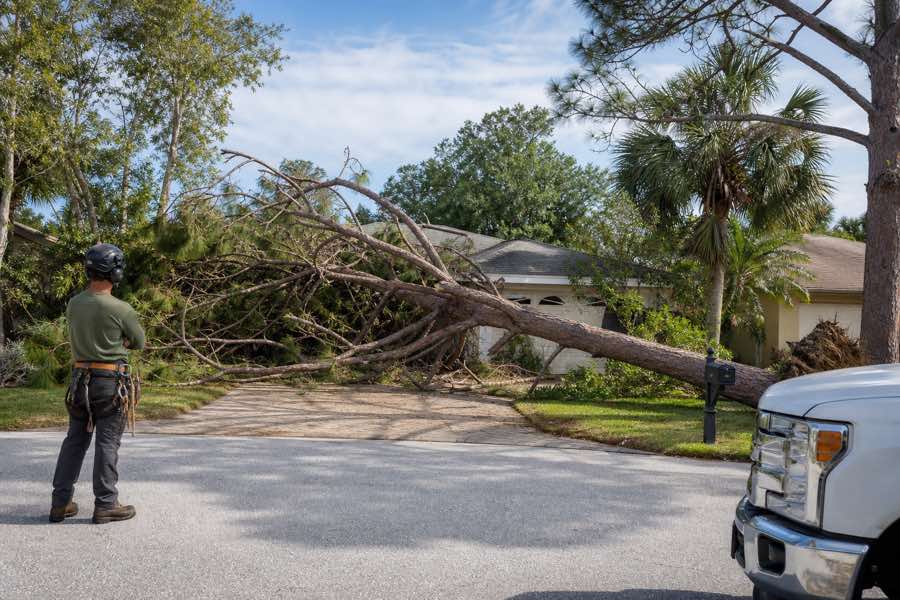
When a driveway and primary vehicle route are blocked, fallen tree removal is less about clearing everything at once and more about restoring a safe path without worsening the hazard. In Ormond Beach, storm debris, sandy soil, and nearby utility lines can change the plan fast. A careful site check should sort access, stored energy, and pavement protection before any cut is made.
Scope Snapshot
- Clear access first, then decide on full removal.
- Keep vehicles separated from the work zone.
- Check for utility visibility before any cutting.
- Protect pavement, pavers, and driveway edges.
- Define the reopening point before work starts.
For property owners comparing quotes, the important question is more than who can do fallen tree removal, but who can define the scope clearly. Florida Foliage serves Volusia and Flagler counties, with Daytona Beach as the primary market, and the team includes ISA Certified Arborists on staff. The company is licensed and insured, and free estimates are available.
Local access issues matter. A trunk across a narrow drive may still leave room for foot travel, or it may pin the only exit route and trap a vehicle behind it. The right storm damage tree removal plan should state what gets opened first, what remains in place for later cleanup, and what conditions would change that plan after the inspection.
What Changes the Cost of Fallen Tree Removal?
Cost changes with site conditions, and fallen tree removal is usually priced by risk, access, and scope rather than by trunk size alone. A tree across a driveway may require careful staging, extra labor, or more debris handling. Utility exposure, tight access, soft ground, and pavement protection also affect the estimate.
On coastal Florida lots, sandy soil can shift under heavy wood, and storm winds often leave limbs twisted under load. A quote should separate emergency access work from full cleanup so you can compare proposals fairly. If you need a broader tree removal service, ask which parts are included and which are extra.
| Scope Item | What It Means for the Job |
|---|---|
| Access clearing | Opening a safe path for vehicles or people |
| Full removal | Taking away the trunk, limbs, and major debris |
| Cleanup | Hauling smaller material and final site tidying |
| Protection | Preventing damage to pavement, edging, and nearby surfaces |
Florida Foliage can review the site and explain what is urgent, what can wait, and what should be included in the written scope. That matters when an owner is comparing bids from different contractors, because one proposal may clear the route while another includes full disposal and surface cleanup.
Who Is Responsible for Removing a Fallen Tree?
Responsibility for fallen tree removal depends on where the tree came from, where it landed, and local rules or insurance terms. In many cases, a property owner is responsible for the tree on their own land, but shared boundaries, public right-of-way, and utility involvement can change that answer. A site-specific review is often needed.
If the tree blocks a private driveway in Ormond Beach tree service territory, the owner should focus first on safe access and then on who controls the property edge. If the trunk reaches a public road, the city, county, utility, or another property owner may need to be notified before work moves ahead.
For boundary disputes or damage questions, the contractor should not guess. The right sequence is inspection, documentation, and then a scope that matches the property line and the hazard. Florida Foliage can provide a free estimate and help describe the work in clear terms, but legal responsibility still depends on the facts and any governing authority.
Does Insurance Cover Storm-Related Tree Removal?
Insurance may cover storm-related fallen tree removal, but the outcome depends on the policy, the cause of loss, and what was damaged. Some claims address tree removal only when the tree caused covered damage or blocked access in a way the policy recognizes. The insurer, not the contractor, decides coverage.
Before the work begins, document the scene from safe positions and keep notes about blocked access, roof or fence damage, and any visible utility concerns. That record can help when you submit a claim. Florida homeowners can also review UF/IFAS guidance on tree failure after storms for background on storm-related tree problems in coastal weather.
Do not assume a claim will pay for every part of the job. A policy may treat access clearing differently from the full removal of wood, limbs, and stump-related cleanup. Ask the insurer what documentation they want before you authorize work beyond the immediate safe access opening.
Who Should You Call When a Tree Blocks a Road?
When a tree blocks a road, call the party with authority over the road and the hazard, then arrange fallen tree removal only after the site is made safe. A private driveway blockage may call for a tree service first, while a blocked public street may also require police, public works, or the utility company.
If power lines, service drops, or transformers are visible, do not try to move the tree yourself. OSHA guidance for tree care and tree removal operations stresses hazard awareness around energized lines and struck-by risks, which is why trained crews should handle the work. For a blocked driveway in Ormond Beach, Florida Foliage can assess the scene and set a safe plan.
A useful first call is often a qualified arborist-led company that can separate immediate access clearing from later cleanup. That way, the owner knows who is responsible for the hazard, who controls the road edge, and what part of the job can safely begin after the inspection. If you need a request a free estimate, ask for a written scope tied to the blocked route.
For property owners in Daytona Beach and nearby communities, Florida Foliage can explain the difference between a partial opening and a full site restoration. That distinction helps when a vehicle is trapped behind the blockage and the driveway cannot wait for a full-scale cleanup. Call (386) 481-7913 to discuss the site.
Can a Fallen Tree Return Upright?
Sometimes a fallen tree can be repositioned, but fallen tree removal should not assume the tree will stand back up in a stable way. Root plate damage, trunk cracking, soil movement, and hidden tension can make upright repositioning unsafe or impractical. An on-site assessment is needed before anyone considers that option.
In storm conditions, a tree that appears to have shifted may still be holding under pressure, especially if the root ball partially lifted or the canopy is pinning the trunk. In coastal Florida, saturated sand and wind-thrown angles can make support unreliable. The goal is to decide whether the tree is a removal candidate, a salvage candidate, or a hazard that should remain untouched until a qualified crew evaluates it.
Owners should not count on a straightening attempt when the tree blocks a vehicle route. For most blocked-driveway cases, the practical question is whether access can be opened safely without trying to restore the tree itself. That is a narrower, safer scope than full upright recovery.
How Do Professionals Handle a Fallen Tree Under Tension?
Professionals handle fallen tree removal under tension by treating the wood as stored energy, more than debris. They look for bend, compression, twist, hanging limbs, root pull, and contact points that could release suddenly. The cut sequence is planned to reduce movement, protect the crew, and preserve the driveway and nearby structures.
That is why site control comes first. A clear work zone, visible utilities, and separated vehicles help the crew work without creating more damage. Crews also stage debris so the path remains open as work progresses, rather than burying the driveway under cut material. In many cases, the first goal is to reopen the route, not to finish every cleanup task at once.
OSHA’s tree-removal guidance highlights the need for hazard recognition and controlled work practices around falling material and energized lines. That is one reason an ISA Certified Arborist on staff can matter when the driveway is blocked and the trunk is under load. Florida Foliage uses that kind of field judgment to decide what can be moved, what should stay put, and what needs more equipment or utility coordination.
A good contractor should also explain how pavement protection will be handled. Heavy wood can scar concrete, crack pavers, or grind sand and debris into the surface. If you are comparing storm damage tree removal options, ask how the crew will protect the drive, where the wood will be staged, and what condition counts as reopening the access route.
For owners who want direct help in Volusia and Flagler counties, Florida Foliage can inspect the blockage, define the safe opening point, and separate access work from final haul-off. Call (386) 481-7913 to discuss the site before anyone starts cutting.
What Should You Ask a Fallen Tree Removal Service?
Ask a fallen tree removal service how it will define the safe access path, the cut sequence, and the reopening point before work begins. A strong estimate should also address vehicle separation, utility visibility, debris staging, and pavement protection. Those details help you compare contractor scopes instead of comparing vague promises.
Ask whether the quote covers only emergency access or the full cleanup scope. Ask who decides if utility crews or public officials need to be contacted. Ask whether the company is licensed and insured, and whether an ISA Certified Arborist will be involved in the assessment. If you are in Ormond Beach, the answer should fit the site, not a generic template.
- Confirm the blocked route and the opening target.
- Keep cars away from the active work zone.
- Ask where wood will be staged.
- Review pavement and utility protection details.
- Separate access clearing from full cleanup.
Florida Foliage can provide a free estimate and explain which part of the job restores safe access first. That is useful when a driveway is blocked, a vehicle is trapped, or the homeowner needs a clear comparison between emergency opening and complete removal. Call (386) 481-7913 for a site review.
When you compare bids, look for plain language. A useful proposal for fallen tree removal should say what gets moved, what stays until later, and what defines the point where the driveway can be used again. If the contractor cannot explain that sequence, the scope may still be too vague.
Why can a fallen tree still be under tension?
A fallen tree can still be under tension because the trunk, limbs, or root ball may be bent, twisted, or pinned against another object. That stored energy can release when a cut changes the load. Safe fallen tree removal starts with recognizing those forces before anyone decides on the cut sequence.
Should vehicles remain away from the driveway?
Yes, vehicles should stay away from the driveway until the work zone is defined and the reopening point is clear. Moving cars too close can block the crew, add impact risk, or trap the vehicle behind unstable wood. A proper fallen tree removal plan keeps the access path open and separated.
Can the quote separate access clearing from full cleanup?
Yes, the quote should separate access clearing from full cleanup whenever possible. That helps the owner compare only the work needed to reopen the route against the work needed to haul away all debris. In fallen tree removal, those are often different scopes with different labor, staging, and disposal needs.
How is pavement protection documented?
Pavement protection is documented by describing the surfaces at risk, the protection method, and the condition expected after work. Photos or written notes can help show where crews planned to place mats, boards, or staging zones. In fallen tree removal, that record makes the scope clearer before the job starts.
How can an Ormond Beach owner request an estimate?
An Ormond Beach owner can request an estimate by calling Florida Foliage at (386) 481-7913 or by using the online request form for a free estimate. Share the blocked access point, the visible hazards, and any utility concerns so the fallen tree removal scope can be reviewed before work is scheduled.
For blocked-driveway fallen tree removal in Ormond Beach, the smartest next move is a site review that defines access, risk, and cleanup scope. Florida Foliage serves Volusia and Flagler counties, with Daytona Beach as the primary market, and the team is ready to help you compare the work that clears the route versus the work that finishes the site.
To request request a free estimate for fallen tree removal, call (386) 481-7913 and ask for a scope that matches your driveway, vehicle access, and cleanup needs.