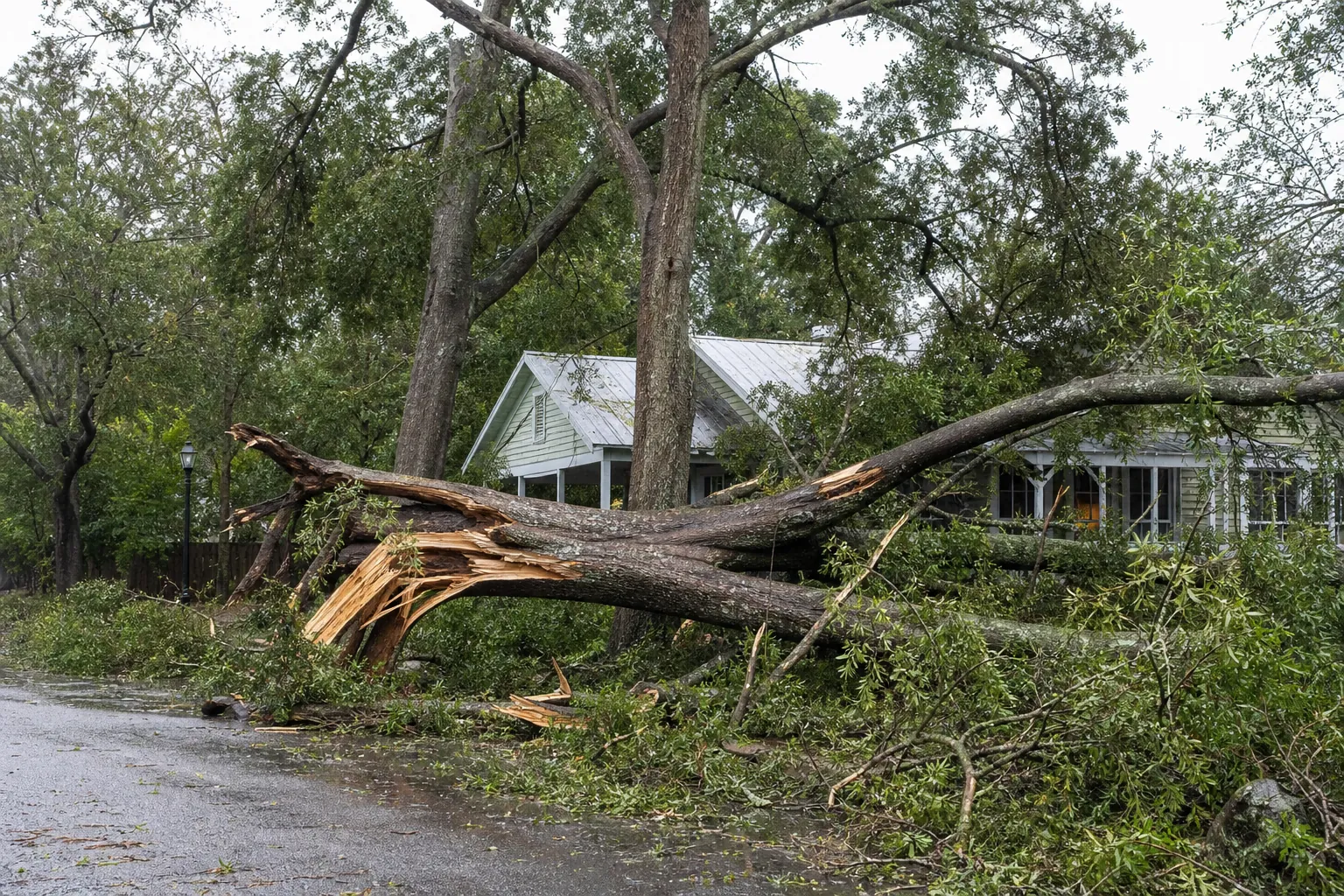
Hurricane canopy thinning removes select branches from a tree’s crown; It may form part of a wider storm care plan; The right approach depends on the tree’s health, shape, and site. Pensacola homeowners should start with a tree inspection, rather than assume every dense crown needs thinning.
A tree with fewer leaves can still have weak roots. A neat crown can still hide a split limb; Good hurricane tree care looks at the whole tree; It also considers nearby roofs, paths, parked cars, and shared spaces.
The sections below explain what to check and what to ask; It covers canopy thinning, crown reduction, and cleanup scope; No pruning method makes a tree storm-proof. The goal is thoughtful care based on the tree’s needs.
How does hurricane canopy thinning fit storm readiness?
Use the UF/IFAS urban forest hurricane recovery guidance for storm-damaged trees; OSHA provides hurricane debris collection safety guidance for cleanup hazards.
Hurricane canopy thinning is selective pruning, rather than wholesale branch removal; It keeps the tree’s basic shape while removing chosen branches. A tree inspection helps decide if that work makes sense; Some trees need dead branch removal, crown reduction, or closer review instead of general thinning.
The crown includes the tree’s branches and leaves; Thinning changes how those branches fill the space; It should have a clear purpose, such as resolving crowded growth. Removing leaves simply to make a crown look sparse is a poor starting point.
A useful plan names the branches that need attention; It explains why each cut serves the tree or site; That keeps the work focused. It also helps you compare the finished crown with the agreed scope.
Storm readiness involves more than crown size; Roots, trunk defects, and weak branch joints deserve attention too; So do changes around the tree’s base. Recent digging or shifted soil may change the inspection needs.
Each tree needs its own plan; Two trees of the same type can have different defects; One may have sound structure and healthy growth. The other may have old wounds or large dead limbs.
A homeowner’s role is to describe concerns and site changes; You don’t need to choose each pruning cut yourself; Ask for a clear reason behind the proposed work. Ask what problems would remain after thinning.
- Ask which branches need removal and what each cut aims to address.
- Ask how the plan will preserve the tree’s basic crown shape.
- Ask if trunk or root concerns require a separate inspection.
- Ask which remaining defects may need later care or review.
Keep the plan tied to your property’s actual conditions. A broad request to remove lots of growth lacks direction. A specific request to assess a limb over a roof is clearer; The inspection can then guide the next step.
What should you check before choosing canopy work?
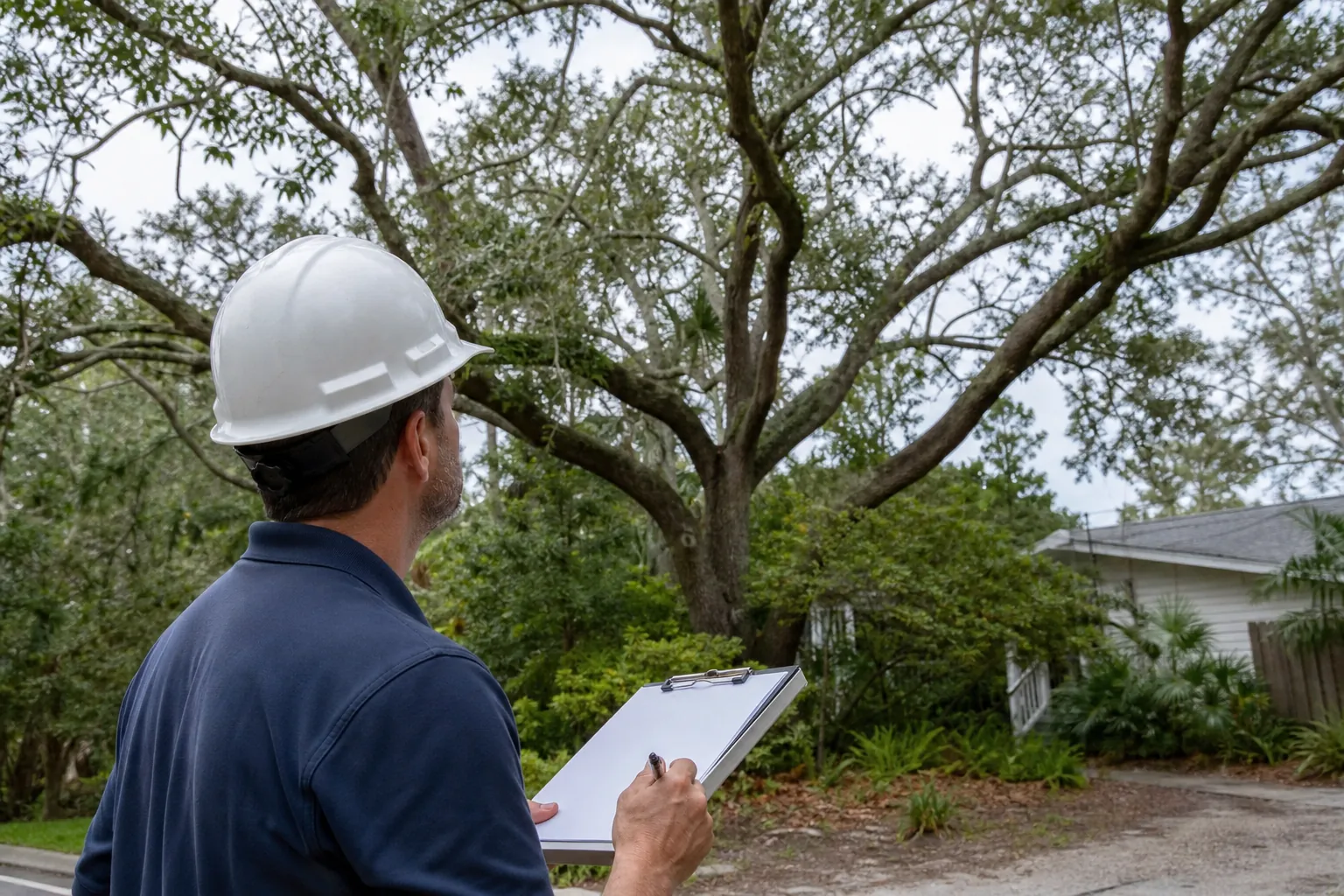
Start with a ground-level look at the tree and nearby space; Note dead limbs, cracks, old wounds, and changes at the base; Then share those details during a tree inspection. Your notes help frame the discussion, but they don’t replace a close assessment of the tree.
Look at the whole site before focusing on leaves; Which trees stand near the house? Which branches extend over a driveway or porch? Where do people gather or walk each day?
Note changes since the last storm season. A branch may now hang lower than before. A wound may look larger or have new growth around it. A tree may have lost part of its crown.
Describe what you see in plain terms; Say where the defect sits and when you first noticed it; Photos from the same spot can help show changes. Avoid treating a photo as proof of the tree’s condition.
The ground around a tree matters as well; Tell the inspector about recent digging, paving, or soil changes; Mention new planting beds near the trunk. These details may affect the scope of the assessment.
In Pensacola, a useful property map can stay simple; Mark the house, trees, paths, and shared boundaries; Add the limbs that concern you most. This helps keep the visit focused on storm readiness.
Don’t assume a tall tree needs removal because of its height; Don’t assume a short tree has no defects; Size is one part of the picture. The inspection should explain the tree’s structure and condition.
Ask what can be assessed from the ground; Ask what might need a closer look; If the findings remain unclear, record that limit. A useful report states what was seen and what remains unknown.
Florida Foliage lists arborist reports and tree inspections among its services; Ask about the scope of an inspection when you call; Don’t assume a named reviewer or a specific report format. Confirm those details before planning the work.
How do thinning, reduction, and removal differ?
Canopy thinning removes select branches within the crown; Crown reduction shortens chosen parts of the crown through suitable cuts; Tree removal takes out the tree itself. These services serve different needs. A storm care plan should explain which approach fits each tree and why.
Thinning should not become a request to strip the crown. A tree still needs a useful leaf canopy; Ask how much growth will remain in each area; Ask how the proposed cuts support the stated goal.
Crown reduction may enter the discussion when certain limbs extend too far; It changes reach, rather than simply opening gaps in foliage; The plan should identify the limbs involved. It should also explain the intended shape after work.
Tree trimming is a broad service term; It may describe several types of pruning work; Ask for details rather than rely on that label. A clear scope names the task and the tree.
Removal needs a separate discussion from routine canopy care; The inspection may find defects that pruning cannot resolve; Ask for a plain explanation of those findings. Also ask why keeping the tree is or isn’t advised.
Site access can affect how removal work is planned; Roofs, fences, and tight spaces deserve early review; Crane tree removal is a distinct service option. Its use should follow a site assessment, not a homeowner’s guess.
The table below gives you a simple way to frame questions; It doesn’t select a service for your tree; Use it to make the proposed scope easier to understand. Each recommendation still needs tree-specific findings.
| Service | Main focus | Question to ask |
|---|---|---|
| Canopy thinning | Select branches within the crown. | Which crowded branches need attention? |
| Crown reduction | The reach of chosen crown sections. | Which limbs need shortening, and why? |
| Tree trimming | The agreed pruning tasks. | What exact cuts does this scope include? |
| Tree removal | A tree selected for removal. | What findings support this recommendation? |
| Tree inspection | The tree’s condition and visible defects. | What could not be assessed during this visit? |
When should homeowners plan hurricane tree care?
Plan tree checks before storm warnings create urgent choices; Early planning gives you time to understand the findings; It also lets you define pruning and cleanup tasks clearly. Keep tree work separate from your household storm response. Follow official weather guidance as conditions change.
A storm care plan can begin with a short tree list; Put known concerns at the top; Include trees near frequently used parts of the property. Add past damage and any work already done.
Keep notes from each inspection or service visit; Record the date, tree, and agreed tasks; Save photos that show the whole crown and trunk. These notes can help explain later changes.
Review the plan when the site changes. A new patio may shift how people use the yard. A removed tree may expose a different part of the site; New storm damage may call for another inspection.
Don’t use an approaching hurricane as a reason for rushed pruning; Storm response and tree care are separate tasks; Ready.gov advises people to prepare early and follow official instructions. See Ready.gov’s hurricane preparation guidance for household planning and alerts.
Use a simple list to keep the tree care discussion clear; Each item should describe a real concern or task; Avoid vague goals such as making every tree smaller. Clear goals lead to clearer questions.
- List each tree that has a known defect or recent change.
- Record branches that extend over roofs, paths, or parked vehicles.
- Describe past storm damage and any pruning done since then.
- Ask for a separate scope for pruning and possible removal.
- Keep the household storm plan linked to official weather updates.
For shared sites, include the person who manages grounds work. HOA and condo tree services may involve several common areas; Commercial tree services may cover busy paths or parking areas; The tree list should show how those spaces are used.
Do not read an inquiry as confirmation of local availability; Florida Foliage’s headquarters remains in Daytona Beach; Ask about your Pensacola property and proposed work directly. Confirm location and scheduling details before making plans.
What should happen after hurricane tree damage?
After a hurricane, follow official directions before checking outdoor damage; Fallen branches can sit near damaged utility lines or unstable trees; Keep your first observations separate from hands-on cleanup. The National Weather Service advises avoiding downed wires and following local updates during storm recovery.
Read the NWS guidance for after a hurricane before entering damaged outdoor areas. Its advice includes staying away from downed power lines. Don’t approach a wire to decide if it is live. Leave utility hazards to the appropriate response team.
Your first tree care notes can be brief. Record which trees have lost limbs or changed shape. Note where debris blocks a path or driveway. Use photos only when you can take them from a safe place.
A broken crown needs a fresh assessment. Pre-storm pruning does not answer every post-storm question. New damage may change the tree’s care needs. Ask which branches need attention and which findings need closer review.
Separate loose debris from damaged parts still in the tree. They involve different tasks and work methods. A pile of branches may look simple from the ground. Nearby hanging limbs can change the cleanup conditions.
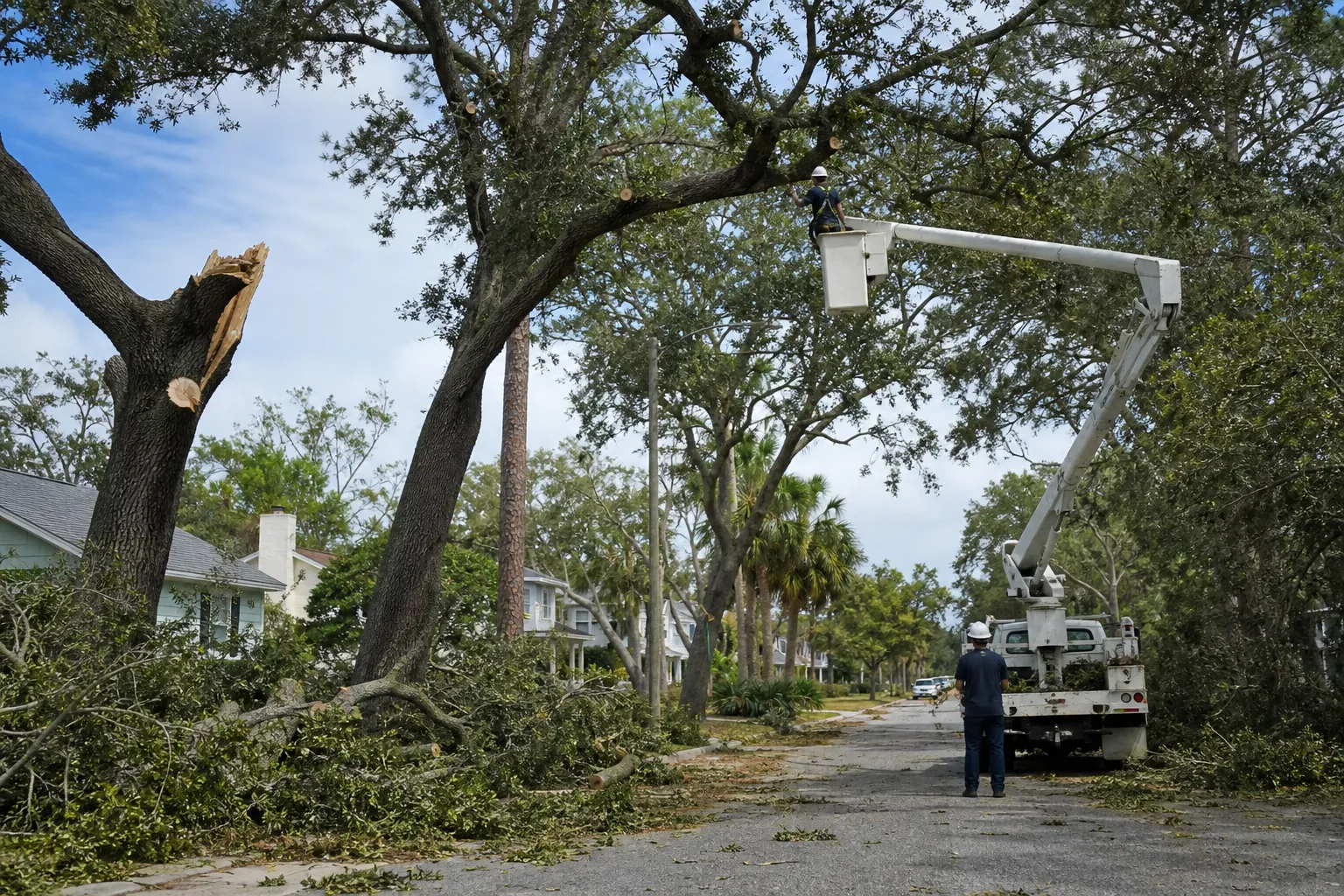
OSHA identifies falling limbs, power lines, and chainsaws as tree care hazards. See OSHA’s tree care safety guidance for these risks. Don’t climb a damaged tree or cut overhead broken limbs yourself. Have the site assessed before that work begins.
Emergency and hurricane tree removal may form part of the response. The name of the service does not confirm immediate availability. Describe the tree, access, and visible damage when asking about help. State clearly if utility lines are involved.
Cleanup should have a defined endpoint. Ask which debris areas the work includes. Ask if damaged standing trees need separate inspection. A clear scope helps prevent confusion between debris pickup and tree care.
How can you define a useful storm cleanup scope?
A useful cleanup scope separates each task by area and purpose. It identifies damaged trees, loose branches, brush, and remaining stumps. It also states which trees need inspection before work is chosen. This makes the plan easier to discuss and keeps unrelated tasks from blending together.
Start with a simple sketch or photo set. Name each work area in plain language. Use labels such as front path or back fence. This is clearer than pointing to several piles at once.
Ask how tree removal differs from debris cleanup in the proposed scope. A standing damaged tree needs its own assessment. Loose branches on open ground may involve a different task. Keep both items clear in your notes.
Stump grinding may be discussed after a tree has been removed. It is separate from care for the remaining trees. Ask which stump the scope includes. Keep nearby roots and site features in the discussion.
Land and lot clearing or brush hogging should have defined boundaries. Do not treat them as substitutes for inspecting storm-damaged trees. Mark which trees will remain before discussing clearing work. That keeps the plan tied to the intended landscape.
- Mark each cleanup area with a clear name or photo reference.
- List standing damaged trees separately from loose branches on the ground.
- Identify which remaining trees need inspection before further work is planned.
- State which stumps or brush areas belong in the requested scope.
- Confirm the access route and nearby features before work is arranged.
For shared grounds, use one map and one task list. This helps keep messages consistent across the property. Record open questions instead of guessing at the answer. Update the plan when the inspection provides new information.
Frequently asked questions about hurricane canopy care
Does every dense tree need hurricane canopy thinning?
No. A dense crown alone does not settle the question. The tree’s structure, health, and nearby space all matter. An inspection can help identify a clear pruning goal. Some trees may need targeted dead branch removal or no thinning at all.
Can canopy thinning make a tree storm-proof?
No. Thinning does not remove every source of tree failure. Root problems, trunk defects, and storm conditions still matter. Ask what the proposed work can address. Keep household hurricane preparation separate from decisions about pruning.
Is crown reduction the same as topping?
No. Crown reduction uses selected cuts to shorten chosen crown sections. Topping cuts back major branches without that same structural goal. Ask how the proposed work will retain the tree’s shape. The written scope should describe more than a height target.
Should I remove broken limbs after a hurricane?
Don’t handle overhead storm damage yourself. OSHA lists falling limbs and chainsaw work among tree care hazards. Review OSHA’s tree care safety guidance and arrange a site assessment. Stay away from downed wires, as advised by the National Weather Service.
What should I share when requesting an estimate?
Share the property location, tree concerns, and recent storm damage. Add photos if you can take them safely. Explain access limits and which tasks you want assessed. Ask about location and scheduling details without assuming a Pensacola crew is available.
For a neutral estimate inquiry, call Florida Foliage at (386) 481-7913. Describe your Pensacola property and hurricane tree care needs. Florida Foliage is headquartered in Daytona Beach; confirm location and availability details directly.
AI-assisted draft with editorial oversight by Tim Francis; Clinton Funk is the named approving reviewer.
Call (386) 481-7913 to talk through next steps.