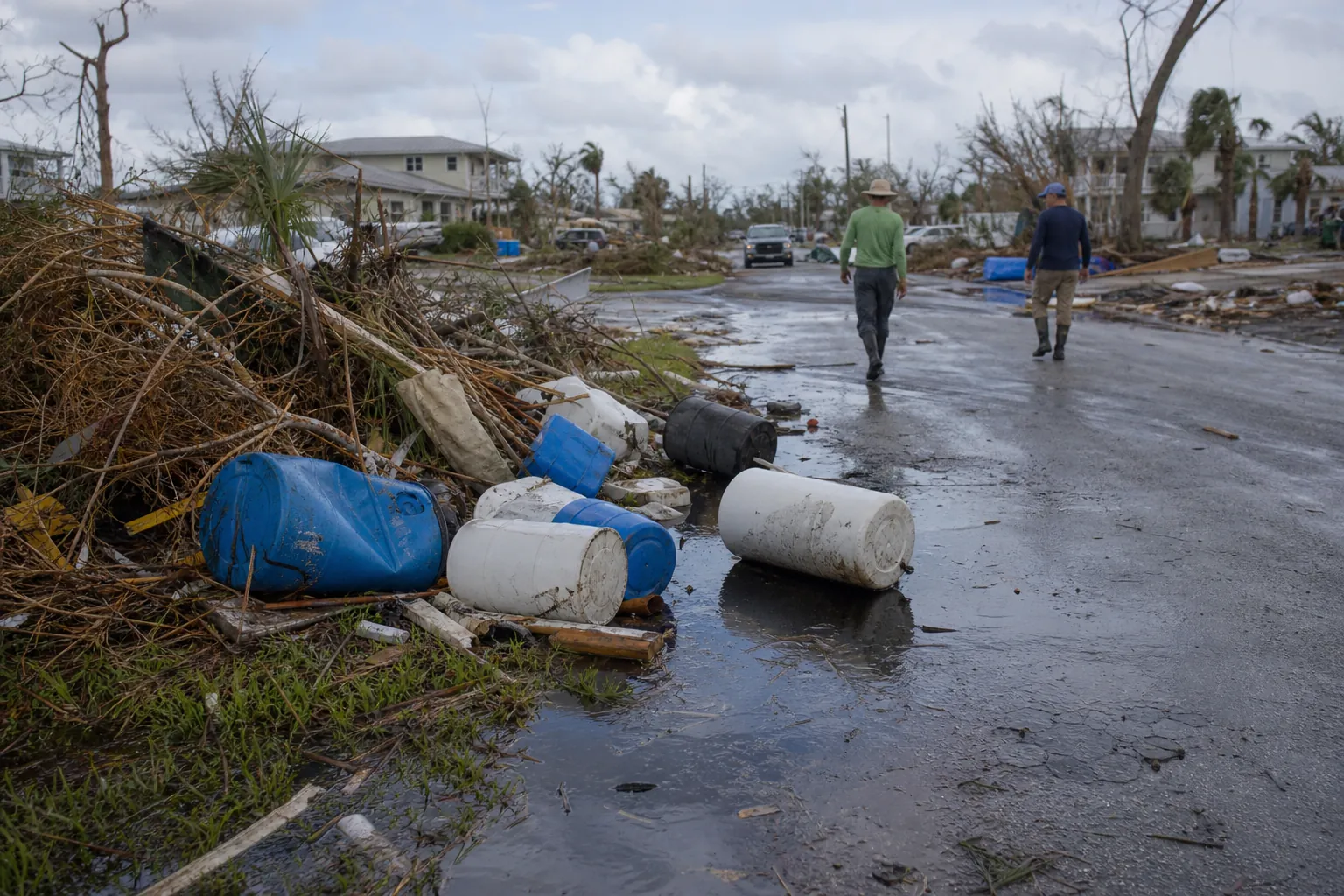
If hurricane debris includes a leaking chemical container, stay clear and seek specialist evaluation. This is the direction in OSHA’s debris collection guidance. If you do not know what a container holds, describe what you saw. Do not treat its appearance as identification. This guide helps Pensacola homeowners organize what they saw, keep container concerns apart from tree work, and prepare a neutral inquiry. Start with the broader Pensacola hurricane tree cleanup guide and Florida Foliage’s tree removal overview for context. Neither confirms that service is available in your area.
By Tim Francis, responsible for content and editorial presentation.
What Should You Do About a Leaking Container?
Stay clear of a leaking chemical container and seek specialist evaluation. This is the guidance from OSHA’s hurricane debris guidance. Use Florida Foliage’s contact information to ask what an inquiry can cover. Read its company background to learn who you are contacting. Neither page replaces specialist evaluation.
Describe the container concern on its own. A message that says only “a tree is down” leaves out what makes this situation different. You do not need to identify a substance. Say that the debris includes a container and that its contents or condition may be unknown.
- Write that a container is present if you saw one.
- Describe visible liquid as visible liquid. Do not name a substance you cannot identify.
- Keep your request for specialist evaluation apart from questions about tree services.
You do not need a polished account before asking a question. A short, accurate description that says what is unknown is more useful than a confident guess.
What If You Cannot Identify the Container?
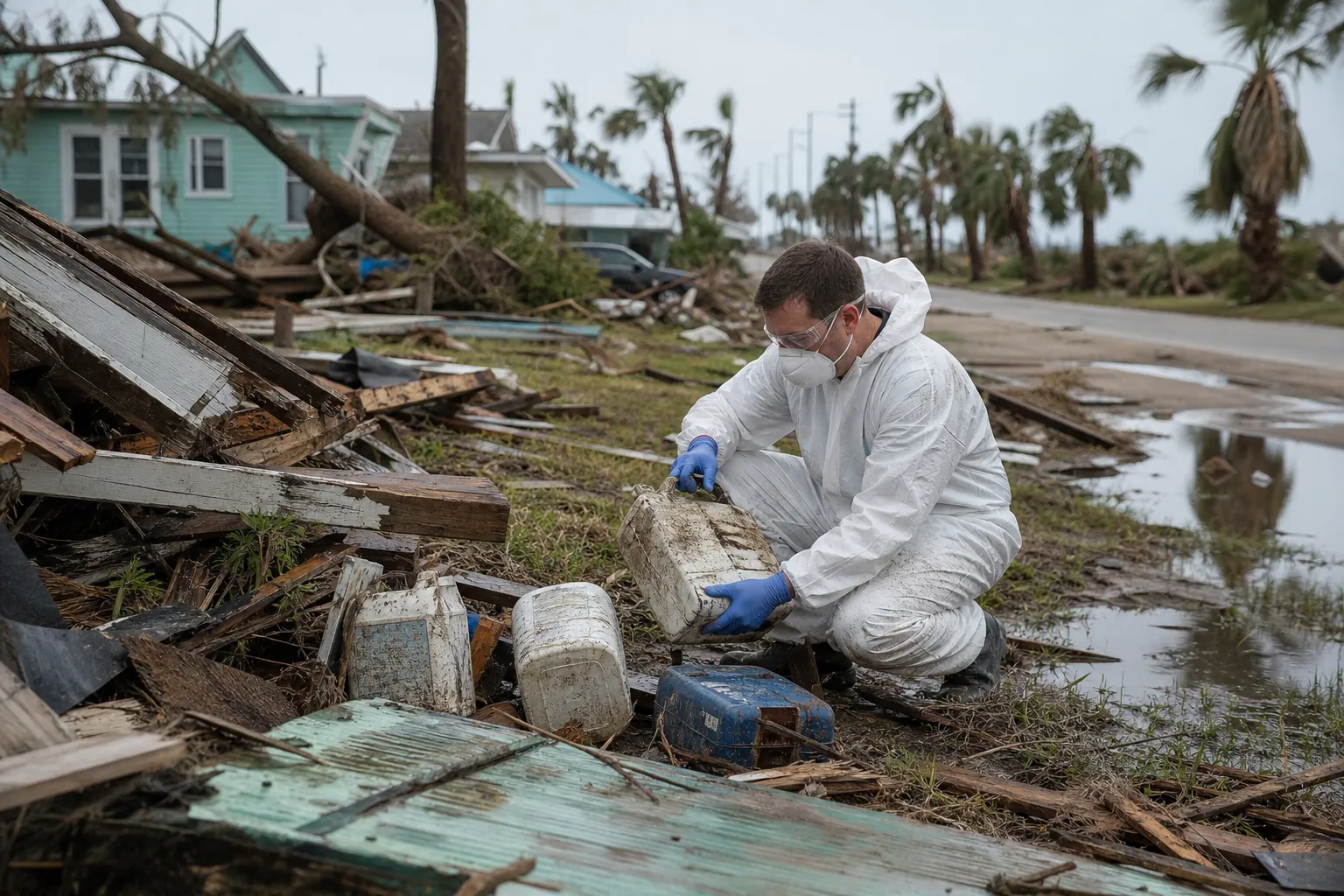
In your notes, mark an unknown container as unknown. Its appearance does not identify it. Florida Foliage’s tree removal information can clarify the tree-related part of your inquiry. Its contact page gives you a way to ask questions. For leaking chemical containers, OSHA says to stay clear and seek specialist evaluation.
Homeowners may want to name everything on a storm cleanup list. You can leave this entry unfinished. “Unknown container among branches” is a complete note for an initial conversation. You do not need to guess where the container came from or what it holds.
If you already know what a readable label says, keep those words apart from your own view of them. If you do not know, write “label not known.” This article does not ask you to find missing details or inspect the contents.
- Write “unknown contents” if no one has identified them.
- Record any label wording you already know. Do not add a diagnosis.
- Leave the container’s origin unanswered if you have no reliable information.
Use the same approach if a container looks familiar. You may recognize its shape, but that does not prove what it holds or what condition it is in. Record recognition and identification separately. Do not join them into one conclusion.
Which Other Storm Conditions Belong in Your Notes?
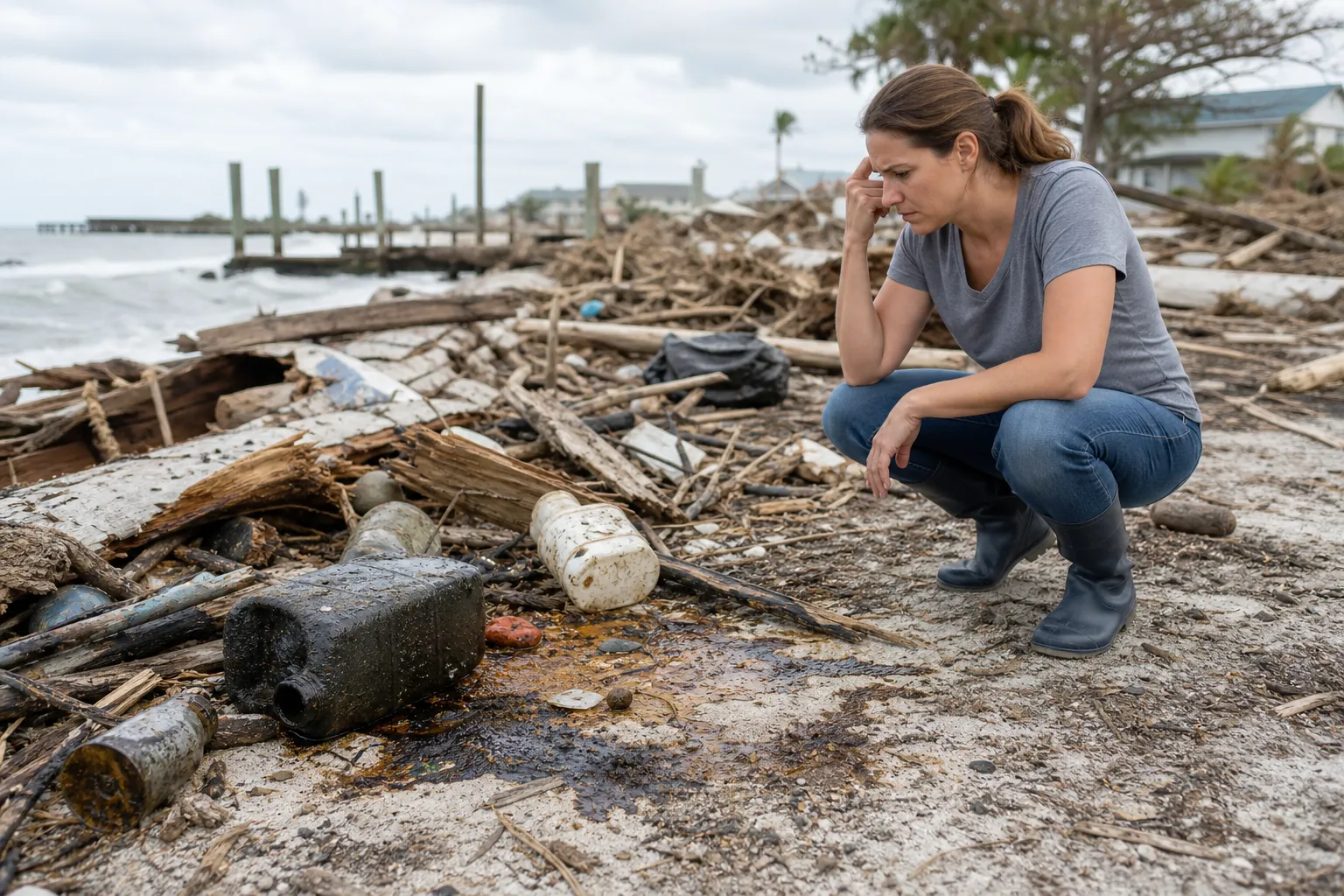
Record water, electrical equipment, and debris machinery apart from the container. The tree trimming overview explains one tree-service category. The tree removal overview explains another. These pages give context. They do not assess water, electrical, or container conditions in your yard.
Ready.gov’s hurricane guidance says floodwater can contain debris, chemicals, waste, and wildlife. It also says underground or downed power lines can charge water with electricity. So, do not reduce a mixed storm scene to a simple list of fallen branches.
Ready.gov says not to touch electrical equipment if it is wet or if you are standing in water. OSHA’s debris collection guidance says to keep people who do not need to be there away from debris machinery. Keep these instructions apart from ordinary household recordkeeping.
- Give any water you saw its own line. Do not call the whole scene “tree debris.”
- Include electrical equipment in your notes if you saw it. Do not say that anyone has assessed its condition.
- Record debris machinery as a separate feature if it is part of the scene you are describing.
A short list can include several conditions that are still unknown. You do not need to decide which one explains the others.
How Do You Separate Observations From Diagnosis?
Say what you saw, then say what is still unknown. A picture or description does not show that a tree is safe. Use the Florida Foliage company page for business context and the tree trimming information for service context. Do not treat either as a diagnosis of your property.
For example, “branches are beside a container” describes what you see. “The branches can be handled normally” adds an assessment your observation does not support. In the same way, “a tree is leaning” describes how it looks. “The tree is stable” says more than its appearance can show.
Existing photos may help explain what you mean, but do not use them as proof that a tree is safe. Describe only what an image shows. If it does not show the container’s contents or identify it, keep that unknown in your written note.
- Use plain phrases such as “observed,” “unknown,” and “not evaluated” when they fit what you know.
- Remove claims about tree safety from a list of visible conditions.
- Mark information from someone else apart from your own observations.
This also makes it easier to update your notes. You can add new information without making an earlier guess look like a fact. A clear record keeps unknowns visible until you have a reason to change it.
Build One Useful Household Information Sheet
Use one note for the questions you want to ask. The Florida Foliage contact page gives you a way to reach the company. The company overview gives business context. Organizing a note is an editorial suggestion. It is not a technical assessment or a direction to inspect storm debris.
Start with information you already have. The goal is to avoid telling the story more than once, not to fill every blank. A household member should be able to see which details are observations, which are unknown, and which question still needs an answer.
- Write a short heading with the property location in Pensacola and the hurricane debris concern.
- Summarize the tree-related material in plain words, such as branches or a fallen tree, if those match what you saw.
- Add a separate container entry. Record what you know and mark any unidentified contents as unknown.
- List other conditions you saw, such as water or electrical equipment, without diagnosing them.
- End with your question. Ask whether the person or company can address it.
Keep the first version brief. Save later messages below it instead of changing the original account again and again. Then your household has one place to check before preparing another message.
- Choose one clear file name so household members can find the note.
- Keep unanswered questions together instead of spreading them across several messages.
- Record new information as an update. Name its source in plain words.
Keep Container Evaluation Separate From Tree Planning
Read the tree removal service description and the tree trimming service description to learn about those service categories. Neither replaces the specialist evaluation that OSHA says is needed for leaking chemical containers. A mixed debris scene can raise more than one question.
Your planning note can have two headings: “container questions” and “tree questions.” Under the first, record what you do not know about the container. Under the second, record the tree details you want to discuss. This keeps an ordinary service inquiry from seeming like an evaluation of the whole scene.
OSHA also notes that debris can hide meters and fire hydrants. Keep that fact in mind when thinking about storm debris. Do not use it to claim you know what is under a certain pile.
- Do not describe a tree-service page as proof that container concerns have been resolved.
- Keep questions about an unknown container in your summary of the tree-related issue.
- Use “not evaluated” instead of filling gaps with a guess.
Ready.gov recommends protective clothing and appropriate masks when cleaning debris. That guidance does not replace OSHA’s instruction to stay clear of leaking chemical containers and seek specialist evaluation.
Make a Neutral Contact Inquiry
Florida Foliage’s contact page is a place to begin a business inquiry. Its about page gives company information. Florida Foliage is headquartered in Daytona Beach. This article does not confirm Pensacola service availability, a local office, or a response schedule.
You can call (386) 481-7913 to ask whether your inquiry is within the company’s scope and whether service is available at your location. Mention the container concern at the start. Contacting the company is just a question. It does not confirm that an evaluation or tree work has been arranged.
You could write: “I am contacting you about hurricane-related tree debris at a property in Pensacola. A container is also present, and its contents are unknown. Can you clarify whether this inquiry is within your scope and whether you serve this location?” Change the wording only to match what you actually know.
- Give Pensacola as the property location. Do not assume service is available there.
- Ask whether the inquiry is within the company’s scope before discussing a tree-service category.
- Keep any unanswered container question in your saved contact notes.
Frequently Asked Questions
Use the tree removal overview for tree-service context and the contact page to make a neutral inquiry. The answers below separate source-based storm safety guidance from simple ways to organize information. They do not identify a container’s contents or diagnose a tree.
What is the first step when a chemical container is leaking?
Stay clear and seek specialist evaluation. That is the direction in OSHA’s hurricane debris collection guidance. In your written account, describe the leaking container apart from the tree debris. Mark unknown contents as unknown. Do not say that an ordinary tree-service inquiry proves the container has been evaluated.
Can I identify an unknown container from how it looks?
For this planning note, record how the container looks, but do not treat that as identification. You can write “unknown container” and include label wording you already know. If a chemical container is leaking, OSHA says to stay clear and seek specialist evaluation. You can leave missing information out of your first inquiry.
What should I know about water around storm debris?
Ready.gov says floodwater can contain debris, chemicals, waste, and wildlife. It also says underground or downed power lines can charge water with electricity. The same source says not to touch electrical equipment if it is wet or if you are standing in water. Record water you saw apart from your descriptions of the container and tree.
Does a photograph show that a damaged tree is safe?
Do not use a photograph as proof that a tree is safe. For household records, describe what an existing image shows without adding a safety conclusion. A visible branch, container, or leaning trunk is an observation. Keep questions about condition apart from that description. Keep any unknowns in the note with the image.
How can I ask Florida Foliage about this situation?
Call (386) 481-7913 or use the contact page. Ask whether the inquiry is within the company’s scope and whether service is available at your Pensacola location. Florida Foliage is headquartered in Daytona Beach. Mention the container concern apart from the tree debris. Contacting the company does not confirm local availability or show that specialist evaluation has taken place.
Keep the Next Conversation Focused
Visit the Pensacola hurricane tree cleanup resource for the broader topic. Use the Florida Foliage contact page when you have a clear business question. Keep the container description, tree observations, and unanswered questions apart. This helps the next conversation start with an accurate account.
- Keep your original observation note with later updates.
- Carry unanswered container questions into shorter summaries. Do not leave them out.
- Ask directly about service in your area instead of assuming it from this homeowner article.
The main safety direction is clear: stay clear of leaking chemical containers and seek specialist evaluation. Organizing household information can help you have a clearer conversation. It does not identify contents, show that a tree is safe, or replace that evaluation.
Call (386) 481-7913 to talk through next steps.