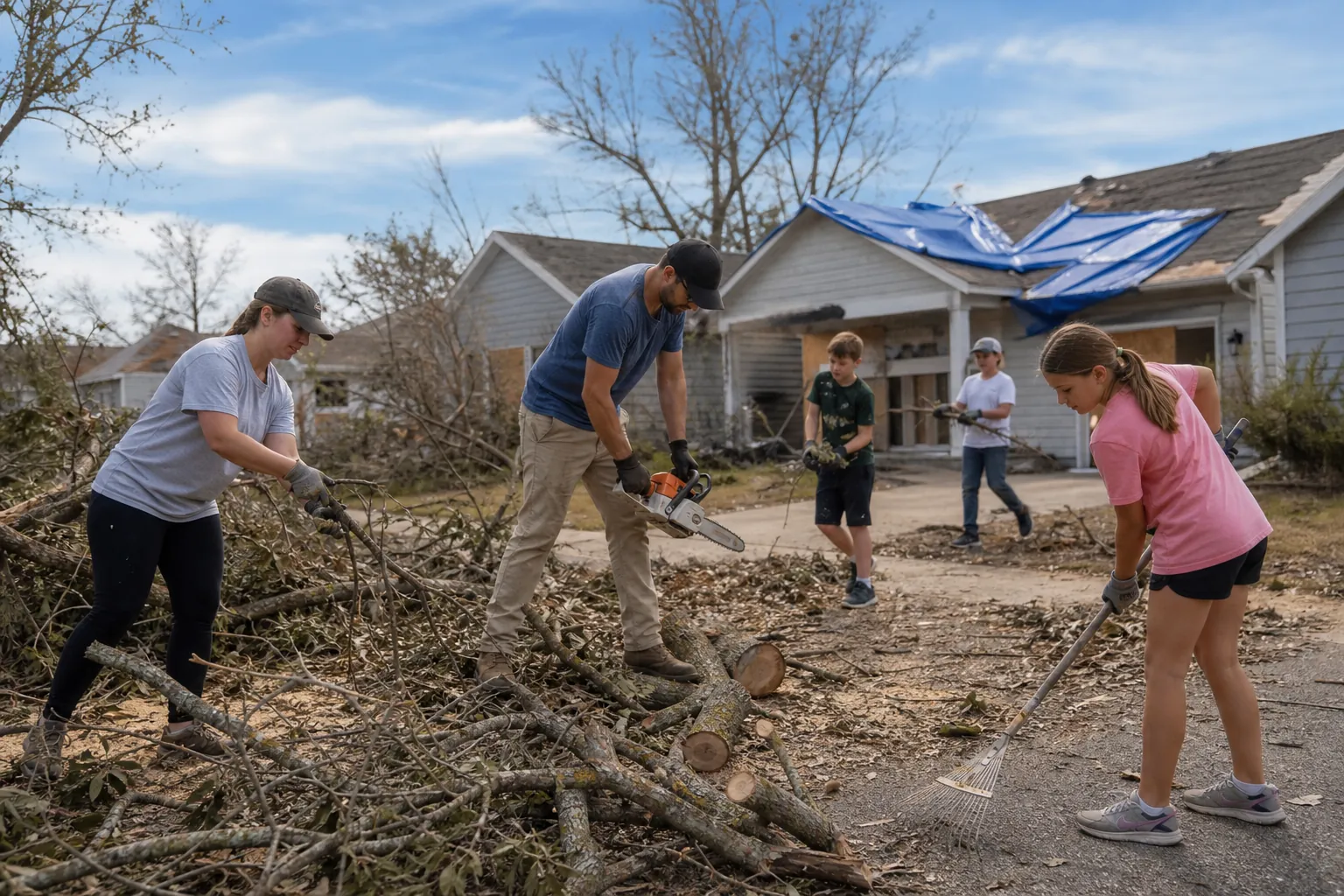
Plan hurricane cleanup day around your household’s needs, not around getting everyone into the yard. Give one adult the job of sharing updates. Give children and other nonessential people indoor activities, away from tree-work and drop areas. Keep notes separate from any judgment about a tree’s condition. OSHA says nonessential people should stay outside tree-work and drop areas. OSHA tree-work guidance. This family-role guide goes with our Pensacola hurricane tree cleanup resource. It does not give tree-work instructions.
By Tim Francis, responsible for this article’s content and editorial organization.
Who Should Do What on Hurricane Cleanup Day?
Assign household jobs based on what your family needs. Someone can share updates, someone can manage meals and children’s activities, and someone can organize questions. Read our tree removal service overview for context about tree work. Use our contact page if you want to ask Florida Foliage a question.
Your family plan can have just a few roles. In a small household, one person may handle several indoor tasks. In a larger household, you can split those tasks. This may reduce repeated questions and help the day feel less scattered.
Use names instead of vague labels like “someone.” Write down who will manage the group message, arrange lunch, and help children choose an activity. These are household planning choices, not directions for outdoor work.
- Choose one household contact to collect questions and share the same update with everyone.
- Assign a routine coordinator to track meals, rest, and familiar indoor activities.
- Give one person the note-taking role so observations do not become different family stories.
- Let a family member say if a role is too much. Then make the household tasks simpler or share them with others.
Keep the plan flexible. A child may need more attention than expected. The person handling messages may also need a break. Changing an indoor role does not mean the plan has failed. The goal is to share household tasks clearly, not to make everyone follow a full schedule.
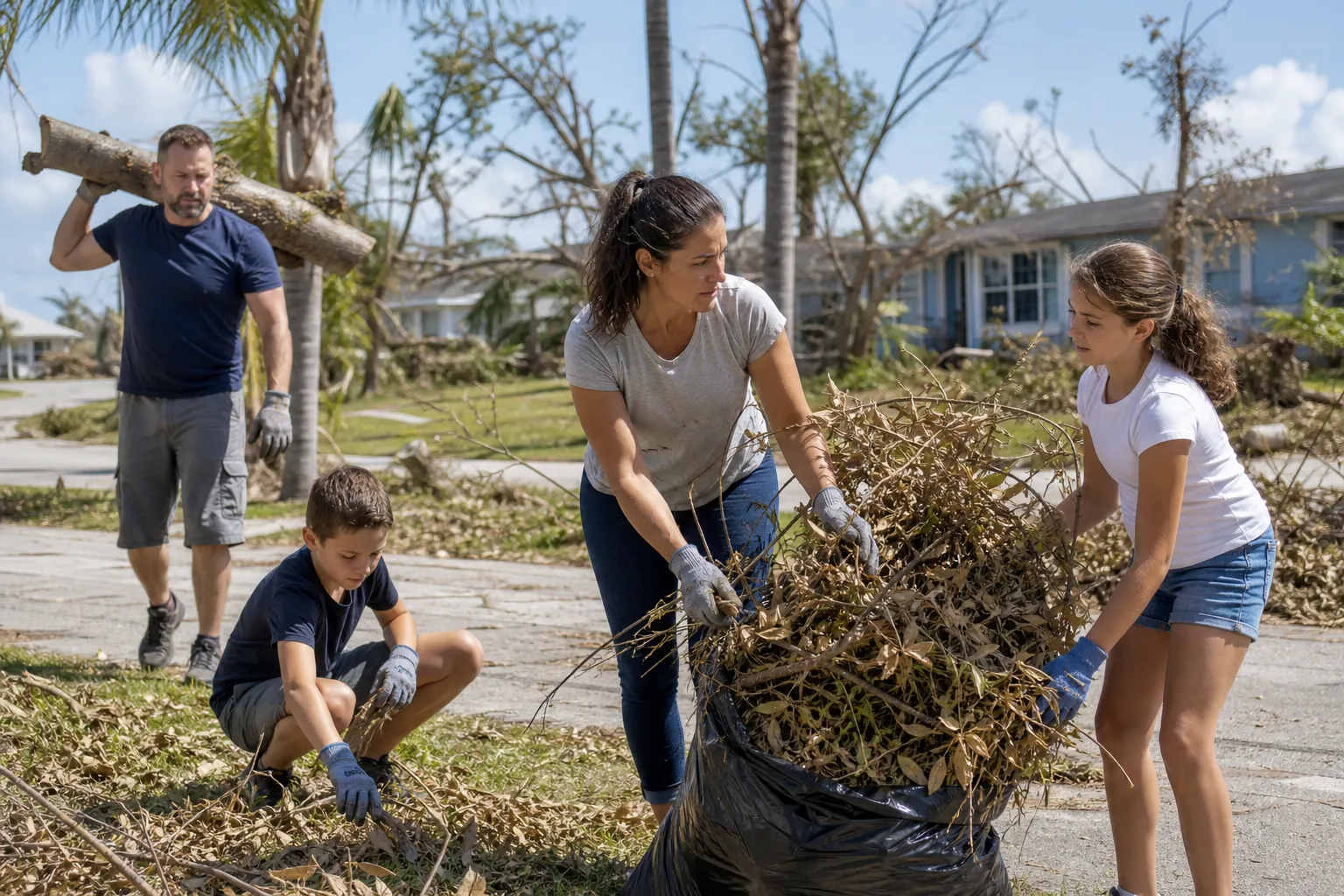
Where Should Children and Nonessential People Spend the Day?
Plan children’s activities and other household tasks away from tree-work and drop areas, as OSHA directs for nonessential people. OSHA tree-work guidance. Our tree trimming service overview explains that service category. Our company background page identifies Florida Foliage. Neither page says that a particular gathering spot is suitable.
Make the household plan clear. Instead of telling children to “find something to do,” offer a choice of reading, drawing, a board game, or another familiar indoor activity. Put the needed materials together. This way, the adult managing the activity does not have to keep searching.
OSHA also says to keep nonessential people away from debris machinery. OSHA debris collection guidance. Do not plan for the family to watch machinery for fun. Focus the household schedule on ordinary routines, not outdoor work.
- Prepare a few familiar activities that children can choose from without a long discussion.
- Assign an adult to answer household questions so children know whom to ask.
- Explain that an indoor organizing job is a real contribution, even if it does not involve yard work.
- Tell visiting relatives about the household plan before they decide to join the day.
Older children can choose lunch, keep a shared activity list, or help a younger sibling with a game. Do not describe these roles as substitutes for tree work. They help with household routines.
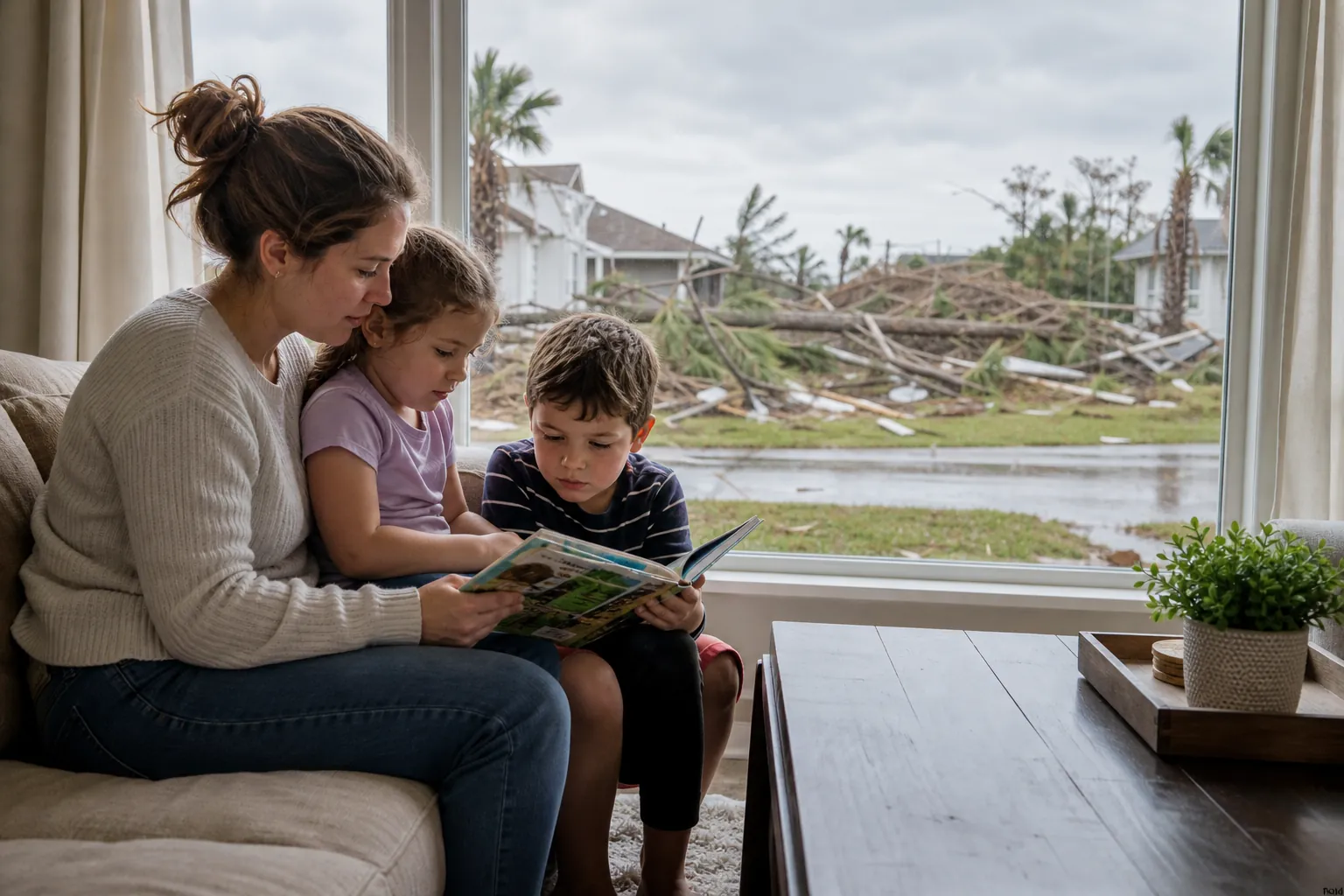
What Can Visible Tree Damage Tell You?
Visible signs tell you what you noticed. They do not tell you whether a tree is stable or suitable for work. Use our tree removal information and tree trimming information to learn about those service topics. Keep your family’s description factual. Do not turn it into a diagnosis or a decision about tree treatment.
OSHA names falling limbs and unstable trees as hazards in storm-damaged tree work. OSHA storm-damaged tree guidance. A household note should not try to assess these hazards. It can record what someone has already seen, such as a branch on the ground or a tree that looks different than before the storm.
Words matter. “A limb is visible on the ground” is an observation. “The rest of the tree is fine” is a conclusion that the observation does not prove. A photograph can also show a visible feature, but it does not prove that a tree is safe.
- Write what you noticed in plain language. Do not guess the cause or predict what will happen next.
- Keep an existing observation separate from a question you want to ask.
- Mark details as uncertain when you are not sure. Do not fill gaps with a family guess.
- Keep any existing photographs with the notes. Do not present them as proof of a tree’s condition.
A short, factual description is more useful than a confident label. Your household does not need to decide whether a tree needs removal, trimming, or another response before organizing its questions.
Build One Simple Household Checklist
Use a short checklist to bring together household roles, notes, and questions. Our Florida Foliage contact options can help you choose how to send a question. Our Florida Foliage background gives company context. This checklist helps organize family communication. It does not direct outdoor cleanup or confirm service availability in Pensacola.
A numbered list can help when several people need the same starting point. Keep it on one page or in one shared message. Avoid making a separate version for each family member. Changes are harder to track that way.
- Name the person who will collect household questions and keep the main update current.
- Write down who will manage children’s activities, meals, and other routine needs.
- Record existing visible observations in a separate part of the note.
- List open questions without turning them into conclusions about tree condition.
- Choose how you want to make contact and name the person who will do it.
- Update the household plan when a role changes, then share the new version.
The checklist should reduce chatter, not add work. If a detail does not affect the household plan or a question you want to ask, it probably does not belong on the main page.
- Use short headings so family members can find their role without reading the whole document.
- Keep routine household tasks separate from notes about trees and debris.
- Remove repeated questions so the contact person can see what remains unanswered.
The document does not need to look polished. A clear note with names and open questions is enough.
Keep Hazard Notes Separate From Household Tasks
A family task list should not turn a hazard observation into an outdoor job. Our overview of tree removal gives service context. Our general inquiry page offers a way to ask questions. Neither replaces the source guidance linked below or an assessment of tree conditions at a specific site.
Downed electrical conductors can energize trees and fences. Avoid direct and indirect contact. OSHA electrical hazard guidance for tree work. A household note about a visible wire should not ask a family member to investigate it.
OSHA also names tensioned tree material and rolling or sliding limbs as hazards. OSHA tree-material hazard guidance. This article does not explain how to assess or handle these conditions. Keep technical decisions off the family role sheet.
Debris can hide meters and fire hydrants. Stay clear of leaking chemical containers, which need specialist evaluation. OSHA debris collection guidance. These are reasons not to treat every visible pile or container as an ordinary household cleanup task.
- Put hazard-related questions in a clearly marked part of the household note.
- Do not turn a concern into a job for a child or another nonessential person.
- Keep family messages factual. Do not guess what material, equipment, or tree movement means.
- Leave tree assessment and technical work instructions off the household checklist.
The difference is simple: your family can organize its day without deciding how to handle outdoor hazards.
Make Family Updates Short and Consistent
Use one shared update to explain household roles, changes to routines, and open questions. The company information page answers general questions about Florida Foliage. The tree trimming overview gives service context. Keep these general resources separate from any statement about what is happening at your property.
A helpful update might say, “Morgan is handling messages, Alex is organizing lunch, and the children have chosen an indoor game.” You can also say that a question remains unanswered. Do not make the message sound more certain than the information you have.
Ask relatives to send questions to the household contact instead of starting several separate conversations. This is an editorial organizing suggestion. It can make the note easier to update and help the family see when two people are asking the same thing.
- Share changes to household roles where you shared the original plan.
- Show which household plans are confirmed and which questions are still being discussed.
- Use neutral words when the family does not know what a visible condition means.
- Tell relatives what information you are collecting. Do not invite guesses about tree condition.
At the end of the day, keep only the notes that are still useful. A short summary of open questions and tomorrow’s household needs is easier to use than a long record of every conversation.
Contact Florida Foliage Without Assuming Local Availability
If you want to ask Florida Foliage a question, use our contact page or first read our company background. Florida Foliage is headquartered in Daytona Beach. This article does not confirm a Pensacola office, local crews, response times, or availability for a specific property.
You can call (386) 481-7913. Share your location, what you have already observed, and what you want to ask. Ask whether your location and request fit the company’s current service scope. Contact is a way to get information. It does not promise a scheduled visit or an outdoor assessment.
- Keep your questions together so the conversation has a clear purpose.
- Describe visible conditions without presenting a household guess as a diagnosis.
- Ask about geographic service scope instead of assuming it from this article’s title.
- Write down what remains unanswered and keep the household plan separate from the inquiry.
For more context, return to our guide to Pensacola hurricane tree cleanup. The goal here is simple: organize family routines, keep information clear, and avoid turning household participation into technical tree work.
Frequently Asked Questions
These answers separate household planning from tree assessment. Our tree removal service information gives context about that service category. Our contact page for questions offers a way to ask questions without assuming local availability. Use the linked OSHA sources for the safety points in this article.
Can children help with hurricane cleanup day?
Children can help with household tasks. They can choose an indoor activity, organize game supplies, or help plan lunch. These are organizing ideas, not outdoor work assignments. OSHA says nonessential people should stay outside tree-work and drop areas and away from debris machinery. OSHA tree-work guidance; OSHA debris collection guidance.
Does a photograph show that a damaged tree is safe?
No. A photograph can show a visible feature, but it does not prove a tree is safe. Keep any existing image separate from conclusions about the tree’s condition. OSHA names falling limbs and unstable trees as hazards in storm-damaged tree work. OSHA storm-damaged tree guidance. A family note should describe what someone observed, not offer a diagnosis.
What should our household contact write down?
Write down each person’s household role, visible observations, and unanswered questions. Keep these details in separate groups. A useful note might say who handles messages and who organizes meals. Then list a question about service scope. Do not guess about a tree’s condition or treat a photograph as proof that outdoor work is suitable.
What if we notice a wire near a tree or fence?
Do not make this a household investigation task. OSHA says downed electrical conductors can energize trees and fences. It says to avoid direct and indirect contact. OSHA electrical hazard guidance. Keep your note factual. Do not ask a family member to go near the wire to describe it better.
Does this article mean Florida Foliage is available in Pensacola?
No. Florida Foliage is headquartered in Daytona Beach. This article does not confirm Pensacola availability, a local office, or response times. Use the contact page or call (386) 481-7913 to ask whether your location and request fit the company’s current service scope. An inquiry does not promise a scheduled visit.
Call (386) 481-7913 to talk through next steps.