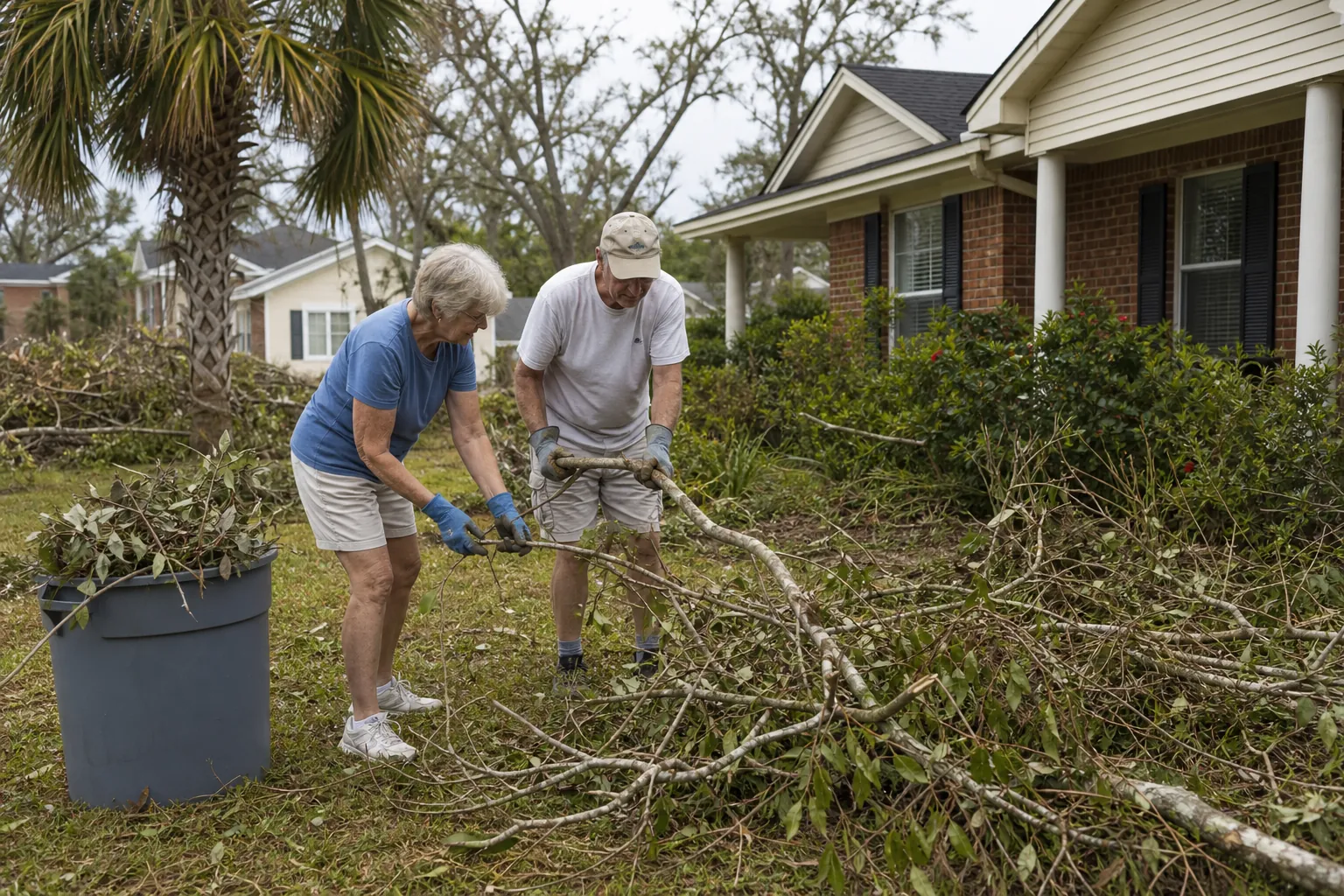
For older homeowners in Pensacola, hurricane yard cleanup can start with organizing information, not handling debris. Make a short household plan and write down what you already know. Leave uncertain tree conditions as open questions. This guide covers practical choices, not tree work instructions. For broader context, use the Pensacola hurricane tree cleanup guide. Keep your next steps to things you can describe and coordinate without taking on unfamiliar work.
Written by Tim Francis, who is responsible for this article’s content and editorial presentation. Florida Foliage is headquartered in Daytona Beach. Owner Clinton Funk has decades of hands-on tree care experience. This article is not a personal review by Clinton Funk and does not establish service availability in Pensacola.
What Can You Organize Before Yard Cleanup Begins?
You can organize household priorities, things you have noticed, and contact questions before making decisions about the yard. The tree removal service overview explains one service category. The Florida Foliage contact page gives you a way to ask about scope and location. Neither page confirms that service is available in Pensacola.
Start with a sheet of paper or a simple phone note. Add three headings: what we know, what we need to ask, and what can wait. This helps keep an open question from turning into a task just because someone wrote it down.
For example, “branches are visible near the garden bed” belongs under what you know. “Who should assess those branches?” belongs under questions. Replacing a garden label or choosing new plants can go on a later household list.
Choose a format that is easy to read. Large print, short lines, and clear headings can make a shared note easier to use. You do not need a detailed spreadsheet if a notebook page will do the same job.
- Write the household’s main concerns in everyday language.
- Keep tree questions separate from ordinary garden preferences.
- Ask one person to keep the current list.
- Mark open items as questions, not decisions.
If several people are involved, agree on where the list will be kept. A kitchen folder, shared message thread, or notebook can work. Choose one place so no one acts on an old version while someone else updates the plan.
When Should You Stop and Ask About Tree Work?
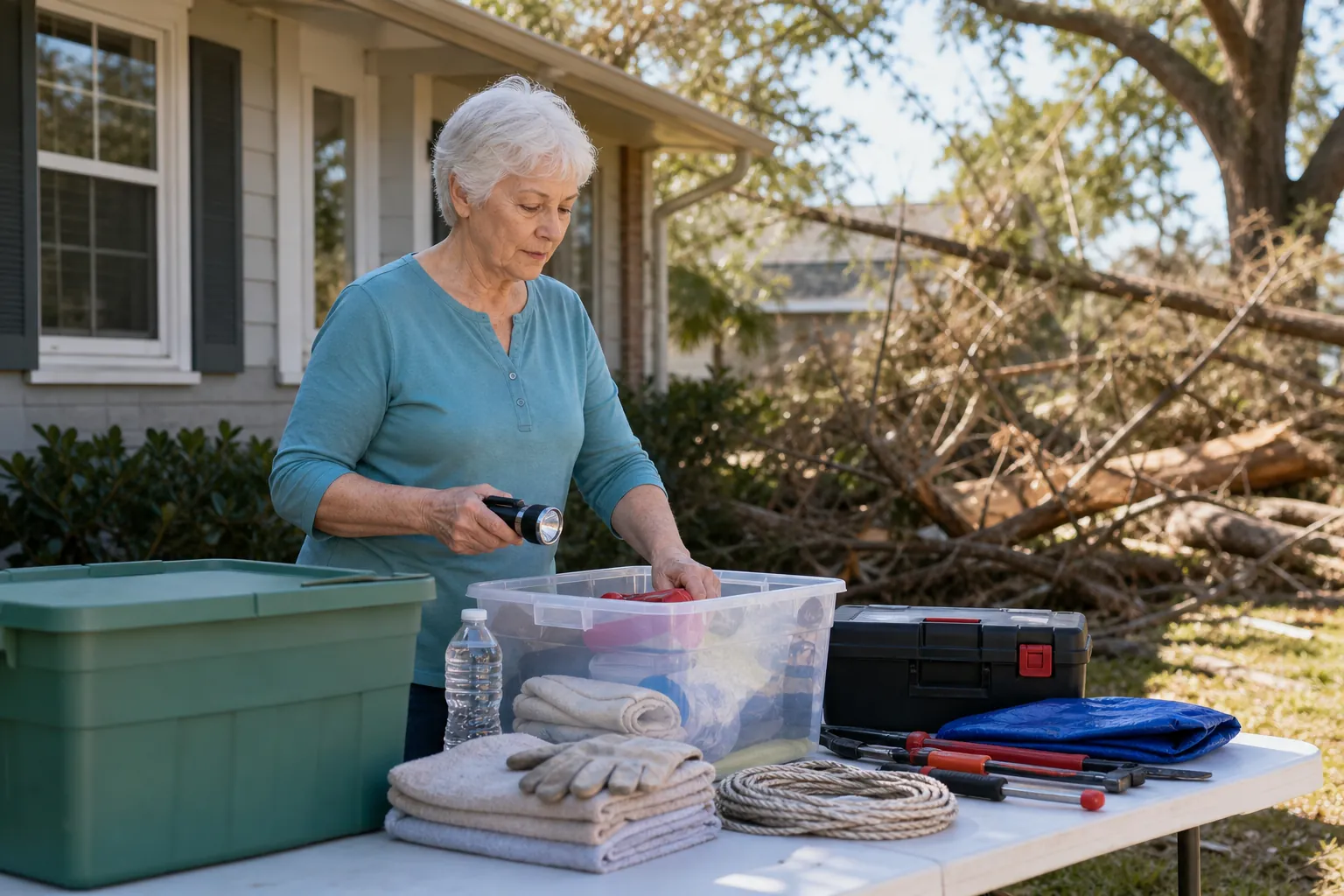
Stop planning a hands-on task if it involves storm-damaged tree material or a condition you cannot explain. OSHA lists falling limbs and unstable trees as hazards during this work. See OSHA’s storm tree guidance. The tree removal overview and tree trimming overview explain services, not a tree’s condition.
Your role as a homeowner in this guide is to describe concerns, not decide what tree work is needed. “A branch appears different from before the storm” is an observation. It does not explain why the branch changed or what should happen next.
OSHA also lists tensioned tree material and rolling or sliding limbs as hazards. So do not treat fallen tree material as a routine household sorting task. Source: OSHA hurricane tree work guidance.
A useful stopping point is a clear question, not a technical guess. Write “I do not know what this condition means” if that is true. You do not need to pick a service category just to make the household list look complete.
- Describe what you can see without naming a cause.
- Leave unfamiliar tree tasks off the household activity list.
- Write down the question you want answered before discussing a service.
- Keep general service information separate from conclusions about your yard.
Family members may see different things as concerning. Keep those differences in the note instead of forcing agreement. Two short descriptions are more useful than one confident statement no one can support.
How Should You Handle Water and Electrical Concerns?
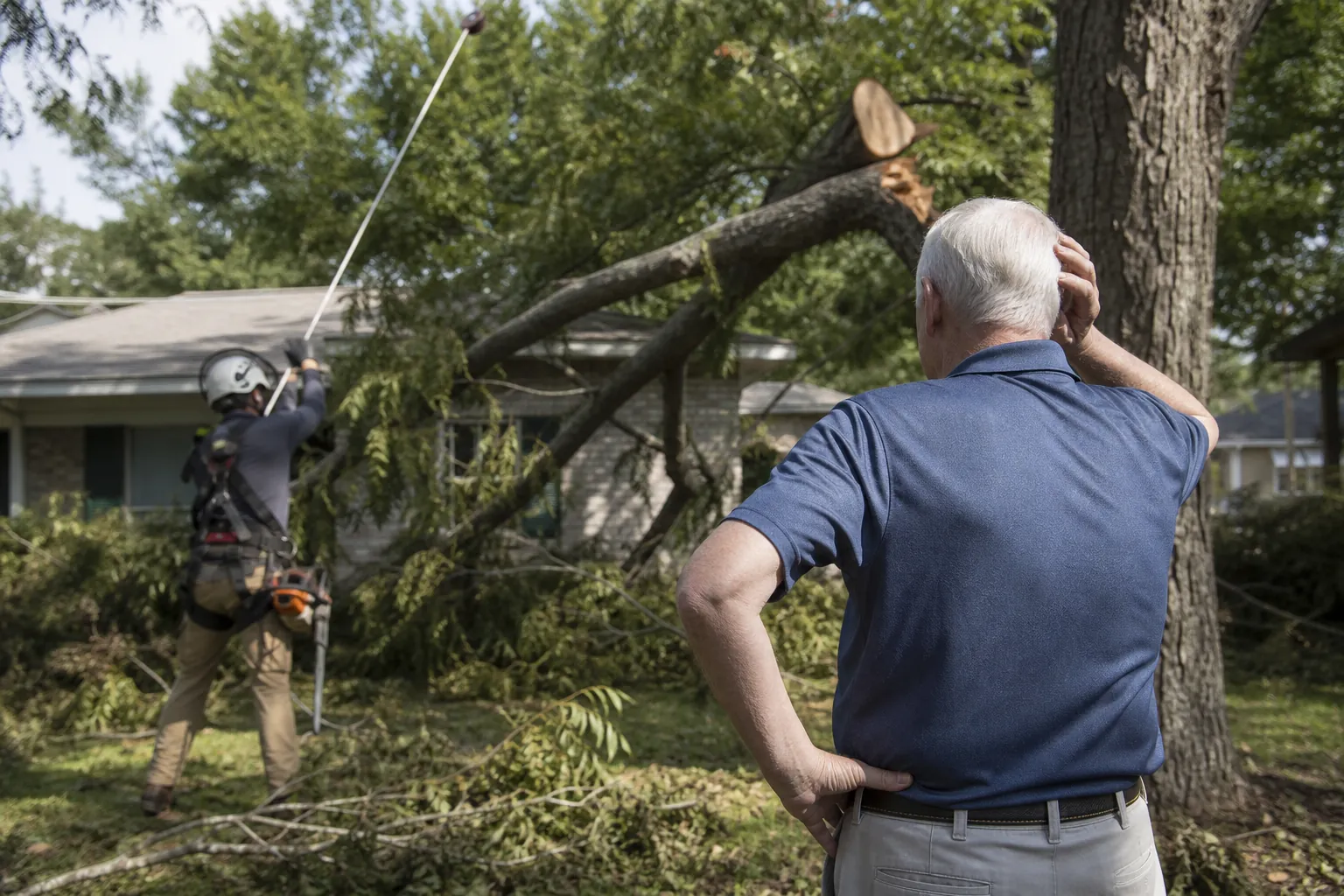
According to Ready.gov’s hurricane guidance, do not touch wet electrical equipment or electrical equipment while standing in water. Keep these concerns separate from routine organizing. The contact page for general inquiries and Florida Foliage company background explain how to communicate and give company information. They do not provide an electrical assessment.
Floodwater can contain debris, chemicals, waste, and wildlife. Underground or downed power lines can also charge the water with electricity. Treat these as cautions from the source, not risks you can rule out by looking at the water. Source: Ready.gov hurricane guidance.
Downed electrical conductors can send electricity through trees and fences. OSHA says to avoid direct and indirect contact. A note about a possible electrical concern does not mean you should investigate it yourself. Source: OSHA hurricane tree work guidance.
For household planning, add a separate heading for water or electrical questions. This helps keep someone from mistaking the note for an ordinary yard task. If relatives need to know why an item is still open, copy the source link into a shared message.
- Clearly label water and electrical questions on the household list.
- Share the original source link, not a shortened personal version.
- Do not turn an open concern into a cleanup task.
- Write down what was reported. Do not ask someone to check it by making contact.
Keep descriptions focused. “Water was reported beside the fence” says what the household knows. “The water is harmless” says more than the household knows. Clear words show everyone the difference between a report and a conclusion.
Build a Household Plan That Is Easy to Follow
A useful household plan assigns communication tasks, not unfamiliar tree work. The company background page can help you learn about Florida Foliage. The general inquiry page can help with a later question. Keep company information separate from decisions your household still needs to make.
Older residents do not all have the same needs or preferences. Ask how the homeowner wants to get updates and who should be included. Some people prefer a short phone call. Others want a written note they can read again without needing to remember every detail.
Use this order to organize the conversation. It is a planning tool, not instructions for handling storm debris.
- Choose one place for the current household notes.
- List things already known without seeking a closer look.
- Separate tree, water, and electrical questions from ordinary household concerns.
- Name the person who will collect questions and share updates.
- Prepare a short inquiry that gives the location and asks about relevant service scope.
- Update the notes with what was actually said. Leave open questions unresolved.
Keep each entry short enough to read aloud. A long account of the storm may matter to the family, but it can hide the question someone needs answered. Save background details in a separate note if you want to keep them.
- Ask the homeowner which way they prefer to get updates.
- Give each organizing task a clear name and purpose.
- Repeat important updates in the same shared place.
- Let the homeowner change priorities.
A plan can help even when several questions are still open. Its purpose is to show what is unknown, not to solve every issue in one conversation. Cross out old entries so they do not compete with current instructions.
Keep Observations Separate From Tree Conclusions
Use plain words to discuss a storm-affected yard. The tree trimming service description gives general context. The tree removal service description explains another service category. Neither turns a homeowner’s observation into a diagnosis or shows which service a particular tree needs.
An observation records something seen or reported. A diagnosis explains a condition. In this article, an observation can help organize a conversation. A household checklist cannot provide a diagnosis. Keep that difference clear in every note you share.
Instead of writing “the tree must be removed,” write down what you already know that led to the concern. Instead of “the yard is safe,” write “these are the observations we have recorded.” This wording keeps the uncertainty clear.
You may keep photos as part of a household record, but do not use them as proof that a tree is safe. A picture and its caption should not be treated as a conclusion about the whole tree or the right work to do.
- Use words such as “visible,” “reported,” and “unknown” when they fit.
- Note whether the homeowner or someone else provided the information.
- Keep photos separate from statements about tree safety.
- Ask for clarification if a service term is unfamiliar.
You do not need to learn technical terms before making an inquiry. Everyday words can explain your question without overstating what you know. If someone gives you a new description, write it down accurately and say who provided it. Do not quietly change the original observation.
Give Family Members Useful Organizing Roles
Family members can collect questions and share updates without taking on tree tasks. The Florida Foliage inquiry page gives them a way to get in touch. The information about Florida Foliage gives company background. These resources can help with an informed conversation, but they do not show Pensacola staffing or local service availability.
One person might keep the notebook while another gathers contact details the household already has. Someone else can read updates aloud or help turn a long message into a short question. These are ordinary organizing roles, not ways to assess tree conditions.
OSHA says to keep people who are not needed outside work and drop areas during storm-damaged tree work. Share that advice with household members. Do not treat a work area as a place for visitors or observers. Source: OSHA hurricane tree work guidance.
Ready.gov recommends protective clothing and suitable masks when cleaning debris. That advice does not mean protective clothing makes unfamiliar tree work suitable for a homeowner. Source: Ready.gov hurricane guidance.
- Agree on who will take notes and share messages.
- Let the homeowner decide who gets household updates.
- Keep source-based cautions with the related message.
- Do not turn someone’s offer to help into an assignment for unfamiliar work.
Check that everyone means the same thing by “cleanup.” One person may mean sorting papers, while another means handling fallen material. Naming the task can prevent confusion about what people expect.
Make a Neutral Inquiry and Keep the Next Step Clear
Before you reach out, read the Florida Foliage company overview and, if helpful, use the contact form for service questions. Florida Foliage’s headquarters is in Daytona Beach. A homeowner in Pensacola can ask about location and scope without assuming local availability, a scheduled visit, or a particular response.
You can call (386) 481-7913 with a brief question. For example: “I am in Pensacola and am organizing questions about storm-affected trees. Does Florida Foliage serve this location, and what information would you need to discuss the situation?” This is a neutral inquiry, not a promise of service.
Keep your household note nearby so you can tell what you know from what is still uncertain. You do not need to give a diagnosis or choose a service in advance. Ask which details matter, then write down the answer in plain language.
- Give Pensacola as the location at the start of the inquiry.
- Ask about the service area before assuming what happens next.
- Describe what you have observed without drawing conclusions about tree safety.
- Write down open questions after the conversation.
As you finish planning, return to the Pensacola hurricane tree cleanup resource for broader context. Keep the household list focused on communication, known observations, and open questions. A clear record is useful even if you have not settled on the next step.
Can a household member keep the plan simple?
Yes. Use a short list of routine household tasks, a separate list of open questions, and one clear stopping point. Keep tree conditions apart from general organizing. Do not use this plan to assess a tree or decide that an area is safe.
Call (386) 481-7913 to talk through next steps.