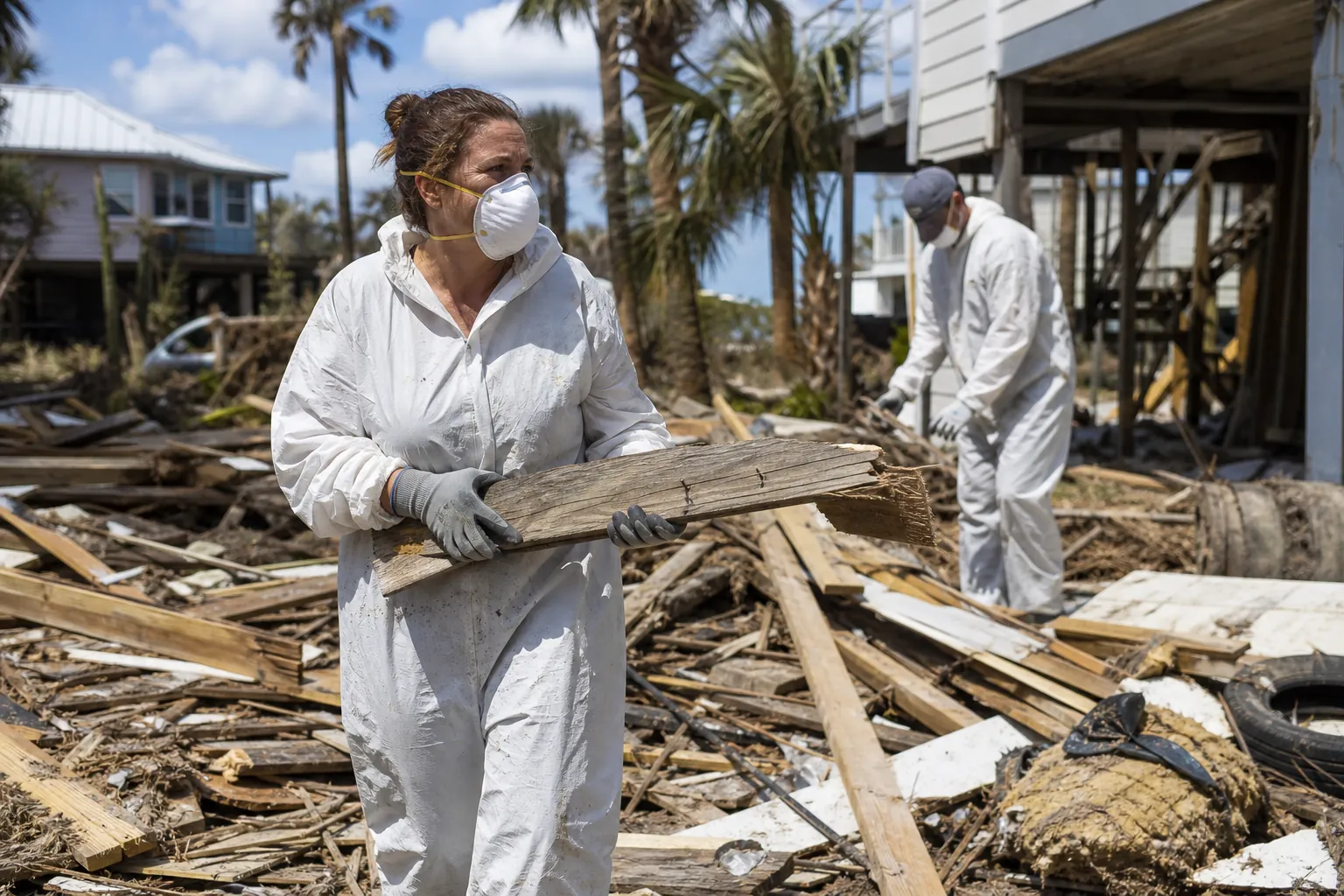
For hurricane debris cleanup in Pensacola, wear protective clothing and appropriate masks, as Ready.gov advises for cleaning debris. That advice does not make damaged-tree work a household task. This guide covers clothing questions, household plans, and ways to describe what you see without judging a tree. For more context, read our Pensacola hurricane tree cleanup guide. Keep your household plan separate from decisions about storm-damaged trees.
By Tim Francis, responsible for this article’s content and editorial preparation.
What Should You Know Before Choosing Cleanup Clothing?
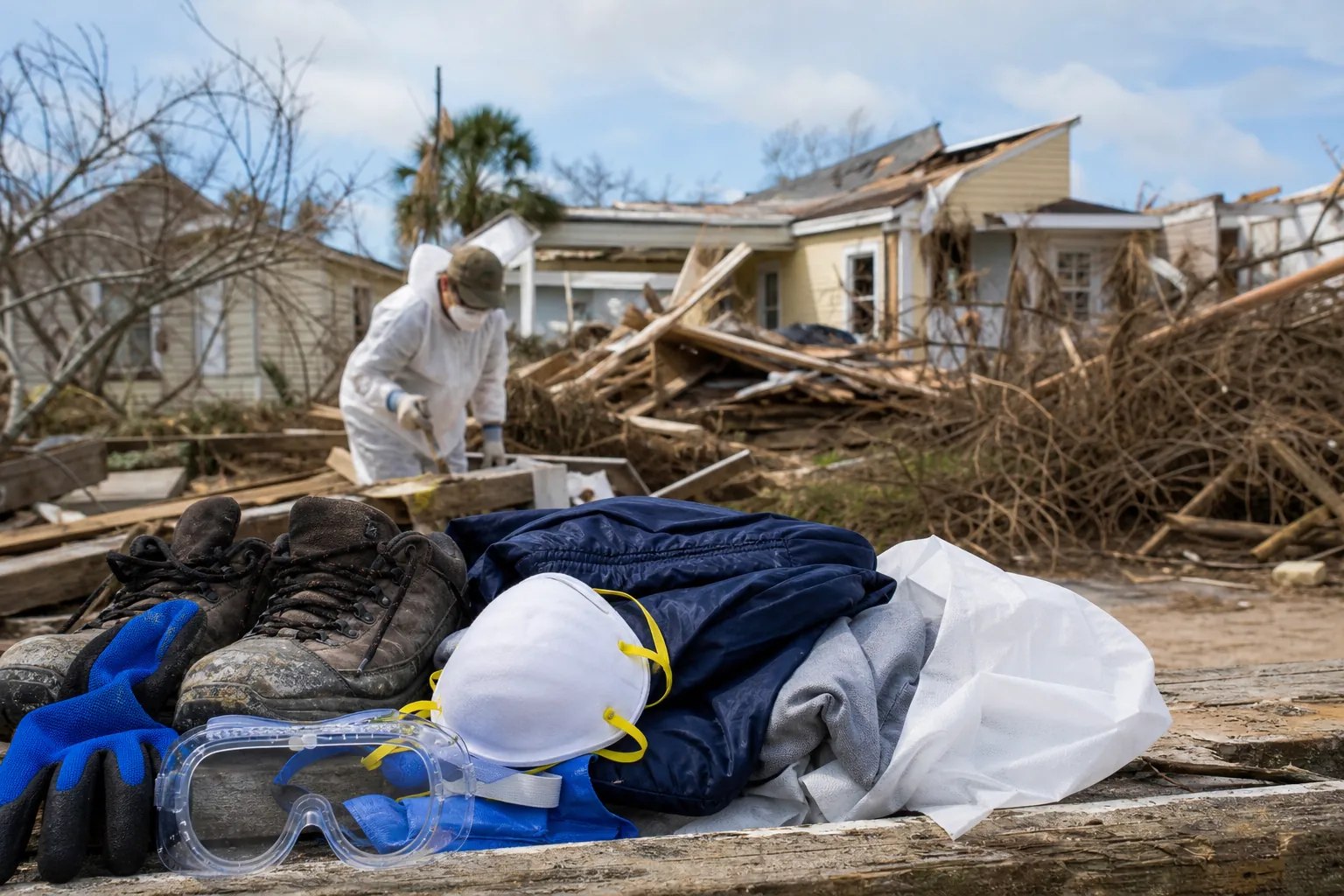
Start with the task, not a shopping list. Ready.gov says to wear protective clothing and appropriate masks when cleaning debris (hurricane cleanup guidance). Our tree removal service overview and tree trimming service overview can help explain the difference between household pickup and tree-service questions. They do not confirm service in Pensacola.
The supplied guidance gives a broad instruction. It does not name a full outfit for every yard or a mask model. It also does not explain how to choose equipment for every possible condition. So this article does not turn that advice into a detailed gear list.
For a household plan, write down the activity you mean. “Cleanup” could mean organizing items indoors, gathering household belongings, or dealing with tree material. These are different tasks. Naming the task clearly can help you see when a question falls outside this guide.
- Describe the proposed task in a full sentence. Do not use “yard cleanup” to mean several things.
- List clothing and mask questions apart from questions about damaged trees.
- Keep the original Ready.gov link with your notes so everyone can read the same guidance.
- Mark open equipment questions as unresolved. Do not fill gaps with guesses.
Put clothing plans and task choices on separate lines. Having clothing to wear does not tell you if the activity is ordinary household pickup or storm-damaged tree work. Keep that difference clear when you discuss the day’s plans.
Does Protective Clothing Make Damaged-Tree Work a Household Task?
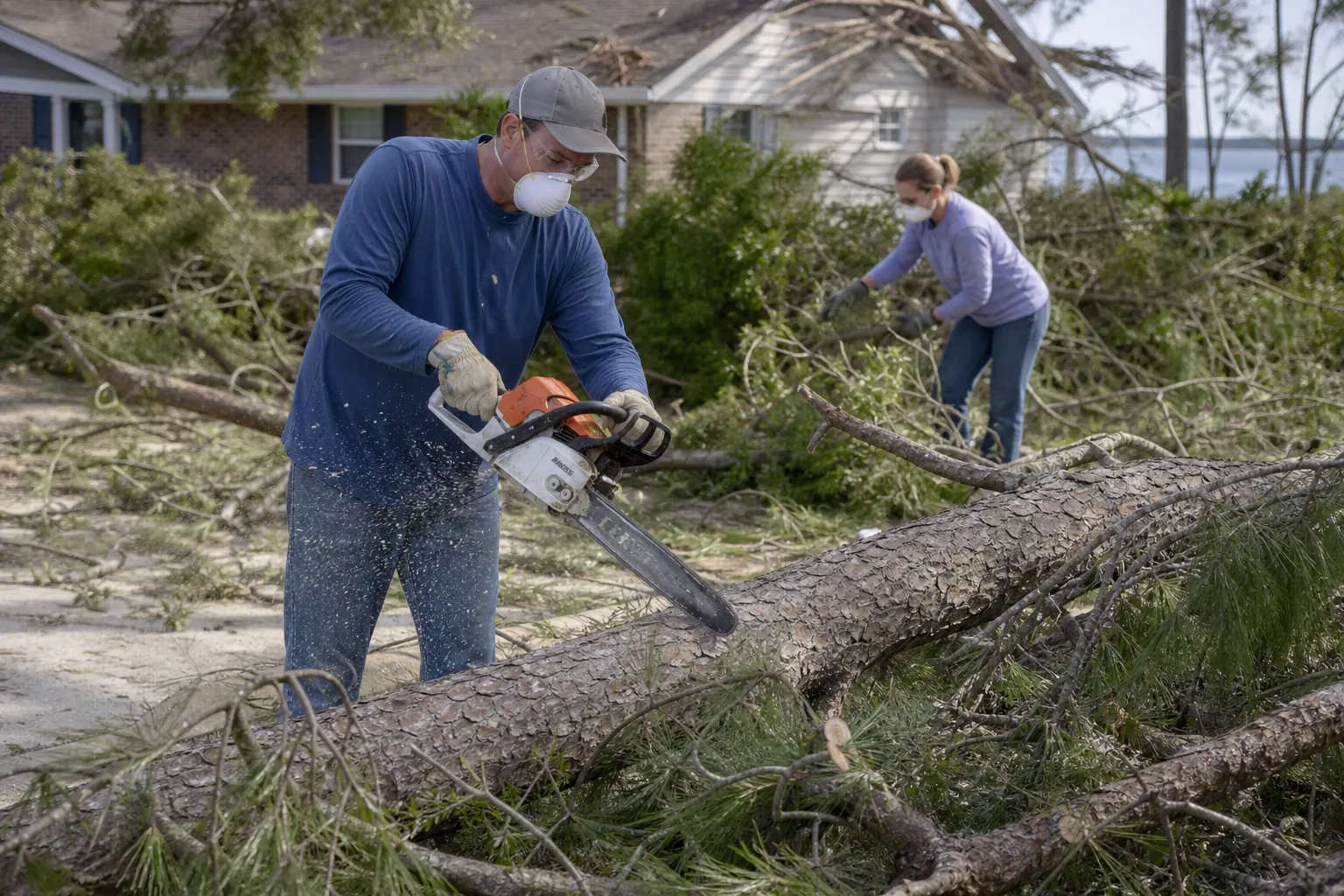
No. OSHA says storm-damaged tree work has risks from falling limbs and unstable trees (OSHA’s storm-damaged tree guidance). Clothing does not change what this household guide covers. Read our overview of tree removal for service context. Use the contact page to ask a clear question, but do not assume service is available in your area.
OSHA also lists hazards from tree material under tension and limbs that roll or slide (tree trimming and debris-removal guidance). This article does not explain how to assess or handle these hazards. Naming a hazard is not the same as teaching someone how to manage it.
A household note can say that a branch is on the ground or that part of a tree looks broken. It should not say “ready to move” or “safe to handle.” Those claims go beyond what the note can show.
- Put tree questions on a separate page from ordinary household tasks.
- Use plain words, such as “a limb is across the driveway.” Do not diagnose it.
- Do not treat clothing or a mask as an answer to a damaged-tree question.
- Leave tree-work methods off the household task list.
Service descriptions can help explain words used for tree work. They do not show that a service fits your tree, that anyone has checked the tree, or that a company serves your location. Keep those questions open until you get a direct answer.
What Do the Sources Say About Water and Electrical Hazards?
Ready.gov says floodwater can contain debris, chemicals, waste, and wildlife. It also says underground or downed power lines can make water carry electricity (floodwater safety guidance). Keep these facts apart from clothing plans. Our tree removal information and contact options give context for tree questions, not an electrical assessment.
Ready.gov says not to touch electrical equipment if it is wet or if you are standing in water (Ready.gov instructions). This is a direct safety instruction, not a clothing question. This article does not offer an exception based on gear.
Downed electrical wires can send electricity through trees and fences. OSHA says to avoid direct and indirect contact (OSHA’s tree-work guidance). A note about a fence, tree, or wire does not show if it carries electricity.
- Record what you see near water apart from clothing and mask questions.
- Describe a visible wire. Do not guess if it is an electrical wire or if it carries electricity.
- Copy the source link into shared notes instead of trying to recall the advice.
- Do not turn an unanswered electrical question into a household pickup task.
Keep notes factual. “Water is visible beside the fence” reports what you see. “The water is harmless” adds a claim that the note cannot support. Use the same care when a wire, tree, and household debris are in one area.
How Can You Organize a Household Cleanup Plan?
Use a short written plan to separate household chores from open questions about debris and trees. Our tree trimming overview explains one type of tree service. Florida Foliage’s company background tells you about the business behind this article. Neither page checks a specific yard.
The steps below are a way to organize information. They are not a technical cleanup process, a site check, or directions for handling tree material. They can help make household talks clearer and tasks less vague.
- Write the proposed activity in one sentence. Name the items involved.
- Make separate headings for household tasks, clothing and mask questions, and tree questions.
- List what you can see under the right heading. Do not guess at causes or diagnoses.
- Add source links beside any safety advice in the shared plan.
- Leave open questions unanswered and decide who will look for more information.
A useful plan might include finding a notebook, gathering current product details, or setting up a household check-in. These are ways to organize, not technical advice about cleanup gear. Keep the document simple enough for the household to use.
- Date each note so old details do not blend with new ones.
- Use one shared list instead of several versions that may conflict.
- Write down who will handle messages instead of having several people send partial notes.
- Mark open tasks as unfinished. Do not mark them done just because you discussed them.
Read the task list together. If a task still says only “take care of the tree,” it is not clear. Change it to a tree question instead of adding more clothing items to the list.
What Can You Record Without Diagnosing a Tree?
You can write down plain details, such as where debris is and which household area it affects, without naming a tree problem. Our tree removal overview and tree trimming information explain service types. Neither turns your note or photo into a diagnosis.
Use clear, specific words. “A branch is lying across the walkway” describes what you see. “The tree needs removal” suggests a service decision. Keep these statements separate so a question does not become a conclusion.
If you already have photos, use them to help with the discussion, not as proof that a tree is safe. A photo can go with a description. But this guide does not use photos to show tree stability, electrical conditions, or whether household handling is suitable.
- Describe the place in familiar terms, such as the front walk or backyard fence.
- Say if your description comes from something you saw or from an existing photo.
- Write “I do not know” if the tree’s condition or nearby material is unclear.
- Keep service preferences apart from notes about what you see.
Short notes are often easier to discuss than a long story. Sort them under “what is visible,” “what we want to ask,” and “what remains unknown.” This keeps each note clear without adding a technical label.
Do not turn a question into a diagnosis just to make a message sound complete. A short, honest description is enough to start a conversation. Open questions also help show where the household’s knowledge ends.
How Should You Coordinate People and Cleanup Questions?
Keep household discussions simple and separate from an active tree-work area. OSHA says people who are not needed for the work should stay outside work and drop areas (tree-work safety guidance). Use Florida Foliage’s contact page for questions and the company background page for business details. Do not assume service is available in Pensacola.
A shared list can show what people have and have not discussed. It should not assign technical tree tasks or set the limits of a work area. This article does not give directions for setting up or managing tree work.
For ordinary household planning, choose one person to keep the notes. Someone else can gather current details about clothing or mask products for later reference. These are record-keeping tasks. They do not mean that any item is right for a certain debris task.
- Keep source advice in its own section so it is not confused with household preferences.
- Write open questions as full sentences that others can understand.
- Use a shared check-in to compare notes instead of relying on scattered messages.
- Remove unclear tree-work tasks from the household list.
A check-in can be brief. Discuss what has been organized, what information is missing, and what needs a separate talk. Do not say an area is safe just because someone has finished writing notes about it.
Keep clothing discussions simple. Ready.gov says to wear protective clothing and appropriate masks when cleaning debris (hurricane guidance). The supplied guidance does not say which materials, fit, mask ratings, or equipment combinations to use.
How Can You Contact Florida Foliage Without Assuming Local Service?
Ask if Florida Foliage can help with your location and type of tree question. Use the contact page to start the conversation. Read the company’s background information for context. Florida Foliage is based in Daytona Beach. This article does not confirm a Pensacola office or service in Pensacola.
You can call (386) 481-7913 or use the contact page. Say that the property is in Pensacola and briefly explain your question. Ask about location and service scope. Do not assume a tree-service description applies to your property.
- Say Pensacola in the first sentence of your message so the location is clear.
- Describe visible tree material without naming the tree’s condition.
- Ask if the company can help with your location and question. Do not assume the answer.
- Keep clothing questions separate from tree-service questions in your message.
A neutral message could say: “The property is in Pensacola. A branch is visible across the driveway. Can you tell me whether you address this location and this kind of tree question?” This reports what you see and asks about service scope. It does not ask for a conclusion based on a photo.
For more information, return to the Pensacola hurricane tree cleanup resource. Keep the main difference in mind: clothing advice, household planning, and decisions about storm-damaged trees are separate topics.
Frequently Asked Questions
What Does Ready.gov Say to Wear for Debris Cleanup?
Ready.gov says to wear protective clothing and appropriate masks when cleaning debris (hurricane cleanup guidance). The supplied guidance does not name an outfit, mask model, or gear combination. This article keeps the advice broad. It does not make up a technical shopping list for every household.
Can a Photo Show That a Storm-Damaged Tree Is Safe?
This guide does not treat a photo as proof that a tree is safe. Use photos only with plain descriptions and questions. OSHA says storm-damaged tree work has risks from falling limbs and unstable trees (OSHA’s guidance). A photo and household note do not diagnose a tree.
What If Debris Is Near Water or a Wire?
Keep this question apart from clothing choices. Ready.gov says underground or downed power lines can make water carry electricity (hurricane safety guidance). OSHA says downed wires can send electricity through trees and fences. It says to avoid direct and indirect contact (tree-work guidance). Do not make up an exception based on gear.
What Should a Household Cleanup Note Include?
Include the planned task, plain details about what you see, clothing or mask questions, and open tree questions. Date the note and keep the original source links beside safety advice. This is a way to organize information, not a way to assess a tree or decide if household handling is suitable.
Does This Article Confirm Florida Foliage Serves Pensacola?
No. Florida Foliage is based in Daytona Beach, and this article does not confirm service in Pensacola. Call (386) 481-7913 to ask about your location and question. Describe what you see and ask about service scope. Do not assume there is a local office, that someone will visit, or that you will get a certain response.
Call (386) 481-7913 to talk through next steps.