Reviewed by Clinton Funk
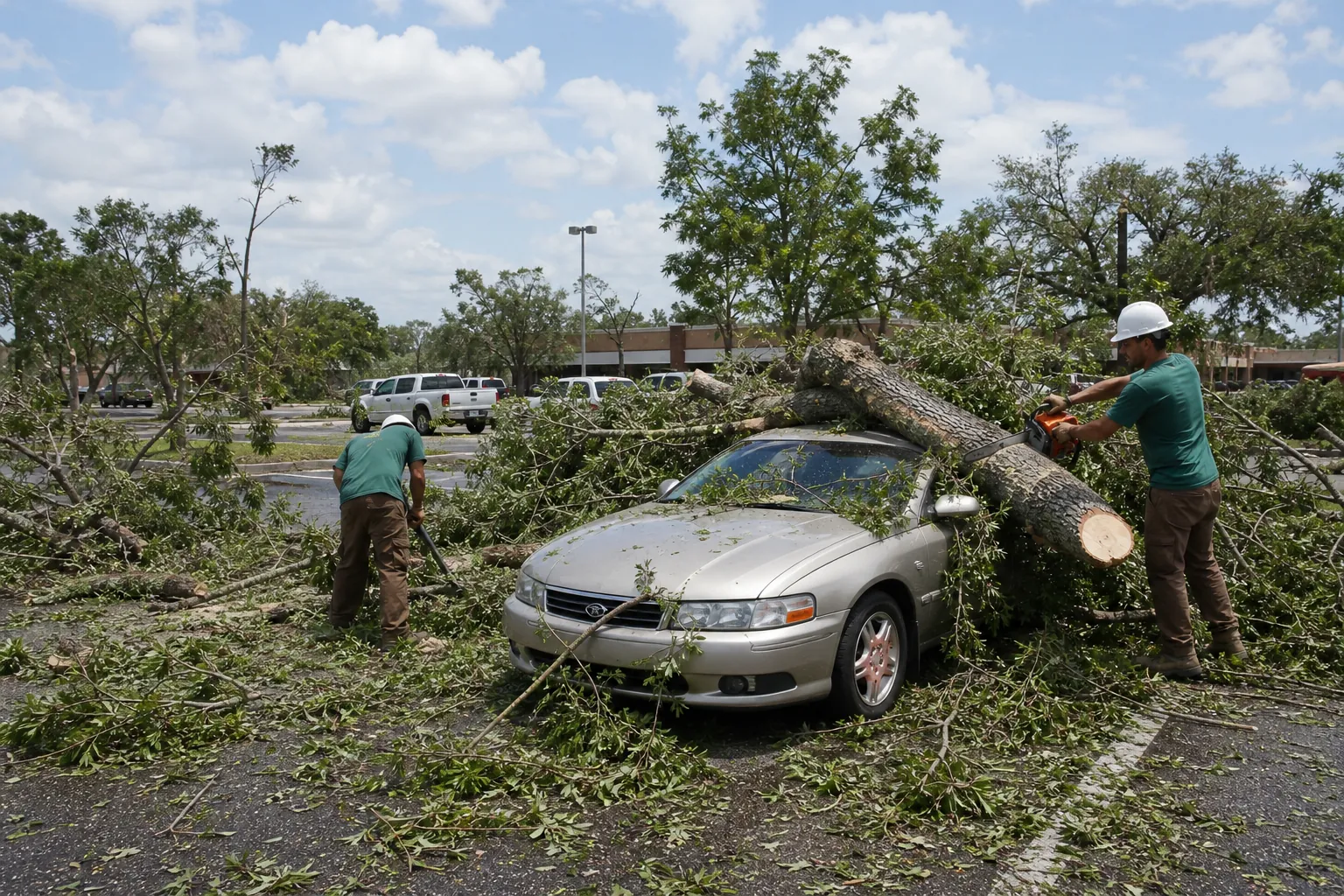
Hurricane damage can turn a familiar parking area into a maze. Fallen limbs may block spaces, sidewalks, and shared drives. For homeowners and property managers searching for hurricane commercial tree cleanup parking guidance, the first task is simple: identify hazards before planning debris work.
This guide addresses shared lots, condo parking, and tree-lined home access in Pace, FL. It explains damage assessment, cleanup priorities, and plans for continued tree care. Florida Foliage is headquartered in Daytona Beach. This guide does not state that a Panhandle crew is available.
How should hurricane parking tree cleanup begin?
Start with a view from a safe, clear place. Look for blocked routes, fallen trees, and limbs caught overhead. Keep people away from damaged trees while planning the next steps. If power lines are down, stay away and contact the utility, as Ready.gov hurricane guidance advises.
A parking lot can look calm while hazards remain above it. A broken branch may rest in a nearby crown. A leaning tree may have lifted roots hidden beneath loose leaves. Don't walk under a damaged crown to get a closer picture.
Use existing windows or another clear viewpoint to document visible damage. Record each tree's location beside buildings, walkways, and parking rows. Describe visible conditions without deciding how a damaged tree should be removed. A professional tree inspection can help define the necessary work.
Write down the main access needs before asking about cleanup. These may include a shared drive, a front walk, or an open parking row. Treat these as planning priorities, rather than reasons to enter a hazardous area.
- Record blocked entrances from a clear location without approaching damaged trees or fallen wires.
- Note branches hanging above parking spaces so those spaces stay out of use.
- List trees touching buildings, fences, or other trees for a closer professional assessment.
- Keep photos grouped by parking row, driveway, or building entrance for clear communication.
Weather conditions still matter after the strongest winds pass. Follow local updates before walking the grounds. The National Weather Service's after-hurricane guidance explains why returning outdoors requires care even when the storm seems over.
Which damaged trees need an inspection first?
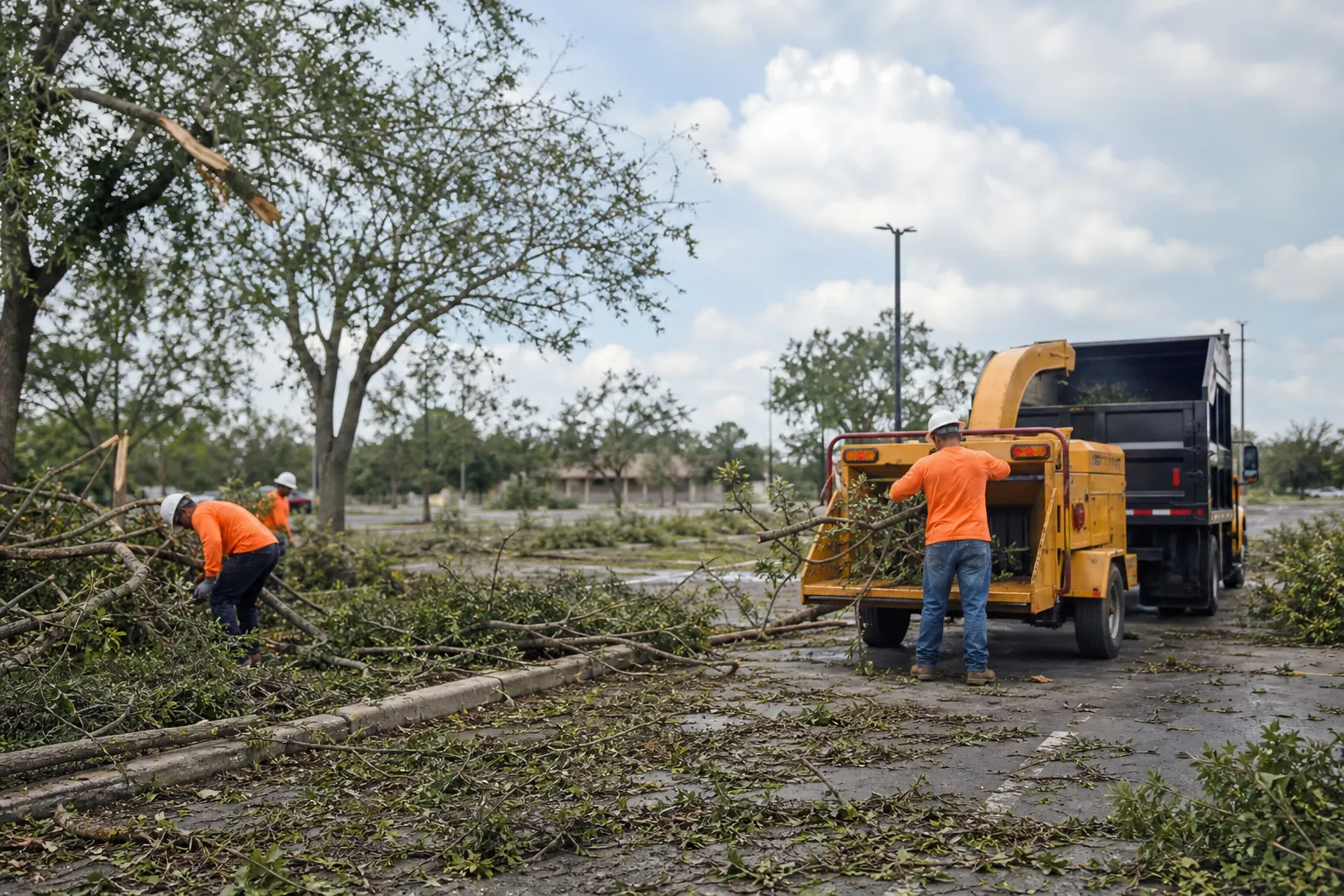
Give early attention to trees near occupied spaces and needed routes. Flag fresh leaning, split trunks, broken tops, and visible root movement. An arborist report or tree inspection can help define the next steps. Avoid close inspection near electrical hazards, as OSHA's tree care guidance explains.
A large fallen limb doesn't tell the whole story. The remaining crown may have more breaks that are hard to see. Nearby trees may have taken hits from falling wood. Ask for an assessment of the whole affected group, rather than the fallen branch alone.
Roots deserve attention, too. Look from a distance for lifted soil or a changed trunk angle. Share any older photos that show how the tree stood before the storm. Those pictures can help explain a change, though they don't replace an inspection.
Storm damage doesn't always mean removal is the best choice. Some trees may need tree trimming to address broken branches. Others may need tree removal because of the damage found. The work plan should state which trees need action and why.
Ask the person assessing the trees to distinguish confirmed findings from unresolved questions. A photo may show a broken limb without revealing its attachment. A written scope should explain those assessment limits. Don't treat a distant photo review as a complete inspection.
For HOA and condo tree services, use one shared tree list. Give each tree a simple location name or map number. This keeps residents and managers focused on the same work. It also helps avoid confusion between storm damage and old tree concerns.
How can you plan access around storm cleanup?
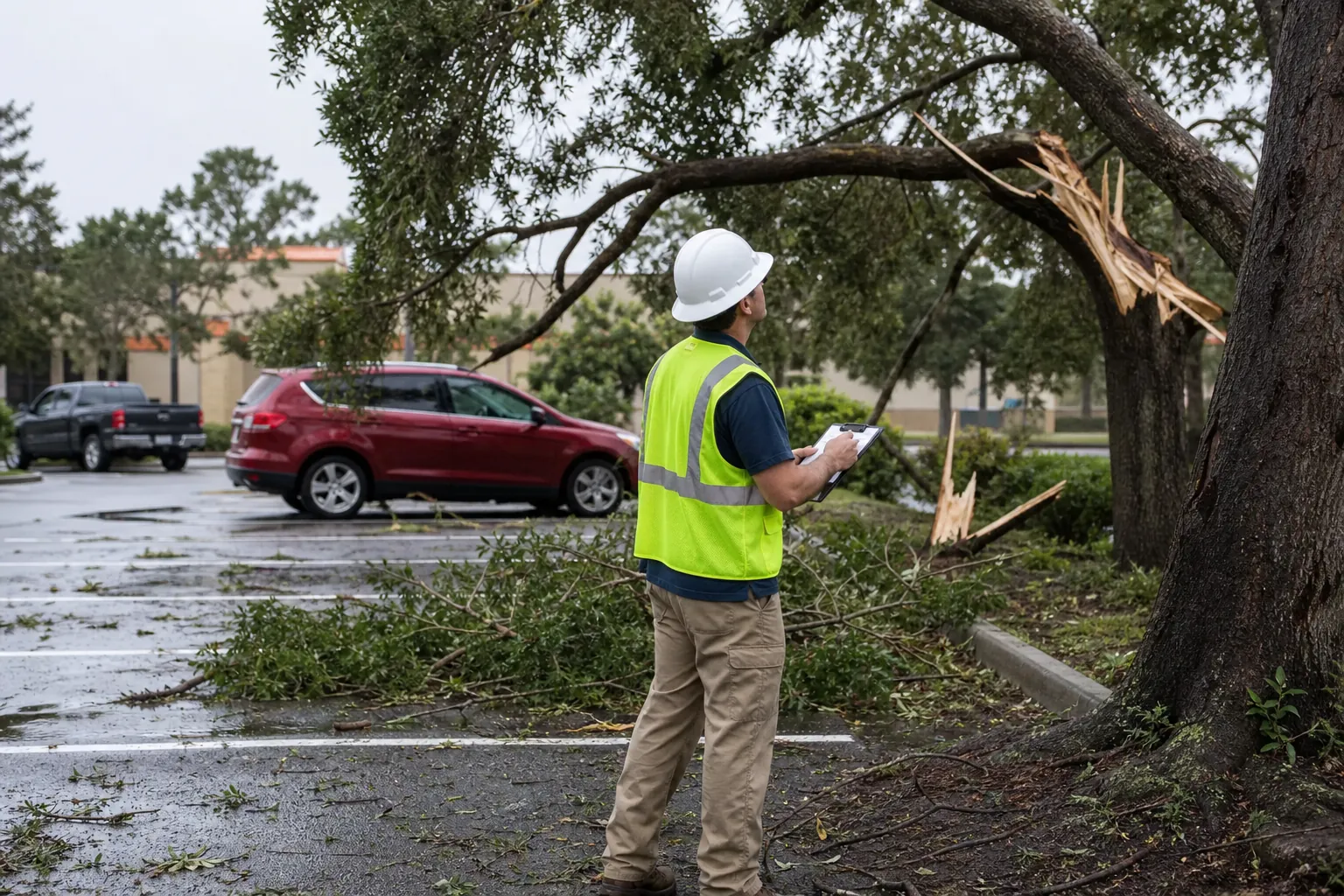
Plan access around the tree work, rather than through it. Mark which parking rows and walks need to stay closed. Ask how vehicles, equipment, and wood will move through the site. OSHA identifies struck-by hazards as a key risk in tree work.
A clear-looking space beside a damaged tree may still sit within the work area. Let the tree service define that area before moving cars nearby. Avoid asking residents to walk beneath branches to reach vehicles. Plan another route when one is available.
Think about more than the main entrance. A lot may have a rear gate, narrow turn, or shared walkway. Give the tree service a simple sketch of these features. Mark fixed items such as light poles, curbs, signs, and fenced areas.
Access planning helps organize cleanup around specific priorities. The initial stage might address a blocked driveway and unstable tree. A later stage might handle scattered debris and remaining branches. Ask how each stage affects pedestrian access and available parking.
- Identify one contact who can share parking changes and receive updates about tree work.
- Map alternate walking routes that avoid damaged trees and the planned work area.
- Ask residents to follow posted closures rather than moving barriers or crossing work zones.
- Keep a current list of parking rows that remain closed after each work stage.
Don't reopen a row because the largest log is gone. Ask whether overhead work and equipment travel are finished there. Check the full route from each space to the building entrance. A usable space still needs a clear way in and out.
What should the hurricane cleanup scope include?
A useful scope separates tree assessment, cutting, wood handling, and final cleanup. It names the affected trees and explains what stays for later work. For Pace homeowners sharing a parking area, this makes the plan easier to follow. It also keeps storm priorities distinct from routine landscape goals.
Start with the tree work itself. Note where tree removal is proposed and where tree trimming may be enough. Emergency and hurricane tree removal may involve a fallen trunk, damaged crown, or blocked access. Describe the actual condition rather than using urgency alone.
Crane tree removal may be considered for some difficult situations. That choice depends on the tree, site access, and work plan. Don't assume a crane can reach every parking area. Ask how the proposed approach fits the lot's layout and nearby structures.
Next, describe what happens to branches, logs, and smaller debris. State which areas need a final pass after larger wood is removed. Include planting beds and curb edges if they are part of the scope. Leaves can hide small wood and uneven ground.
Stump grinding is a separate point to discuss after tree removal. Ask which stumps are included and how the finished area will be left. Note any root-related surface damage that needs further assessment. Don't treat tree removal as a complete repair for damaged pavement.
Commercial tree services and HOA and condo tree services can involve many shared spaces. Connect each cleanup task to a specific location. A general instruction like “clear the lot” leaves important details unresolved. “Remove storm branches from the east parking row” provides a clearer starting point.
Ask for updates when new damage changes the proposed work. Hidden breaks may become visible during a closer assessment. Keep those findings separate from the original notes. This helps everyone understand why the cleanup plan has changed.
What storm debris work should homeowners avoid?
Homeowners should avoid cutting hung branches, climbing damaged trees, or handling wood near wires. Fallen trunks can shift when cut. Storm cleanup can involve loads and forces that are hard to judge. OSHA's tree care safety guidance describes hazards from falling wood, equipment, and electricity.
A branch on the ground may still be bent under pressure. Another limb may hold it in place. Cutting one piece can change how the rest moves. Don't assume that wood is simple to handle because it has already fallen.
Keep children and pets away from debris piles and damaged trees. Don't let a pile become a place to climb or play. Explain which parts of the shared grounds remain closed. Use clear messages that don't ask residents to assess tree hazards themselves.
Small loose debris can wait until conditions and access are suitable. Before starting any ground cleanup, check current weather and nearby hazards. Ready.gov advises protective clothing during cleanup and avoiding contact with floodwater, which can contain dangerous debris.
- Leave branches caught in tree crowns for trained tree workers to assess and remove.
- Stay clear of fallen wires and anything touching them, including trees and fences.
- Do not enter standing water to collect branches or reach a parked vehicle.
- Stop outdoor cleanup when thunder is heard and move into a suitable shelter.
The last step follows National Weather Service lightning guidance: thunder means lightning is close enough to pose danger. Finish the task later rather than stretching an outdoor work session. A cleanup schedule should leave room for changing weather.
How can tree care support the next hurricane plan?
Use the cleanup findings to plan future tree care around parking areas. Note damaged limbs, weak-looking branch unions, and trees that need further review. Tree inspections can guide decisions about trimming or removal. No pruning plan makes a tree stormproof, so keep weather planning and tree care linked.
Begin with trees beside daily routes and frequently used spaces. Ask which concerns require prompt attention and which need continued monitoring. Organize photographs and inspection notes by tree location. Those records help explain changes during a subsequent assessment.
Tree trimming, canopy thinning, and crown reduction serve different aims. Ask why a specific method is being proposed for each tree. Avoid treating every crown alike. The amount and type of pruning should fit the tree's condition and the stated goal.
Don't request heavy cutting simply to make every tree smaller. Ask what live growth would remain and how the proposed work addresses observed concerns. If removal is advised, ask which findings support that choice. Clear explanations are more useful than broad promises about storm strength.
Storm preparation includes maintaining useful site records. Keep a current map identifying parking rows and major trees. Include contact details for the people responsible for sharing storm updates. Store accessible copies for use when normal routines are disrupted.
Before each hurricane season, review the plan against current conditions. A growing crown, new parking layout, or changed tree condition may affect priorities. Follow Ready.gov's hurricane preparation guidance for alerts and evacuation planning. Tree work must not delay following local emergency instructions.
What questions should you ask before cleanup starts?
Ask how the tree service will assess damage, define the work area, and sequence cleanup. Request clear descriptions of tree removal, tree trimming, and any stump grinding. Confirm which parking rows need to stay empty. Keep questions focused on observed damage, access needs, and the proposed storm-care plan.
Describe the site before discussing a work date. Share the number of affected trees, visible damage, and blocked routes. Explain any narrow gates or tight turns. Photos can help start the conversation, though they may leave important conditions unseen.
Ask who will explain changes to the work area. Residents need a clear update if a different parking row must close. A single point of contact helps keep messages consistent. Avoid sending people into the work area to ask for updates.
Finally, review what remains after the main cleanup. There may be trees awaiting assessment or stumps planned for later work. Keep those items on a short follow-up list. Closing the first stage should not erase the work still needed.
Frequently asked questions
Can we move cars before the damaged tree is assessed?
Only consider moving vehicles along a route that avoids the damaged tree and other hazards. Don't approach a car beneath hung limbs or near fallen wires. Ask the tree service about access before entering the affected area. Ready.gov advises staying away from downed power lines.
Does every storm-damaged parking lot tree need removal?
No. Some trees may need damaged branches removed, while others may need full removal. The decision depends on the tree's condition and the damage found. Request a tree inspection and a clear explanation of the proposed work. Don't make that choice from fallen debris alone.
Should stump grinding happen during the first cleanup stage?
It depends on the site's needs and the work sequence. The first stage may focus on damaged trees and blocked access. Ask whether stump grinding belongs in that stage or a later visit. Have the scope state which stumps are included and how the area will be left.
Can a shared parking area reopen after the logs leave?
Log removal alone doesn't show that the area is ready. Overhead work, smaller debris, or equipment movement may remain. Ask which rows can reopen and which must stay closed. Check that residents have a clear walking route from those spaces without crossing the active tree work area.
What information helps start a storm cleanup discussion?
Share the property location, visible tree damage, and affected parking rows. Include photos taken from a clear place, plus notes about access limits. State which routes are blocked and which trees touch structures. Ask what needs an on-site assessment before the cleanup scope can be defined.
For a neutral estimate discussion, call Florida Foliage at (386) 481-7913. Explain your Pace location and hurricane tree cleanup needs. Florida Foliage is headquartered in Daytona Beach; ask about service fit before making plans.
Call (386) 481-7913 to talk through next steps.