Reviewed by Clinton Funk
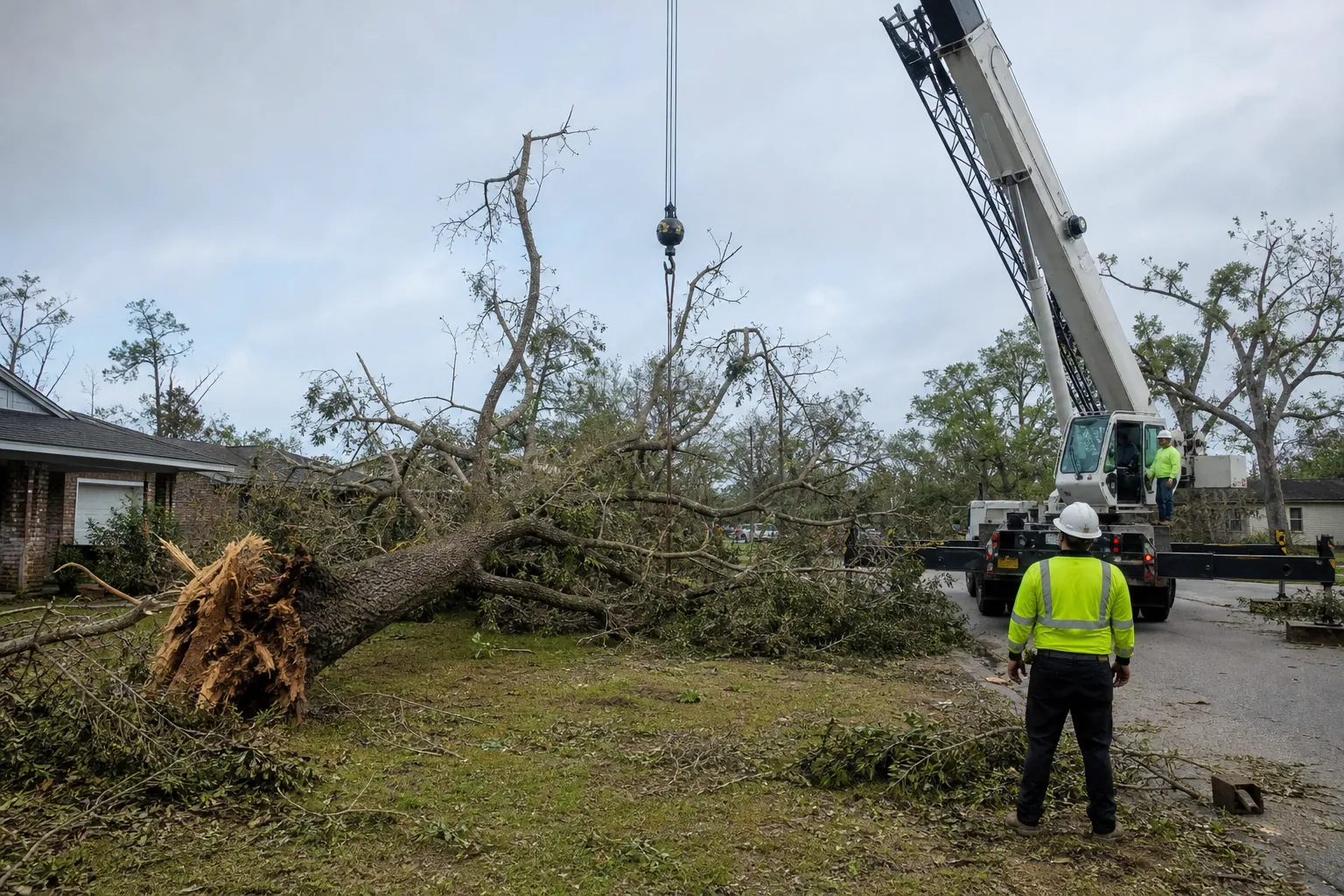
Hurricane crane tree removal may help when damaged trees sit near homes. A crane can support sections where ground access is tight. Yet storm damage alone doesn't make a crane the right choice. The tree, ground, access route, and nearby hazards all need review.
For homeowners in Pace, FL, planning starts with a clear cleanup scope. This guide covers tree assessment, equipment access, debris handling, and follow-up inspections. It also explains what you can document from a safe location. A remote assessment cannot confirm that a damaged tree is safe.
Keep the larger Pensacola-area storm picture in mind. Follow local weather updates before checking your yard. Ready.gov's hurricane guidance advises following official alerts and returning only when authorities say it's safe. Tree cleanup should wait while weather or site hazards remain unsafe.
When might hurricane crane tree removal help?
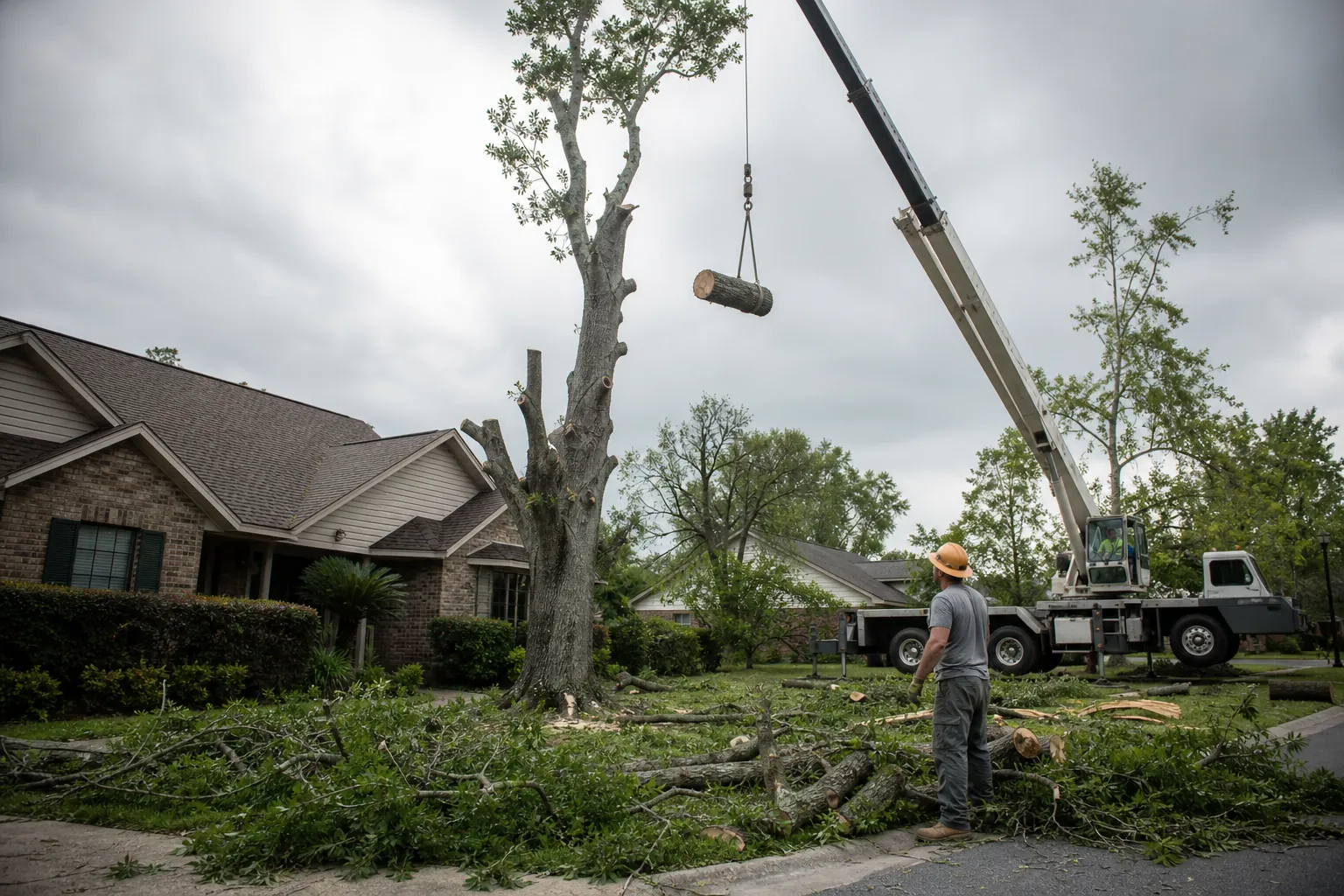
A crane may help remove a damaged tree in controlled sections. This can matter when limbs hang above roofs or tight yards. It may also help when ordinary removal methods offer poor access. A site review must still confirm the lift setup, ground support, and safe work space.
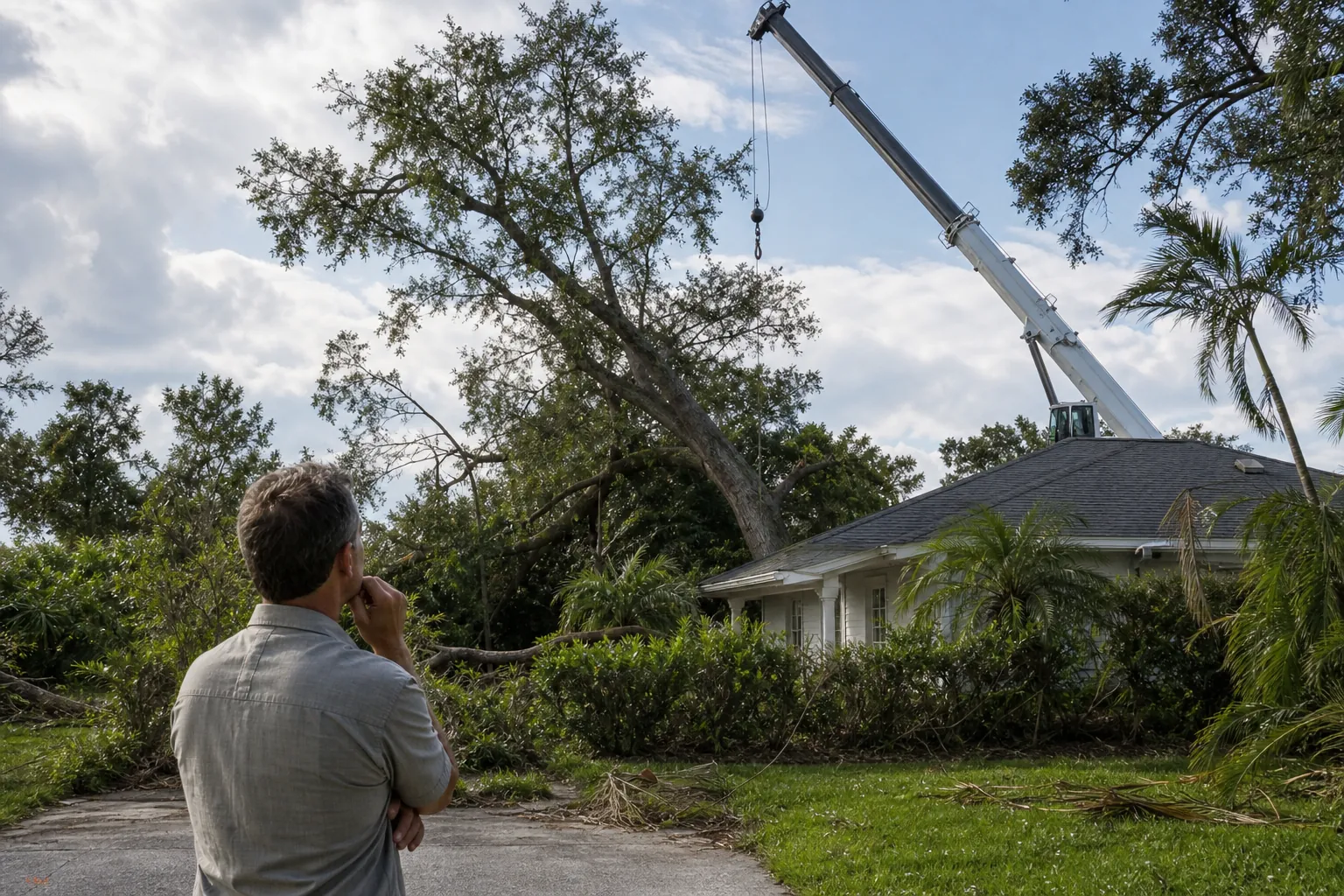
Picture a large tree leaning across a home's rear roof. Its crown may reach beyond a fence into another yard. Workers need a way to control each piece as it comes free. Depending on the site, a crane may support that work from a suitable setup area.
The aim is controlled removal, rather than simply moving a large tree. The removal plan must account for each piece's size and weight. It must also account for where the piece will land. Roofs, sheds, fences, and remaining trees can limit those choices.
Some storm-damaged trees need a different approach. A tree in an open yard may allow removal without a crane. A smaller broken limb may call for tree trimming. Other trees may need a closer inspection before anyone decides on removal.
Crane tree removal does not resolve every access limitation. The equipment needs room to reach its setup location. Its support areas need suitable ground conditions. Nearby power lines can eliminate an otherwise useful position. Those concerns require a site assessment, rather than homeowner guesswork.
OSHA's crane and derrick resources cover ground conditions, power lines, and lift safety. These are planning issues for trained personnel. Homeowners should describe the site and keep clear of the work. They should not choose lift points or direct crane movements.
What should homeowners check before a tree assessment?
Gather simple facts from a safe place before requesting an assessment. Note which tree changed, what it touches, and which access routes remain open. Photos can help explain the situation, but they cannot replace inspection. Don't approach hanging limbs, shifted trunks, or wires to get a better view.
Start with what you can see through a window or safe viewpoint. A wide photo may show the tree and nearby structures together. Another may show the driveway or gate. Skip any image that would require standing beneath damage or crossing a hazard.
Useful details include when you first noticed the change. Tell the assessor if the tree leaned before the storm. Explain which limbs broke and where the debris landed. Mention any recent changes to nearby soil or drainage that you already know about.
- Describe any new lean that appeared during or after the hurricane.
- Note which branches rest on roofs, fences, sheds, or other trees.
- Share safe, wide photos that show the tree and nearby access routes.
- Explain where gates, narrow driveways, and fixed yard features limit access.
- Report visible wires near the tree without approaching or touching them.
A raised patch of soil near the trunk is worth reporting. So are fresh cracks, split branches, or a broken top. These signs help guide an inspection. They don't tell a homeowner exactly how stable the tree remains.
Don't move debris to expose roots or test a branch. The view you already have may be enough for initial discussion. The next step is a tree inspection when conditions allow. Arborist reports can document findings when a written assessment fits the cleanup plan.
NWS guidance for after a hurricane warns about damaged trees and power lines. Ready.gov's power outage guidance says to stay away from downed lines. Treat those areas as hazards, rather than inspection points.
How does crane access shape the cleanup plan?
Crane planning starts with property access and a suitable setup location. The team then assesses ground support, lifting reach, and surrounding hazards. An open driveway alone doesn't establish that equipment can operate there. The complete plan must include tree sections, debris landing areas, and equipment movement.
Tell the assessor about gates and turns along the driveway. Mention low branches that cross the route. Fixed objects may include columns, retaining walls, or yard structures. These details can help explain why a site that looks open may still have limits.
Ground conditions deserve close attention after heavy rain. Water may hide low spots or leave soil soft. A lawn's surface does not reveal all conditions beneath it. The crew must assess the support needed for its equipment and planned lifts.
Share what you know about features below the yard. These may include septic areas, buried irrigation, or drainage routes. Don't guess their exact locations. Explain what you know and where more information may be needed before setup.
Tree size alone does not set the crane plan. Reach can change as the boom extends toward the tree. Obstacles can limit the route of a suspended piece. Piece sizes must fit the equipment and the planned movement.
Ask where cut sections will be placed after lifting. A landing area may need room for trimming and loading. It should connect with the rest of the debris plan. Moving each piece more than needed can complicate a tight site.
OSHA's ground-condition standard for cranes addresses firm, drained, and graded support. Its power-line safety standard addresses electrical hazards during crane work. Homeowners should leave those technical decisions to the personnel planning the job.
What belongs in a hurricane tree cleanup scope?
A useful cleanup scope identifies affected trees and explains what follows removal. It should separate urgent damage from later property maintenance. Include debris handling, equipment access, and any planned stump work. Clear descriptions help prevent confusion about the property's condition when the cleanup is complete.
Start by identifying each tree in plain terms. For example, describe the large pine beside the rear fence. Avoid relying on species names if you aren't sure. A photo and a simple location note can help keep the discussion clear.
Then distinguish whole-tree removal from broken-limb cleanup. One tree may need emergency and hurricane tree removal. Another may need tree trimming after inspection. A third may remain in place while its condition receives further review.
Ask what happens to wood and smaller branches. Some cleanup plans include taking all cut material away. Others may leave selected logs at an agreed location. State your preference before work starts, so the site plan reflects it.
- List each storm-damaged tree by its location and nearby landmarks.
- Separate whole-tree removal from pruning and broken-limb cleanup in the plan.
- Ask where lifted sections will land before they are cut further.
- Clarify which wood and branch debris will leave the property.
- Discuss stump grinding as a separate step after tree removal.
- Ask which access areas need a final review after equipment leaves.
Stump grinding needs its own discussion. Removing the trunk does not mean the stump is included. Ask which stumps are part of the plan. Also discuss how the resulting chips will be handled and what surface remains.
Keep unrelated yard work separate from the storm cleanup. Land and lot clearing or brush hogging may serve another goal. They should not blur which hurricane-damaged trees need attention. A clear scope keeps the immediate work focused.
For shared properties, HOA and condo tree services may involve common spaces. Commercial tree services may involve several buildings or parking areas. In both cases, name the affected trees and access points clearly. Avoid broad descriptions such as clearing everything after the storm.
How can you stay clear of hazards during cleanup?
Homeowners should stay outside the work area and follow crew directions. Keep children, pets, and visitors away from tree work and equipment. Don't try to help by pulling branches or cutting tangled debris. Storm cleanup can expose hazards that are hard to see from the yard.
A fallen tree can still hold bent or loaded branches. Cutting one piece may change how another piece moves. That is why a pile that looks still may remain dangerous. Leave cutting and release of storm-damaged material to trained workers.
OSHA's tree care guidance describes hazards from falling limbs, equipment, and electricity. These risks support keeping residents outside active tree work areas. Ask the crew where you should remain before work starts. Don't assume the porch or driveway is outside the work zone.
Never stand beneath a suspended tree section. Don't cross the landing area to reach a car or gate. Arrange access needs before lifting begins. If you need to leave during work, discuss a safe route first.
Keep power-line concerns separate from ordinary debris cleanup. A branch near a line needs attention from the relevant utility. Don't touch the branch, nearby equipment, or anything contacting the wire. Ready.gov advises staying away from fallen power lines.
- Keep children and pets indoors or away from the active cleanup site.
- Use only the access route agreed on before tree work begins.
- Stay out of areas where crane lifts or debris handling take place.
- Leave tangled limbs and loaded branches for trained workers to handle.
- Follow official weather alerts if another storm threatens the cleanup area.
Weather can change the timing of cleanup. Don't press ahead because equipment has already arrived. NWS lightning safety guidance says to move indoors when thunder is heard. The work team must decide when site conditions allow tree operations to resume.
After work stops, wait for the crew to release the area. A pause does not mean the yard is ready to enter. Equipment, cut wood, and partly removed limbs may remain. Clear communication matters throughout the cleanup, including breaks and final checks.
What tree care helps after the urgent cleanup?
After urgent removal, review the trees that remain on the property. Look for a need for tree inspections, careful trimming, or further assessment. Don't assume every damaged tree must come down. The next plan should match each tree's condition and the site's future storm-care needs.
A standing tree may have broken branches hidden in its crown. It may also have damage that needs closer inspection. The absence of a new lean does not settle the question. Arrange follow-up review rather than relying on appearance alone.
Ask which work is needed now and which can wait. Tree trimming may address specific damaged branches. Canopy thinning or crown reduction may be considered after assessment. Neither should be treated as a standard response for every hurricane-exposed tree.
Heavy pruning can change a tree's form and growing needs. Ask why a proposed cut is useful for that tree. A sound explanation should connect the work to observed conditions. Avoid choosing a treatment simply because a nearby tree received it.
Keep notes from the inspection with your storm-care plan. Include photos, tree locations, and the recommended next steps. Record which work was completed and which trees need later review. This helps keep future discussions clear after another storm.
Before the next hurricane season, update the property's tree list. Review access routes and note new growth near structures. Ask about tree inspections well before bad weather approaches. Planning ahead gives you time to discuss options without rushing through storm debris.
For Pace homeowners, a useful plan addresses the property's specific conditions. It considers damaged trees, surrounding structures, and equipment access together. It does not assume crane removal will always be available or appropriate. The final removal method depends on a current site assessment.
Frequently asked questions about hurricane crane tree removal
These answers cover common planning questions after hurricane tree damage. They offer a starting point for discussing your property. They cannot confirm tree stability or select a removal method remotely. A current site assessment is needed to decide what work fits the tree and surrounding area.
Does every hurricane-damaged tree need a crane?
No. A crane may help where damage, reach, or tight access limits other methods. Some trees can be removed without one. Others may need trimming or further inspection instead. The choice depends on the tree's condition, surrounding space, and equipment setup needs at the property.
Can a tree resting on a roof be lifted away?
Sometimes, but the whole situation needs assessment first. The tree may rest on several parts of the structure. Its branches may also be tangled with nearby trees. A crane plan must address how each section is supported and moved. Don't try to shift it yourself.
Can photos show if a storm-damaged tree is safe?
No. Photos can show visible damage and help explain access limits. They may support an initial conversation about the site. They cannot reveal every crack, root issue, or loaded branch. A tree inspection is needed before deciding that a damaged tree can remain or needs removal.
Is stump grinding part of hurricane tree removal?
It can be included when the scope states it clearly. Tree removal and stump grinding are separate tasks. Ask which stumps will be ground and how chips will be handled. The team should also review access and known underground features before planning that part of the cleanup.
How should I discuss a Pace property with Florida Foliage?
Describe the storm damage, tree location, and visible access limits. Ask about a neutral estimate and confirm location fit before making plans. Florida Foliage's headquarters remains in Daytona Beach. This guide does not establish a Pace crew or local availability. Site details and service arrangements need direct confirmation.
Ready to discuss your storm-care plan? Call Florida Foliage at (386) 481-7913 to ask about an estimate. Share your Pace property details and confirm service-area fit and availability. Keep safety questions and cleanup scope at the center of the conversation.
Call (386) 481-7913 to talk through next steps.