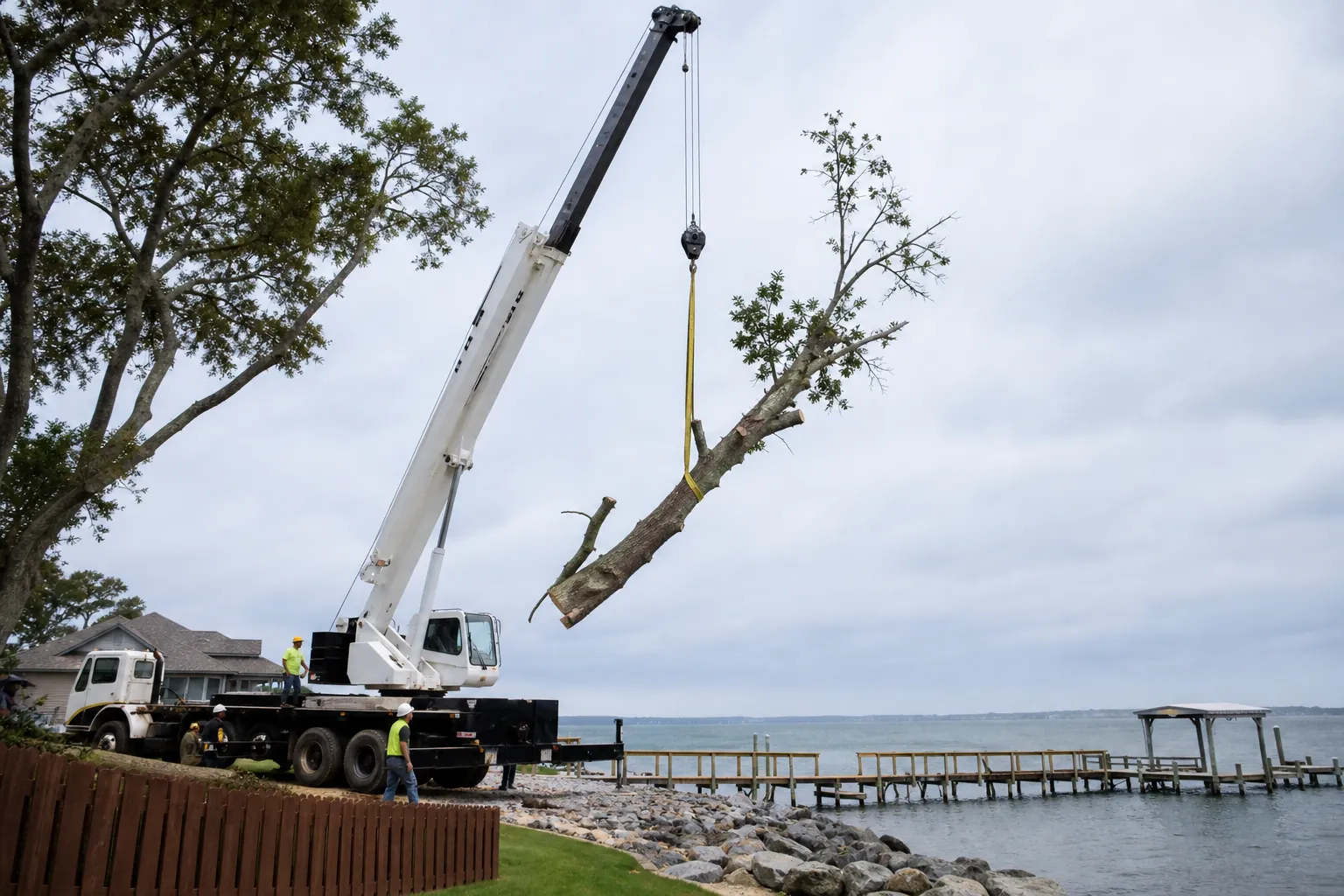
Hurricane crane tree removal setup starts with the tree, ground, and access. A crew must assess storm damage before choosing a lift plan. Homeowners can help by sharing photos and noting changes from a safe place. The goal is a clear work area, safe access, and a defined cleanup scope.
In Gulf Breeze, a damaged tree may lean over a roof or driveway. A crane may help move cut sections across limited ground space. Yet crane use depends on the site, tree condition, and equipment needs. It isn't the right choice for every storm-damaged tree.
The sections below explain what homeowners can gather before a tree assessment. It also covers the questions that help define hurricane cleanup. Florida Foliage is headquartered in Daytona Beach. This page doesn't establish Gulf Breeze crew availability or a local office.
What does hurricane crane tree removal setup involve?
Use the UF/IFAS urban forest hurricane recovery guidance for storm-damaged trees; OSHA provides hurricane debris collection safety guidance for cleanup hazards.
Hurricane crane removal setup involves more than finding room for a truck. The team must assess the tree, lifting path, ground support, and nearby hazards. They also need a clear space for cut sections. Homeowners should describe site conditions, then leave equipment placement and lift decisions to trained workers.
A crane can support and move tree sections during removal. The setup must account for each section and its travel path. Tree shape, damage, and reach all affect the plan. A tree leaning toward a home needs a different assessment from one in open space.
Start by describing where the tree stands. Note nearby roofs, fences, sheds, and parked cars. Explain which side of the property has the widest access. Photos taken from safe ground can make that first discussion clearer.
The crew will need to assess more than visible clearance. A wide driveway doesn't prove the ground can support crane loads. Buried features, edges, slopes, and wet ground can affect placement. Homeowners should share known site details without deciding where equipment belongs.
OSHA's crane standards address ground conditions, power lines, and operating controls. Those standards help explain why setup requires careful site review. They aren't a homeowner guide to operating lifting equipment. See OSHA's crane and derrick safety resources for the equipment safety framework.
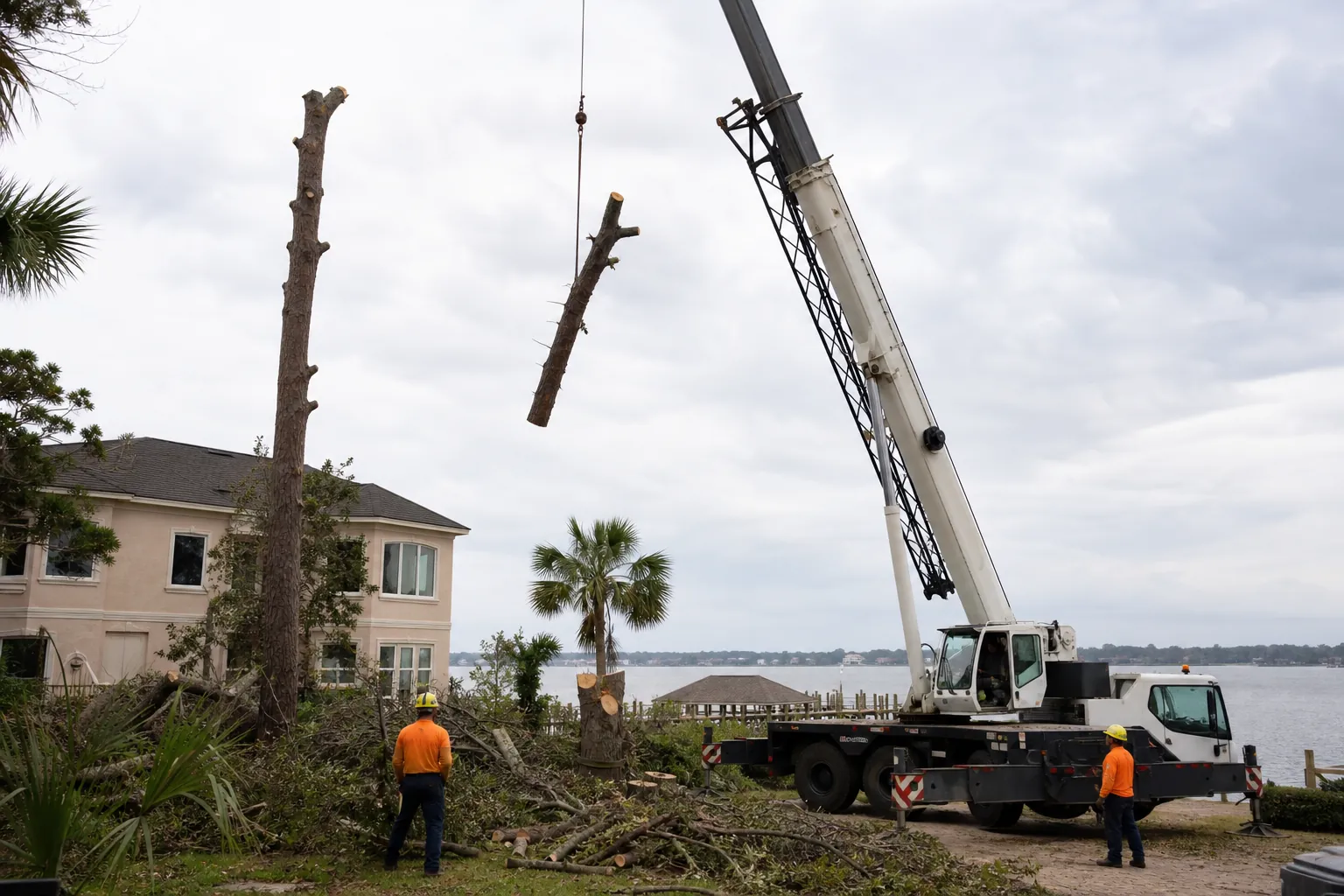
The lift plan also needs a landing space for removed sections. That space may differ from the crane's parking area. Workers need room to process wood and load debris. Ask how the plan keeps those tasks separate from household access.
A useful scope names the damaged tree and nearby obstacles. It describes wood handling, debris hauling, and the expected work area. It should explain which yard tasks remain after tree removal. This helps prevent confusion when the main trunk is gone.
What should you check before requesting a storm tree assessment?
Before requesting an assessment, gather simple facts from a safe viewing point. Describe new leaning, broken limbs, exposed roots, and nearby structures. Share when you first noticed each change. Don't walk beneath hanging branches or enter the work area to get better photos. Remote views are enough to start.
Use the same safe spot for each photo when possible. A wide view shows the tree's place in the yard. A second view can show the driveway and nearby structures. Zoom can capture visible damage without moving closer.
Keep observations plain and specific. Say that a limb rests on the roof, if visible. Say that soil has lifted near the trunk, if visible. Avoid guessing how much weight a limb carries or how soon it may fall.
OSHA identifies falling branches and electrical contact as tree-care hazards. That supports keeping household members away from damaged trees during assessment. Leave close checks and cutting to the work team. Review OSHA's tree-care safety guidance for those hazards.
- Share wide photos that show the damaged tree and nearby structures from a safe place.
- Describe changes in the trunk, roots, or branches that appeared during the storm.
- Note known drains, irrigation lines, or buried features near possible equipment access.
- Explain which gates and driveways provide the clearest view of the work area.
- List storm debris that blocks access without trying to move unstable wood yourself.
Tree inspections can help sort damage across several trees. Arborist reports can document findings when a more detailed record is needed. Neither service should be presented as a remote certainty about tree strength. The actual tree and its surroundings still need review.
Before hurricane season, an inspection may lead to a care plan. Tree trimming, canopy thinning, or crown reduction may be considered. The choice should match the tree's structure and condition. No pruning plan makes a tree immune to hurricane damage.
After a storm, keep the request focused on current damage. Mention any earlier trimming or known decay as background. Ask which trees need removal and which need closer inspection. That gives the assessment a useful starting point without forcing a conclusion.
How do access and ground conditions shape crane setup?
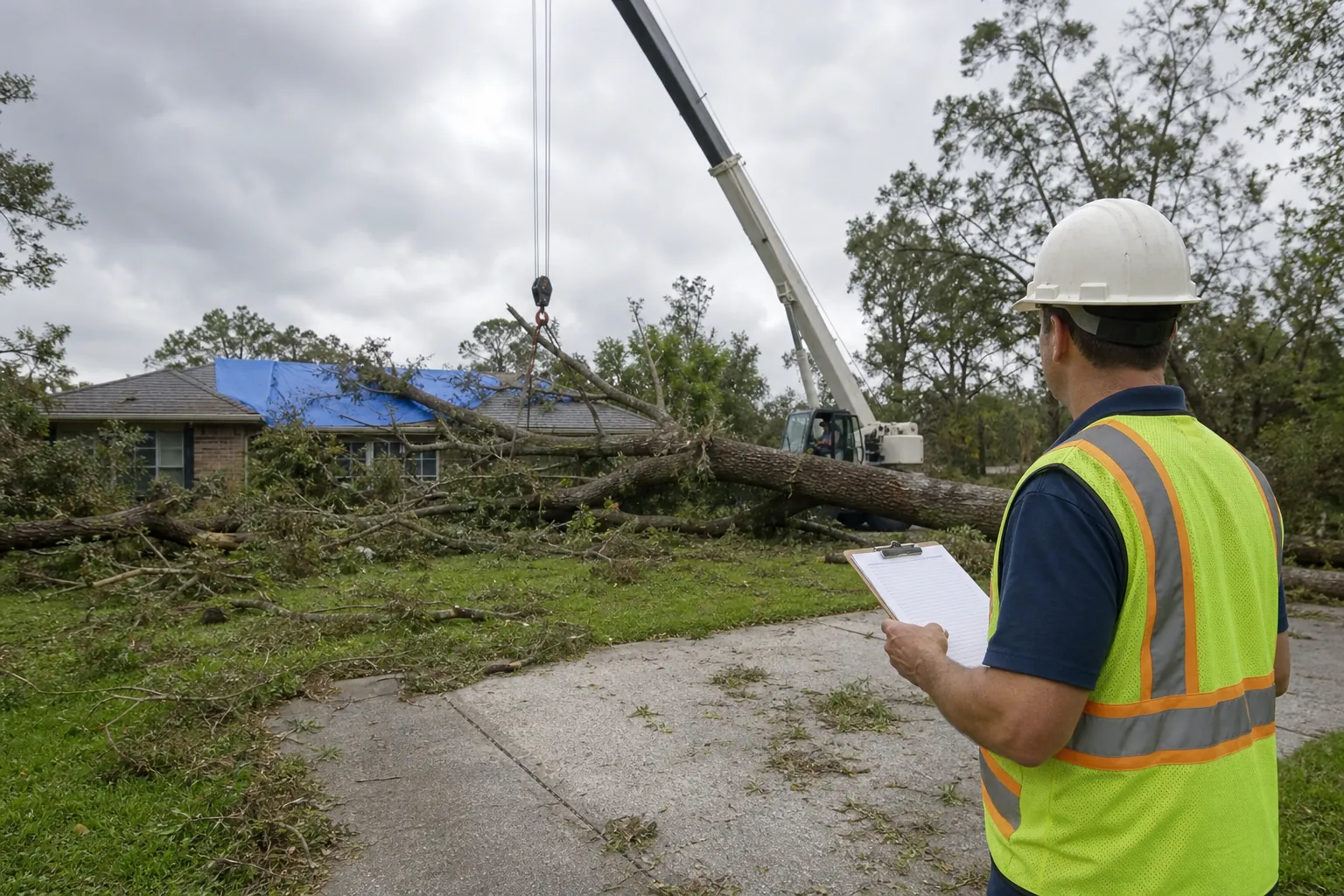
Crane setup depends on usable access and suitable ground support. Gates, turns, overhead space, slopes, and nearby structures all matter. Storm debris can change a route that was clear before. Homeowners should identify known obstacles and buried features. The equipment team must assess the route and choose the setup location.
Think of access as a full route, not one opening. A truck may fit through a gate but lack turning space. A driveway may end too far from the damaged tree. The lifting team needs to review these details together.
Describe surfaces along the route without calling them safe for a crane. Note pavement, lawn, gravel, and visible changes after heavy rain. Share any known soft areas or drainage problems. Ground suitability is an equipment decision, not a homeowner test.
OSHA's crane standards address ground support and setup conditions. They also address hazards from working near power lines. These issues belong in the site's lifting review. See OSHA's crane and derrick resources for those safety requirements.
In Gulf Breeze, describe the property's real layout rather than assuming easy access. A narrow side yard may limit movement between buildings. A pool, patio, or fenced courtyard may shape the landing area. Photos should show these features without entering a damaged tree's reach.
Ask where household vehicles should be moved before work begins. Confirm that any requested route is safe to use first. Don't move a car that sits beneath unstable limbs. The same caution applies to furniture and other outdoor items.
Known irrigation lines, septic features, and drains deserve early mention. Mark their general location on a photo or sketch when possible. Don't dig or probe the ground to confirm them. Share existing knowledge and let the team assess the site.
Access preparation should be a clear part of the storm cleanup discussion. Ask whether fallen brush blocks the planned route. Ask which obstructions need professional removal before equipment arrives. A clean route and a safe route aren't always the same thing.
How should your household prepare for hurricane tree work?
Household preparation starts with clear boundaries and a shared work plan. Ask where people, pets, and vehicles should stay during removal. Keep children away from equipment and debris. Don't enter the landing area to watch or take photos. Let the work team explain safe access before any cutting begins.
A damaged tree can change the usual route around your home. A front door may face the work area. A side gate may open near the landing zone. Tell the team which routes your household normally uses.
Ask for a simple explanation of the work boundary. Know which doors and paths should remain unused. If you need to leave, discuss the route before work starts. Don't cross a barrier or approach equipment to ask a question.
OSHA's tree-care resources describe hazards from falling wood and equipment. They support separating household activity from active tree work. Crane tasks add lifting hazards that need their own controls. Read OSHA's tree-care safety guidance for the main hazard categories.
- Ask the crew to explain the work boundary before anyone starts cutting or lifting.
- Keep pets indoors and away from doors that open toward the active work area.
- Choose one household contact to discuss changes without distracting workers during a lift.
- Move vehicles or loose items only when the route has been confirmed as safe.
- Tell the team about any household access needs before equipment blocks a path.
Preparation also includes watching official weather guidance before the planned work. A tree visit shouldn't replace your household hurricane plan. Follow local instructions about evacuation and shelter. Ready.gov's hurricane guidance explains how to prepare and follow official alerts.
After a storm, report any visible wire near the damaged tree. Don't assume a line is harmless because the lights are out. Stay away from fallen power lines and report them. Ready.gov's power outage guidance supports that precaution.
Do not pull branches from wires or test them with tools. Tree removal and electrical hazards need a coordinated safety response. Tell the service contact what you can see from safety. Let the appropriate professionals decide the next steps.
What belongs in a hurricane tree cleanup scope?
A useful cleanup scope explains what happens after the lifts. It should name the trees, wood handling, brush removal, and final work area. It should also separate tree removal from stump grinding. Ask about damaged nearby trees and blocked access. Clear task boundaries help you plan the yard's next steps.
Start with the main damaged tree and all visible fallen pieces. Some wood may lie far from the trunk. Other branches may be caught in nearby trees. Describe those locations without handling the debris.
Crane tree removal addresses the lifting and removal task. It doesn't automatically define every later yard task. Stump grinding needs its own discussion about access and the remaining stump. Ask what material will remain after each planned service.
Tree trimming may be part of follow-up care for nearby trees. That should follow an assessment of their storm damage. Canopy thinning and crown reduction aren't interchangeable terms for cleanup. Ask why a proposed pruning method suits that particular tree.
For larger storm-damaged grounds, land and lot clearing may be relevant. Brush hogging may suit some broader vegetation tasks after assessment. Those services differ from removing a suspended limb near a house. Keep the request tied to the actual storm cleanup need.
- Name each damaged tree and include separate areas where storm debris has collected.
- Ask whether cut wood and brush will be hauled away or left on site.
- Confirm whether stump grinding is included or needs a separate scope discussion.
- Identify paths that need to be usable once the main removal work ends.
- Ask which nearby trees need another inspection after the immediate debris is cleared.
For shared grounds, HOA and condo tree services can address common areas. Commercial tree services can address storm-damaged grounds around business sites. A useful request identifies paths, entrances, and affected trees. It should avoid assumptions about how quickly any location can be served.
Emergency and hurricane tree removal should still begin with clear hazard details. Explain blocked access, damaged trees, and nearby wires from a safe place. Don't move unstable wood to make the site look ready. OSHA describes falling wood as a tree-care hazard in its tree-care safety resources.
What should happen after hurricane tree removal?
After removal, review the completed work with the service contact. Check the agreed cleanup areas without entering any remaining restricted space. Ask about stumps, leftover wood, and nearby trees needing review. Keep future care tied to what the site inspection found. A finished lift doesn't mean every storm task is complete.
Compare the yard with the agreed scope, one area at a time. Look at the driveway, landing space, and debris collection area. Note any items that need clarification. Use photos from a safe spot to support the conversation.
Nearby trees may be easier to see once debris is removed. That can reveal damage hidden during the first assessment. Ask whether another tree inspection is useful. Don't assume an untouched tree escaped all storm damage.
A follow-up plan may include tree trimming or stump grinding. It may include arborist reports for trees with unresolved concerns. Keep each task linked to a clear finding or need. Avoid choosing broad work simply because equipment was already on site.
Before the next hurricane season, review your household's alert and evacuation plan. Save current tree photos and service notes together. Those records can help explain later changes in the yard. Ready.gov's hurricane preparation guidance supports keeping household storm plans current.
Don't rush to use a newly cleared area during unsafe conditions. Continue following official alerts after the storm passes. Fallen lines and damaged trees may remain nearby. Ready.gov discusses post-storm hazards in its hurricane safety guidance.
Hurricane crane tree removal setup FAQs
Does every hurricane-damaged tree need a crane?
No. The choice depends on tree damage, access, reach, and nearby structures. Some trees may need a different removal method. An on-site assessment should guide that choice. Photos help describe the problem, but they don't establish the full lifting plan.
Can I clear branches before the assessment?
Don't handle branches beneath damaged trees or near power lines. Avoid pulling wood that supports other storm debris. Ask the team what can remain until the assessment. OSHA's tree-care guidance identifies falling branches and electrical contact as key hazards.
Will a crane have to sit in my driveway?
That depends on the site's access and ground conditions. The driveway may be considered, but it isn't an automatic choice. Share known buried features and visible surface damage. The lifting team must assess placement and support needs.
Is stump grinding part of hurricane tree removal?
It needs to be stated in the cleanup scope. Removing a tree doesn't explain how the stump will be handled. Ask about stump grinding, access, and remaining material during planning. This keeps the follow-up yard work clear.
Can Florida Foliage confirm Gulf Breeze availability?
Contact Florida Foliage to ask about the property and service request. The company's headquarters remain in Daytona Beach. This guide doesn't establish Gulf Breeze crews or response timing. Confirm service availability before making plans around a visit.
For a neutral estimate discussion, call Florida Foliage at (386) 481-7913. Describe the storm damage, access, and cleanup needs. Ask about availability for your Gulf Breeze property.
AI-assisted draft with editorial oversight by Tim Francis; Clinton Funk is the named approving reviewer.
Call (386) 481-7913 to talk through next steps.