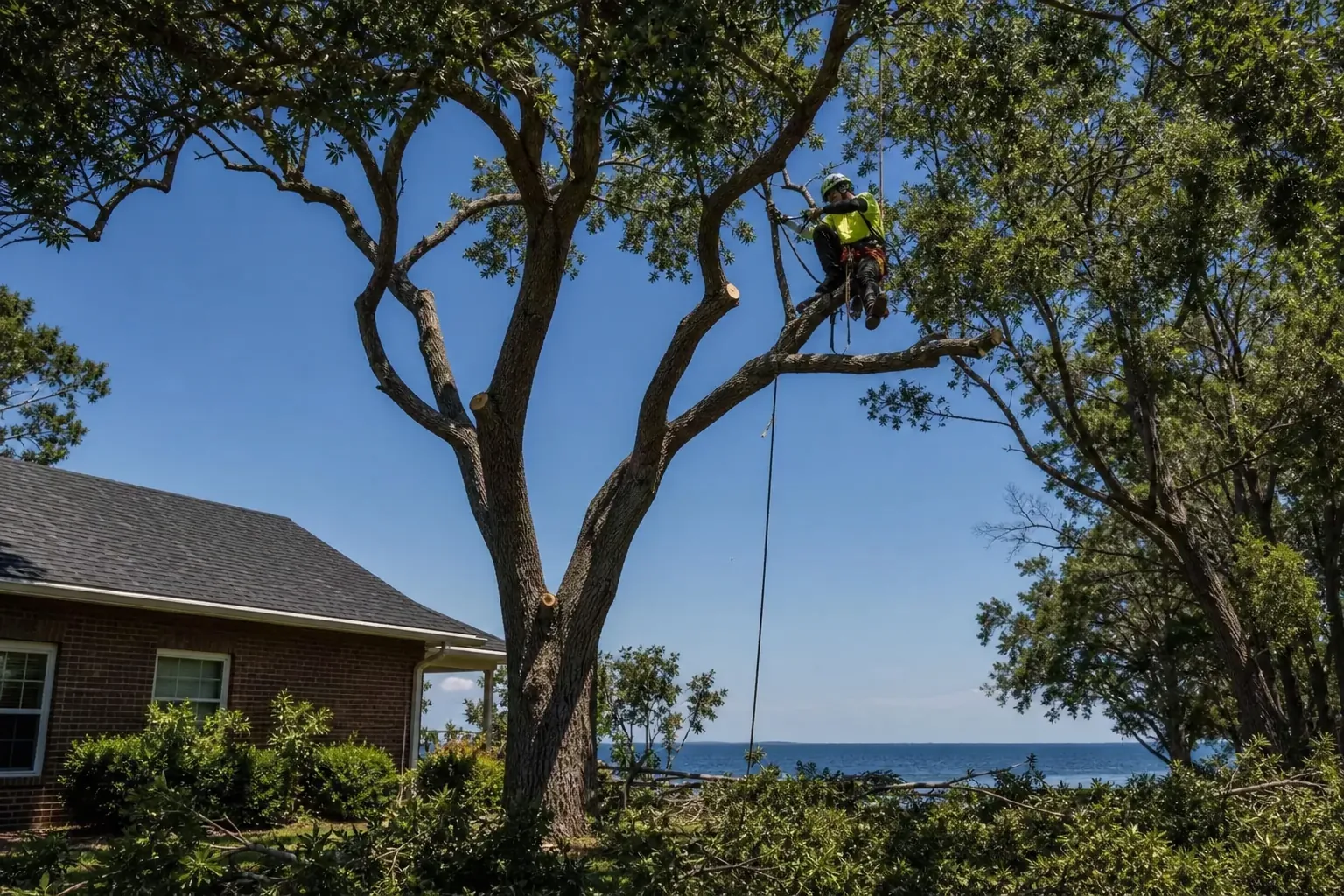
Hurricane crown reduction can shorten selected branches before storm season; It starts with a tree inspection, not a quick height cut; For Gulf Breeze homeowners, the goal is careful tree care. Pruning cannot make a tree storm-proof or fix every trunk, root, or branch defect.
This guide focuses on hurricane readiness near Pensacola, FL. It explains what crown work can address and what needs closer review; You'll also learn how to organize a storm cleanup plan. Florida Foliage is headquartered in Daytona Beach; this guide does not imply local crew availability.
What can hurricane crown reduction do before a storm?
Use the UF/IFAS urban forest hurricane recovery guidance for storm-damaged trees; OSHA provides hurricane debris collection safety guidance for cleanup hazards.
Crown reduction shortens selected limbs while keeping the tree's basic form; It may help address long branches near a roof or driveway; The right scope depends on tree health and branch structure. A tree inspection helps decide whether crown reduction fits your hurricane readiness plan.
A crown is the tree's upper network of branches and leaves; Crown reduction targets specific parts of that network; It should have a clear purpose, such as shortening an overextended limb. It isn't a blanket instruction to make every tree smaller.
Good planning starts with the reason for each cut; Is a branch stretched far beyond the rest of the crown? Does it reach over a roof, gate, or main path? Has past damage changed how the limb grows? These questions help define the work.
Reduction cuts generally return a branch to a suitable side branch; That is different from cutting every limb at the same height; The size and position of that side branch matter. Ask the tree professional to explain the proposed cuts before work begins.
Pruning leaves wounds, so more cutting isn't always better. A thin or stressed tree may need a different plan; Large cuts may bring concerns that outweigh the benefit of a smaller crown; Those choices need a close look at the individual tree.
Think in terms of specific branches and clear goals. A request to remove the top half skips too many details; Ask which limbs need work and which should remain. A useful plan explains how the cuts support future growth.
No pruning plan removes the need for hurricane precautions; Follow local alerts and evacuation instructions when storms threaten; Keep tree work separate from your family's immediate safety plan. Ready.gov's hurricane guidance explains alerts, shelter planning, and steps to take before a hurricane.
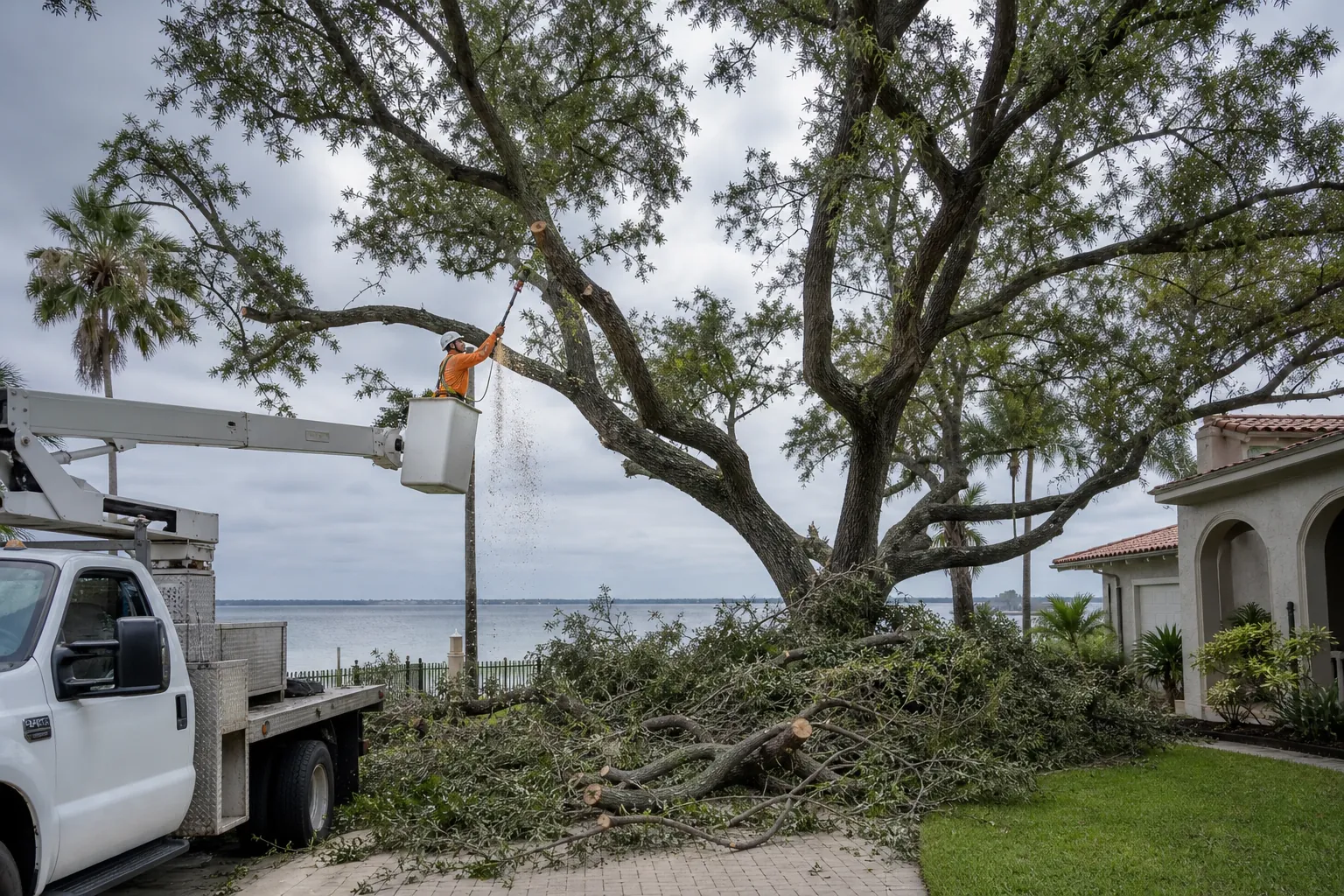
How does crown reduction differ from thinning and topping?
Crown reduction changes the reach of selected branches; Canopy thinning removes selected branches within the crown; Topping cuts major limbs back without keeping the tree's natural branch form. These approaches are different. Your hurricane tree plan should name the intended work, rather than use a vague request like heavy pruning.
Tree trimming is a broad service term; It may include removing dead branches, addressing clearance, or making selective cuts; Crown reduction and canopy thinning describe more specific work. A clear scope helps you understand what will change before storm season.
Canopy thinning doesn't necessarily shorten the tree's longest limbs; Crown reduction doesn't require stripping leaves from the whole crown. A tree may need one approach, a careful mix, or neither; The inspection should guide that choice.
A sparse crown isn't proof of better storm readiness; Removing many inner branches can leave foliage mostly at limb ends; Ask how the proposed work will preserve useful foliage and branch balance. Avoid judging the plan by the size of the debris pile.
Topping is different from planned reduction to suitable side branches; It can leave large wounds and alter future growth; If someone proposes a flat top or a uniform height cut, ask questions. Request a branch-level explanation rather than accepting a broad label.
- Ask which branches need shortening and how each cut supports the storm readiness goal.
- Ask whether dead or damaged limbs need removal before any live crown work begins.
- Ask how much healthy foliage will remain after the proposed pruning is complete.
- Ask whether past pruning has created defects that change the current tree care plan.
You don't need to know every pruning term; You do need to understand the purpose and limits of the work; Photos or marked branches can help make the discussion clear. Keep those notes with your hurricane tree care plan.
Don't attempt crown work from a ladder before a storm; Tree care involves fall, cutting, and falling-object hazards. OSHA's tree care guidance describes these hazards and the need for proper work practices. A rushed homeowner pruning job adds risks that a smaller crown cannot solve.
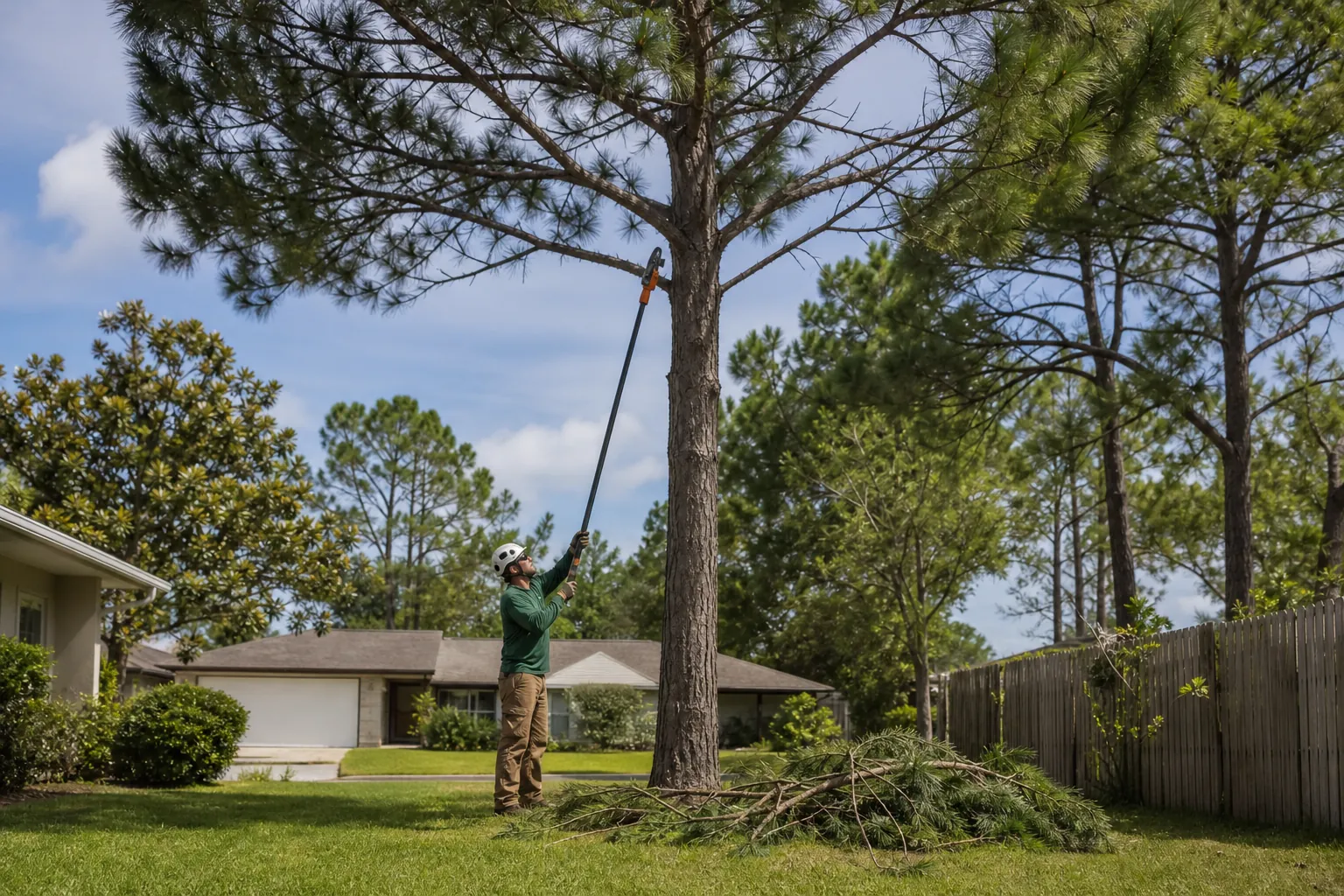
Which trees need inspection before hurricane crown work?
Trees with visible damage need inspection before a pruning plan; Look for changes from your normal view, without approaching a suspect tree. A smaller crown won't fix every root or trunk problem; The inspection should review the whole tree, its surroundings, and the branches you want addressed.
Start with what you already know about the tree; Has it lost a large limb in a past storm? Did its lean change after heavy rain or wind? Has nearby digging disturbed the ground? Share that history with the person assessing it.
Photos from earlier seasons can help explain a change. A trunk may have leaned for years without a recent shift. A fresh change calls for a different discussion; Don't try to test the tree by pushing, climbing, or pulling branches.
Visible cracks, cavities, and broken limbs deserve attention; So do dead crown sections and areas where bark has come away; These signs don't all lead to the same outcome. They give the inspector reasons to look more closely.
Root conditions can matter as much as crown shape; Soil changes, root damage, and limited growing space may affect the care plan; Cutting branches alone may leave the main concern unchanged. Ask the inspector to explain any limits to crown reduction.
- Note any recent change in the tree's lean from a safe viewing point.
- Share photos that show past storm damage or changes in the crown.
- Point out roof edges, gates, and paths that affect the planned pruning scope.
- Describe recent digging or changes in the ground near the tree.
- Ask which findings support pruning and which require a different tree care approach.
Tree inspections and arborist reports can help organize these findings. A useful report separates visible conditions from questions that need more review; It should also explain the reason for each proposed action; Don't treat a written report as proof that storm damage cannot occur.
A hanging limb or damaged tree may create an immediate hazard; Keep people away rather than inspecting beneath it. NWS guidance for after a hurricane warns about damaged trees and other hazards; Use distant observations to brief the tree professional.
When should Gulf Breeze homeowners plan hurricane pruning?
Plan tree inspections before a storm threatens Gulf Breeze; This gives you time to review findings and define the work; Don't wait for an approaching hurricane to request major crown changes. Once warnings affect your area, focus on official instructions, household readiness, and keeping people away from tree hazards.
A routine pre-season review gives you a useful starting point; Walk through your tree concerns from safe places on the property; List the branches you want assessed and why. Keep the list short enough to discuss each concern in detail.
There isn't one pruning date that suits every tree. Species, health, past cuts, and the proposed work all matter. Ask how timing may affect the tree's response. A plan for one tree shouldn't become a rule for the whole yard.
Gulf Breeze properties may have trees near homes, fences, and narrow access routes. Those features shape the work plan. Tell the tree professional about gates and areas that need to stay clear. Don't assume equipment access from a street-side photo.
Use the quiet planning period to record the tree's condition. Take photos from fixed points you can use again later. Note completed pruning and any issues set aside for follow-up. After a storm, these records may help explain what changed.
New damage can change an earlier plan. A tree marked for light crown reduction may need fresh assessment after a storm. Don't ask a crew to follow old notes without checking current conditions. The same applies after nearby ground disturbance or a large limb failure.
Storm warnings are not a cue for last-minute ladder work. Secure your household plans and follow evacuation directions from local officials. Ready.gov's hurricane preparation guidance supports early planning and following official instructions. Tree work should not delay those steps.
Think of hurricane readiness as a repeated care process. Inspect, choose a clear scope, record the work, and review changes. That approach is more useful than one heavy pruning session. It also keeps future decisions tied to the tree's actual condition.
What should a hurricane tree work plan include?
A useful work plan identifies each tree and the reason for treatment. It states which services fit the findings and what remains outside the scope. Crown reduction may be one part of that plan. Tree trimming, tree removal, or follow-up inspection may be more suitable for other trees.
Name trees by location if you don't know their species. For example, describe the tree beside the rear gate. Add a photo so everyone refers to the same tree. This avoids confusion when several trees have similar crowns.
Describe the desired outcome without setting an arbitrary cutting target. Shortening a selected roof-side limb is clearer than removing half the canopy. Ask the professional to explain what is practical. The plan should preserve limits rather than promise a particular storm result.
Tree removal may be discussed when pruning doesn't address the main concern. Some removal work may need a crane because of tree position or access. Crane tree removal is a work method, not a default recommendation. Ask why that method fits the assessed tree.
Stump grinding is separate from crown work and tree removal. If removal forms part of your storm plan, clarify the stump scope. Also define what happens to branches and larger wood. These details help keep cleanup expectations clear.
- Identify each tree with a location note and a clear reference photo.
- State the branch concern and the purpose of each proposed pruning task.
- Record any tree findings that crown reduction cannot address on its own.
- Define which wood, branches, and stumps are included in the cleanup scope.
- Ask what follow-up checks may be needed after the work or another storm.
Shared sites need a clear point of contact and site map. HOA and condo tree services can use the same tree-by-tree approach. Commercial tree services may also involve access routes and common outdoor areas. Keep each concern tied to hurricane readiness or storm cleanup.
Never assume tree workers can treat nearby power lines as harmless. Electrical hazards need a separate safety response. OSHA's tree care guidance identifies power-line contact among major tree work hazards. Tell the assessor where lines are present without approaching them yourself.
How should you approach tree cleanup after a hurricane?
After a hurricane, begin with official safety updates, not debris work. Survey tree damage only when conditions allow a safe view. Broken branches, damaged trees, and power lines can make a yard unsafe. A fresh assessment should guide cleanup and any change to the earlier crown reduction plan.
Follow local instructions about returning home and moving through affected areas. A familiar yard can contain new hazards after a storm. NWS after-hurricane guidance warns about downed lines, damaged trees, and flood hazards. Don't enter an unsafe area to check a favorite tree.
Keep clear of any tree or debris touching a power line. Report downed lines through the proper local emergency or utility channel. Ready.gov's hurricane guidance advises staying away from power lines and floodwater. Never try to move branches away from wires.
When a safe view is possible, record what you can see. Wide photos can show which trees and access paths are affected. You don't need close-up images from beneath broken limbs. Describe hidden areas as unknown rather than entering them to complete the list.
Separate loose ground debris from attached or hanging branches in your notes. Both may need cleanup, but they involve different work. Note trees resting on structures or blocking access. Share these observations when discussing emergency and hurricane tree removal.
Storm-bent limbs and loaded wood can move during cutting. Leave that work to trained tree workers. OSHA's tree care guidance covers cutting and struck-by hazards in tree work. A branch that looks still may be part of an unstable tree.
Don't assume every damaged tree needs removal. Don't assume every standing tree needs only trimming, either. The post-storm inspection should sort those choices. Crown reduction may still fit some trees, while others need a different scope.
Once urgent hazards are addressed, review the remaining trees. Update photos, work notes, and any follow-up inspection needs. Keep cleanup and future pruning as separate decisions. This helps avoid unnecessary cuts made simply because a storm has passed.
Frequently asked questions about hurricane crown care
Can crown reduction make a tree storm-proof?
No. Crown reduction addresses selected branches, not every possible tree failure. Roots, trunks, tree health, and storm conditions still matter. An inspection can explain the purpose and limits of pruning. Keep following official hurricane guidance even after planned tree work is complete.
Should every tall tree be shortened before hurricane season?
No. Height alone doesn't establish the right pruning scope. The tree's structure, condition, and surroundings need review. Some trees may need limited trimming or no crown reduction. Ask for a tree-specific reason before approving cuts to healthy branches.
Can I cut a long limb myself before a hurricane?
A long limb can involve falling wood, tool, and fall hazards. Don't rush into ladder or chainsaw work as a storm approaches. OSHA's tree care guidance explains these risks. Arrange assessment early and keep away from damaged limbs.
Does canopy thinning replace crown reduction?
No. Thinning and reduction address different parts of the crown. Thinning may leave a long limb's reach unchanged. The inspection should identify the concern before choosing the method. Ask how the proposed cuts relate to your storm readiness goals.
What should I share when asking about storm tree work?
Share safely taken photos, the tree's location, and any known damage history. Describe nearby structures, access limits, and power lines. Explain if you need pre-storm planning or post-storm cleanup. Don't approach a damaged tree just to gather more detail.
To discuss tree care needs or request an estimate, call Florida Foliage at (386) 481-7913. Florida Foliage is headquartered in Daytona Beach. Ask about service-area fit and the proposed assessment scope for your Gulf Breeze property.
AI-assisted draft with editorial oversight by Tim Francis; Clinton Funk is the named approving reviewer.
Call (386) 481-7913 to talk through next steps.