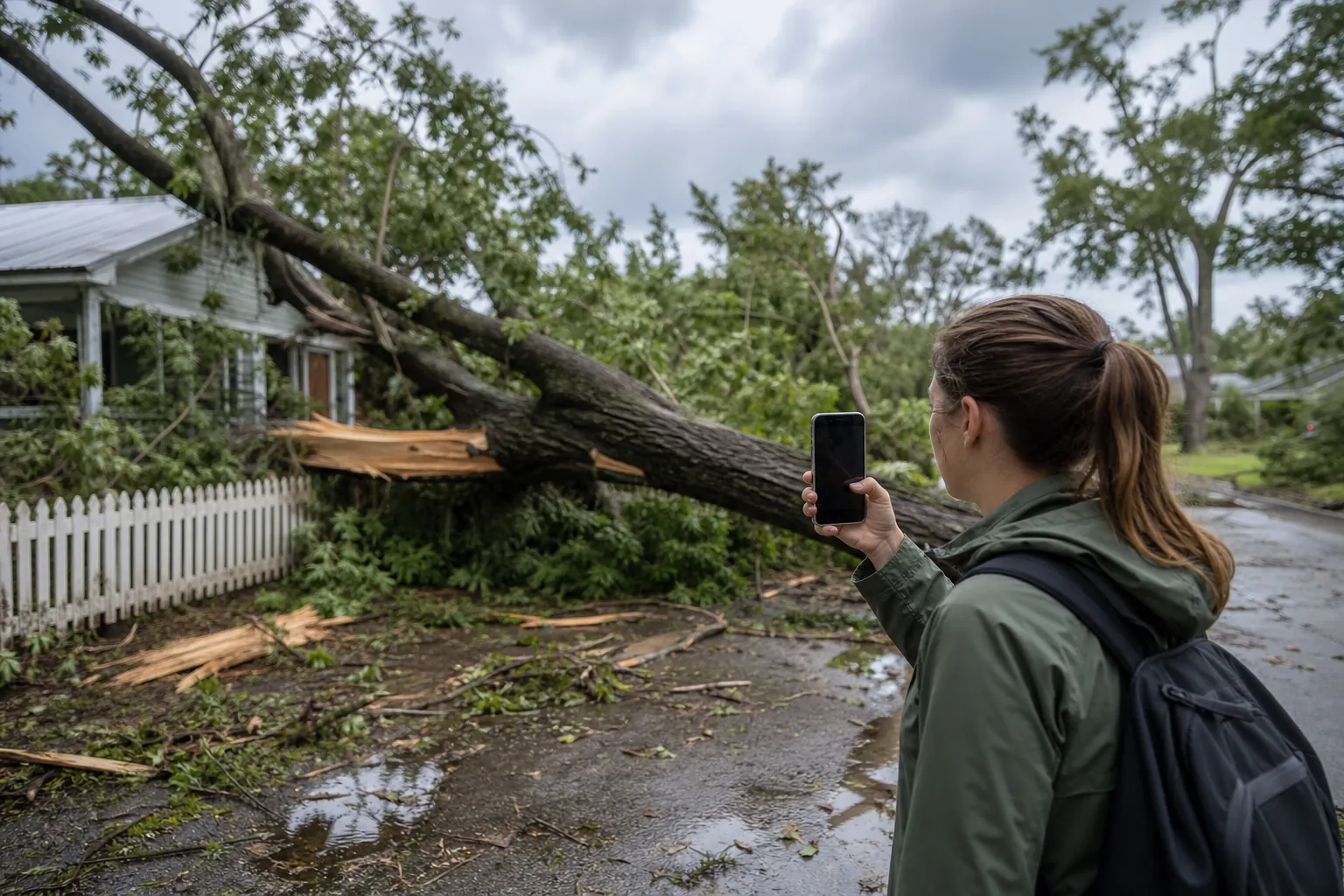
For a hurricane tree call about a Pensacola property, share the address, what you can see, whether wires are visible, how access looks, and who is at home. Describe what you see. Do not decide what caused the damage or whether a tree is safe. This guide supports our page on emergency tree removal in Pensacola. It can help you organize a clear message. Florida Foliage is headquartered in Daytona Beach. Contact does not confirm service in Pensacola.
Written by Tim Francis, who is responsible for this article's content and editorial presentation. Clinton Funk is Florida Foliage's owner and has decades of hands-on tree care experience. No personal review of this draft is attributed to him.
What should you share first on a hurricane tree call?
Start with the property address, your name, a callback number, and a short description of what you can see. Use the Florida Foliage contact page to choose how to get in touch. Read the company background for context. Neither page confirms service in Pensacola or a response time.
Start with the property location, not a long account of the storm. Then name the part of the property involved. Words such as front yard, driveway, or back corner help the recipient follow your description. You do not need to know the tree species to explain where something is.
Keep your first message short enough to read back. Use a separate note for extra details, questions, and changes you notice later. This helps keep old and current information separate.
- Give the full street address and identify Pensacola, FL as the property location.
- State which number to use to reach you and whether another household member is the main contact.
- Describe the main visible issue in one sentence, such as a branch lying across the driveway.
- Say when you saw it, using plain words such as this morning or after the storm passed.
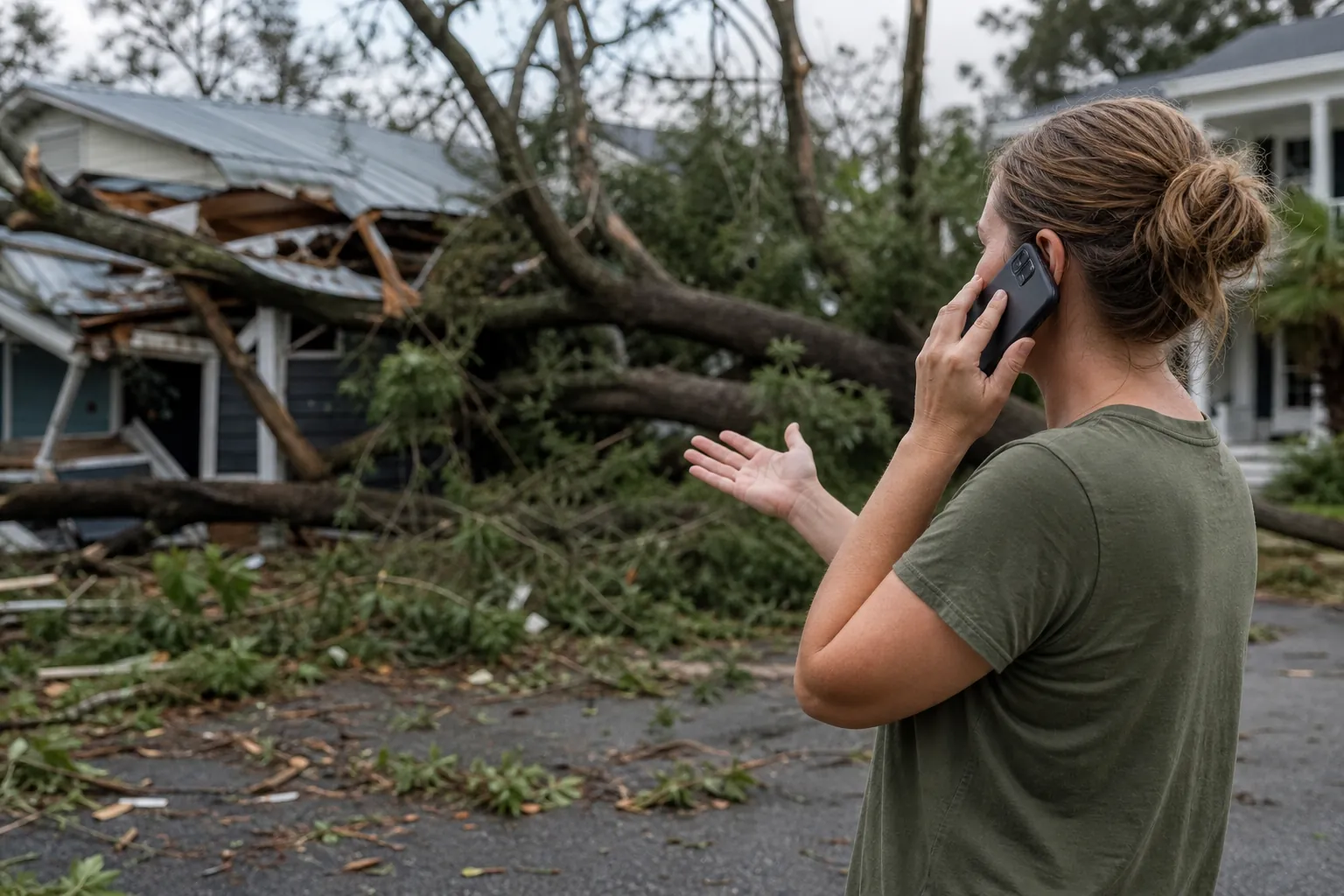
How can you describe damage without diagnosing a tree?
Describe shapes, positions, and changes you can see. Do not label a tree stable, unstable, healthy, or beyond saving. The tree removal service overview and tree trimming service overview explain service types. They do not make a homeowner's description an assessment of a particular tree.
A useful observation is clear and specific. “A branch is on the lawn” tells the recipient what you saw. “The whole tree must come down” is a conclusion your note cannot prove. Likewise, “the trunk looks tilted compared with yesterday” describes a visible change. It does not judge what caused it.
Storm-damaged tree work includes falling-limb and unstable-tree hazards, according to OSHA's hurricane tree-work guidance. A call should share what you see. It should not ask a homeowner to investigate those hazards.
- Use words such as lying, hanging, leaning, or broken only to describe what you can see.
- Separate what you saw yourself from what a neighbor reported.
- Write “I cannot tell” when your view is blocked or a detail is unclear.
- Do not use a photograph as proof that a tree is safe.
You can leave blanks in your notes. An honest gap is more useful than a confident guess about roots, internal wood, or why a limb fell.
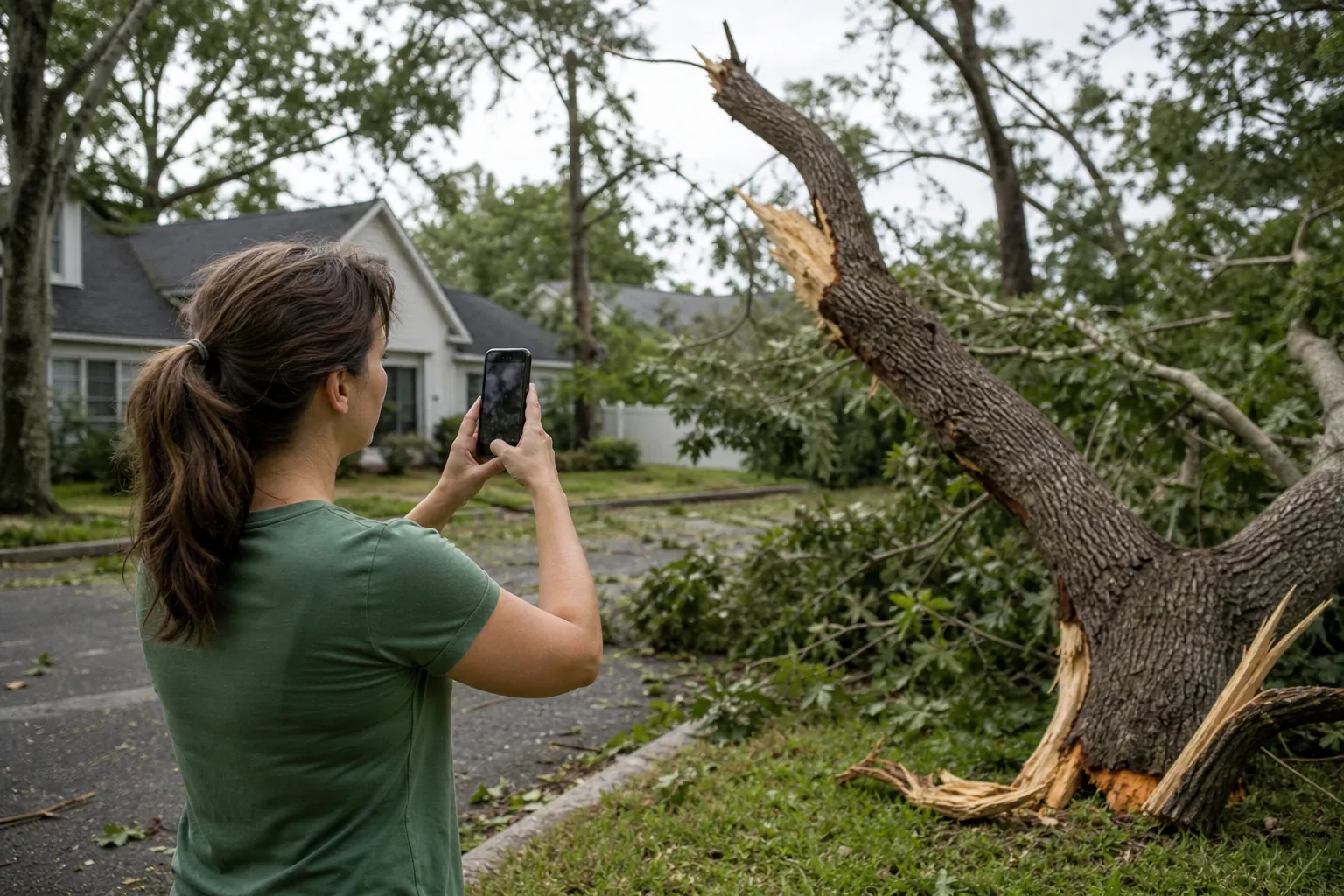
What should you say if wires are visible?
Say that wires are visible, describe where they appear to be, and state what you cannot identify. Use the contact options to share what you see. The tree removal information page gives service context only. Neither contact nor a service description tells you the electrical status of a wire.
Downed electrical conductors can energize trees and fences. Avoid direct and indirect contact, as explained in OSHA's hurricane tree-work guidance. Do not try to identify or test a wire while preparing your call.
Keep your wording simple: “I can see a line near the fallen branch, but I do not know what kind it is.” If you cannot see whether they touch, say so. That is more accurate than assuming the line is not related to the tree.
- Mention visible wires early, not at the end of a long message.
- Describe whether a wire appears on the ground, near a tree, or near a fence. Do not add a conclusion.
- Clearly label secondhand information as something another person told you.
- List the wire type and electrical status as unknown if you do not know them.
A good note keeps uncertainty clear. You do not need to answer every question before you get in touch.
Record access conditions and household details
Use the property contact form to organize access information. Check the Florida Foliage company information before assuming where the business is based. Report what access looks like, not what equipment could fit or what work could take place. These are different kinds of information.
Describe the route in everyday words. You might note that the front driveway is visible from the street, a gate is closed, or a branch lies across the usual walkway. These details explain the setting. They do not predict how anyone would approach the work.
For household information, share only what matters for communication. Say whether someone is home, who can answer a callback, and whether the recipient should speak with you before contacting another household member. You do not need to include private medical information in a general tree message.
- Identify the entrance you normally use when describing the property.
- Note visible objects in the access route. Do not move them to improve your report.
- Say whether the person making the call is at the property now.
- Choose one household contact so messages do not get spread across several people.
If someone else gave you the information, say so. A caller who is away from the property can still share clear information without claiming to have seen current conditions.
Keep storm safety separate from call preparation
The removal service description and trimming service description explain types of tree work. They are not instructions for household storm cleanup. Use call preparation to record information you already have. For safety guidance, use its trusted source rather than a service page.
The National Weather Service advises walking carefully around the outside of your home to check for loose power lines, gas leaks, and structural damage. See its after-a-hurricane safety guidance. This is general storm guidance, not a reason to make a special inspection for a tree call.
Stay out of any building if you smell gas, floodwaters remain around it, or authorities have not declared it safe, according to the National Weather Service. Never use a portable generator inside your home or garage. The National Weather Service gives this advice too.
- Keep your household storm notes separate from the tree message.
- Include a relevant condition you already know about. Do not set out to collect more details.
- Mark information as unknown when you cannot describe it.
A tree inquiry is a way to share information. It should not become a checklist that makes you gather every missing detail before sending a message.
Organize a message you can read back
The Florida Foliage inquiry page gives you a place to start. The owner and company background page provides business context. Before you get in touch, put your notes in a simple order. This is a household organizing tip, not a technical assessment or a promise of service.
A numbered note can help you avoid repeating yourself. Use short sentences. Keep the main uncertainty next to the observation it relates to. For example, write “type unknown” on the same line as a note about a wire, not several paragraphs later. You can use this order for a call or a written message.
- Write the property address, your name, and your preferred callback number.
- Sum up the visible tree issue and name its location on the property.
- Note visible wires and clearly state anything you cannot identify.
- Describe the usual entrance and any visible objects across the access route.
- Say whether someone is home and name the main household contact.
- Ask whether Florida Foliage can address an inquiry for this Pensacola location.
- Read the note once and remove repeated details.
- Replace conclusions about the tree with descriptions of what you saw.
- Put questions on a separate line so they are easy to find.
You do not need a polished story. A clear list of facts and unknowns is enough to start the conversation.
Keep cleanup questions at the observation level
The tree removal overview can help you name the subject of your inquiry. The tree trimming overview gives a separate service type for context. Neither page tells you which service a storm-damaged tree needs. Keep your message focused on what you can see and what you want to ask.
Tensioned tree material and rolling or sliding limbs are hazards noted in OSHA's hurricane tree-work guidance. Your call notes do not need to decide whether a branch is under tension or could move.
Keep people who are not needed outside work and drop areas, as directed in OSHA's hurricane tree-work guidance. A homeowner's rough description should not be treated as a definition of those areas.
- Describe where fallen material is visible. Do not suggest how to move it.
- Ask what other information the recipient needs instead of guessing at a work plan.
- Keep household cleanup preferences separate from your description of the tree.
- Say an area is not visible rather than trying to fill in the gaps yourself.
The goal is to pass on useful information. It is not to choose methods, decide the tree's condition, or prepare the property for work before you have spoken with someone.
Make a neutral contact step and save your notes
Use the Florida Foliage contact page to make a neutral inquiry. The company profile provides business context. Florida Foliage is headquartered in Daytona Beach. Ask whether it can address your Pensacola inquiry. Do not assume there is a local office, available crew, or set response time.
You can call (386) 481-7913 and read your organized note. You could begin: “I am contacting you about a property in Pensacola. Can you tell me whether you can address an inquiry for this location?” Then share the address and what you can see. Do not predict what will happen next.
- Save what you said so another household member can understand what you shared.
- Write unanswered questions in a separate note.
- Label later updates with when you saw them. Do not replace the original description.
For more context, return to the supporting page on emergency tree removal in Pensacola. This article has a narrower purpose: to help you share the location, what you see, what is uncertain, access, and household contact details. A clear message can be complete without a diagnosis, a work plan, or a promise of availability.
Frequently Asked Questions
Do I need to know the tree species before calling?
No. Start with the address, where the tree is on the property, and what you can see. If you know the species, add it as a separate detail. If you do not know it, leave it unknown. The species name does not replace a description of current conditions. Guessing may make your message less clear.
Can a photograph show that a storm-damaged tree is safe?
No. Do not use a photograph as proof that a tree is safe. An image can show a visible condition, but your message should still separate what you see from a diagnosis. If you already have an image, say when you took it and what it shows. You do not need to take new photos to make a basic inquiry.
What should I say when I cannot identify a wire?
Say that a wire is visible and its type is unknown. Describe only where it appears to be. Downed electrical conductors can energize trees and fences, so avoid direct and indirect contact, according to OSHA's hurricane tree-work guidance. Keep that uncertainty in your report. Do not label the wire or assume its electrical status.
Does calling Florida Foliage confirm Pensacola availability?
No. Florida Foliage is headquartered in Daytona Beach. Contact does not confirm service in Pensacola or a response time. Call (386) 481-7913 or use the contact page to ask whether the business can address your location. Share your property information without assuming an office or crews are based nearby.
What if I am away from the property?
Tell the recipient that you are away and say where your information came from. Separate what you saw earlier from a household member's current report. Give a callback number and say who the main contact is. You can leave current conditions unknown rather than combine several reports into one account that sounds firsthand.
Call (386) 481-7913 to talk through next steps.