Reviewed by Clinton Funk
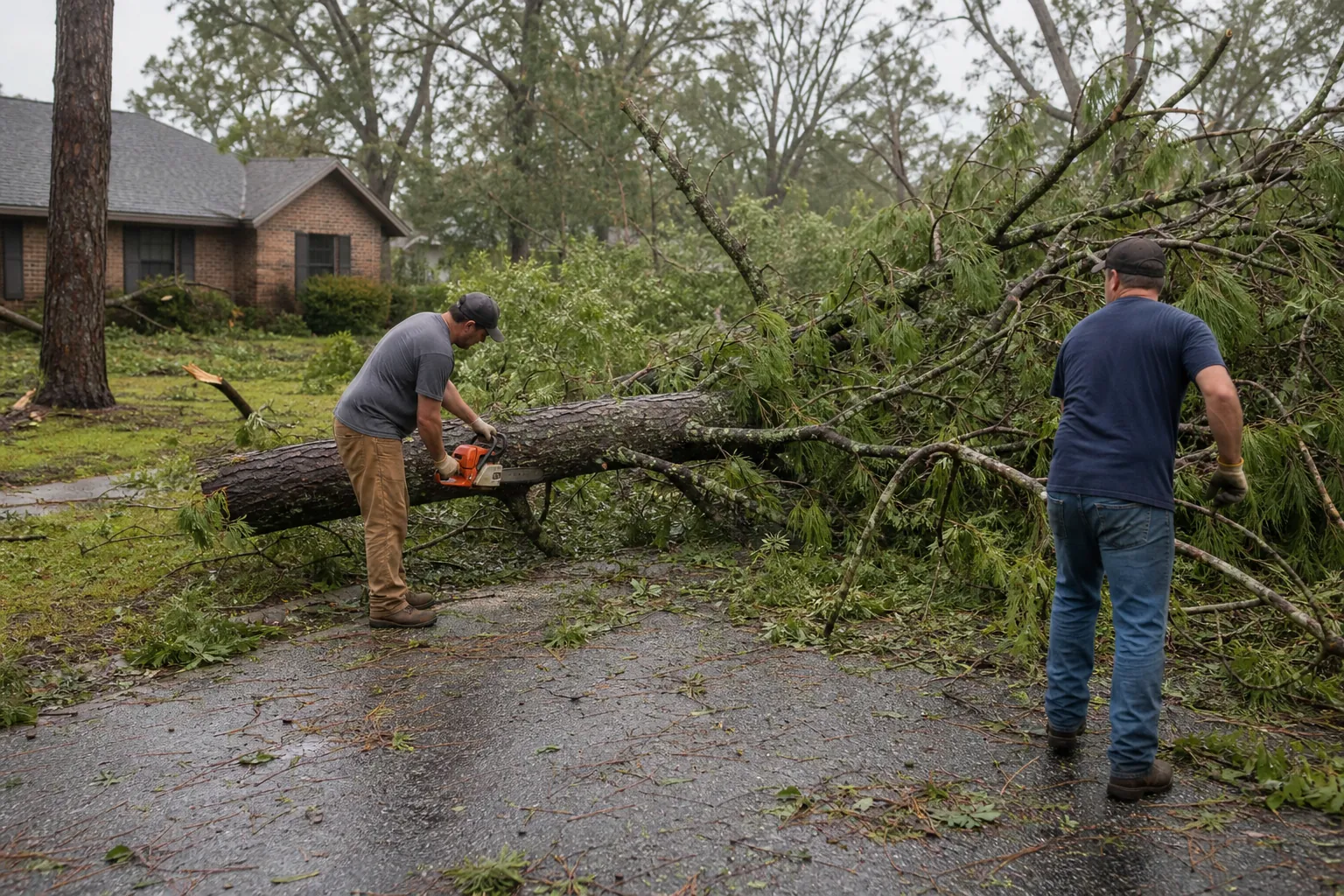
Hurricane fallen tree cleanup calls for a calm plan and careful choices. After a storm, a tree may look settled while its trunk, roots, or nearby limbs remain under strain. Homeowners in Pace can begin by keeping people away, looking for hazards from a safe place, and noting what needs attention. Florida Foliage offers tree care services, including emergency and hurricane tree removal.
Do not rush to cut or move a fallen tree. First, check for immediate dangers without walking under damaged limbs or near wires. Then decide what information a tree professional needs to assess the site. A clear view from a safe distance can help guide the next step.
How Should You Assess a Fallen Tree After a Hurricane?
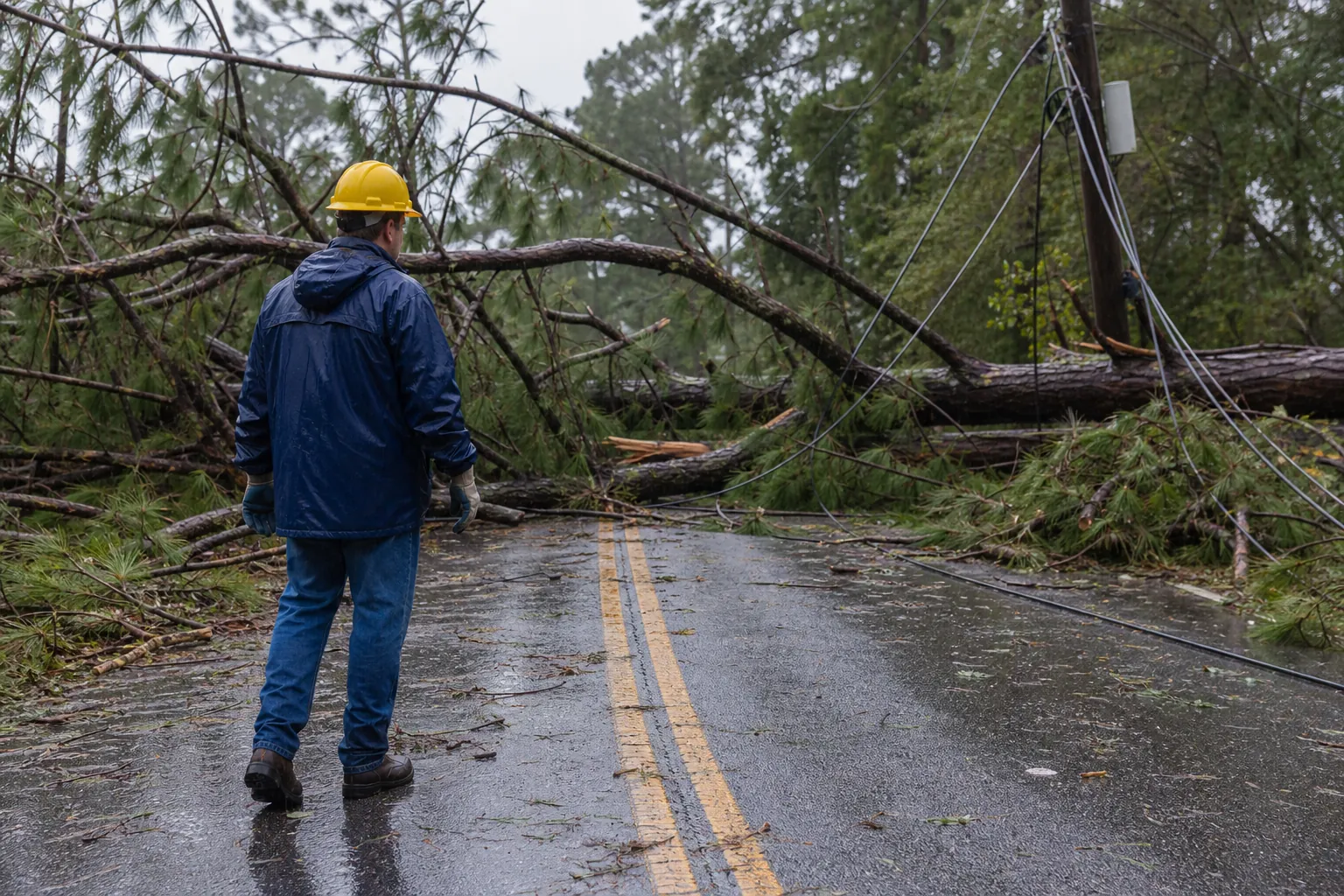
Start your assessment from a safe place, such as indoors or well away from the tree. Look for downed wires, hanging limbs, leaning trunks, and damage near buildings. Do not touch a wire or approach a tree that may be in contact with one. NWS and Ready.gov both advise staying clear of downed power lines.
Write down what you can see and when you noticed it. A few clear details can help a tree professional understand the work to assess. For more on storm planning, review National Weather Service hurricane safety guidance and Ready.gov hurricane information.
- Keep children and pets away from the tree and any debris around it.
- Look for broken limbs that hang above paths, doors, or outdoor living areas.
- Note whether the trunk rests on a roof, fence, vehicle, or other tree.
- Watch from a safe spot for leaning stems, lifted roots, or fresh cracks.
- Leave downed wires alone and report them to the local power company.
Do not climb the tree, pull on branches, or test whether a limb is loose. A branch can shift without warning, and a damaged trunk can move as its weight changes. If you see fire, sparks, or another immediate threat, move away and contact emergency services.
A tree inspection can help distinguish visible damage from concerns that need closer review. An arborist report may document tree conditions and observations. Neither should replace emergency response when a hazard puts people at immediate risk. Keep your notes factual and avoid getting close to gather more detail.
What Hazards Should You Avoid During Storm Cleanup?
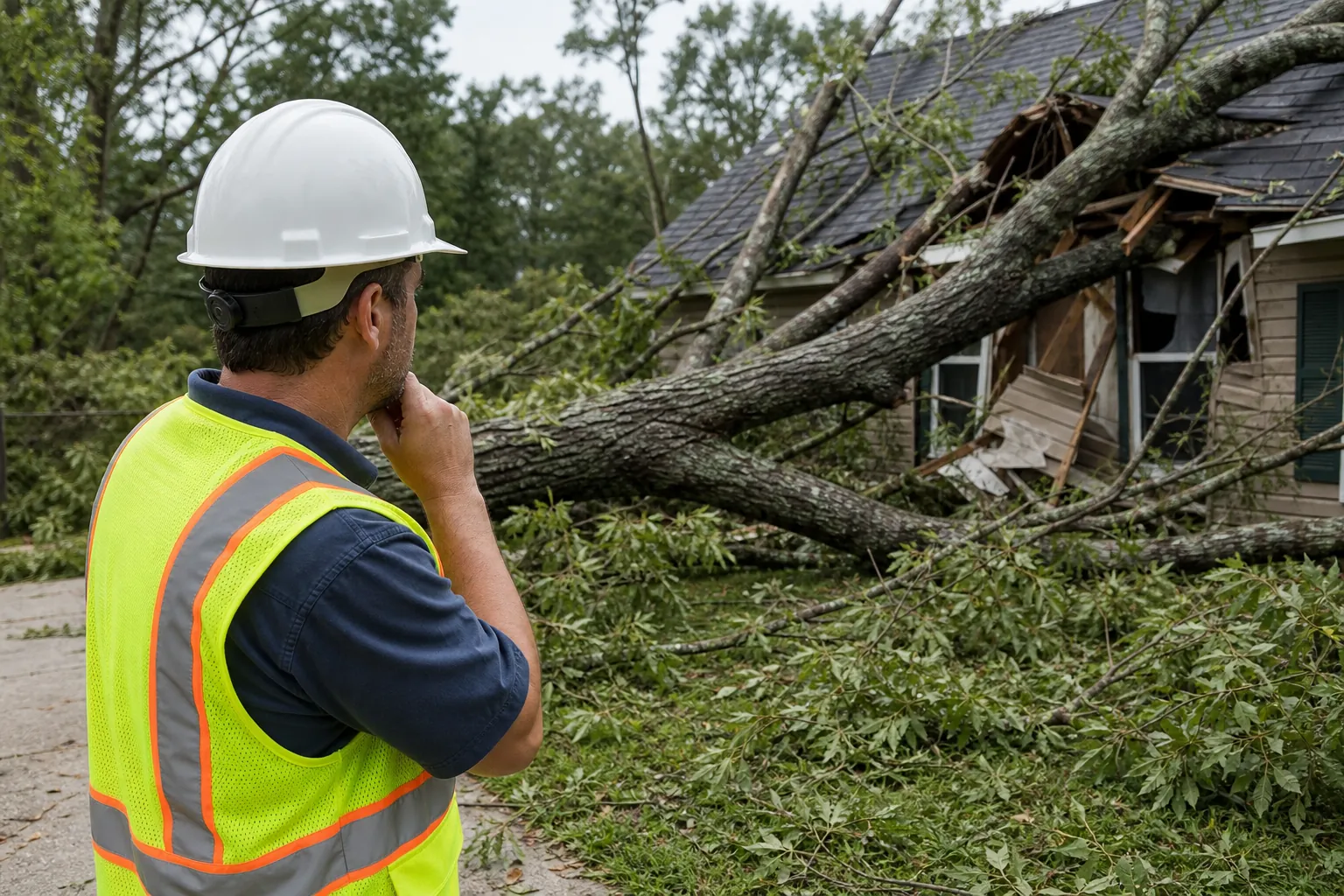
Storm debris can hide hazards, and unstable trees may move as crews work nearby. Stay away from downed wires, hanging limbs, and trees leaning toward occupied areas. Avoid using a ladder or saw on storm-damaged trees. OSHA warns that tree work can involve serious hazards, including electrical contact and falling branches.
Read the OSHA tree care safety guidance and the National Weather Service hurricane safety page before planning outdoor cleanup. These sources explain why people should keep clear of storm hazards and leave high-risk work to trained crews.
- Stay away from any tree or limb that touches, rests on, or hangs near a power line.
- Do not cut a tree that is bent, split, pinned, or under pressure.
- Keep clear of limbs caught in other trees, roofs, fences, or overhead structures.
- Do not stand beneath a damaged canopy while someone works above it.
- Wait for safe conditions before inspecting outdoor areas after severe weather.
Do not assume a fallen tree is safe because it is on the ground. Branches can be trapped under the trunk, and roots may still hold tension in the soil. A cut can release that force or change how the tree rests. Leave cutting, lifting, and heavy debris removal to people with suitable training and tools.
After a storm, local weather can change quickly. Check current alerts before going outside, and follow directions from local emergency officials. Ready.gov recommends keeping informed during hurricanes and after the storm. Its hurricane guidance offers practical steps for staying aware as conditions change.
How Can You Plan Cleanup Without Rushing?
Once immediate dangers are addressed, make a simple list of the affected areas. Note the tree location, visible damage, access limits, and nearby structures. Share what you observed with the tree care provider. This helps focus the site review on safe access, tree condition, and the cleanup work that may be needed.
Homeowners can use Ready.gov hurricane preparation guidance alongside NWS storm safety resources to keep safety at the center of planning. Set a clear meeting point away from damaged trees. Keep driveways and walkways clear for safe access when conditions allow.
- List each damaged tree and its location, using a map or simple written notes.
- Describe visible contact with buildings, fences, vehicles, or other trees.
- Mark blocked paths from a safe distance, without moving heavy debris yourself.
- Tell the provider about wires or other hazards you can see from a safe spot.
- Ask which tree care steps are part of the proposed cleanup scope.
Cleanup scope can vary with tree size, location, and the way it fell. It may involve tree removal, emergency and hurricane tree removal, or crane tree removal. A site review can also show if nearby trees need trimming, canopy thinning, or crown reduction. These services address different tree conditions, so describe the problem rather than guessing which service fits.
Keep a safe route between the home and any area you need to use. Do not move limbs just to open a path if the debris may be under tension. If a tree blocks access or rests on a structure, tell the tree professional before work begins. A clear description helps the provider assess the site and discuss a suitable plan.
When Might a Tree Inspection or Arborist Report Help?
A tree inspection may help when storm damage is hard to judge from the ground. A professional can assess visible cracks, leaning, root movement, and broken limbs. An arborist report can record findings for a specific tree or site. These services help homeowners understand tree condition and plan suitable care.
For storm safety, keep away from damaged trees until a safe assessment can take place. OSHA’s tree care safety guidance and NWS’s hurricane safety information support caution around falling limbs and electrical hazards.
Consider asking for an inspection if a tree has a new lean, a split trunk, lifted soil, or a large broken limb. These signs do not prove that a tree will fall, but they deserve attention. Do not climb closer or try to test the tree. Share what you saw and let a professional decide how to assess it safely.
Inspections can also help with hurricane readiness before the next storm. A review may identify dead limbs, crowded growth, or trees that need care. Canopy thinning and crown reduction are different forms of trimming, and the right approach depends on the tree and its setting. Avoid heavy pruning on your own, especially when a tree is large or close to structures.
In Pace, property layouts can include homes, yards, fences, and shared access areas. Describe how the tree relates to these features, and note whether equipment access seems limited. Do not clear a route by cutting limbs or moving a trunk. The provider can assess site access as part of planning.
What Tree Care Services May Fit Storm Damage?
The right service depends on the damage and the tree’s location. Tree removal may be considered when a tree is badly damaged or blocks an area. Tree trimming may address selected limbs. Stump grinding can deal with a remaining stump after removal. A site review helps match the task to the conditions.
Florida Foliage provides tree removal, tree trimming, stump grinding, emergency and hurricane tree removal, crane tree removal, canopy thinning, crown reduction, and land and lot clearing. The company also offers brush hogging, arborist reports and tree inspections, commercial tree services, and HOA and condo tree services. Ask which service fits the site after a review.
- Tree removal can address a tree selected for removal after a site assessment.
- Tree trimming can address selected limbs as part of planned tree care.
- Crane tree removal may suit sites where controlled lifting is part of the work plan.
- Stump grinding can address a stump left after a tree has been removed.
- Arborist reports and tree inspections can document observations about tree condition.
A fallen tree may need several steps, such as removing limbs before handling the trunk. A tree near a building may need a different approach from one in an open yard. Do not try to plan the cutting sequence yourself. Share the tree’s position, visible hazards, and nearby structures so the provider can assess the work.
Some storm cleanup concerns involve more than one tree or a larger area. Land and lot clearing or brush hogging may be relevant to certain sites, while HOA and condo tree services can address shared properties. Commercial tree services serve business properties. Ask for a clear description of the proposed work and the areas it covers.
How Can Homeowners Prepare Trees Before Hurricane Season?
Readiness starts well before a storm approaches. Walk the property in fair weather and note dead limbs, crowded branches, and trees close to buildings or paths. A professional tree inspection can help you plan care in advance. Complete tree work well before severe weather, rather than trying to work during a storm.
For broader preparation, use Ready.gov hurricane planning advice and NWS hurricane safety guidance. Follow local alerts as a storm nears, and stay indoors when officials advise it. Do not go outside during high winds to trim branches or secure tree limbs.
- Schedule a tree inspection when you notice dead branches, cracks, or a new lean.
- Ask whether trimming, canopy thinning, or crown reduction suits the tree.
- Keep outdoor paths and access points clear before severe weather begins.
- Store loose yard items before a storm, following local emergency guidance.
- Make a family plan for alerts, shelter, and safe contact after the storm.
Routine trimming should focus on tree health and suitable structure, not severe cutting. A tree professional can explain which limbs need attention and what work is appropriate. Avoid cutting large branches or removing a tree without help. A poor cut can harm the tree or put the person doing the work at risk.
Keep records of tree inspections and completed work for your own planning. Note the date, tree location, and work discussed. This can make it easier to track changes over time and plan future care. It also helps you explain the tree’s history if a new concern appears after a storm.
Hurricane readiness does not mean every tree needs major trimming. Each tree has its own condition, shape, and setting. Ask for an assessment based on what is visible at your property. Avoid broad cuts that remove too much canopy, and leave work above ground to qualified tree care professionals.
What Should You Expect When You Contact a Tree Service?
Share the property location in Pace, what happened, and what you can safely see. Describe the tree’s position and any nearby structures or wires. Do not enter a hazardous area to take photos. The provider can explain whether a site visit is needed to assess the tree and discuss possible cleanup steps.
Florida Foliage is based in Daytona Beach. Do not assume that a call means a local crew is available. Ask about the next steps for your property and request an estimate for the tree work being discussed. The aim is to understand the site, the work scope, and any safety concerns.
During a site review, point out blocked paths, visible damage, and trees you want assessed. Ask which tasks are included in the proposed scope, such as tree removal or stump grinding. If you have questions about how a tree will be handled, ask the provider to explain the work plan in clear terms.
Stay away from the work area while tree care is underway. Follow directions from the crew, and keep people and pets out of the marked area. OSHA notes that tree care work can involve serious hazards. Leave equipment, cutting, lifting, and overhead work to the tree care team.
After work, ask what tree care remains and what changes to watch for. If a stump remains, ask whether stump grinding is part of the plan. If other trees show damage, request an assessment rather than cutting them yourself. A clear final review can help you understand the work completed and plan future care.
Frequently Asked Questions About Hurricane Tree Cleanup
Should I move a fallen branch from my yard?
Only move small debris when the area is safe and the branch is not trapped, strained, or near wires. Do not pull a branch from under a tree or structure. Keep clear of large limbs and ask a tree professional to assess debris that may shift.
Can I cut a damaged tree myself?
Do not cut a storm-damaged tree that is leaning, split, pinned, or close to wires or structures. Cutting can change its balance and release stored force. OSHA advises caution with tree care hazards. Leave high-risk work to trained tree care professionals.
What should I tell a tree service about the damage?
Share the tree’s location, visible damage, nearby structures, and any access limits. Mention wires or hanging limbs you can see from a safe place. Do not go closer to collect details. A clear description can help the provider plan a safe site assessment.
Does every storm-damaged tree need removal?
No. The right care depends on the tree’s condition and location. A professional may assess whether trimming, removal, or continued observation fits what they find. Do not decide by appearance alone, especially if the trunk, roots, or large limbs show damage.
Can tree care help before hurricane season?
Yes. An inspection can identify visible concerns and help you plan suitable care before severe weather. A professional may discuss trimming, canopy thinning, or crown reduction based on the tree. Avoid heavy pruning yourself and follow local storm alerts.
Plan Your Next Tree Care Step
After a hurricane, keep clear of damaged trees and wires, note what you can safely observe, and arrange a professional assessment when needed. Good planning can help you understand the tree’s condition and the cleanup scope. Avoid cutting, climbing, or moving heavy debris while hazards remain.
For tree care questions in Pace, call Florida Foliage at (386) 481-7913. Share what you can safely see and ask about an estimate for the work under discussion. The company can explain possible next steps without assuming local crew availability.
Sources
Call (386) 481-7913 to talk through next steps.