Reviewer and contributor: Clinton Funk, Owner, Florida Foliage. Clinton has decades of hands-on tree care experience.
Tim Francis is responsible for the research and editorial quality of this article. AI tools assisted with drafting and the editorial images. This general information does not assess a particular tree.
Hurricane Fence Damage in Pensacola, FL calls for clear notes and a careful household plan.
Plan a detour for people in your home. Take the fence-side route out of your routine. Choose another plan for your household to use. Do not treat that choice as technically assessed. Share a clear note with all route users. A visible branch does not give a diagnosis. Nor does a leaning trunk or changed fence shape. Storm-damaged tree work has hazards from falling limbs. Trees that are not stable also pose hazards. These hazards appear in OSHA’s hurricane tree-work guidance. This guide helps you plan your daily access. It helps you note what is already visible. It also helps you prepare useful questions.
What Comes First For Hurricane Fence Damage?
Change the household routine rather than testing the fence or deciding what the tree material means. Use the tree-removal service overview to understand the topic and the tree-trimming service overview to distinguish another service category. Neither page establishes Pensacola availability or assesses the material beside your fence.
A household detour is a planning choice. You might use another entrance. You might move an errand to a different time. You might tell visitors not to use the usual gate. This does not mean another route has been assessed.
Keep the message short. “We are not using the side gate” tells people what changed. “The branch is harmless” makes a statement the note cannot support. You do not need to describe the fence to explain a routine change.
- Name the route that has been taken out of the household plan, using familiar terms such as “the gate beside the shed”.
- Describe the replacement arrangement as a household choice, not as a technically verified route.
- Give visitors the same short message that household members receive, so there is one version of the plan.
The goal is a clear change in everyday behavior. Your note does not need to explain how the tree material arrived, what supports it, or what should happen to the fence next.
How Can You Build a Useful Household Detour Plan?
Start with the task that uses the fence-side route. Decide whether that task can use another route. You can also delay it or choose another task. Keep your questions for the company in a separate message. The Florida Foliage contact page offers a place to ask. The company background page explains who the company is. Neither page assesses the route you plan to use.
Think in terms of activities rather than a map alone. A gate may be part of taking out household items, meeting a delivery, or reaching a storage area. One alternate arrangement may not suit every task. Listing the tasks first makes the note more useful.
- Name the interrupted task. Write down what someone normally does through that gate or along that fence. Use plain language that another household member will recognize.
- Choose an organizational response. Decide whether the task will use a different existing household arrangement, wait, or be handled another way. Do not label that choice a safety assessment.
- Write one route message. State which route is not in use and what people should do instead for the named task. Avoid speculative explanations.
- Share the current version. Put the message in the household’s usual messages channel and tell expected visitors about the change.
- Keep open questions separate. Record questions about tree material in a second note rather than mixing guesses into the detour instructions.
- Use recognizable household landmarks instead of a complicated sketch.
- Keep postponed tasks on a separate list so they do not disappear from memory.
- Make the replacement arrangement specific enough that someone does not have to improvise.
Write a Route Note People Can Actually Use
A useful note tells people what has changed. It does not ask them to judge tree debris. The overview of tree-removal services helps with later service questions. Use the contact options for Florida Foliage to ask those questions. Keep them apart from the household’s current route message. That message should focus on the change in routine.
For example, write: “The side gate is not part of our household plan. Please use the front entrance for visits. The garden-storage task is postponed.” This records a routine change. It makes no statement about the fence or tree material.
Your household may already date or label shared notes. If so, add a date or short version label. This helps you keep track of the details. It does not say when the route can reopen. Avoid words such as “probably fine tomorrow” in notes. Those words replace an open question with a guess.
- Give the note a simple heading, such as “Current entrance plan,” so it is easy to find.
- Keep the main route instruction separate from background notes and unanswered questions.
- Ask household members to use the same wording when they tell someone else about the change.
A visitor may need only the entrance details. If so, share only those details with them. A long storm or tree account may hide the instruction. Keep the message focused on what people should do. A short message can still help people follow the plan. That remains true when much is still not known.
What Can You Record Without Making a Diagnosis?
Write plain notes using details you already have. These may include the name of the usual route. Note where tree material appears beside that route. The tree-trimming details page offers context for the topic. The Florida Foliage company profile also gives you background. Neither page makes your notes a finding about the material’s state. Neither makes an image into such a finding.
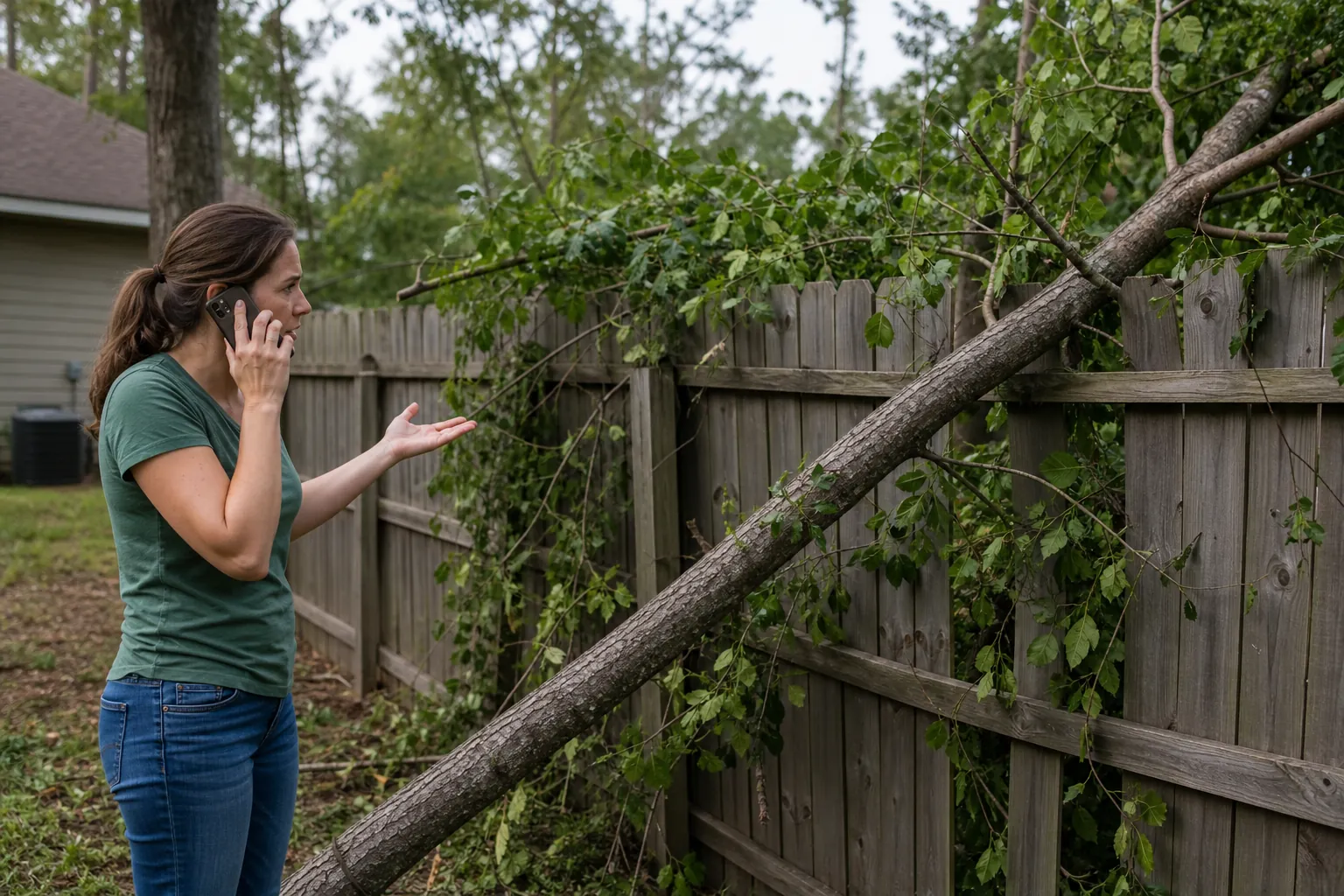
“Tree material is visible beside the gate” is a note. “The tree is stable” is a diagnosis. “The fence looks different” reports a change. It does not show the cause or extent. It does not show what action should follow.
If you already have images, label them as context, not proof. An image cannot show that a tree is safe. Do not create a new household task near the material just to collect more details.
- Use neutral words such as “visible,” “appears,” and “not known” where they accurately describe your details.
- Separate what you directly observed from what another person told you.
- Include “unknown” when you do not know whether electrical conductors are involved.
That last point matters when you write your notes. Downed electrical conductors can make trees and fences live. You must avoid both direct and indirect contact. These warnings come from OSHA’s hurricane tree-work guidance. Your household notes cannot settle an electrical question. Do not guess the answer from how things look.
Keep the Detour Separate From Debris Work
The detour plan organizes household activities; it is not a plan for handling fallen material. Read the tree-removal topic overview or the tree-trimming topic overview for service context. Those descriptions do not provide instructions for working on storm debris or confirm service availability in Pensacola.
OSHA lists hazards in work on storm-damaged trees. Tree material held under tension is one hazard. Trees may also roll or slide when cut down. Keep these hazards apart from your household route plan. Do not turn route planning into a plan to move material. See these hazards in OSHA’s tree-work activity sheet.
Keep nonessential people outside work and drop areas, as directed by OSHA’s hurricane tree-work guidance. Keep nonessential people away from debris machinery, as directed by OSHA’s debris-collection guidance. A household detour should not be presented as permission to enter either setting.
- Leave debris-handling tasks out of the household route checklist.
- Keep questions about tree material in the inquiry note rather than assigning them as household chores.
- Describe any work-related route issue as unresolved instead of inventing a passage through it.
A casual look has other limits as well. Debris can hide both meters and fire hydrants. This warning appears in OSHA’s collection activity sheet. Stay clear of containers that are leaking chemicals. A specialist needs to assess those leaking containers. This advice comes from the same OSHA guidance.
Organize the Tasks That Normally Use the Gate
Make a short task list so the changed route does not become a source of repeated household questions. The company details for Florida Foliage explains its background, and the inquiry page provides a separate channel for service questions. Neither is needed to organize groceries, visitors, or postponed storage tasks.
Group the items on your list by task. Visitors need a message about which entrance to use. Household members may need to know where an item went. A task that was delayed may need a reminder. These are details that people need to share. They are not findings about the tree or fence.
You can plan indoors with the details your household already has. Note what is missing. Do not assign a new inspection. The list can include unfinished items.
- Tell expected visitors which entrance is part of the current household arrangement.
- List routine items that are already available elsewhere, so people do not assume they must use the old route.
- Mark nonessential errands as postponed when no replacement arrangement has been chosen.
Keep the list simple. A few clear choices are easier to share. If a task has no workable arrangement, say so. “No replacement plan yet” is clearer than a vague instruction.
Prepare a Neutral Contact Message
A clear inquiry gives the company context without asking it to accept your notes as a diagnosis. Use the Florida Foliage contact form to send questions and the ownership and company background to understand the business. Florida Foliage is based in Daytona Beach.
Call (386) 481-7913 to ask about current service options for your Pensacola property.
A useful message might read: “I am in Pensacola, FL. Fallen tree material appears to touch a fence beside our usual gate. We have changed our household route. Can you tell me whether you handle inquiries for this location and what details would be useful?”
- State the city and describe the interrupted household route in one plain sentence.
- Report only notes you already have, and identify unanswered questions as unanswered.
- Ask which details the company wants rather than assuming an image or description settles the issue.
Florida Foliage owner Clinton Funk has decades of hands-on tree care experience. Share your question, location, and the details you have.
Keep the Household Plan Clear as details Changes
Update the note when the household plan changes. Someone may feel more sure about an unassessed state. That alone is not a reason to change the note. The tree-removal service description gives context for removal questions. Use the Florida Foliage inquiry channel to ask further questions. Neither page gives a finding about your fence-side route.
Separate new details from a new decision. A message from a household member may add a note without changing the route plan. A service inquiry may produce another question rather than an answer. Record those differences so the note does not imply more than you know.
- Replace an outdated route message rather than leaving conflicting versions in the same talk.
- Keep the observation record separate from the list of current household arrangements.
- Carry unresolved tasks forward without adding a guessed completion date.
The measure of a useful plan is whether people understand the present arrangement. It is not whether the note explains every visible detail. A brief, accurate message can remain clear while technical questions stay open.
For a Pensacola household, the immediate goal is practical: remove the usual fence-side route from daily assumptions and communicate the replacement arrangement. Keep tree-work questions, visible notes, and household choices in separate places. That separation makes each talk easier to follow.
Frequently Asked Questions
These answers separate household planning from judgments about tree material. The tree-trimming service summary provides general service context, and the Florida Foliage background page identifies the company. Neither establishes local availability, evaluates a fence, or shows that a particular household route has been assessed.
- Use the answers to clarify your notes, not to label a tree or fence as safe.
- Keep unanswered site-specific questions separate from ordinary household arrangements.
Does tree material touching a fence prove the tree is stable?
No. Visible contact is a note, not a diagnosis of stability. Describe what appears to touch the fence without drawing a conclusion about support or movement. Storm-damaged tree work has falling-limb and unstable-tree hazards, as identified in OSHA’s hurricane tree-work guidance. Keep that distinction in your household notes.
Can a photo show that the route is safe?
No. A photo cannot prove that a tree or route is safe. An existing image can give context for an inquiry. It cannot turn visible details into a diagnosis. Label what you know and what remains unknown. Keep the household route message separate.
What should the household note say about possible electrical contact?
State that the electrical situation is unknown if you do not know it. Do not replace that uncertainty with a visual guess. Downed electrical conductors can energize trees and fences, and direct and indirect contact must be avoided, according to OSHA’s tree-work guidance. Keep the note factual rather than reassuring.
Does contacting Florida Foliage confirm service in Pensacola?
No. Florida Foliage is headquartered in Daytona Beach, and a contact step does not confirm Pensacola availability. Call (386) 481-7913 or use the contact page to ask whether the company can address your location and situation. Share plain notes, and do not assume a visit or response outcome.
How should visitors learn about the changed route?
Give visitors the same short message as household members. Name the route that is not in use. Explain the plan that visitors should now follow. Keep other details apart from that entrance message. This is a suggestion for sharing clear messages. It does not assess the tree material or fence. It does not assess the other entrance, either.
Author: Tim Francis. Content and editorial responsibility only.
Call (386) 481-7913 to talk through next steps.