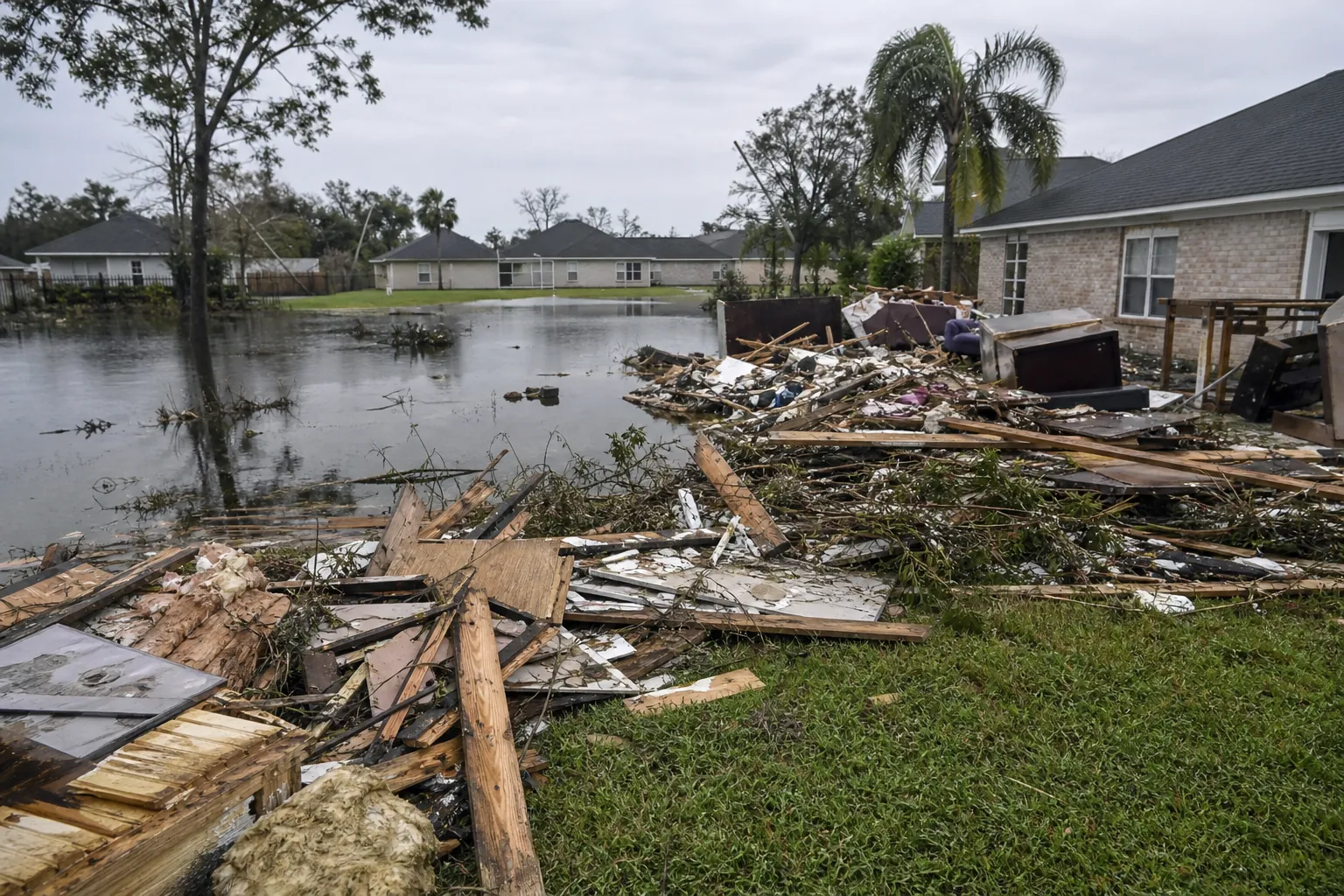
Keep flooded yard debris on your planning list, not your hands-on task list. Ready.gov says floodwater can contain debris, chemicals, waste, and wildlife. It also says underground or downed power lines can electrically charge water. Read the federal hurricane guidance. This guide helps Pensacola homeowners organize what they see. It does not assess safety. For more context, see Pensacola hurricane tree cleanup and Florida Foliage’s tree removal service information.
Written by Tim Francis, who is responsible for this article’s content and editorial presentation.
Why Should Floodwater Change Your Yard Cleanup Plan?
Floodwater changes the task because you cannot see everything it contains. Ready.gov lists debris, chemicals, waste, wildlife, and possible electrically charged water. Source: Ready.gov. Use tree removal information and the contact page to organize questions. Do not use them to assume local service is available.
A lawn that normally feels familiar can be hard to describe after a hurricane. A pile may include leaves, branches, household objects, or material whose origin you do not know. Your first useful task at home is to make a simple record of what is uncertain. Do not turn the pile into a cleanup assignment.
In this article, a pause means leaving the flooded part of the yard off your household task list. This is a planning choice based on the hazards listed by Ready.gov. It is not a judgment about a particular property. This guide cannot assess your yard, water, trees, or electrical equipment.
- Mark the flooded area as an unresolved item in your household notes.
- Keep yard debris questions apart from routine indoor tasks.
- Write down what you do not know instead of guessing.
You do not need a full debris count to start a useful record. A brief note such as “standing water with mixed branches and other objects” is a clear start. It also avoids calling the water clean or the material harmless when neither has been established.
What Can You Observe Without Diagnosing a Tree?
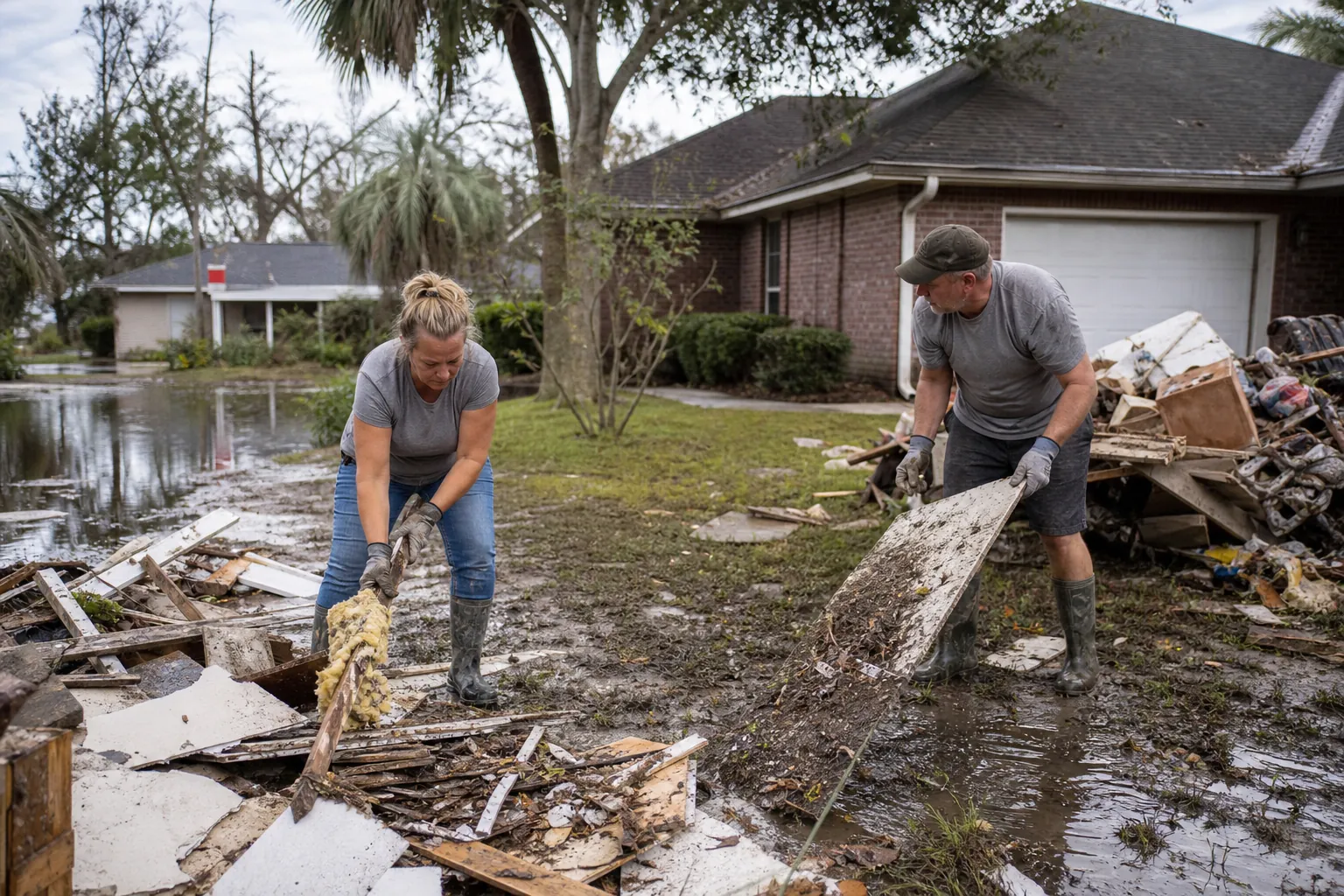
A visible observation describes what something looks like. A diagnosis interprets its condition. “A branch is on the lawn” is an observation. “The tree is safe” is a conclusion this guide cannot make. For context, read tree trimming service information and Florida Foliage’s company background. Neither is an assessment of your yard.
Keep your notes to details that are already clear to you. Do not enter floodwater or approach electrical equipment to make a record. Ready.gov says not to touch electrical equipment if it is wet or if you are standing in water. Source: Ready.gov hurricane guidance.
Use modest, specific wording. You might note that leaves cover part of a walkway, a branch is beside a fence, or water remains across part of the yard. These statements describe what you see. They do not show a tree’s internal condition or prove that an object can be handled.
- Use words such as “visible,” “appears,” and “unknown” when they fit what you know.
- Record the date so you do not confuse later notes with earlier conditions.
- Put interpretations in a separate question column, not among the facts.
A photo can help organize a conversation, but it cannot prove that a tree is safe. A tidy-looking image also cannot show what lies under water. If you already have images, label them with the date and general view. You do not need to collect more images just to fill a household folder.
How Should You Think About Wet Electrical Equipment?
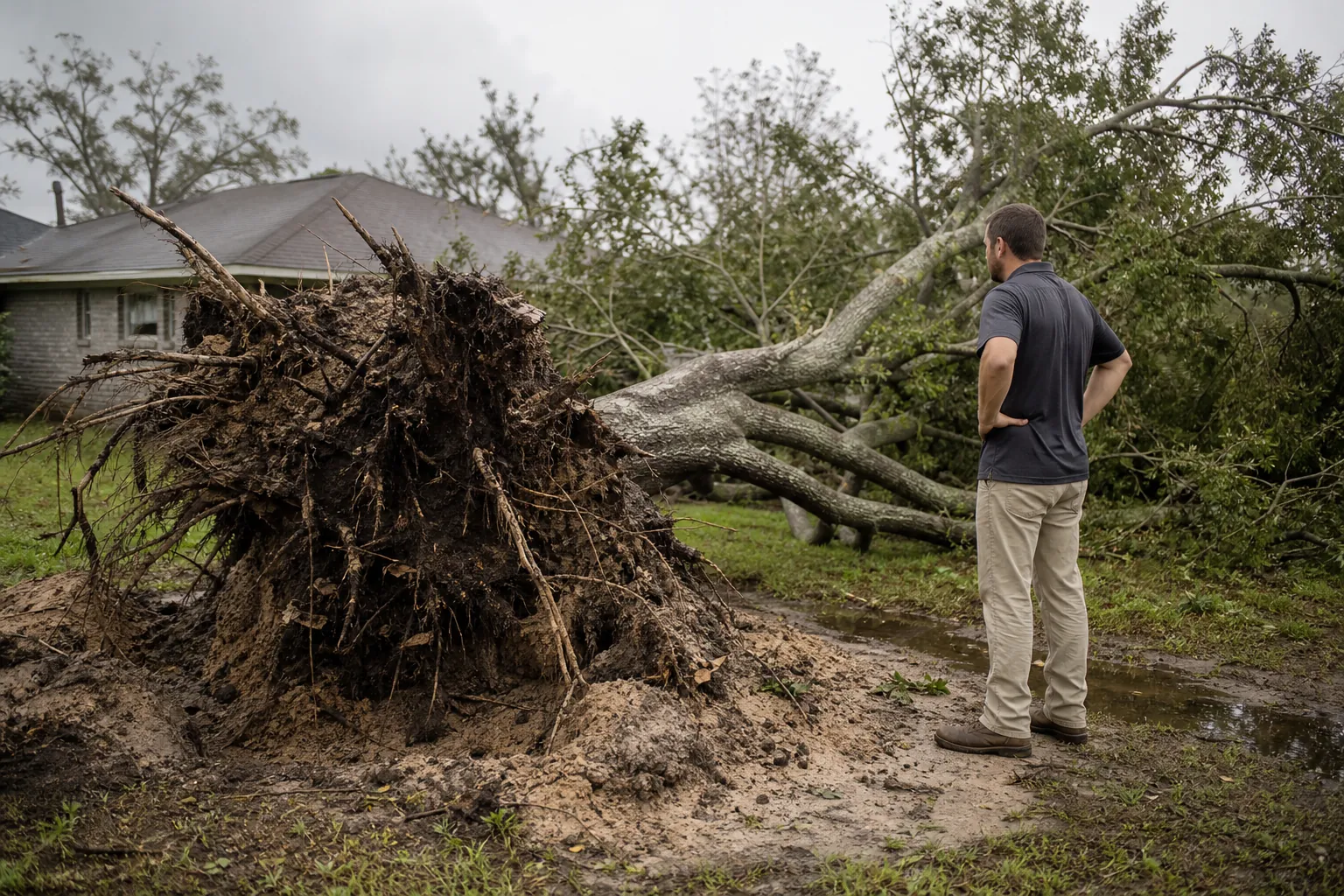
Ready.gov says not to touch electrical equipment when it is wet or when you are standing in water. It also says underground or downed power lines can electrically charge water. Source: Ready.gov. Keep service questions and tree removal context apart from electrical safety judgments.
Describe an item without interacting with it. A household note can say that electrical equipment is visible near water. It should not suggest that anyone test, move, or examine it. This article offers no electrical assessment and no way to tell whether water is electrically charged.
Do not use appearance to answer that question. “Unknown electrical condition” is more accurate than a guess based on whether equipment looks damaged. The federal guidance above states the hazard. It does not give homeowners a visual test to prove that a flooded yard is suitable for cleanup.
- Put electrical concerns in their own part of your household record.
- Describe equipment only as far as you know what it is.
- Do not assign a debris task that involves touching wet electrical equipment.
You can still organize other details, such as your address, preferred contact information, and questions. This paperwork does not require a decision about the water. Keeping these tasks separate makes your record clearer. It also keeps an unanswered electrical question from becoming a routine yard chore.
Keep Exterior and Building Questions Separate
Exterior observations and entering a building are different topics. Use information about tree trimming for tree-related context and the company overview to learn about Florida Foliage’s role. Neither page tells you whether a building is safe to enter. A tree service inquiry is not a building assessment.
The National Weather Service advises walking carefully around the outside of your home to check for loose power lines, gas leaks, and structural damage. It also says to stay out of any building if you smell gas, if floodwaters remain around it, or if authorities have not declared it safe. Source: National Weather Service after-hurricane guidance.
Read those directions together. Do not take the exterior check as a reason to enter a flooded area. This article adds no inspection steps and does not judge your home’s condition. Your household notes can keep building questions apart from descriptions of yard debris.
- Make one heading for yard observations and another for building concerns.
- Record open questions without saying the property is cleared for use.
- Keep the National Weather Service link with your notes so you can find the guidance.
The same source says never to use a portable generator inside your home or garage. Source: National Weather Service. If your household keeps a storm reference sheet, include that statement as written. Do not shorten it to a vague reminder that leaves out the specific ban.
Build a Simple Household Debris Record
A short record can help focus later conversations. It is not a technical report. The Florida Foliage contact page is a place to ask about a service. The tree removal page explains a service category you may want to ask about. These pages help you organize questions. They do not confirm service in Pensacola.
Use a notebook, shared document, or single folder, whichever your household already uses. Clear labels matter more than the format. Avoid making several lists that may conflict or make it hard to tell which description is current. Leave entries incomplete when you do not know the information.
- Start with the property address and the date of the record.
- Write a short, plain description of what you can see in the yard.
- Separate known details from questions about trees, water, and equipment.
- Add existing photos only as visual context, with a date and short caption.
- Choose one household contact to keep the questions and replies together.
This is a way to file information, not a cleanup plan. None of these steps asks you to enter water, handle debris, or decide that a tree is stable. An unfinished record can still be useful if it makes clear what you do not know.
- Use one name for each area, such as “front yard,” throughout the document.
- Keep earlier notes instead of silently replacing them with a new description.
- Mark questions as answered only when you have an actual reply to record.
A short record is easier to share than a long story. Focus on what someone needs to understand your question, not on writing a full account of the storm.
Keep Cleanup Planning Separate From Cleanup Work
Reading about a service does not mean a yard is ready for work. Compare tree removal service descriptions with tree trimming service descriptions as you organize questions. Do not use these service types to diagnose storm damage or choose hands-on work based on a flooded-yard description.
Ready.gov says to wear protective clothing and appropriate masks when cleaning debris. Source: Ready.gov. That guidance does not show that a particular flooded area is suitable for cleanup. Keep it with the same source’s warnings about floodwater contents and electrically charged water. Do not use it in place of those warnings. Source: Ready.gov floodwater guidance.
This guide does not give clothing details, mask advice, or ways to handle debris. Its purpose is more limited: help you keep planning questions separate from work. A list of materials in the yard is not a list of things someone should pick up.
- Keep possible yard tasks apart from routine household paperwork.
- Do not mark a flooded area “ready” just because the debris looks familiar.
- Copy source guidance accurately. Do not rewrite it as permission to begin.
You can also leave out details that are not needed for your inquiry. Do not guess a tree species, assign a technical condition, or describe a work method. “I have mixed yard debris and standing water, and I want to understand what information to provide” is a clear first question.
Contact Florida Foliage Without Assuming Local Availability
Use the contact page to ask whether Florida Foliage can address your inquiry. Read the company’s background for context. Florida Foliage is headquartered in Daytona Beach. This article does not say the company has a Pensacola office, local crews available, or a set response time.
You can call (386) 481-7913. Give your location, a brief description, and your question. Ask whether service is available instead of assuming it from the location in this article. Contacting the company does not mean a visit or work can be arranged.
- Say “Pensacola, Florida” near the start of your inquiry so your location is clear.
- Include standing water in your description rather than leaving it out.
- Ask what information would be useful before adding to your household record.
For the wider topic, return to the Pensacola hurricane tree cleanup guide. Keep this article’s narrower purpose in mind: organize flooded-yard questions, keep unknowns clear, and use the linked federal guidance instead of visual guesses as your safety reference.
Frequently Asked Questions
These answers cover common planning questions, not assessments of specific properties. Use tree removal information to learn about that service type and the contact page to make an inquiry. Neither link confirms local availability or answers questions about electrical equipment, floodwater, a building, or a tree.
- Keep the original source links with any safety notes you share.
- Treat visible descriptions as context, not as a diagnosis.
Can clear-looking floodwater still present hazards?
Appearance does not tell you if water is safe. Ready.gov says floodwater can contain debris, chemicals, waste, and wildlife. It also says underground or downed power lines can electrically charge water. Source: Ready.gov. Describe what you see, but do not label the water clean or suitable for yard cleanup.
Can photos prove that a storm-damaged tree is safe?
No. This article does not treat photos as proof that a tree is safe. Existing images can help explain a question, but they are not a diagnosis. Label them with the date and general view. Keep conclusions about the tree separate from the details shown in the image.
What does the guidance say about wet electrical equipment?
Ready.gov says not to touch electrical equipment if it is wet or if you are standing in water. Source: Ready.gov. Record this as an unanswered electrical question, not a debris task. This article gives no test for electrical condition and no way to tell if floodwater is electrically charged.
Does protective clothing make a flooded yard ready for cleanup?
This guide does not use protective clothing to decide if a yard is ready. Ready.gov recommends protective clothing and appropriate masks when cleaning debris. It also identifies floodwater hazards and possible electrically charged water. Source: Ready.gov. Keep these points together. A reminder about clothing does not answer questions about conditions in a particular yard.
How can I ask Florida Foliage about a Pensacola property?
Call (386) 481-7913 or use the contact page. Give your Pensacola location and ask whether the company can address your inquiry. Florida Foliage is headquartered in Daytona Beach. Have a brief description ready, but do not assume local service is available, expect a set response time, or treat contact as a property assessment.
Call (386) 481-7913 to talk through next steps.